TRT + GLP-1: Can Testosterone Prevent Muscle Loss?
5/28/2026
5 min read
By The TRT Catalog
GLP-1 drugs cause up to 45% of weight lost to come from muscle. A 2026 review proposes combining TRT to preserve lean mass. Here is what the data shows.
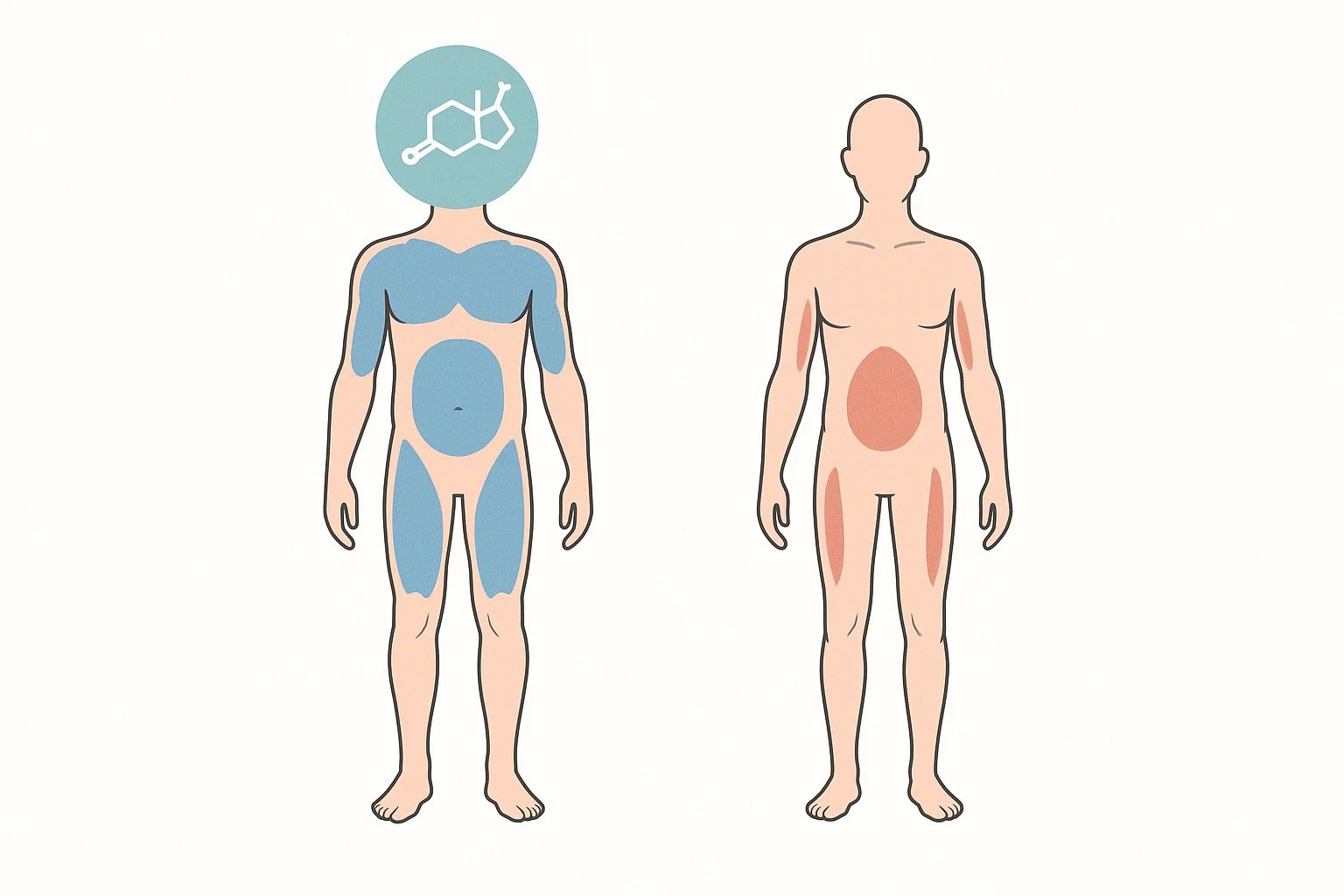
GLP-1 drugs like semaglutide and tirzepatide are producing weight loss that was previously only possible with bariatric surgery. The problem is where the weight comes from. Clinical trial data consistently show that 25 to 45 percent of the weight lost on GLP-1 therapy is lean mass — muscle, not fat. For men who already have low testosterone, this tradeoff is a serious concern.
A 2025 review in The Aging Male proposed a direct answer: combine GLP-1 drugs with testosterone replacement therapy and structured lifestyle intervention to strip fat while preserving muscle. The authors called it the "male hormone reset" — treating obesity, low testosterone, and muscle loss as an integrated problem instead of three separate ones.
Here is what the data says about GLP-1 muscle loss, what TRT adds to the equation, and how clinics that handle both metabolic and hormone care are starting to put this together.
Key Takeaways
GLP-1 drugs cause 25 to 45% of weight lost to come from lean mass, not just fat
Tirzepatide strips more lean mass than semaglutide at every time point across 12 months (2026 medRxiv, 670,000 users)
A 2025 Aging Male review proposes combining TRT with GLP-1 as a new standard of care for obese men with low T
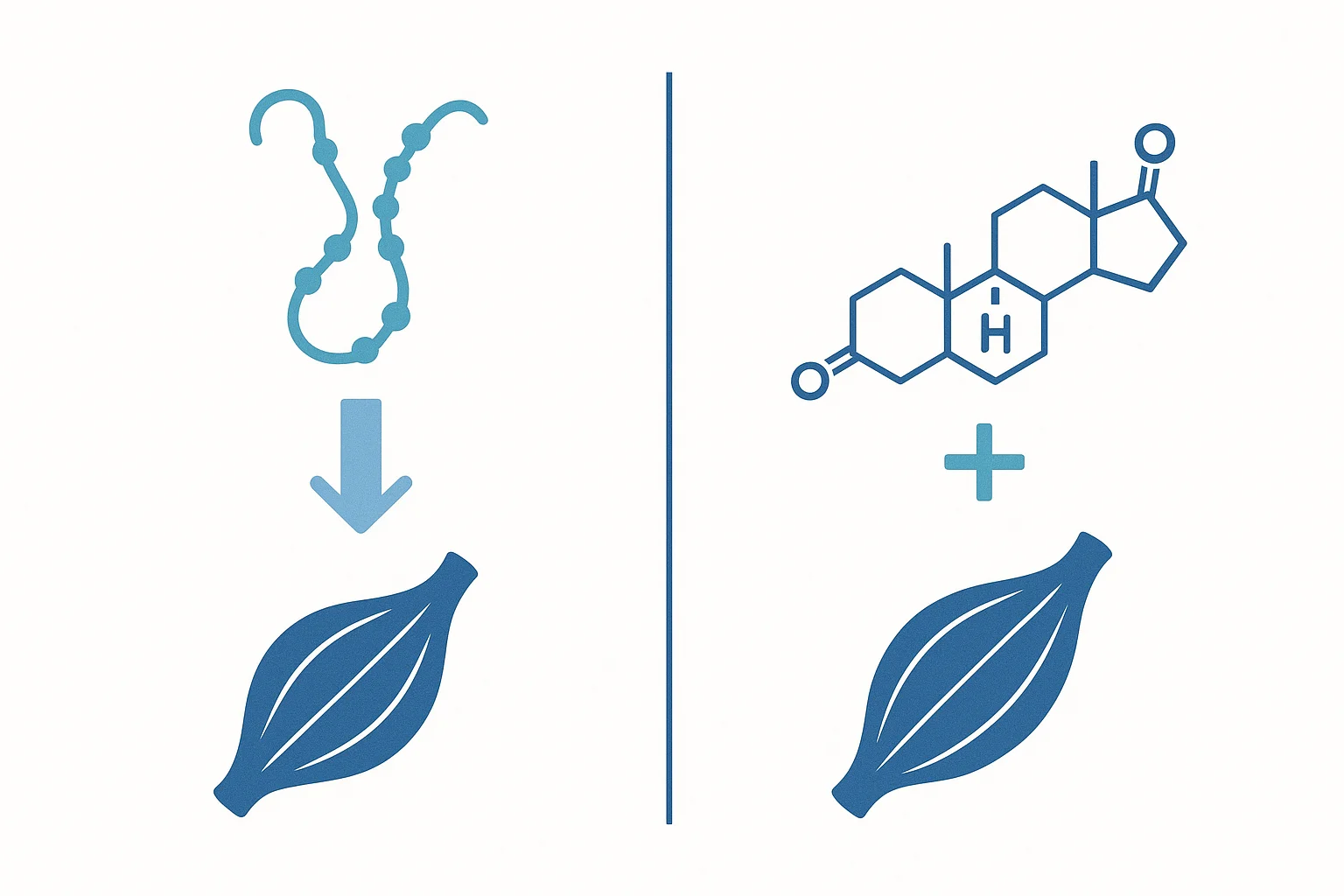
TRT preserves lean mass through protein synthesis stimulation and nitrogen retention
Resistance training remains the single most effective muscle-preservation strategy — TRT is an additional lever
Sequential start (GLP-1 first, add TRT if needed) is safer than simultaneous initiation
The scale of GLP-1 muscle loss is not trivial. Three landmark trials quantify it:
STEP-1 (semaglutide 2.4 mg weekly): Participants lost approximately 15% of total body weight. DXA body composition scans showed lean mass decreased by roughly 13%, accounting for 40 to 45% of the total weight lost.
SURMOUNT-1 (tirzepatide up to 15 mg weekly): Greater overall weight loss (about 21%) with lean mass loss of about 11%, representing roughly 25% of total weight lost. The SURPASS-3 MRI substudy did show reductions in myosteatosis (fat infiltration within muscle), suggesting some improvement in muscle quality despite the mass decline.
2026 medRxiv analysis (670,000 first-episode GLP-1 users): A body-composition digital phenotyping study published in April 2026 tracked lean body mass changes in 7,965 patients with paired pre- and post-treatment measurements. Tirzepatide was associated with greater lean body mass decline than semaglutide at every time point — excess losses of 1.1%, 1.5%, 1.3%, and 2.0% at 3, 6, 9, and 12 months respectively. A "depletive" pattern (more than 20% body weight loss with more than 5% lean mass loss) was significantly more common with tirzepatide (10.3% vs 6.7% for semaglutide).
The patients most vulnerable to lean mass depletion were those with baseline musculoskeletal pain — cervicalgia and knee pain were the strongest correlates of excessive muscle loss. These are the patients least able to compensate with resistance training, which creates a compounding problem.
Why Muscle Loss Matters More Than the Scale Suggests
Losing 5 to 10% of your lean mass does not just change a number on a body composition scan. It translates to:
Reduced basal metabolic rate. Less muscle means fewer calories burned at rest, which sets up rebound weight gain when the GLP-1 is discontinued.
Functional decline. Grip strength, stair climbing, carrying capacity — the activities that keep independence in older age.
Metabolic backslide. Skeletal muscle is the primary site of insulin-stimulated glucose disposal. Lose muscle and you lose insulin sensitivity — partially undoing the metabolic benefits the GLP-1 delivered.
For men with low testosterone, the equation is worse. Testosterone is one of the primary anabolic signals that maintains muscle protein synthesis. When both testosterone and muscle mass are declining simultaneously, the result is a faster path to sarcopenic obesity — high body fat, low muscle mass, poor metabolic health — even if the scale says you lost weight.
The "Male Hormone Reset" Concept
The Aging Male review that coined the "male hormone reset" framework argues that obese men with functional hypogonadism should not be treated with GLP-1 alone or TRT alone. The three-pronged approach:
GLP-1 receptor agonist for weight loss, appetite suppression, and cardiometabolic protection
Testosterone replacement therapy for lean mass preservation, anabolic signaling, and symptom relief
Structured lifestyle intervention — resistance training and high-protein nutrition — as the foundation under both drugs
The rationale is straightforward. GLP-1 drugs are the best pharmacological weight-loss tools available, but they deplete muscle alongside fat. TRT is the best pharmacological tool for muscle preservation in hypogonadal men, but it does not produce significant weight loss on its own. Combining them addresses the weakness of each: GLP-1 handles the fat, TRT protects the muscle, lifestyle ensures the adaptations stick.
What TRT Actually Does for Lean Mass
The data on TRT and body composition are well-established:
Men starting TRT typically gain 2 to 5 kg of lean mass over the first 6 to 12 months
Fat mass decreases by 1 to 3 kg in the same period
The gains come primarily through increased muscle protein synthesis, improved nitrogen balance, and enhanced satellite cell activation
When layered on top of GLP-1 therapy, the expected effect is not additional weight loss — it is a shift in the composition of the weight lost. More of the loss comes from fat, less from muscle. The net result: better body composition at the same scale weight.
Where the Evidence Stands
This is the honest part. The combination protocol has strong mechanistic support but limited controlled trial data.
What exists:
Observational evidence that men on TRT retain more lean mass during caloric restriction than men without testosterone support
The Aging Male focused review synthesizing the mechanistic case and calling for formal trials
Clinical experience from men's health clinics that report better body composition outcomes when TRT is paired with GLP-1 versus GLP-1 alone
What does not yet exist:
A randomized controlled trial comparing GLP-1 alone versus GLP-1 plus TRT with DXA-measured body composition as the primary endpoint
Long-term safety data specific to the combination (both drugs have individual long-term data, but the combination is newer)
Dose-finding data for optimal testosterone dosing during concurrent GLP-1 therapy
The T-REX trial demonstrated that resistance training plus GLP-1 cuts fat-free mass loss roughly in half compared with GLP-1 alone. No equivalent trial has been published for TRT plus GLP-1 versus GLP-1 alone — yet. Until that trial exists, the combination is supported by mechanism and clinical logic, not randomized evidence.
Practical Protocol: How Clinics Combine TRT and GLP-1
Clinics that handle both metabolic and hormone care are converging on a general sequencing framework. This is not a universal protocol — individual prescribers adjust based on patient risk — but the pattern is consistent:
Phase 1: Baseline Assessment (Week 0)
Full hormone panel: Total testosterone, free testosterone, SHBG, LH, FSH, estradiol, prolactin
Blood pressure at every visit — both TRT and GLP-1 can affect it
Who Should Consider This Combination
Not every man on a GLP-1 needs TRT. The combination makes the most sense for a specific profile:
Strong candidates:
BMI over 30 with documented total testosterone below 300 ng/dL (functional hypogonadism)
Men over 50 with low muscle mass at baseline (pre-sarcopenic)
Men with mobility limitations who cannot do adequate resistance training
Men whose testosterone stays low after 6 or more months on a GLP-1 alone
Men losing more than 30% of their weight from lean mass (measurable on DXA)
Weaker candidates (GLP-1 alone may be enough):
Men with borderline low testosterone (300 to 400 ng/dL) whose levels normalize on GLP-1 — the AUA 2026 cohort showed many men see testosterone rise by 100 ng/dL on GLP-1 alone
Men who can commit to 3 or more resistance training sessions weekly and 1.4 g/kg/day protein
Not candidates:
Men with normal testosterone who do not have hypogonadism — adding TRT for muscle preservation without clinical need introduces unnecessary risk
Men with contraindications to TRT (untreated severe sleep apnea, active polycythemia, prostate cancer under active treatment)
Men who have not tried lifestyle interventions first — resistance training and protein are more effective for muscle preservation than any drug
What About Enclomiphene Instead of TRT?
For men who want hormonal support but need to preserve fertility, enclomiphene is a reasonable alternative to TRT in this protocol. Enclomiphene stimulates endogenous testosterone production without suppressing spermatogenesis. The testosterone gains are typically smaller than injectable TRT (average total testosterone increase of 200 to 300 ng/dL vs. 400+ ng/dL on cypionate), but for men in the borderline range, the increase may be sufficient to protect lean mass during GLP-1 therapy while keeping the fertility door open.
GLP-1 drugs are the most effective weight-loss medications available, but they strip muscle alongside fat — and for men with low testosterone, that lean mass loss accelerates. The emerging approach combines TRT with GLP-1 therapy: the GLP-1 handles the fat loss and metabolic improvement, testosterone protects the muscle, and resistance training plus protein intake provide the foundation.
The concept is mechanistically sound and clinically logical, but controlled trial data are still catching up. Men considering this combination should work with a clinic that handles both metabolic and hormone care, start with the GLP-1 first, recheck testosterone and body composition at 3 to 6 months, and add TRT only if indicated.
Wilding JPH et al. Once-weekly semaglutide in adults with overweight or obesity (STEP-1). New England Journal of Medicine, 2021.
Jastreboff AM et al. Tirzepatide once weekly for the treatment of obesity (SURMOUNT-1). New England Journal of Medicine, 2022.
Greater lean-body-mass decline with tirzepatide than semaglutide in routine care, revealed by body-composition digital phenotyping. medRxiv, April 2026. https://doi.org/10.64898/2026.04.11.26350687
Köhler T et al. Retrospective cohort analysis of GLP-1 receptor agonist therapy and serum testosterone in more than 1,600 men. AUA 2026 Annual Meeting, Washington D.C., May 2026.
Sansone A et al. GLP-1 receptor agonists and testosterone in men with obesity and type 2 diabetes: a systematic review. The Journal of Sexual Medicine, 2026.
Clift AK et al. Real-world outcomes and safety of testosterone therapy: a longitudinal, retrospective cohort study of over 9,000 men. World Journal of Men's Health, April 2026.
Frequently Asked Questions
How much muscle do you lose on GLP-1 drugs?
Clinical trial data shows significant lean mass loss during GLP-1 therapy. In the STEP-1 trial, semaglutide 2.4 mg weekly produced roughly 15% total body weight loss, but DXA scans revealed that lean mass decreased by about 13% — meaning 40 to 45% of the weight lost was muscle, not fat. In the SURMOUNT-1 trial, tirzepatide up to 15 mg weekly produced roughly 21% weight loss with about 11% lean mass loss (25% of total weight lost). A 2026 medRxiv analysis of 670,000 GLP-1 users found tirzepatide caused greater lean body mass decline than semaglutide at every time point measured across 12 months.
Can testosterone replacement therapy prevent muscle loss on GLP-1 drugs?
The mechanism is sound but large-scale controlled trials are still lacking. TRT stimulates muscle protein synthesis, preserves nitrogen balance, and supports lean mass retention. A 2025 review in The Aging Male proposed combining TRT with GLP-1 receptor agonists as a new standard of care for obese men with functional hypogonadism — specifically because GLP-1 drugs produce significant weight loss but strip lean tissue alongside fat. Men on TRT typically gain 2 to 5 kg of lean mass over the first 6 to 12 months. The rationale is that adding TRT offsets the lean mass lost to GLP-1 caloric restriction. Controlled head-to-head data comparing GLP-1 alone versus GLP-1 plus TRT for body composition are still emerging.
Should I start TRT and a GLP-1 at the same time?
Most clinicians recommend a sequential approach rather than simultaneous initiation. Start one medication first, stabilize, then add the second if needed. This helps identify which medication causes any side effects (GLP-1 nausea vs. TRT polycythemia, for example). A common sequence: start the GLP-1 first, monitor for 3 to 6 months, recheck testosterone and body composition, then add TRT if testosterone remains low and lean mass is declining. Testosterone monitoring should occur every 3 months when combining both therapies.
Who benefits most from combining TRT with a GLP-1?
The strongest candidate is an obese man with documented low testosterone (functional hypogonadism), who needs substantial weight loss but cannot afford to lose more muscle. Men over 50 are especially vulnerable to GLP-1-related lean mass depletion because they have less muscle reserve to begin with. Other high-priority candidates include men with pre-sarcopenia or low grip strength, men who are physically limited and cannot do adequate resistance training to protect muscle on their own, and men whose testosterone remains below 300 ng/dL even after 6 months on a GLP-1 drug.
What else prevents muscle loss on GLP-1 besides TRT?
Resistance training is the single most effective muscle-preservation strategy during GLP-1 therapy. The T-REX trial showed that combining a GLP-1 with structured resistance training cut fat-free mass loss roughly in half compared with medication alone. Protein intake of 1.2 to 1.6 grams per kilogram of body weight daily is also critical. Creatine monohydrate (3 to 5 g daily) may provide additional support. Keeping the rate of weight loss below 2 pounds per week reduces muscle catabolism. TRT is an additional lever when these lifestyle interventions are not enough on their own.
Do GLP-1 drugs raise testosterone on their own?
Yes. GLP-1 receptor agonists raise testosterone in obese men through multiple mechanisms — primarily by reducing body fat (which lowers aromatase activity and estrogen conversion) and potentially through direct effects on the HPG axis. A 2026 AUA cohort of 1,600 men showed median total testosterone rose from 320 to 419 ng/dL on GLP-1 therapy, and the increase was partly independent of weight loss. For some men, the GLP-1 alone restores testosterone to normal without needing TRT. But if testosterone stays low after 6 to 12 months on a GLP-1, adding TRT is a reasonable next step. See our coverage of the [AUA 2026 GLP-1 testosterone study](/treatment/glp1-testosterone-independent-weight-loss-aua-2026).