Understanding how TRT works -- from the moment testosterone enters your body to the cellular changes that follow -- helps you set realistic expectations and recognize when the therapy is working. This article covers the biological mechanisms, HPG axis effects, and a detailed timeline of what to expect in your first year.
From Injection to Bloodstream
When you inject testosterone cypionate or enanthate intramuscularly, the oil depot sits within the muscle tissue. The ester (cypionate or enanthate) is a chemical "tail" attached to the testosterone molecule that makes it fat-soluble and slows its release. Typical starting doses across the major guidelines are documented in the TRT dosing ranges hub and the TRT first cycle dosing schedule.
Over the following days, esterase enzymes in the muscle tissue and bloodstream gradually cleave the ester bond, releasing free testosterone into the bloodstream. This is why different esters have different half-lives -- longer ester chains take longer to cleave, producing a slower, more sustained release.
Once the ester is removed, you're left with bioidentical testosterone -- the exact same molecule your testes naturally produce. Your body cannot distinguish between exogenous (injected) and endogenous (naturally produced) testosterone. They bind to the same receptors and produce the same effects.
Androgen Receptor Activation
Testosterone circulates in three forms:
Bound to SHBG (~44%): Tightly bound and biologically inactive. SHBG-bound testosterone acts as a reservoir but can't enter cells.
Bound to albumin (~54%): Loosely bound. Albumin releases testosterone readily, making it "bioavailable."
Free testosterone (~2%): Unbound and immediately active. This is the fraction that enters cells.
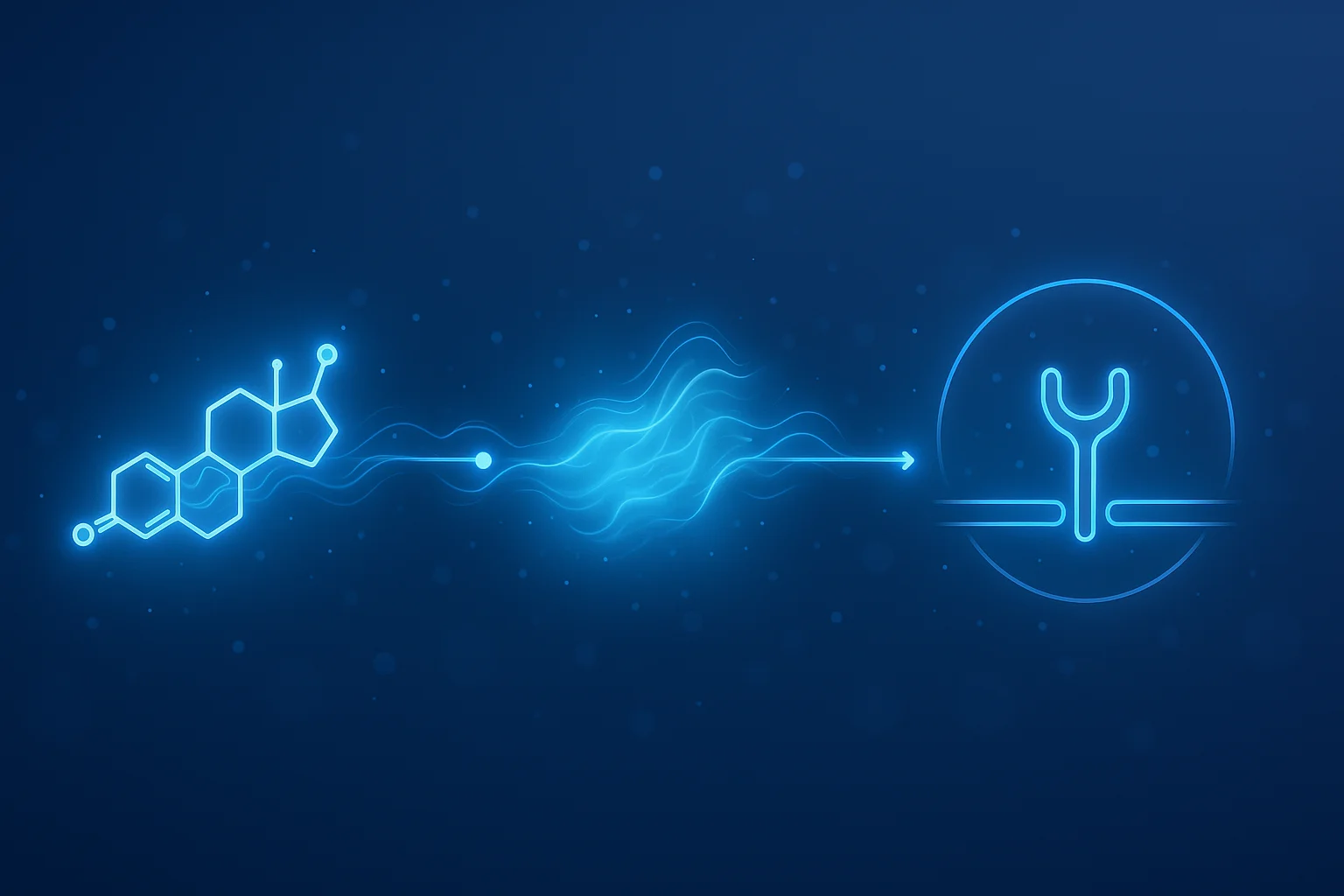
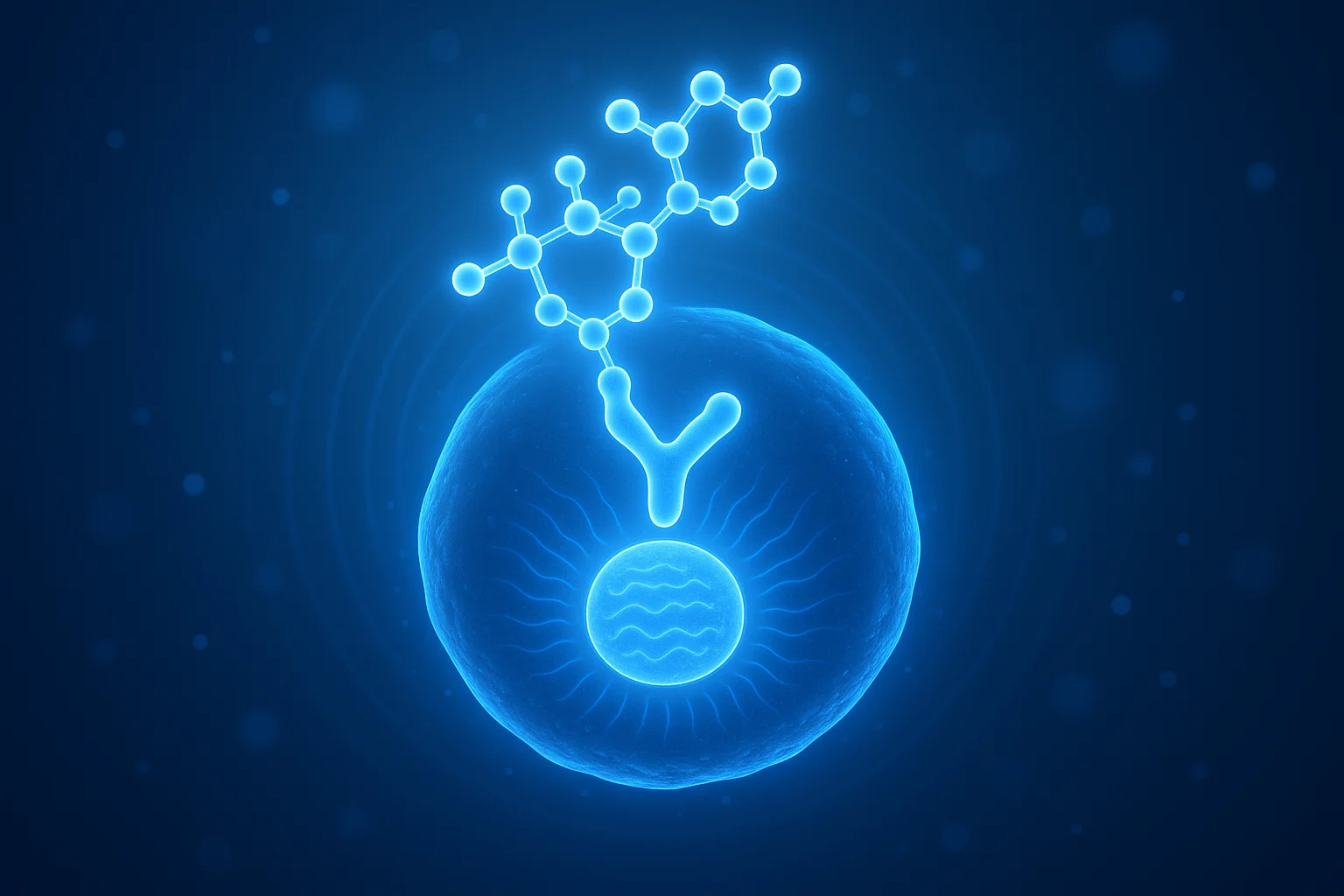
Free testosterone crosses cell membranes passively -- it's fat-soluble and doesn't need a transporter. Once inside the cell, it binds to androgen receptors (AR) in the cytoplasm. This testosterone-AR complex then translocates to the nucleus, where it binds to specific DNA sequences called androgen response elements (AREs).
This binding activates gene transcription: the cell begins producing specific proteins based on the genes that were activated. Which proteins get made depends on the cell type:
Muscle cells: Produce contractile proteins (actin, myosin), increasing muscle mass and strength
Bone cells: Stimulate osteoblast activity, increasing bone mineral density
Fat cells: Enhance lipolysis and reduce lipogenesis, shifting body composition
Brain cells: Modulate neurotransmitter systems (dopamine, serotonin), affecting mood, motivation, and cognition
Red blood cell precursors: Stimulate erythropoietin production, increasing red blood cell mass
The DHT and Estradiol Pathways
Testosterone doesn't only act through the androgen receptor directly. Two enzymes convert it into other active hormones:
5-Alpha Reductase: Testosterone to DHT
The enzyme 5-alpha reductase converts testosterone to dihydrotestosterone (DHT), a more potent androgen that binds the AR with approximately 3-5x greater affinity than testosterone itself. DHT is responsible for:
Prostate growth and maintenance
Facial and body hair growth
Scalp hair miniaturization (male pattern baldness in genetically susceptible men)
Sebaceous gland activity (acne)
Genital tissue sensitivity and sexual function
DHT levels increase on TRT, particularly with scrotal cream application (which has higher 5-alpha reductase activity). Most men don't need to worry about DHT unless they experience significant hair loss or prostate symptoms.
Aromatase: Testosterone to Estradiol
Aromatase enzyme, found primarily in adipose tissue, converts testosterone to estradiol (E2). Estrogen in men is not the enemy -- it's essential for:
Bone health and density
Cardiovascular protection
Brain function and neuroprotection
Joint health and fluid balance
Sexual function (libido requires adequate estrogen)
Problems arise when estradiol gets too high (water retention, gynecomastia, mood disturbance) or when it's driven too low by aggressive aromatase inhibitor use (joint pain, depression, low libido, bone loss). The target range for most men on TRT is 20-35 pg/mL.
This is the most important systemic effect of TRT that every patient must understand.
The hypothalamic-pituitary-gonadal (HPG) axis is the hormonal feedback loop that regulates natural testosterone production:
Hypothalamus detects low testosterone and releases GnRH (gonadotropin-releasing hormone)
Pituitary gland responds to GnRH by releasing LH (luteinizing hormone) and FSH (follicle-stimulating hormone)
Testes respond to LH by producing testosterone and to FSH by producing sperm
When you inject exogenous testosterone, blood levels rise above the threshold that signals the hypothalamus to produce GnRH. The result: GnRH production drops, LH and FSH plummet, and your testes stop producing testosterone and significantly reduce sperm production.
What This Means Practically
Testicular atrophy: Without LH stimulation, the Leydig cells in your testes become inactive. Most men notice a 20-50% reduction in testicular volume within 3-6 months of starting TRT. This is reversible if TRT is discontinued, though recovery can take months to over a year.
Reduced fertility: FSH is essential for spermatogenesis. TRT suppresses FSH, which can reduce sperm count to zero in many men. TRT should not be used as contraception (it's not 100% effective), but it significantly impairs fertility. Men who want to preserve fertility should discuss HCG or enclomiphene with their provider. Most reputable TRT clinics include fertility preservation in their standard protocols.
Dependence: Once the HPG axis is suppressed, your body relies on exogenous testosterone. Stopping TRT abruptly leaves you in a hypogonadal state until the axis recovers -- which can take weeks to months. This is why TRT is generally a long-term commitment.
TRT Timeline: What to Expect
The following timeline is based on the landmark review by Saad et al. (2011), published in the Journal of Sexual Medicine, which compiled data from multiple clinical trials to establish expected timelines for TRT effects. Individual variation is significant -- some men respond faster, others slower.
Weeks 1-3: Early Changes
Sexual function: Improvements in sexual interest and desire typically begin within 3 weeks. This is one of the first changes most men notice. Erectile function improvements start emerging but take longer to fully manifest.
Energy and mood: Many men report a noticeable improvement in energy levels and general sense of well-being within the first 2-3 weeks. Some of this may be a placebo effect or the psychological boost of taking action on a health problem. Sustained, consistent energy improvements develop over the next several months.
Sleep: Some men report improved sleep quality early on. Others experience restlessness or night sweats as levels fluctuate during the adjustment period, particularly with less frequent injection schedules.
Weeks 3-6: Building Momentum
Mood stabilization: Anxiety and depressive symptoms begin to improve, with significant effects typically measurable by week 6. The effect on depression deepens over the following months, with maximum benefit observed around 18-30 weeks.
Insulin sensitivity: Improvements in fasting glucose and insulin sensitivity begin appearing within weeks, though full metabolic benefits take 3-12 months.
Inflammation: Inflammatory markers (IL-6, TNF-alpha, CRP) begin declining. This has downstream effects on joint pain, recovery, and general well-being.
Months 2-3: Visible Changes Begin
Body composition: This is when most men start noticing physical changes. Fat loss (particularly visceral fat) and lean mass gains become apparent, though they continue building for 12+ months.
Fat mass reduction: begins at 3-4 months, continues for up to 3-5 years
Lean mass increase: begins at 3-4 months, stabilizes around 12 months
Erection quality: Maximum improvement in erectile function typically occurs between 3-6 months. Men who had severe erectile dysfunction prior to TRT see the most dramatic improvement, though TRT alone may not fully resolve ED caused by vascular or neurological factors.
Skin and hair: Increased oiliness and potential acne usually appear around months 1-3 as sebaceous gland activity increases. Facial and body hair growth increases gradually.
Months 3-6: Deeper Effects
Bone density: Testosterone stimulates osteoblast activity and suppresses osteoclast resorption. Measurable improvements in bone mineral density begin around 6 months, with continued gains over several years. This is particularly meaningful for older hypogonadal men at risk of osteoporosis.
Red blood cells: Hematocrit and hemoglobin increase over the first 3-6 months, stabilizing by approximately month 12. This is why CBC monitoring every 6 months is essential. The erythropoietic effect is one of the most consistent physiological responses to testosterone. Lab-driven dose adjustments across this window typically follow the trough-level titration approach at 6-8 week intervals.
Cardiovascular markers: Lipid profile changes are complex and dose-dependent. Moderate TRT doses typically have a neutral or slightly beneficial effect on lipids, with some reduction in total cholesterol and LDL. HDL may decrease slightly. These changes stabilize within 6-12 months.
Strength gains: With consistent resistance training, most men notice meaningful strength increases by months 3-4. TRT increases muscle protein synthesis, improves recovery between sessions, and enhances neuromuscular function. The combination of testosterone and progressive overload training is significantly more effective than either alone.
Months 6-12: Full Effect
Prostate: PSA levels may increase modestly (typically 0.3-0.5 ng/mL) within the first 6-12 months, then stabilize. Current evidence does not support the historical concern that TRT causes prostate cancer, but PSA monitoring remains standard practice.
Body composition peaks: Maximum fat loss and lean mass gains from TRT (independent of lifestyle changes) are typically achieved by 12-24 months. With optimized training and nutrition, improvements continue beyond what testosterone alone provides.
Mood and cognition: Full cognitive and mood benefits -- including improved verbal memory, spatial ability, and reduction in depressive symptoms -- are typically established by 6-12 months.
Year 1 and Beyond
After the first year, most of TRT's effects have reached their plateau. Continued benefits depend on maintaining consistent therapy, optimizing dose, and supporting the therapy with appropriate lifestyle factors (training, nutrition, sleep, stress management).
Bone density continues improving for up to 3-5 years. Body composition improvements continue with proper training. Blood markers should be monitored regularly, but significant changes beyond year one are unusual with stable dosing.
Factors That Affect Your Response
Starting Testosterone Level
Men with severely low levels (under 200 ng/dL) often experience more dramatic improvements than men with levels in the 300-400 ng/dL range. The delta between pre-TRT and on-TRT levels matters.
Age
Younger men (under 40) typically respond faster and more robustly, particularly for body composition and sexual function. Older men still benefit significantly but may have a slower trajectory, especially for muscle and bone effects.
Body Composition
Higher body fat means more aromatase enzyme and more testosterone-to-estradiol conversion. Obese men may need higher doses or more frequent injections to achieve the same free testosterone levels as leaner men. As body fat decreases on TRT, aromatase activity also decreases -- creating a positive feedback loop.
Genetics
Androgen receptor density and sensitivity vary between individuals. Some men have highly responsive receptors and feel transformative effects at moderate testosterone levels. Others have less responsive receptors and need higher levels to achieve the same clinical benefit. This is largely genetic and explains why two men with identical lab values can feel very different.
Lifestyle Factors
TRT is not a substitute for the basics. Men who combine TRT with resistance training, adequate protein (1.6-2.2g/kg), quality sleep (7-9 hours), and stress management consistently outperform those who rely on testosterone alone.
The Bottom Line
TRT works by providing your body with the same testosterone molecule it naturally produces, activating androgen receptors throughout your tissues to drive protein synthesis, bone formation, fat metabolism, erythropoiesis, and neurological function. The HPG axis shuts down in response, making TRT a commitment rather than a temporary fix.
Expect meaningful improvements within the first 3 months, with full effects developing over 6-12 months. The timeline is gradual, not overnight -- trust the process, monitor your labs, and optimize your protocol over time. A knowledgeable provider can help you dial in your protocol faster -- compare independently scored TRT clinics here.