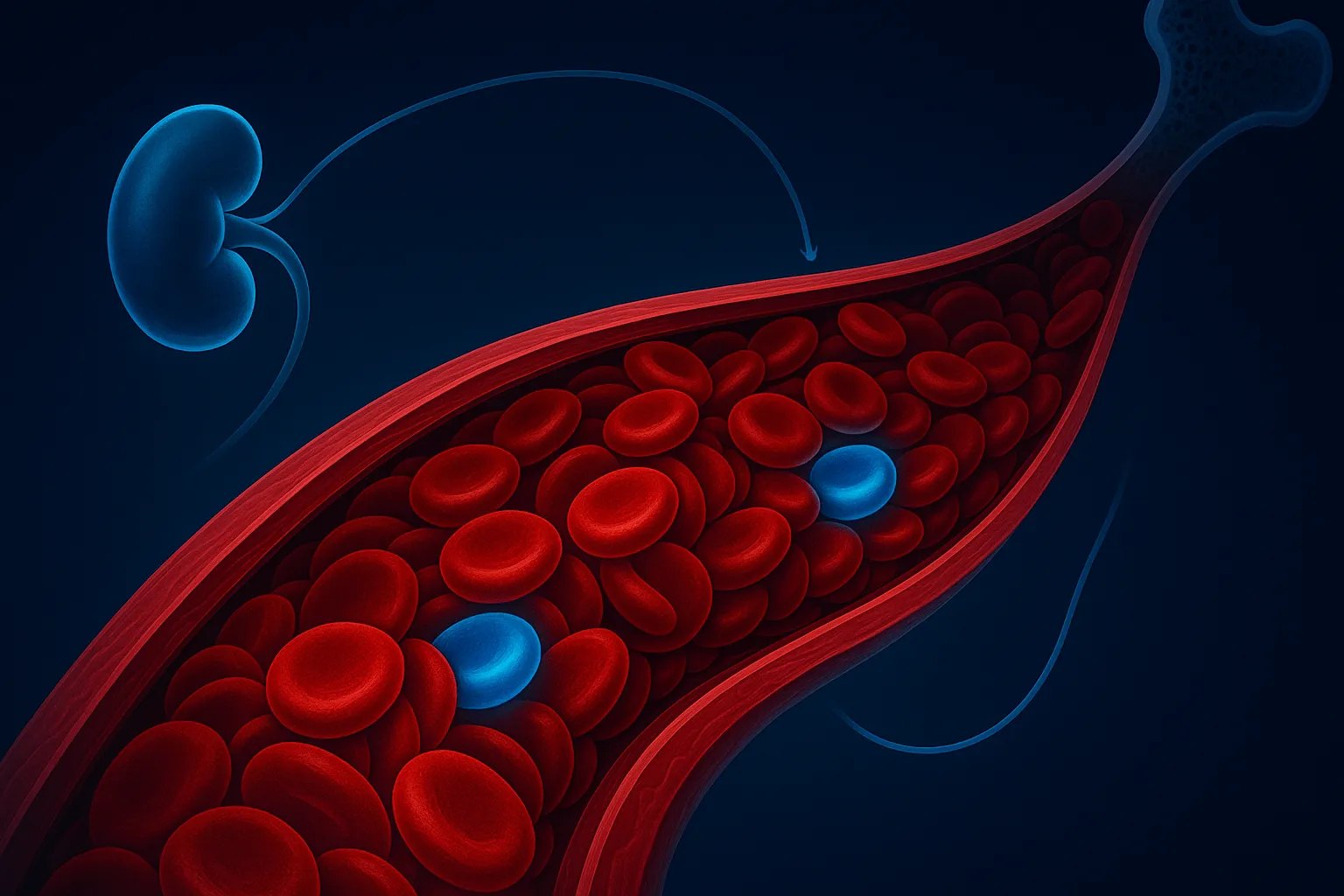
Your bloodwork comes back and hematocrit is creeping up. Maybe it was 45% before TRT, and now it's sitting at 51%. Or 53%. Your doctor mentions polycythemia and suddenly you're wondering if testosterone therapy is giving you dangerously thick blood.
This is the single most common lab abnormality on TRT. Men receiving testosterone therapy have a 3x greater risk of developing erythrocytosis compared to untreated men. But here's what most providers don't explain well: not all hematocrit elevation is equally dangerous, and the management options extend far beyond "stop TRT or donate blood."
Key Takeaways
- Elevated hematocrit is the most common side effect of TRT, affecting up to 20% of men on injectable testosterone
- Testosterone raises hematocrit by stimulating EPO production and suppressing hepcidin, establishing a new red blood cell set point
- The clinical concern threshold is hematocrit above 54% -- below that, most elevation is benign
- Four management strategies exist before discontinuing TRT: phlebotomy, dose reduction, increased injection frequency, and adjunct supplements
- Monitoring every 3-6 months is essential for the first 1-2 years of therapy
What Is Erythrocytosis and Why Does TRT Cause It?
First, terminology. You'll see two terms used interchangeably, but they mean different things:
Polycythemia vera is a bone marrow cancer where your body produces excess red blood cells independent of any external stimulus. This is a hematologic malignancy diagnosed via JAK2 mutation testing. This is not what TRT causes.
Secondary erythrocytosis is an increase in red blood cell production driven by an identifiable external cause -- in this case, exogenous testosterone. This is what happens on TRT. It's a predictable pharmacologic response, not a disease.
The distinction matters because the risk profile is completely different. Polycythemia vera carries significant morbidity. Secondary erythrocytosis from TRT, while it needs monitoring, is far more manageable and carries less inherent risk at the same hematocrit levels.
The Mechanism: EPO, Hepcidin, and a New Set Point
Testosterone stimulates red blood cell production through two parallel pathways:
EPO stimulation: Testosterone directly increases erythropoietin (EPO) production in the kidneys. EPO is the primary hormone that tells your bone marrow to produce more red blood cells. Within 1-3 months of starting TRT, EPO levels rise significantly. Research by Bachman et al. demonstrated that testosterone administration increased EPO levels while simultaneously suppressing hepcidin and ferritin -- a coordinated response that ramps up red blood cell production from both the demand side (more EPO) and the supply side (more available iron).
Hepcidin suppression: Hepcidin is the master regulator of iron metabolism. It controls how much iron is absorbed from your gut and released from storage. Testosterone suppresses hepcidin, making more iron available for hemoglobin synthesis. More iron + more EPO = more red blood cells.
The key insight from the research: EPO levels spike early (months 1-3) then return toward baseline, while the elevated hematocrit persists. This means testosterone establishes a new EPO/hemoglobin set point -- your body recalibrates what it considers "normal" to a higher level. This isn't a runaway process. It stabilizes.
Who Is Most at Risk?
Not every man on TRT develops problematic hematocrit elevation. Risk factors include:
- Higher testosterone doses: More testosterone = more EPO stimulation = more red blood cells
- Injectable testosterone: Injections produce supraphysiologic peaks that drive erythropoiesis more aggressively than gels or patches
- Infrequent injections: Biweekly injections create larger peaks than weekly or every-other-day protocols
- Older age: Men over 60 have higher baseline erythrocytosis risk
- Obesity: Higher BMI is associated with greater hematocrit response to testosterone
- Obstructive sleep apnea: Chronic hypoxia already stimulates EPO; adding testosterone compounds the effect
- Smoking: Smokers start with higher baselines and have less room before hitting concerning thresholds
- Living at high altitude: Chronic hypoxia elevates baseline hematocrit

The Numbers: When Is Hematocrit Actually Dangerous?
This is where nuance matters. The Endocrine Society's 2018 clinical practice guideline recommends checking hematocrit at baseline, 3-6 months after starting therapy, and then annually. They advise against initiating TRT in men with baseline hematocrit above 50% and recommend dose reduction or discontinuation if hematocrit exceeds 54%.
But here's what the guidelines don't adequately address: the 54% threshold is somewhat arbitrary. It was extrapolated from polycythemia vera data, not from studies specifically examining secondary erythrocytosis in men on TRT.
Hematocrit Ranges and Clinical Significance
| Hematocrit | Assessment | Action |
|---|---|---|
| Below 42% | Low for a man on TRT | Investigate -- possible iron deficiency, GI bleeding, or underdosing |
| 42-48% | Normal range | No intervention needed |
| 48-50% | Upper normal | Monitor. Increase frequency of labs to every 3 months |
| 50-52% | Mildly elevated | Common on TRT. Implement preventive strategies. Monitor symptoms |
| 52-54% | Moderately elevated | Active management warranted. Adjust protocol |
| Above 54% | Clinical concern | Intervene promptly. Phlebotomy + protocol adjustment |
| Above 58% | Urgent | Medical attention needed. Discontinue TRT until normalized |
Why the Absolute Number Isn't Everything
A man whose hematocrit was 47% before TRT and rises to 52% has had a 5-point increase -- meaningful but not alarming. A man whose baseline was 50% (already elevated, possibly from sleep apnea or smoking) and rises to 55% is in a different risk category entirely.
The rate of rise also matters. A gradual climb over 12 months is different from a rapid spike over 6 weeks. Rapid increases suggest the testosterone dose is too high or there's a compounding factor (like starting TRT while having undiagnosed sleep apnea).
What Actually Goes Wrong at High Hematocrit
The concern with elevated hematocrit is blood viscosity. As the proportion of red blood cells increases, blood becomes thicker and flows less easily. This increases:
- Thrombotic risk: Thicker blood is more prone to clotting. Deep vein thrombosis (DVT), pulmonary embolism (PE), and stroke risk all increase. A large database study found that men who developed polycythemia on testosterone therapy had a 5.15% rate of major adverse cardiovascular events and venous thromboembolism, compared to 3.87% in men with normal hematocrit.
- Blood pressure: Increased viscosity raises peripheral vascular resistance, which can elevate blood pressure.
- Headaches and visual changes: Hyperviscosity can cause headaches, dizziness, blurred vision, and a flushed appearance.
Symptoms to Watch For
Many men with hematocrit in the low 50s are completely asymptomatic. But if you experience any of the following, get labs drawn promptly:
- Persistent headaches, especially upon waking
- Facial flushing or redness that doesn't resolve
- Blurred or double vision
- Dizziness or lightheadedness
- Numbness or tingling in extremities
- Unusual fatigue despite adequate testosterone levels
- Shortness of breath with minimal exertion
Four Management Strategies (Before Stopping TRT)
Discontinuing TRT is the nuclear option. For most men with moderately elevated hematocrit, there are effective strategies to bring levels down while maintaining therapy. Here they are in order of typical implementation.
Strategy 1: Therapeutic Phlebotomy (Blood Donation)
The fastest and most direct intervention. Removing blood physically reduces the number of circulating red blood cells.
How it works: A standard blood donation removes approximately 470mL of whole blood. This can lower hematocrit by roughly 3 percentage points. The effect is immediate but temporary -- your body will regenerate those red blood cells over 4-8 weeks.
Practical options:
- Red Cross or blood bank donation: Free, helps others, but you can only donate every 56 days and they may reject you if hematocrit is above 54% (for donor safety, ironically)
- Therapeutic phlebotomy: Ordered by your doctor, performed at a lab or infusion center. More flexible timing. Covered by insurance in many cases when medically indicated. The removed blood is typically discarded
- Double red cell donation: Removes more red blood cells while returning plasma. More effective per session but has longer recovery requirements
Frequency: Most men with hematocrit issues on TRT need phlebotomy every 8-12 weeks. Some can stretch to quarterly once their protocol is optimized. If you need phlebotomy more often than every 6 weeks, your TRT protocol needs adjustment.
The iron depletion problem: Frequent phlebotomy depletes iron stores over time. This can cause fatigue, brain fog, and restless legs -- symptoms that mimic low testosterone. Check ferritin regularly if you're doing repeated phlebotomies. Some men end up iron-deficient while still having elevated hematocrit, which is a frustrating combination that requires careful management.
Strategy 2: Dose Reduction
The relationship between testosterone dose and hematocrit is dose-dependent. Higher doses produce higher peaks, which drive more erythropoiesis. Reducing your dose is often the most sustainable long-term fix.
How to approach it:
- Drop by 10-20% initially (e.g., 150mg/week to 120-130mg/week)
- Recheck labs in 6-8 weeks
- Ensure testosterone levels remain in your target range
- Many men find their sweet spot is a lower dose than they initially thought they needed
The goal is to find the minimum effective dose -- the lowest testosterone dose that resolves your hypogonadal symptoms while keeping hematocrit manageable. For many men, 100-120mg/week achieves this better than 150-200mg/week.
Strategy 3: Increase Injection Frequency
Peak testosterone levels, not average levels, appear to be the primary driver of erythrocytosis. Research comparing 100mg weekly injections to 200mg biweekly injections (same total dose) found that weekly injections produced significantly less hematocrit elevation.
The logic is straightforward: splitting the same weekly dose into more frequent, smaller injections blunts the peaks.
Practical frequency ladder:
| Frequency | Dose Example | Peak Reduction |
|---|---|---|
| Once weekly | 140mg every 7 days | Baseline comparison |
| Twice weekly | 70mg every 3.5 days | Moderate peak reduction |
| Every other day | 40mg EOD | Significant peak reduction |
| Daily (subcutaneous) | 20mg daily | Maximum peak reduction |
If you're injecting once weekly and hematocrit is creeping up, switching to twice weekly or EOD is often enough to bring it down 1-3 points without changing your total dose. See our detailed guide on injection frequency protocols for the full comparison.
Subcutaneous injection also produces lower peaks and more gradual absorption compared to intramuscular injection, which may further moderate the hematocrit response.
Strategy 4: Naringin and Grapefruit
This one surprises most providers, but there's actual research behind it. A controlled study demonstrated that daily grapefruit consumption significantly lowered hematocrit in human subjects (p < 0.01). The active compound is naringin, a flavonoid concentrated in grapefruit.
The proposed mechanism: Naringin appears to increase red blood cell aggregation, effectively accelerating the removal of older red blood cells from circulation. It may also have mild effects on EPO signaling, though this is less established.
How to use it:
- Whole grapefruit: Half a grapefruit daily, or 8oz of grapefruit juice
- Naringin supplement: 500-1000mg daily (standardized extract)
Important caveat: Grapefruit and naringin interact with numerous medications by inhibiting CYP3A4 enzymes. If you take statins, calcium channel blockers, certain anti-anxiety medications, or other CYP3A4-metabolized drugs, consult your prescriber before adding grapefruit. Testosterone itself is not significantly affected by this interaction.
Realistic expectations: Naringin is a mild intervention. It may lower hematocrit by 1-2 points. It's best used as an adjunct to other strategies, not as a standalone fix for significantly elevated hematocrit.
Combining Strategies
Most men with persistent hematocrit issues benefit from a combined approach:
- Increase injection frequency (reduces peaks)
- Modest dose reduction if tolerated (reduces overall stimulus)
- Add naringin/grapefruit daily (mild ongoing support)
- Phlebotomy as needed for acute correction
This combination often eliminates the need for regular phlebotomy within 3-6 months.