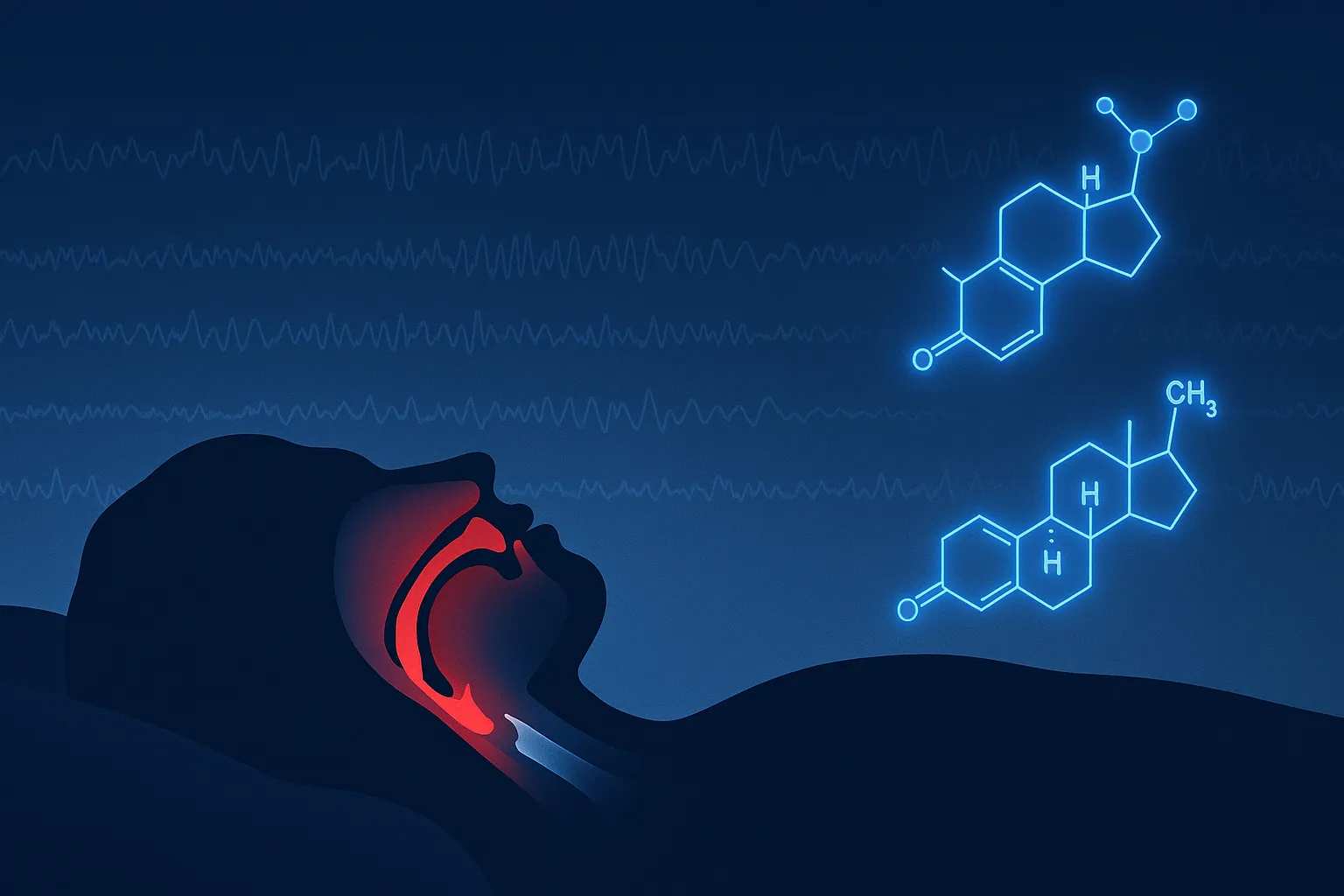
Sleep apnea is listed as a relative contraindication to testosterone replacement therapy in nearly every clinical guideline. If you have been told you cannot start TRT because of sleep apnea -- or that TRT caused your snoring to worsen -- the reality is more nuanced than that binary framing suggests.
The relationship between testosterone and sleep is bidirectional. Low testosterone wrecks sleep quality. Poor sleep tanks testosterone levels. And while TRT can mildly worsen sleep-disordered breathing in some men, the effect appears time-limited and manageable rather than absolute.
This article breaks down what the evidence actually says, who faces real risk, and how to monitor sleep on TRT so you get the benefits without the problems.
Key Takeaways
TRT does not cause sleep apnea from scratch. It may transiently worsen existing sleep-disordered breathing, particularly at supraphysiologic doses.
The worsening effect appears time-limited: studies show it peaks around 7 weeks and resolves by 18 weeks.
Men with obesity, large neck circumference, or untreated severe OSA face the highest risk.
Screening with a sleep questionnaire before starting TRT is standard of care. A formal sleep study is warranted if risk factors are present.
For most hypogonadal men, TRT significantly improves sleep quality, energy, and mood -- benefits that often outweigh the small apnea risk.
CPAP and TRT work well together. Sleep apnea is not an absolute contraindication to testosterone therapy.
The Evidence: Does TRT Actually Cause Sleep Apnea?
The concern traces back to a 1978 case report describing worsened nighttime breathing pauses in a patient receiving testosterone. From that single observation, TRT-and-sleep-apnea became a clinical talking point that persists in guidelines today.
But the total evidence base is thin. A 2021 review in the Journal of Sexual Medicine examined the accumulated literature and concluded that TRT "likely plays a small role in exacerbating or inducing changes in OSA that may be time limited in nature" (PMID: 32636155). The number of patients in published case reports is tiny relative to the millions of men treated with TRT.
What the Randomized Data Shows
The strongest direct evidence comes from a randomized placebo-controlled trial by Hoyos et al. (2012) in obese men with severe obstructive sleep apnea. This study found that testosterone therapy mildly worsened the oxygen desaturation index (a measure of sleep-disordered breathing) at 7 weeks -- but the effect was no longer statistically significant by 18 weeks (PMID: 22512435).
This is a critical finding. The worsening was:
Mild -- not a dramatic escalation of apnea severity
Time-limited -- it resolved even with continued testosterone use
In severe OSA patients -- men who already had significant sleep-disordered breathing
For men without pre-existing OSA, the evidence for TRT triggering new-onset sleep apnea is even weaker.
The Dose Factor
A 2023 review in Frontiers in Reproductive Health identified an important distinction: short-term high-dose testosterone appears more likely to worsen OSA, while long-term physiologic-dose replacement may actually improve symptoms (PMID: 37881222).
This aligns with clinical experience. Men on well-managed TRT protocols -- aiming for mid-to-high-normal testosterone levels rather than supraphysiologic peaks -- rarely report significant sleep-disordered breathing changes.
How Testosterone Affects the Upper Airway
Understanding the proposed mechanisms helps explain why the risk is real but limited.
Neuromuscular Changes
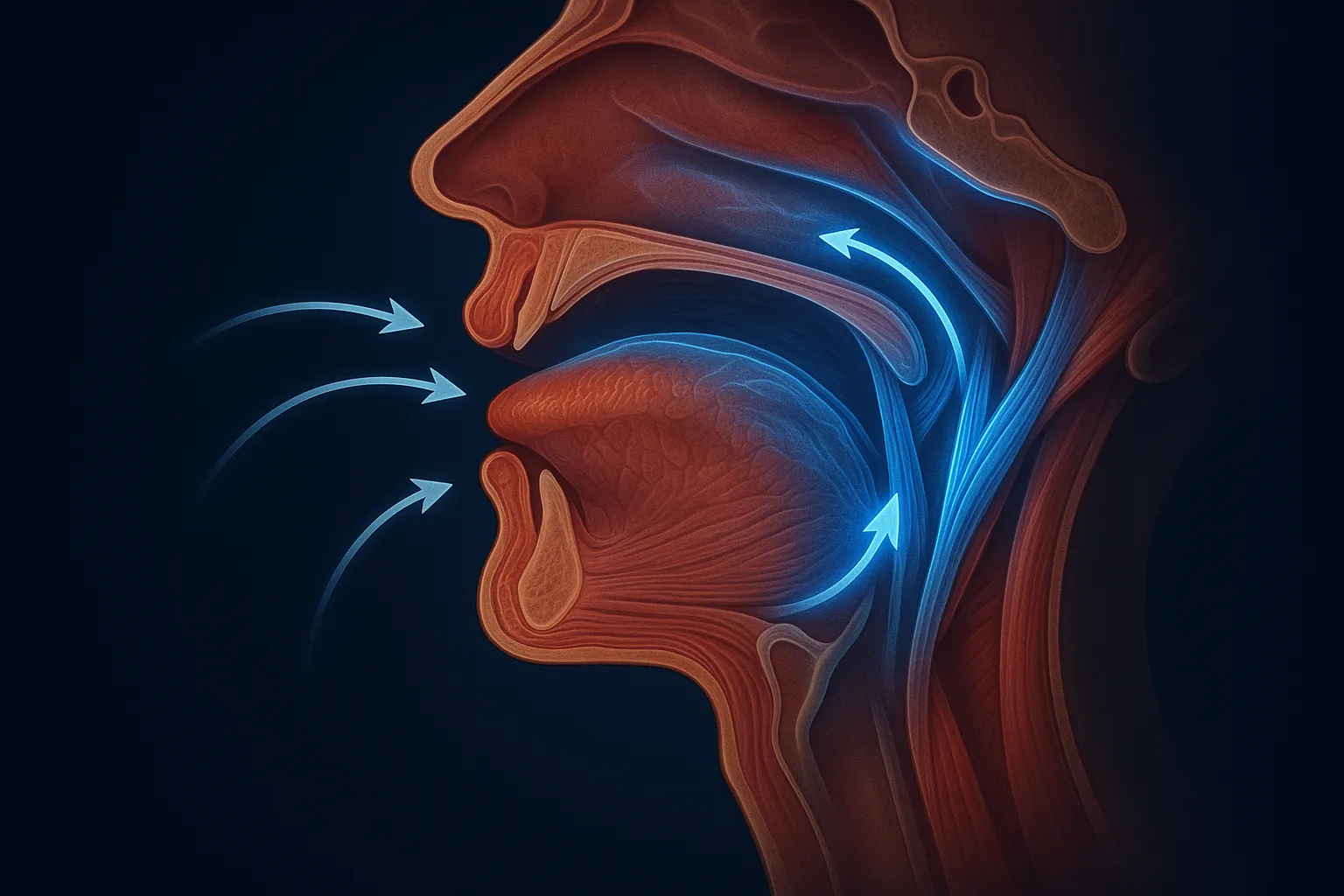
Testosterone may alter the tone and function of upper airway dilator muscles, particularly the genioglossus (the main muscle that keeps your tongue from falling backward during sleep). If these muscles relax more during sleep, the airway narrows and obstruction becomes more likely.
However, this effect is dose-dependent. At physiologic levels, the neuromuscular changes are minimal. At supraphysiologic levels -- the doses used in some older studies -- the effect is more pronounced.
Altered Ventilatory Drive
Testosterone influences the body's response to rising CO2 levels during sleep (hypercapnic ventilatory response). Higher testosterone may blunt this response slightly, meaning the brain is slower to trigger a corrective breath when CO2 builds up during an apneic event.
Again, this effect is most relevant at high doses and in men who already have compromised respiratory mechanics.
Body Composition Effects
This one works in TRT's favor. Testosterone reduces visceral fat and overall body fat while increasing lean mass. Since obesity is the single strongest risk factor for OSA, the body composition improvements from TRT may actually reduce sleep apnea risk over the long term.
A meta-analysis of 18 studies found that OSA severity is inversely correlated with serum testosterone -- meaning lower testosterone is associated with worse sleep apnea, largely mediated through the obesity pathway (PMID: 34536053).
Who Is at Higher Risk?
Not every man on TRT faces meaningful sleep apnea risk. The following factors increase your vulnerability:
High-Risk Profile
Obesity (BMI > 30): Fat deposits around the neck and upper airway narrow the breathing passage. Obese men are already 3-5x more likely to have OSA regardless of testosterone status.
Neck circumference > 17 inches: A direct measure of upper airway tissue mass. Larger necks mean less airway clearance during sleep.
Existing untreated OSA: If you already have moderate-to-severe sleep apnea and are not using CPAP, adding TRT carries the highest relative risk.
Age > 50: Airway muscle tone naturally declines with age, compounding any testosterone-related effects.
Supraphysiologic dosing: Men running testosterone at bodybuilding levels (500+ mg/week) face substantially more risk than those on therapeutic replacement (100-200 mg/week).
Lower-Risk Profile
Normal BMI
Neck circumference < 16 inches
No history of snoring or witnessed apneas
Physiologic testosterone dosing
No structural airway abnormalities
If you fall entirely in the lower-risk category, sleep apnea is unlikely to be a meaningful concern on standard TRT.
Screening Before Starting TRT
Every reputable TRT clinic should screen for sleep apnea risk before prescribing testosterone. This does not mean every patient needs a sleep study -- but every patient needs a risk assessment.
STOP-BANG Questionnaire
The STOP-BANG is the most widely used screening tool. It asks eight yes/no questions:
Factor
Question
Snoring
Do you snore loudly?
Tired
Do you feel tired or sleepy during the day?
Observed
Has anyone observed you stop breathing during sleep?
Pressure
Do you have or are you being treated for high blood pressure?
A score of 5 or higher warrants a formal sleep study (polysomnography or home sleep test) before starting TRT. A score of 3-4 in a symptomatic patient (daytime sleepiness, partner reports apneas) should also prompt further evaluation.
What a Good Clinic Does
Administers STOP-BANG or equivalent at intake
Orders a sleep study for high-risk patients before prescribing
Discusses sleep apnea management options if OSA is found
Does NOT refuse TRT solely because of mild-to-moderate sleep apnea -- instead coordinates treatment
If your clinic refuses to prescribe TRT because you snore, that is an oversimplification of the evidence. If they refuse because you have severe untreated OSA and will not use CPAP, that is a reasonable clinical decision.
Any of these should prompt a conversation with your provider and likely a sleep study. They do not automatically mean TRT must stop.
Timeline Awareness
Based on the Hoyos trial data, if TRT is going to worsen sleep-disordered breathing, the effect peaks around 7 weeks and tends to resolve by 18 weeks. This means:
Weeks 1-4: Baseline period. Most men notice improved sleep from resolving hypogonadism symptoms.
Weeks 5-10: The risk window. Pay closest attention to snoring, daytime sleepiness, and oxygen saturation during this period.
Weeks 12-18: If mild worsening occurred, it typically normalizes by this point.
Month 6+: Long-term adaptation. Body composition improvements from TRT (less fat, more muscle) begin to reduce structural OSA risk factors.
TRT's Positive Effects on Sleep Quality
Here is the part that gets lost in the sleep apnea discussion: for most hypogonadal men, TRT dramatically improves sleep.
A study examining hypogonadal men without OSA found that testosterone replacement therapy significantly improved sleep quality, along with quality of life and sexual function, over 12 months (PMID: 28920756). Sleep disturbance was itself identified as a clinical sign of severe hypogonadism.
The bidirectional relationship is well-established. A 2014 review in the Asian Journal of Andrology found that low testosterone disrupts sleep architecture and that replacement doses improve sleep quality -- while only supraphysiologic doses are associated with sleep abnormalities (PMID: 24435056).
NHANES data from over 2,000 US men showed that each hour of sleep lost was associated with a 5.85 ng/dL decrease in serum testosterone (PMID: 30225799). Poor sleep causes low T, and low T causes poor sleep -- creating a vicious cycle that TRT can break.
How TRT Improves Sleep
Reduced nighttime cortisol: Testosterone has a suppressive effect on cortisol. Hypogonadal men often have elevated nighttime cortisol, causing frequent awakenings and light, non-restorative sleep. Restoring testosterone normalizes the cortisol rhythm.
Improved mood and anxiety: Anxiety and depression are major drivers of insomnia and sleep fragmentation. TRT's well-documented effects on mood and energy often translate directly to better sleep.
Reduced nocturia: Low testosterone is associated with increased nighttime urination. TRT can reduce nocturia frequency, meaning fewer interruptions.
Better body composition: Over months, TRT-driven fat loss -- particularly visceral and neck fat -- reduces the mechanical factors that contribute to airway obstruction.
Managing Sleep Apnea While on TRT
Having sleep apnea does not mean you cannot use TRT. It means you need to treat both conditions simultaneously.
CPAP and TRT Together
CPAP (continuous positive airway pressure) remains the gold standard for OSA treatment. It works by splinting the airway open with pressurized air, preventing collapse regardless of what testosterone is doing to muscle tone.
Men who use CPAP and TRT together often report the best outcomes: the CPAP handles the airway obstruction while TRT resolves the hypogonadism symptoms that were wrecking their energy, mood, and body composition.
A review of TRT in the context of OSA concluded that testosterone should not be categorically avoided in men with OSA, but rather used cautiously alongside appropriate sleep apnea treatment (PMID: 29774669).
Oral Appliances
For men with mild-to-moderate OSA who cannot tolerate CPAP, mandibular advancement devices (oral appliances) are an alternative. These pull the lower jaw forward, opening the airway. They are less effective than CPAP for severe OSA but may be sufficient for the mild worsening that TRT might cause.
Weight Loss
This is where TRT actually helps rather than hurts. Because TRT promotes fat loss and muscle gain, it addresses the root cause of OSA in many men. A comprehensive review noted that weight loss "predictably and linearly increases testosterone in proportion to weight loss" -- and the reverse is also true: TRT-driven weight loss reduces OSA severity (PMID: 24435056).
The long game favors TRT. Men who lose 10-15% of body weight through the metabolic improvements of optimized testosterone often see meaningful reductions in AHI (apnea-hypopnea index) scores.
Positional Therapy
Some men have positional OSA -- their apnea is significantly worse when sleeping on their back. Simple interventions like a positional sleep trainer or even a tennis ball taped to the back of a sleep shirt can reduce apnea events by 50% or more without any equipment.
When Sleep Issues Mean Dose Adjustment
Not every sleep problem on TRT is sleep apnea. But when sleep quality deteriorates after starting or changing your TRT protocol, consider these adjustments:
Lower the Dose
If you are on a dose that puts your trough testosterone above 1000 ng/dL or your peak well into supraphysiologic territory, reducing to a physiologic range (600-900 ng/dL trough) may resolve sleep-disordered breathing. The evidence consistently shows that dose matters more than the testosterone itself.
Increase Injection Frequency
Large infrequent doses create high peaks followed by deep troughs. Those peaks are the moments when testosterone is most likely to affect airway dynamics. Switching from weekly to twice-weekly or every-other-day injections flattens the curve, reducing peak levels while maintaining the same average.
High estradiol can cause fluid retention, which worsens upper airway edema and congestion. If your sleep worsens and your estradiol is elevated (>50 pg/mL on standard assay), managing estradiol through injection frequency adjustment or other means may improve nighttime breathing.
Check Hematocrit
Elevated hematocrit (a common TRT side effect) increases blood viscosity. While this does not directly cause sleep apnea, it may worsen the cardiovascular consequences of existing sleep-disordered breathing. Keep hematocrit below 54% -- donate blood or adjust your protocol if it climbs above this threshold.
The Bottom Line
The clinical guideline warning about TRT and sleep apnea is not wrong -- but it is dramatically oversimplified. The evidence supports a more nuanced position:
TRT does not cause sleep apnea in men without it. There is no convincing evidence that physiologic testosterone replacement creates obstructive sleep apnea where none existed.
TRT may mildly and transiently worsen existing OSA. The effect is dose-dependent, peaks early, and often resolves by 4 months even with continued treatment.
Severe untreated OSA is a reasonable reason to delay TRT -- but only until CPAP or another treatment is in place. It is not a permanent contraindication.
For most hypogonadal men, TRT improves sleep quality through better mood, lower cortisol, reduced nocturia, and improved body composition.
CPAP and TRT work together. The combination addresses both conditions without compromise.
Screen before starting. Monitor during the first 3-6 months. Treat sleep apnea if it is present. But do not let an oversimplified guideline keep you from treating documented hypogonadism.
If you are looking for a provider who understands how to manage TRT alongside sleep concerns, finding the right clinic makes all the difference. The best clinics screen proactively, monitor regularly, and adjust protocols rather than simply refusing treatment.
References
Payne K, et al. Obstructive sleep apnea and testosterone therapy. J Sex Med. 2021;9:296-303. PMID: 32636155
Hoyos CM, et al. Effects of testosterone therapy on sleep and breathing in obese men with severe obstructive sleep apnoea: a randomized placebo-controlled trial. Clin Endocrinol. 2012;77(4):599-607. PMID: 22512435
Santi D, et al. The complex relation between obstructive sleep apnoea syndrome, hypogonadism and testosterone replacement therapy. Front Reprod Health. 2023;5:1236141. PMID: 37881222
Su L, et al. Association between obstructive sleep apnea and male serum testosterone: a systematic review and meta-analysis. Andrology. 2022;10(2):223-231. PMID: 34536053
Shigehara K, et al. Sleep disturbance as a clinical sign for severe hypogonadism: efficacy of testosterone replacement therapy on sleep disturbance among hypogonadal men without obstructive sleep apnea. Aging Male. 2018;21(2):99-105. PMID: 28920756
Wittert G. The relationship between sleep disorders and testosterone in men. Asian J Androl. 2014;16(2):262-265. PMID: 24435056
Liu PY, et al. Obstructive sleep apnea and testosterone deficiency. Sleep Med Clin. 2018;13(2):233-243. PMID: 29774669
Patel P, et al. Impaired sleep is associated with low testosterone in US adult males: results from the National Health and Nutrition Examination Survey. World J Urol. 2019;37(7):1449-1453. PMID: 30225799
Frequently Asked Questions
Does TRT cause sleep apnea?
TRT does not directly cause sleep apnea. Evidence shows a possible mild, time-limited worsening of existing sleep-disordered breathing in some men, particularly at high doses. The risk is overstated in older guidelines.
Should I stop TRT if I develop sleep apnea?
Not necessarily. Most men can continue TRT while treating sleep apnea with CPAP. Dose adjustment may help. Discuss with your provider rather than stopping abruptly.
Does TRT improve sleep quality?
Yes, for many hypogonadal men. Restoring testosterone to normal levels improves sleep quality, reduces nighttime waking, and improves daytime energy. The sleep benefits of treating low T often outweigh the small apnea risk.