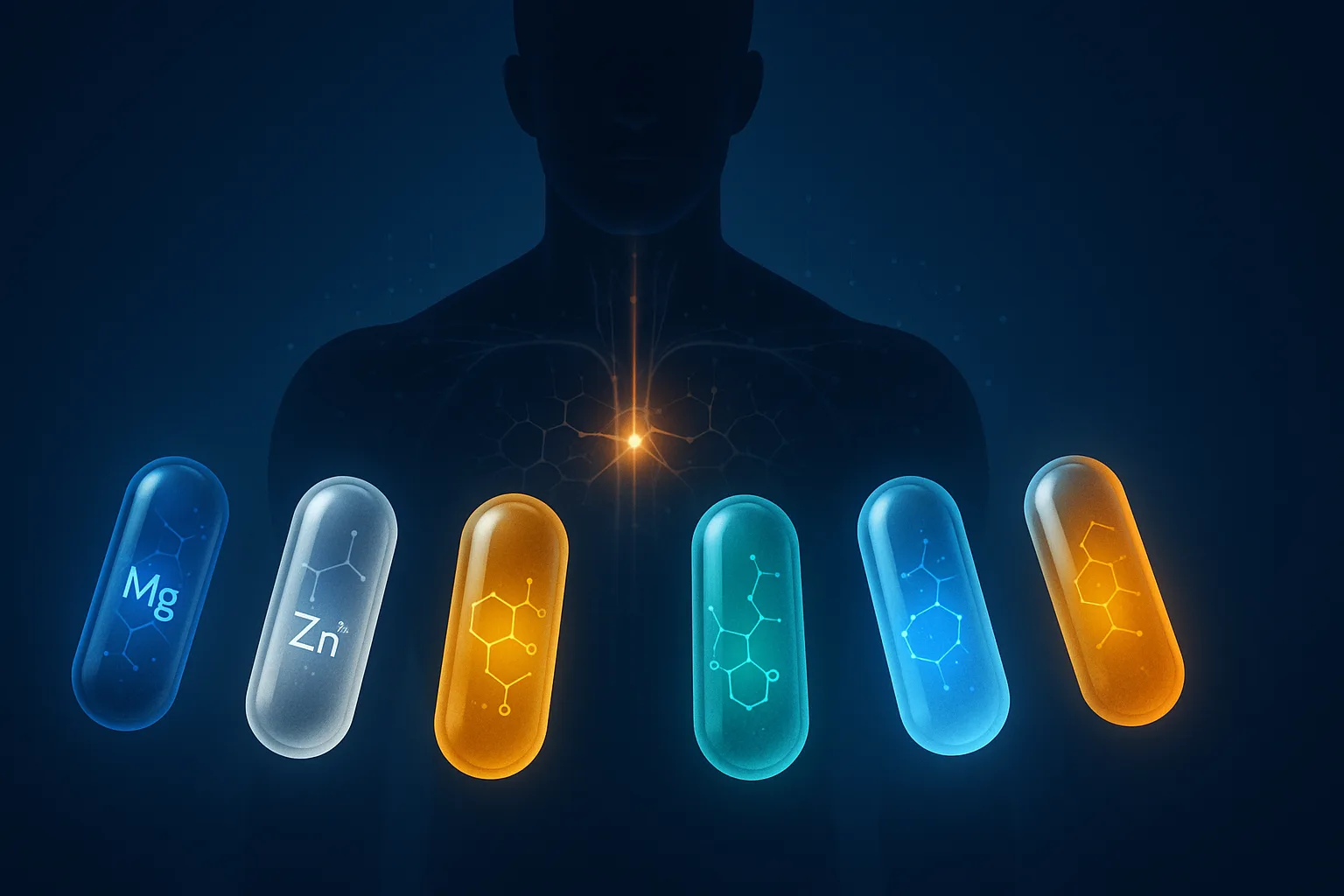
Key Takeaways: Most supplements marketed for testosterone are unnecessary noise. On TRT, you already have exogenous testosterone handling the heavy lifting. The supplements that actually matter are the ones that address the specific gaps TRT creates or exposes: magnesium for sleep and SHBG management, zinc for aromatase activity and immune function, vitamin D for testosterone receptor function, omega-3s for cardiovascular protection, creatine for training performance, and boron for free testosterone optimization. Six supplements. Evidence for each. Skip the rest.
TRT fixes your testosterone levels. It does not fix your nutrition. And the most common complaint men have 3 to 6 months into therapy -- "I feel better but not great" -- often traces back to nutritional gaps that blunt TRT's full effects.
This is not about stacking exotic compounds on top of your protocol. The peptide stack guide covers that territory. This is about the foundational supplements that clinical evidence supports for men on testosterone replacement therapy -- the ones that address real deficiencies, manage real side effects, and improve real outcomes.
Here is what the data actually supports, what to take, what to skip, and the dosing that matters.
The Big Six: Supplements With Evidence on TRT
These six supplements have clinical data supporting their use specifically in the context of testosterone replacement therapy. They are listed in order of practical impact for most men.
1. Magnesium (400 mg Glycinate, Before Bed)
Magnesium is the single most underrated supplement for men on TRT. An estimated 50% of Americans consume less than the recommended daily amount, and men on testosterone therapy may have even higher requirements due to increased metabolic demand from training [1].
Why it matters on TRT:
SHBG modulation. Magnesium binds to SHBG in a non-competitive manner, reducing SHBG's grip on testosterone and increasing the amount of biologically available free testosterone [2]. If your total testosterone looks good but free testosterone is low, magnesium status is worth investigating before adjusting your dose.
Sleep quality. Magnesium glycinate acts on GABA receptors, promoting deeper sleep. This matters because poor sleep on TRT is a common complaint, and growth hormone release during deep sleep is critical for the recovery benefits men expect from therapy.
Blood pressure support. TRT can modestly elevate blood pressure in some men. Magnesium supplementation at 300 to 500 mg per day has been shown to reduce systolic blood pressure by 2 to 5 mmHg in multiple meta-analyses [1].
Form matters. Magnesium oxide is cheap but poorly absorbed (4% bioavailability). Magnesium glycinate or threonate are preferred. Take 400 mg before bed.
When to test: If you have muscle cramps, poor sleep, or borderline high blood pressure on TRT, ask your clinic to add RBC magnesium to your next bloodwork panel. Serum magnesium misses intracellular deficiency in most cases.
2. Zinc (15-30 mg Daily)
Zinc is directly involved in testosterone synthesis, and deficiency tanks testosterone levels regardless of whether you are on TRT. A systematic review of 38 papers found that zinc deficiency reduces testosterone and zinc supplementation restores it [3]. In one clinical trial, older men with marginal zinc deficiency who supplemented for six months nearly doubled their testosterone levels [3].
On TRT, zinc matters for different reasons:
Aromatase inhibition. Zinc acts as a mild natural aromatase inhibitor. For men who run borderline high estradiol but not high enough to justify prescription anastrozole, zinc supplementation can provide a gentle downward pressure on estrogen conversion.
Immune function. TRT can modulate immune response. Zinc supports immune cell function and is commonly depleted in men who train hard.
Prostate health. The prostate concentrates zinc at 10x the level of other soft tissues. Adequate zinc intake supports normal prostate cell function.
Dose: 15 to 30 mg daily with food. Do not exceed 40 mg long-term without monitoring copper levels -- zinc and copper compete for absorption, and chronic zinc supplementation can cause copper deficiency [3].
Vitamin D is a steroid hormone precursor, not just a vitamin. Virtually every cell in the body has vitamin D receptors, including Leydig cells -- the cells that produce testosterone [4].
The relationship between vitamin D and testosterone on TRT is nuanced. A 2019 randomized controlled trial found that vitamin D supplementation alone did not significantly raise testosterone in men with normal vitamin D levels [4]. But the relevant question for men on TRT is different: does vitamin D status affect how well your body uses the testosterone you are injecting?
The answer appears to be yes. A 2025 study published in Nutrients found that vitamin D status significantly determines the cardiometabolic effects of TRT in men with late-onset hypogonadism [5]. Men with adequate vitamin D levels experienced better metabolic outcomes from testosterone therapy than men who were deficient. Vitamin D is not boosting testosterone production (TRT already handles that) -- it is supporting the downstream pathways that testosterone activates.
Dose: 3,000 to 5,000 IU daily. The target blood level is 40 to 60 ng/mL. Most TRT clinics will include 25-OH vitamin D in your initial bloodwork. If yours is below 30 ng/mL, you are deficient and likely need the higher end of the range.
Take with fat. Vitamin D is fat-soluble. Take it with a meal containing dietary fat for optimal absorption.
4. Omega-3 Fish Oil (2-3g EPA/DHA Daily)
TRT increases erythropoiesis -- red blood cell production. This is why your clinic monitors hematocrit on every blood draw. Elevated hematocrit makes blood thicker and increases cardiovascular risk.
Omega-3 fatty acids help on multiple fronts:
Blood viscosity. Omega-3s reduce platelet aggregation, effectively thinning the blood. This directly counteracts the hematocrit elevation that TRT causes [6].
Inflammation. TRT amplifies training recovery, but intense training also generates systemic inflammation. EPA and DHA reduce CRP, IL-6, and other inflammatory markers [6].
Lipid profile. Some men see HDL decrease and triglycerides shift on TRT. Omega-3 supplementation at therapeutic doses improves the triglyceride-to-HDL ratio and supports overall cardiovascular health.
Dose: 2 to 3 grams of combined EPA and DHA daily (not total fish oil -- read the label for actual EPA/DHA content). Most standard fish oil capsules contain only 300 mg combined EPA/DHA per capsule, meaning you may need 6 to 10 capsules of a standard product. Concentrated formulas (700 to 1,000 mg per capsule) are more practical.
Quality matters. Third-party tested brands that verify mercury and oxidation levels are worth the premium. Rancid fish oil does more harm than good.
5. Creatine Monohydrate (5g Daily)
Creatine is the most researched sports supplement in existence, with over 500 peer-reviewed studies confirming its safety and efficacy. On TRT, it becomes even more valuable because testosterone increases protein synthesis rates, meaning your muscles can use more of the energy creatine provides [7].
What creatine does on TRT:
ATP regeneration. Creatine replenishes phosphocreatine stores, allowing faster recovery between sets and more total training volume. Since TRT increases your training capacity, creatine helps you actually use that capacity.
Cell hydration. Creatine draws water into muscle cells, supporting the anabolic environment that testosterone creates.
Cognitive function. Emerging evidence suggests creatine supports brain energy metabolism. Men on TRT who report improved mental clarity may see additional cognitive benefits from creatine supplementation [7].
The DHT concern is resolved. A 2009 study in rugby players suggested creatine might increase DHT (dihydrotestosterone), raising hair loss concerns. A 2025 randomized controlled trial directly tested this: 12 weeks of creatine at 5 grams per day produced no significant changes in DHT, total testosterone, free testosterone, or any hair growth parameters compared to placebo [8]. The concern was based on a single unreplicated study and can be considered resolved.
Dose: 5 grams of creatine monohydrate daily. No loading phase needed. Take it at any time -- consistency matters more than timing. Mix with water or a protein shake.
6. Boron (6-10 mg Daily)
Boron is a trace mineral that most men have never considered. But the data supporting its use on TRT is surprisingly strong.
A clinical study found that just 7 days of boron supplementation at 10 mg per day increased free testosterone by 28% and significantly reduced inflammatory markers (hsCRP) [9]. The mechanism appears to involve SHBG reduction -- boron decreases the protein that binds testosterone, making more of it biologically available.
You want to maximize free testosterone without increasing your dose
You are looking for additional anti-inflammatory support alongside training
Dose: 6 to 10 mg daily. Available as boron citrate or calcium fructoborate. Start at 6 mg and assess over 4 to 6 weeks.
Caution: Do not exceed 20 mg per day. The tolerable upper limit for boron is 20 mg, and high doses can cause gastrointestinal distress.
What to Skip: Supplements That Waste Money on TRT
Not everything marketed for testosterone is worth buying. Here is what to avoid:
Testosterone boosters (tribulus, fenugreek, tongkat ali): These supplements attempt to increase endogenous testosterone production. You are on TRT. Your endogenous production is already suppressed by exogenous testosterone. Paying for supplements that try to stimulate a pathway you have deliberately bypassed makes no sense.
High-dose DHEA: DHEA is a testosterone precursor. On TRT, your testosterone levels are already managed externally. DHEA supplementation can unpredictably increase estrogen levels and complicate your estradiol management. If your clinic prescribes DHEA for specific reasons, that is different from self-supplementing blindly.
DIM as an AI replacement: DIM (diindolylmethane) modestly supports estrogen metabolism, but it is not a substitute for anastrozole or protocol adjustments when estradiol is genuinely elevated. If you have gynecomastia symptoms or significant estrogen-related side effects, work with your clinic rather than hoping a broccoli extract will solve it.
Ashwagandha for testosterone: Multiple studies show ashwagandha can raise testosterone in men not on TRT. But the mechanism (reducing cortisol-mediated suppression of the HPT axis) is irrelevant when you are receiving exogenous testosterone. It may help with stress and sleep independently, but do not take it expecting testosterone benefits.
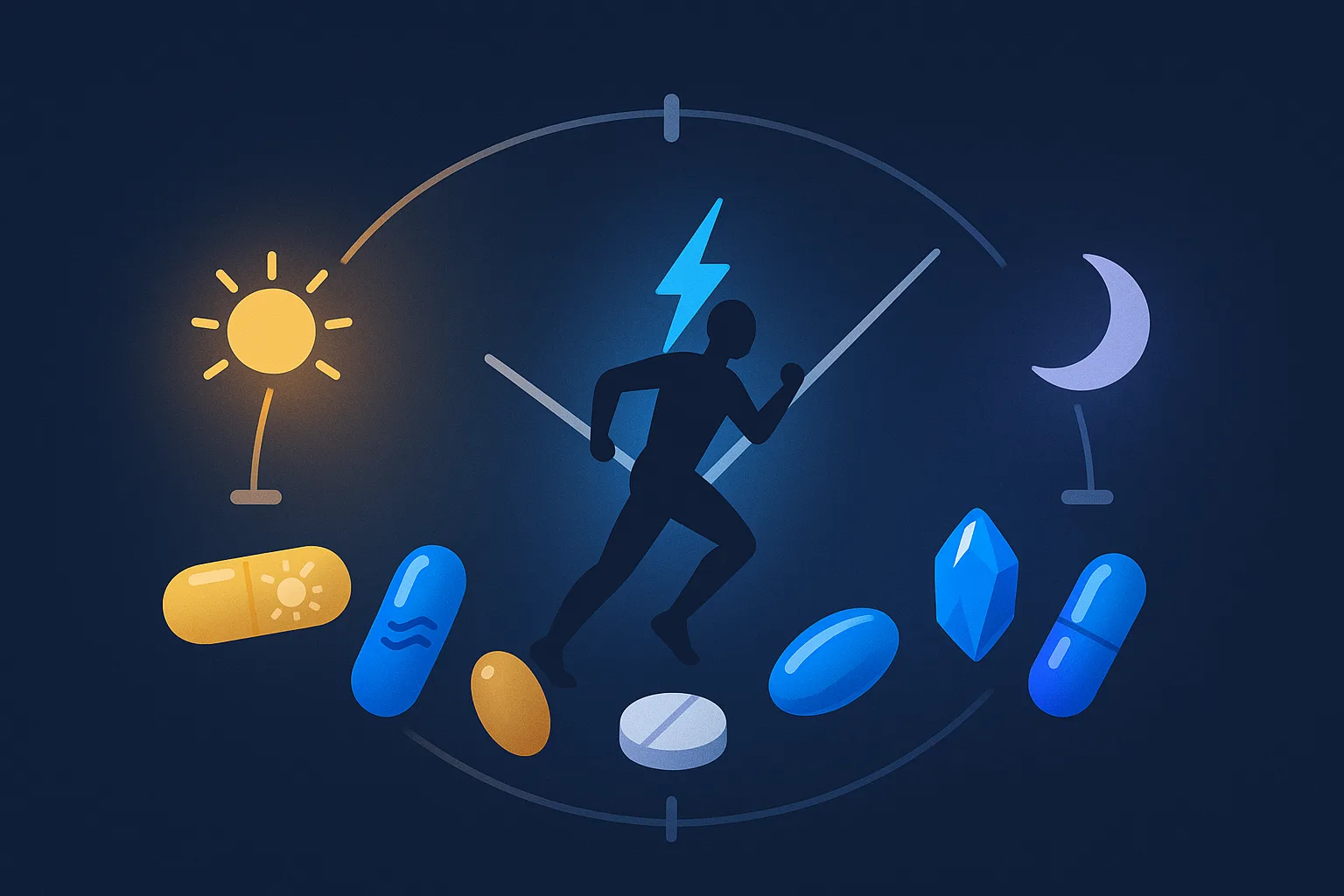
Timing and Stacking: The Daily Protocol
Here is how to organize these six supplements practically:
Morning (with breakfast):
Vitamin D3: 3,000 to 5,000 IU (with a fat-containing meal)
Omega-3 fish oil: 1 to 1.5 grams EPA/DHA (with food to reduce fishy aftertaste)
Boron: 6 to 10 mg
Zinc: 15 to 30 mg (with food to prevent nausea)
Post-training or anytime:
Creatine: 5 grams (with water or protein shake)
Before bed:
Magnesium glycinate: 400 mg
Omega-3 fish oil: 1 to 1.5 grams EPA/DHA (splitting the dose improves absorption)
Total daily cost at standard supplement prices: approximately $2 to $4 per day, or $60 to $120 per month. Comparable to or less than a single unnecessary "testosterone booster" product.
Monitor What Matters: Bloodwork Markers
Supplementation without monitoring is guessing. Ask your TRT clinic to include these markers at your next blood draw:
25-OH Vitamin D: Target 40 to 60 ng/mL
RBC Magnesium: More accurate than serum magnesium for detecting intracellular deficiency
Zinc (serum): Target 80 to 120 mcg/dL
Hematocrit: Monitor whether omega-3 supplementation helps keep hematocrit in range alongside TRT
Free testosterone and SHBG: Track whether magnesium and boron supplementation improve your free-to-total testosterone ratio over time
These markers complement the standard TRT bloodwork schedule your clinic already runs. Most clinics will add them to an existing panel for minimal additional cost.
The Bottom Line
TRT handles testosterone. Supplements handle everything around testosterone: the sleep that drives recovery, the minerals that keep SHBG in check, the fatty acids that protect your cardiovascular system, and the creatine that lets you train at the level your hormones now support.
Six supplements. All evidence-based. All addressing specific mechanisms relevant to men on testosterone therapy. Everything else is either redundant (testosterone boosters on TRT), unproven at meaningful doses (most herbal extracts), or better handled by your prescribing clinic (estrogen management, HCG for fertility).
Start with magnesium and zinc if you are adding one thing at a time. They address the most common deficiencies and produce noticeable improvements (sleep quality, recovery) within 2 to 4 weeks. Layer in the rest over the following month as your budget allows.
If you are not yet working with a TRT clinic that monitors these markers, the clinic comparison page evaluates providers on bloodwork comprehensiveness, monitoring frequency, and protocol flexibility -- all of which matter when optimizing your supplement stack alongside TRT.
References
Barbagallo M, Dominguez LJ. "Magnesium and type 2 diabetes." World Journal of Diabetes. 2015;6(10):1152-1157. PMC4549665
Excoffon L, et al. "Magnesium effect on testosterone-SHBG association studied by a novel molecular chromatography approach." Journal of Pharmaceutical and Biomedical Analysis. 2009;49(2):175-180. PMID: 19095394
Te L, et al. "Correlation between serum zinc and testosterone: A systematic review." Journal of Trace Elements in Medicine and Biology. 2023;76:127124.
Pilz S, et al. "Effect of vitamin D supplementation on testosterone levels in men." Hormone and Metabolic Research. 2011;43(3):223-225. PMID: 21154195
"Vitamin D Status Determines Cardiometabolic Effects of Testosterone Replacement Therapy in Men with Late-Onset Hypogonadism." Nutrients. 2025;17(6):1013.
Rontoyanni VG, et al. "Omega-3 Fatty Acids Improve Functionality of High-Density Lipoprotein." Nutrients. 2022;14(5):962. PMC8905646
Kreider RB, et al. "International Society of Sports Nutrition position stand: safety and efficacy of creatine supplementation." Journal of the International Society of Sports Nutrition. 2017;14:18.
Lak M, et al. "Does creatine cause hair loss? A 12-week randomized controlled trial." Journal of the International Society of Sports Nutrition. 2025;22(1):2495229. PMC12020143
Naghii MR, et al. "Comparative effects of daily and weekly boron supplementation on plasma steroid hormones and proinflammatory cytokines." Journal of Trace Elements in Medicine and Biology. 2011;25(1):54-58.
The six supplements with the strongest evidence for men on TRT are magnesium glycinate (400 mg before bed), zinc (15 to 30 mg daily), vitamin D3 (3,000 to 5,000 IU daily, adjusted by blood levels), omega-3 fish oil (2 to 3 grams combined EPA and DHA daily), creatine monohydrate (5 grams daily), and boron (6 to 10 mg daily). These address the most common deficiencies and side effects seen in men on testosterone replacement therapy: sleep disruption, elevated SHBG, cardiovascular strain, and suboptimal training recovery.
Does creatine affect DHT or cause hair loss on TRT?
A 2025 randomized controlled trial found no significant changes in DHT, total testosterone, free testosterone, or any hair growth parameters after 12 weeks of creatine supplementation at 5 grams per day compared to placebo. The concern originated from a single 2009 study in rugby players that has never been replicated. Creatine is safe to take on TRT.
Should I take an AI supplement like DIM instead of anastrozole?
DIM (diindolylmethane) and I3C (indole-3-carbinol) are not replacements for prescription aromatase inhibitors. They may modestly support estrogen metabolism through a different mechanism, but they lack the potency and clinical evidence to manage elevated estradiol on TRT. If your estradiol is high enough to cause symptoms, work with your clinic on protocol adjustments or prescription options rather than relying on supplements.
Can supplements replace TRT for low testosterone?
No. Supplements can address nutrient deficiencies that worsen testosterone production, but they cannot replace exogenous testosterone in men with clinically confirmed hypogonadism. If your total testosterone is consistently below 300 ng/dL with symptoms, TRT is the appropriate treatment. Supplements play a supporting role alongside TRT, not instead of it.
How long does it take for supplements to improve TRT results?
Most men notice improvements in sleep and recovery within 2 to 4 weeks of starting magnesium and zinc supplementation. Vitamin D levels take 8 to 12 weeks to reach steady state. Creatine saturates muscle stores in about 3 to 4 weeks at 5 grams daily. Full effects on bloodwork markers like SHBG, free testosterone, and hematocrit are typically visible at the next 8 to 12 week lab draw.