Key Takeaways: Progesterone and testosterone serve distinct but complementary roles in women's HRT. Progesterone protects the endometrium, improves sleep through GABA modulation, and supports muscle protein synthesis alongside testosterone. At standard HRT doses, micronized progesterone does not meaningfully suppress testosterone activity. Timing matters: progesterone at bedtime, testosterone in the morning. Both hormones are essential components of comprehensive menopausal hormone therapy.
Why Most HRT Protocols Are Incomplete
The standard approach to menopausal hormone therapy focuses on estradiol and, for women with a uterus, progesterone for endometrial protection. Testosterone gets added as an afterthought, if at all. This leaves women with incomplete symptom relief and a protocol that ignores how these hormones actually interact.
The reality: progesterone and testosterone are not just passengers alongside estradiol. They have independent effects on muscle, bone, brain, and sleep that estradiol cannot replicate. They also interact with each other through shared metabolic pathways, and understanding those interactions determines whether your HRT protocol works well or falls short.
The 2019 Global Consensus Position Statement endorsed testosterone therapy for postmenopausal women with hypoactive sexual desire disorder (HSDD). A subsequent systematic review and meta-analysis confirmed testosterone's safety and efficacy across multiple outcomes. But the consensus statement treated testosterone in isolation from progesterone, missing the clinical reality that most women on HRT take both.
Here is how progesterone and testosterone actually work together, where they compete, and how to optimize both.
The Hormone Landscape After Menopause
Menopause does not just crash estrogen levels. All three major sex hormones decline:
Estradiol drops by roughly 90% as ovarian follicles deplete
Progesterone falls to near-zero without ovulation (no corpus luteum, no progesterone)
Testosterone declines by approximately 50% between ages 20 and menopause, though adrenal production continues
The loss is not equal. Estradiol falls off a cliff. Progesterone disappears entirely. Testosterone declines gradually but persistently. Each hormone loss produces distinct symptoms:
Hormone
Primary Symptoms of Deficiency
Estradiol
Hot flashes, vaginal atrophy, bone loss, cognitive fog
Replacing only estradiol addresses the most acute symptoms but leaves significant gaps. Adding progesterone protects the uterus and improves sleep. Adding testosterone restores libido, energy, and body composition. The three together produce outcomes none can achieve alone.
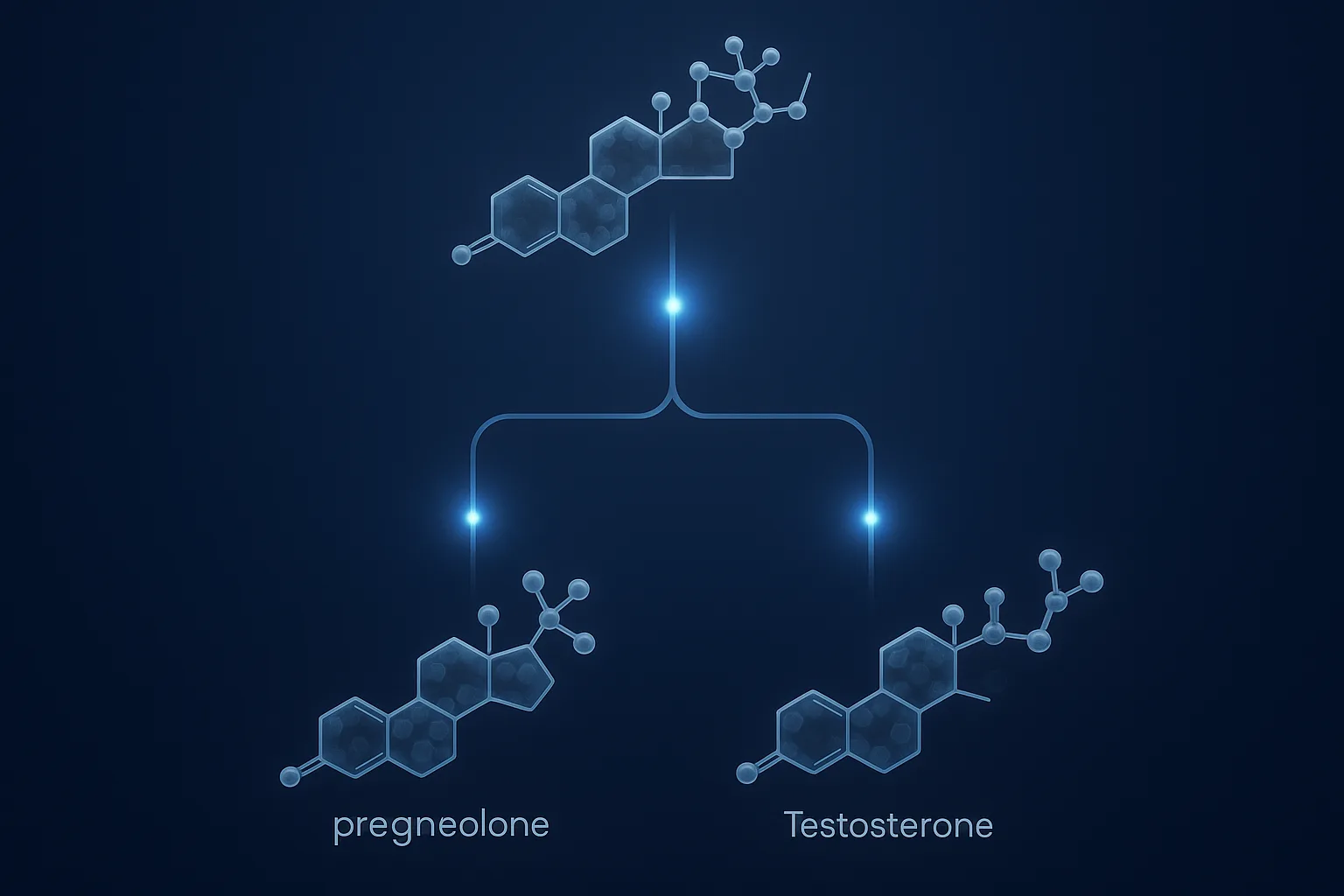
Progesterone and testosterone share enzymatic machinery. Both are metabolized by 5-alpha reductase and 3-alpha hydroxysteroid dehydrogenase. This creates two important dynamics:
Progesterone converts to allopregnanolone via 5-alpha reductase. Allopregnanolone is a potent positive allosteric modulator of GABA-A receptors, producing the calming, sleep-promoting effects that make bedtime dosing of oral micronized progesterone so effective.
Testosterone converts to dihydrotestosterone (DHT) via the same 5-alpha reductase enzyme. DHT is more androgenically potent than testosterone and drives effects on skin, hair follicles, and sebaceous glands.
In laboratory settings, progesterone can inhibit 5-alpha reductase activity at high concentrations, theoretically reducing DHT production. However, clinical data shows this effect is minimal at physiological HRT doses. A study examining endogenous progesterone levels in hirsute women found only minimal effects on circulating 5-alpha-reduced androgens.
The practical takeaway: at standard HRT doses of 100-200 mg oral micronized progesterone, there is no clinically meaningful suppression of testosterone or its metabolites.
Progesterone's Anti-Androgen Potential at High Doses
The relationship between progesterone and androgen activity is dose-dependent:
At physiological HRT doses (100-200 mg oral micronized): No significant anti-androgen effect. Research in women with PCOS showed that oral micronized progesterone (100 mg morning, 200 mg evening for 7 days) did not significantly alter circulating androgen levels.
At supraphysiological doses: Progesterone can suppress gonadotropin secretion (LH and FSH), which reduces ovarian androgen production. This mechanism is leveraged in some PCOS treatments but is not relevant to standard menopausal HRT dosing.
Synthetic progestins vs. micronized progesterone: The distinction matters enormously. Some synthetic progestins (cyproterone acetate, drospirenone, dienogest) have deliberate anti-androgenic properties built into their molecular structure. Micronized progesterone does not share these properties. If your provider prescribes a synthetic progestin and you are also taking testosterone, ask specifically about anti-androgenic effects.
This is one reason micronized progesterone is preferred over synthetic progestins in comprehensive HRT that includes testosterone. It does its job (endometrial protection, sleep, mood) without undermining testosterone's benefits.
Why You Need Both: The Independent Benefits
Progesterone Beyond Endometrial Protection
Progesterone in HRT is typically framed as a necessary safeguard for women with a uterus: it prevents estrogen-driven endometrial hyperplasia. That is its minimum role. Its actual contributions go further:
Sleep quality. Oral micronized progesterone converts to allopregnanolone, which modulates GABA-A receptors. A systematic review and meta-analysis of randomized controlled trials found that micronized progesterone improved multiple sleep parameters in postmenopausal women. Unlike synthetic sleep medications, progesterone restores physiological sleep architecture rather than simply sedating. Further research confirmed it prevents sleep disturbances while modulating growth hormone, TSH, and melatonin secretion.
Anxiety reduction. The anxiolytic effect of progesterone is mediated through allopregnanolone at GABA-A receptors, the same mechanism that makes benzodiazepines effective but through an endogenous pathway.
Muscle protein synthesis. This is the finding most people miss. A study in postmenopausal women demonstrated that both testosterone and progesterone increased muscle protein fractional synthesis rate by approximately 50%, while estradiol did not. Progesterone increased MyoD1 gene expression, a key regulator of muscle cell differentiation.
Breast safety. A systematic review found that estrogens combined with micronized progesterone do not increase breast cancer risk for up to 5 years of use, in contrast to synthetic progestins like medroxyprogesterone acetate.
Testosterone's Unique Contributions
Testosterone addresses symptoms that neither estradiol nor progesterone can:
Libido and sexual function -- the primary indication per the Global Consensus
Energy and motivation -- acts on dopaminergic pathways in the brain
Body composition -- maintains lean mass and metabolic rate
Bone density -- works through androgen receptors on osteoblasts, independent of estrogen's effects
Cognitive sharpness -- neuroprotective effects through both direct and aromatized pathways
Both progesterone and testosterone independently stimulate muscle protein synthesis. Both contribute to bone mineral density through different receptor pathways. Both improve mood, though by different mechanisms (progesterone via GABA modulation, testosterone via dopaminergic signaling).
This overlap is additive, not redundant. Women on both hormones tend to report better body composition outcomes than those on either alone.
Women's HRT — Menopause-First Telehealth
Bioidentical estradiol, progesterone, and low-dose testosterone — all 50 states, unlimited physician access.
A comprehensive menopausal HRT protocol addresses all three deficient hormones:
Hormone
Standard Dose Range
Route
Timing
Estradiol
0.5-2 mg/day (patch or gel)
Transdermal
Morning or per patch schedule
Progesterone
100-200 mg/day (micronized)
Oral
Bedtime
Testosterone
2.5-10 mg/day (cream)
Topical
Morning
This framework reflects current best practice at clinics specializing in women's HRT. For dose-specific guidance, see our testosterone dosage guide for women.
Why Timing Matters
The separation of progesterone (bedtime) and testosterone (morning) is not arbitrary:
Progesterone at bedtime: Oral micronized progesterone produces sedation through allopregnanolone conversion. Taking it in the morning causes drowsiness, brain fog, and impaired function. Bedtime dosing turns this side effect into a therapeutic benefit.
Testosterone in the morning: Natural testosterone peaks in the early morning hours. Applying testosterone cream in the morning mimics this circadian pattern, provides peak levels during active hours when energy and motivation matter most, and allows levels to taper by evening.
Estradiol is flexible: Transdermal estradiol (patch or gel) provides relatively steady levels throughout the day. Patches are changed once or twice weekly. Gels are applied daily, typically in the morning.
Cycling vs. Continuous Progesterone
Two approaches to progesterone dosing exist in menopausal HRT:
Continuous: 100 mg micronized progesterone every night. Simpler. Provides nightly sleep benefits. Preferred by most women more than 2 years past menopause.
Cyclical: 200 mg for 12-14 nights per month. May produce a monthly withdrawal bleed. Sometimes preferred in early menopause or perimenopause. Higher nightly dose may provide more robust endometrial protection.
Both approaches are compatible with daily testosterone therapy. The choice depends on where the woman is in her menopausal transition, bleeding preferences, and clinician judgment.
Monitoring the Combined Protocol
Blood work for women on all three hormones should include:
Baseline (before starting):
Total and free testosterone
Estradiol
Progesterone (if still cycling)
SHBG (sex hormone-binding globulin)
CBC, metabolic panel, lipids
Liver function tests
Follow-up at 6-8 weeks, then every 6-12 months:
Total and free testosterone (morning draw, before testosterone application)
Estradiol
SHBG
CBC and metabolic panel
Target ranges for women:
Marker
Target Range
Total testosterone
50-70 ng/dL
Free testosterone
Upper quartile of female reference range
Estradiol
50-200 pg/mL (varies by symptoms and delivery method)
SHBG
30-80 nmol/L
SHBG deserves special attention. Oral estrogen increases SHBG production, which binds more testosterone and reduces the free (active) fraction. This is why transdermal estradiol is preferred when testosterone is part of the protocol: it raises SHBG less, preserving more free testosterone.
Using Synthetic Progestins Instead of Micronized Progesterone
Medroxyprogesterone acetate (MPA) and other synthetic progestins are not interchangeable with micronized progesterone. MPA has glucocorticoid activity that can increase insulin resistance and visceral fat. It lacks the sleep and mood benefits of allopregnanolone conversion. And some synthetic progestins have anti-androgenic properties that directly counter testosterone therapy.
If you are on testosterone and your provider prescribes a synthetic progestin, ask why and whether micronized progesterone is an option.
Overdosing Testosterone
Women need roughly 1/10th to 1/20th the testosterone dose men use. Signs of excess testosterone include:
Acne, especially along the jawline
Increased facial or body hair
Oily skin
Irritability or agitation
Voice deepening
Clitoral enlargement
If androgenic side effects appear, the first step is reducing testosterone dose, not adding progesterone to counteract it. Using progesterone as an androgen blocker is pharmacologically inefficient at HRT doses and leads to unnecessarily high progesterone levels.
Ignoring the Estradiol Foundation
Testosterone and progesterone work best alongside adequate estradiol. Estradiol is the primary driver of vasomotor symptom relief, vaginal health, and bone protection. Starting testosterone without addressing estradiol deficiency often produces disappointing results, because many symptoms attributed to low testosterone are actually from low estrogen.
The sequence matters: establish estradiol first, add progesterone, then titrate testosterone based on residual symptoms and blood work.
Not Accounting for Oral Estrogen's Effect on SHBG
Women taking oral estrogen (pills) produce more SHBG in the liver due to first-pass metabolism. Higher SHBG binds more testosterone, reducing the bioavailable fraction. This means:
Testosterone blood levels may look adequate, but free testosterone is low
Higher testosterone doses may be needed, increasing side effect risk
The solution is often switching to transdermal estradiol rather than increasing testosterone
Who Benefits Most from Combined Therapy
Not every menopausal woman needs all three hormones. But several profiles consistently respond well to the combined approach:
Surgically menopausal women (oophorectomy). Immediate and dramatic loss of both ovarian estrogen and testosterone. These women typically have the most severe symptoms and the clearest benefit from comprehensive replacement.
Women with persistent symptoms on estrogen-progesterone alone. Fatigue, low libido, brain fog, and muscle loss that do not resolve with estradiol and progesterone often respond to testosterone addition.
Women with documented low testosterone levels. Total testosterone below 25 ng/dL with matching symptoms is a reasonable threshold for considering testosterone addition, per the Global Consensus recommendations.
Perimenopausal women with erratic hormone levels. The transition years often feature progesterone deficiency (anovulatory cycles) before estrogen drops. Adding progesterone first addresses sleep, mood, and cycle regularity. Testosterone may follow if symptoms persist.
Finding the Right Provider
Managing three hormones requires more expertise than prescribing estradiol alone. Look for a provider who:
Prescribes micronized progesterone (not synthetic progestins) as the default
Has experience with female testosterone therapy at physiological doses
Orders comprehensive labs including free testosterone and SHBG
Uses transdermal estradiol rather than oral as the starting approach
Adjusts based on both symptoms and blood work, not blood work alone
Many general practitioners are comfortable with estradiol-progesterone but less experienced with testosterone in women. A clinic specializing in women's hormone therapy can make a meaningful difference.
No. At standard HRT doses (100-200 mg oral micronized progesterone), there is no clinically significant suppression of testosterone or its active metabolites. The two hormones work through largely independent pathways. Synthetic progestins with anti-androgenic properties (cyproterone acetate, drospirenone) are a different story, but micronized progesterone does not share those effects.
What happens if progesterone dose is too high?
Excessive progesterone causes drowsiness, bloating, breast tenderness, and depressed mood. At very high doses, progesterone metabolites can theoretically compete with testosterone at 5-alpha reductase, but this requires doses well above the standard 100-200 mg HRT range. If you experience these symptoms, work with your provider to adjust the dose down.
Should women without a uterus take progesterone?
This is debated. The traditional rationale for progesterone is endometrial protection, which is irrelevant without a uterus. However, progesterone's benefits for sleep, mood, anxiety, and muscle protein synthesis exist independently of its endometrial effects. Many HRT-specialized clinicians now prescribe progesterone to hysterectomized women for these non-uterine benefits, though this remains off-consensus.
Can progesterone cream and testosterone cream be applied at the same time?
It is best to separate them. Apply testosterone cream in the morning and take oral micronized progesterone at bedtime. If using topical progesterone (less common in HRT), apply to a different skin site and at a different time than testosterone. This avoids any absorption interference and leverages the optimal timing for each hormone.
References
Davis SR, et al. Global Consensus Position Statement on the Use of Testosterone Therapy for Women. J Sex Med. 2019;16(9):1331-1337. PMID: 31488288
Islam RM, et al. Safety and efficacy of testosterone for women: a systematic review and meta-analysis of randomised controlled trial data. Lancet Diabetes Endocrinol. 2019;7(10):754-766. PMID: 31353194
Smith GI, et al. Testosterone and progesterone, but not estradiol, stimulate muscle protein synthesis in postmenopausal women. J Clin Endocrinol Metab. 2014;99(1):256-265. PMID: 24203065
Asi N, et al. The impact of micronized progesterone on breast cancer risk: a systematic review. Climacteric. 2016;19(2):111-122. PMID: 29384406
Caufriez A, et al. Progesterone prevents sleep disturbances and modulates GH, TSH, and melatonin secretion in postmenopausal women. J Clin Endocrinol Metab. 2011;96(4):E614-E623. PMID: 21289261
Bitran D, et al. Anxiolytic effect of progesterone is mediated by the neurosteroid allopregnanolone at brain GABAA receptors. J Neuroendocrinol. 1995;7(3):171-177. PMID: 7606242
Kolodziejczyk B, et al. Effect of oral micronized progesterone on androgen levels in women with polycystic ovary syndrome. Fertil Steril. 2002;77(6):1125-1127. PMID: 12057716
Caretto M, et al. Efficacy of micronized progesterone for sleep: a systematic review and meta-analysis of randomized controlled trial data. Menopause. 2021;28(9):1061-1069. PMID: 33245776
Frequently Asked Questions
Does progesterone lower testosterone in women?
At physiological HRT doses (100-200 mg oral micronized), progesterone does not significantly lower circulating testosterone levels. High-dose synthetic progestins can suppress androgen production through gonadotropin suppression, but micronized progesterone at standard doses has minimal anti-androgenic effects.
Can you take progesterone and testosterone together?
Yes. Most comprehensive HRT protocols include estradiol, progesterone, and testosterone together. They address different symptoms and work through different pathways. Many clinicians consider all three essential for complete menopausal symptom relief.
When should I take progesterone if I'm also on testosterone?
Take oral micronized progesterone at bedtime to leverage its sedative effects via allopregnanolone conversion. Testosterone cream is typically applied in the morning. This timing separation maximizes benefits from both hormones and avoids any potential interaction at the absorption site.
Does progesterone affect testosterone blood test results?
Oral micronized progesterone at standard HRT doses does not significantly alter total or free testosterone levels. You do not need to time your blood draw around progesterone dosing, though morning draws before testosterone cream application remain standard practice.