Your lab report shows a total testosterone of 480 ng/dL. Solidly mid-range. But you feel terrible: fatigued, low libido, brain fog. What is going on?
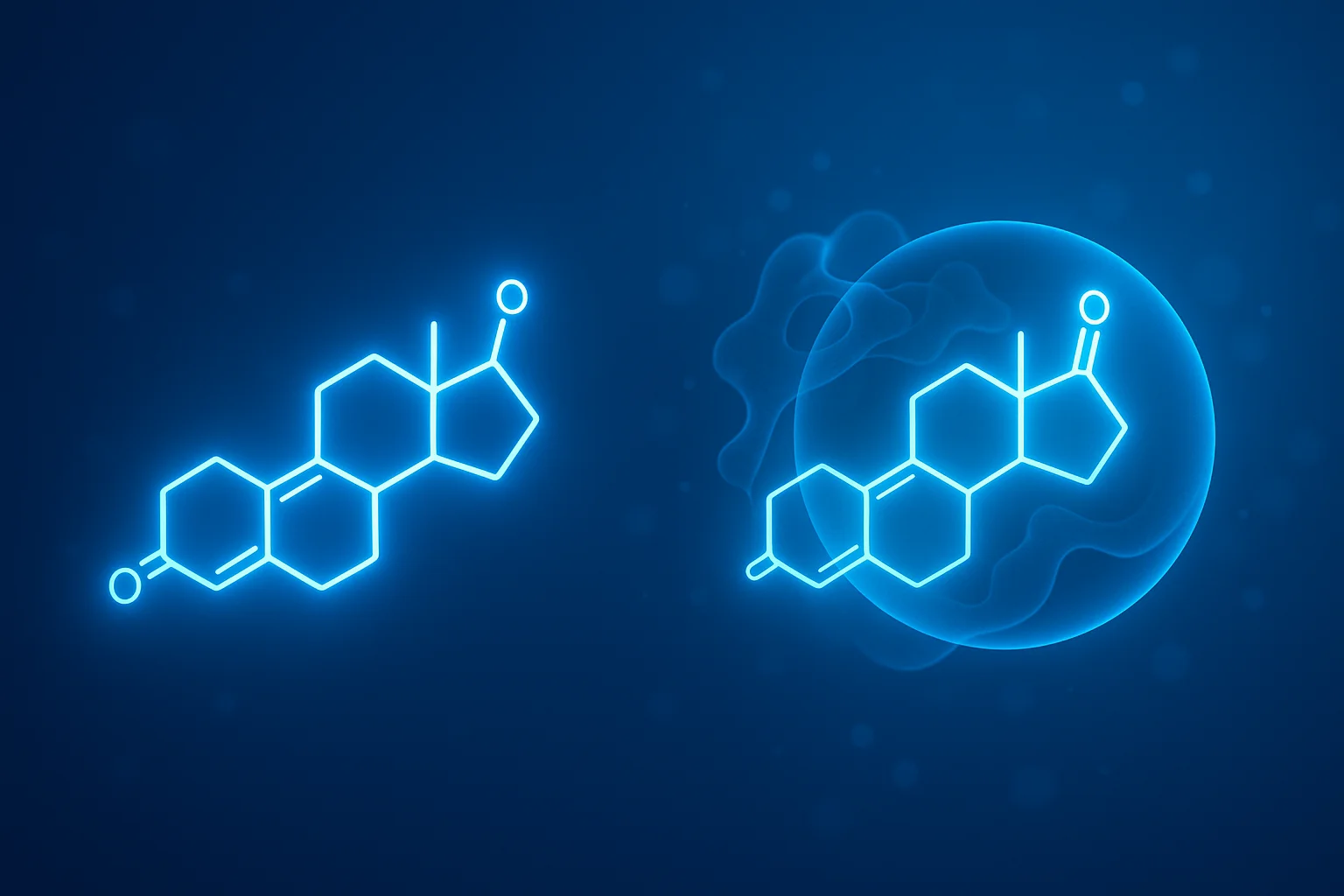
The answer often lies in the distinction between total and free testosterone. Total testosterone measures everything in your blood, including the large fraction that is bound to proteins and unavailable to your tissues. Free testosterone measures only the small percentage that actually enters cells and does the work.
Understanding this distinction is one of the most important concepts in male hormone health, and ignoring it leads to missed diagnoses regularly.
How Testosterone Circulates in Blood
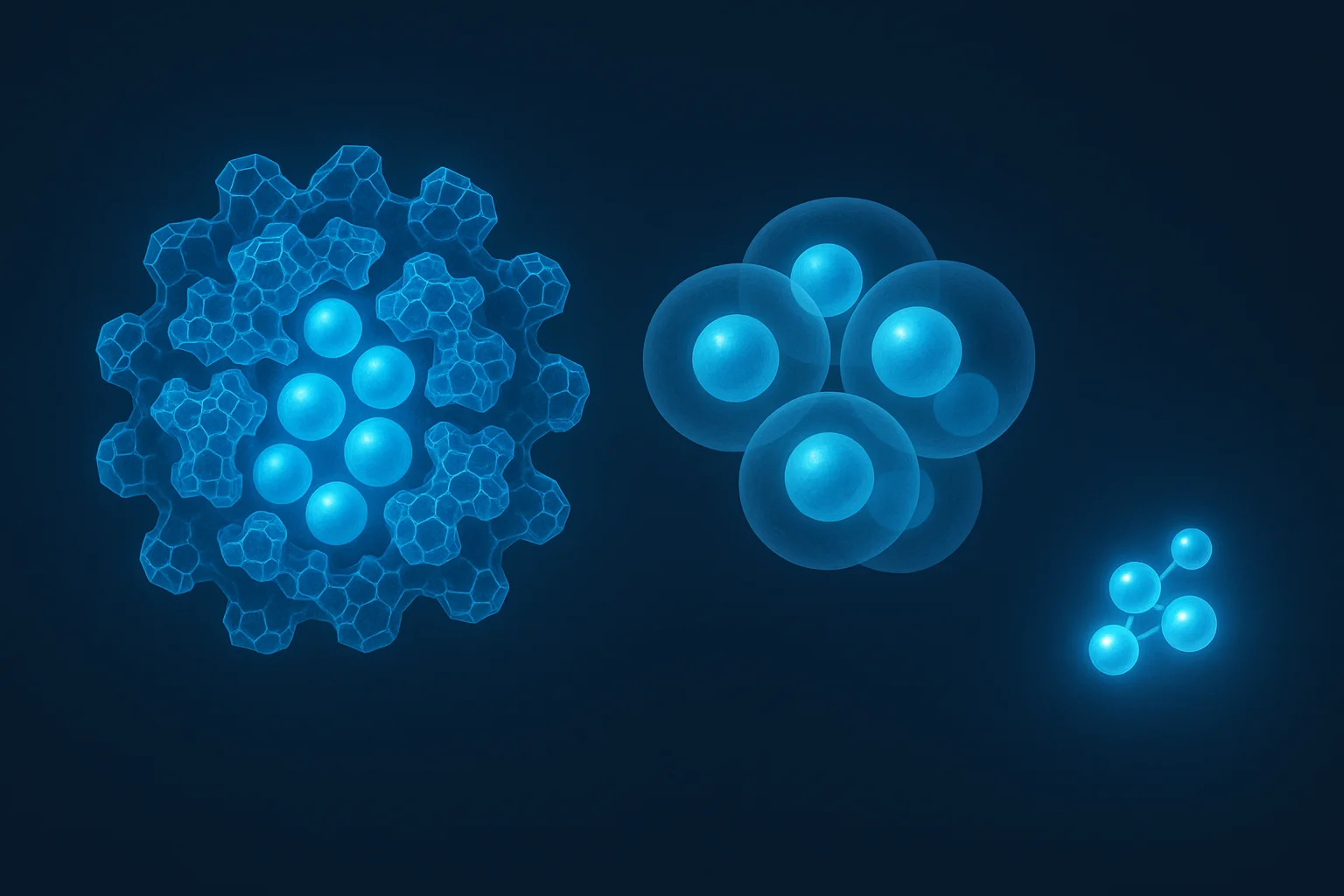
Testosterone does not float freely through the bloodstream. The vast majority is bound to carrier proteins. The distribution breaks down approximately as follows:
~54% bound to albumin — loosely bound, can dissociate and become active
~2% free (unbound) — immediately available to tissues
This means that of a total testosterone level of 500 ng/dL, only about 10 ng/dL is truly free, and roughly 280 ng/dL is bioavailable (free plus albumin-bound).
SHBG: The Gatekeeper
SHBG is a glycoprotein produced primarily by the liver. It binds testosterone with high affinity, essentially locking it up. Testosterone bound to SHBG cannot enter cells, activate androgen receptors, or exert biological effects. It is a hormonal reserve, not an active supply.
SHBG levels vary widely between individuals and are influenced by multiple factors:
Obesity and insulin resistance (the most common cause of low SHBG)
Hypothyroidism
Nephrotic syndrome
Androgenic compounds (including TRT itself)
Exogenous growth hormone
Glucocorticoid use
Understanding what drives your SHBG level is critical for interpreting your testosterone results. A man with SHBG of 20 nmol/L has a very different hormonal picture from a man with SHBG of 70 nmol/L, even if their total testosterone is identical.
Albumin: The Weak Bond
Albumin binds about 54% of circulating testosterone, but the binding is weak and reversible. Albumin-bound testosterone can dissociate at the tissue level, making it functionally available. This is why "bioavailable testosterone" (free + albumin-bound) is sometimes considered a more useful clinical measure than free T alone.
In practice, most clinicians focus on free testosterone because it is more standardized and the albumin fraction generally tracks proportionally. But in certain clinical scenarios (very high or very low albumin), bioavailable T provides additional nuance.
Initiates gene transcription and protein synthesis
Gets converted to DHT (by 5-alpha reductase) or estradiol (by aromatase) at the tissue level
When free testosterone is low, tissues are functionally deprived of androgen signaling regardless of what total testosterone reads. This is why free T often correlates better with symptoms than total T, particularly in older men and men with elevated SHBG.
Multiple studies have shown that symptoms of low testosterone correlate more closely with free testosterone than with total testosterone. The Endocrine Society acknowledges this by including free testosterone below 5-9 ng/dL as a diagnostic criterion for hypogonadism, independent of total T.
Patient: 62-year-old male, healthy weight, no medications
Labs: Total T 520 ng/dL, SHBG 68 nmol/L, Free T 6.8 ng/dL
Symptoms: Fatigue, low libido, reduced morning erections
His total T looks normal and would not trigger concern on a routine screen. But his age-related SHBG elevation is binding most of his testosterone. His free T of 6.8 ng/dL is below the threshold where most men experience symptoms. This man has functional hypogonadism despite "normal" total testosterone. A specialized TRT clinic would catch this immediately; many primary care doctors would not.
Scenario 2: The Obese Man with Low SHBG
Patient: 38-year-old male, BMI 34, insulin resistant
Labs: Total T 310 ng/dL, SHBG 12 nmol/L, Free T 11.2 ng/dL
Symptoms: Mild fatigue, difficulty losing weight
His total T is low and would trigger a hypogonadism workup. But his very low SHBG (driven by insulin resistance) means a larger-than-normal fraction is free. His free T of 11.2 ng/dL is actually mid-range. The primary intervention here is weight loss and metabolic optimization, not TRT.
Scenario 3: The Man on Anticonvulsants
Patient: 45-year-old male on carbamazepine for epilepsy
Labs: Total T 610 ng/dL, SHBG 85 nmol/L, Free T 5.9 ng/dL
Symptoms: Significant fatigue, depression, ED
Carbamazepine markedly increases SHBG. His total T is excellent, but his free T is critically low. A clinician who only checked total T would tell him his hormones are fine. His symptoms are real and driven by insufficient free testosterone reaching tissues.
Scenario 4: The Bodybuilder with Suppressed SHBG
Patient: 30-year-old male, history of anabolic steroid use
Labs: Total T 380 ng/dL (post-cycle), SHBG 8 nmol/L, Free T 14.5 ng/dL
Symptoms: None reported
His total T appears low, but his extremely low SHBG means most of it is bioavailable. His free T is actually healthy. In this case, total T is misleading and free T tells the true story.
How to Measure Free Testosterone
Equilibrium Dialysis (Gold Standard)
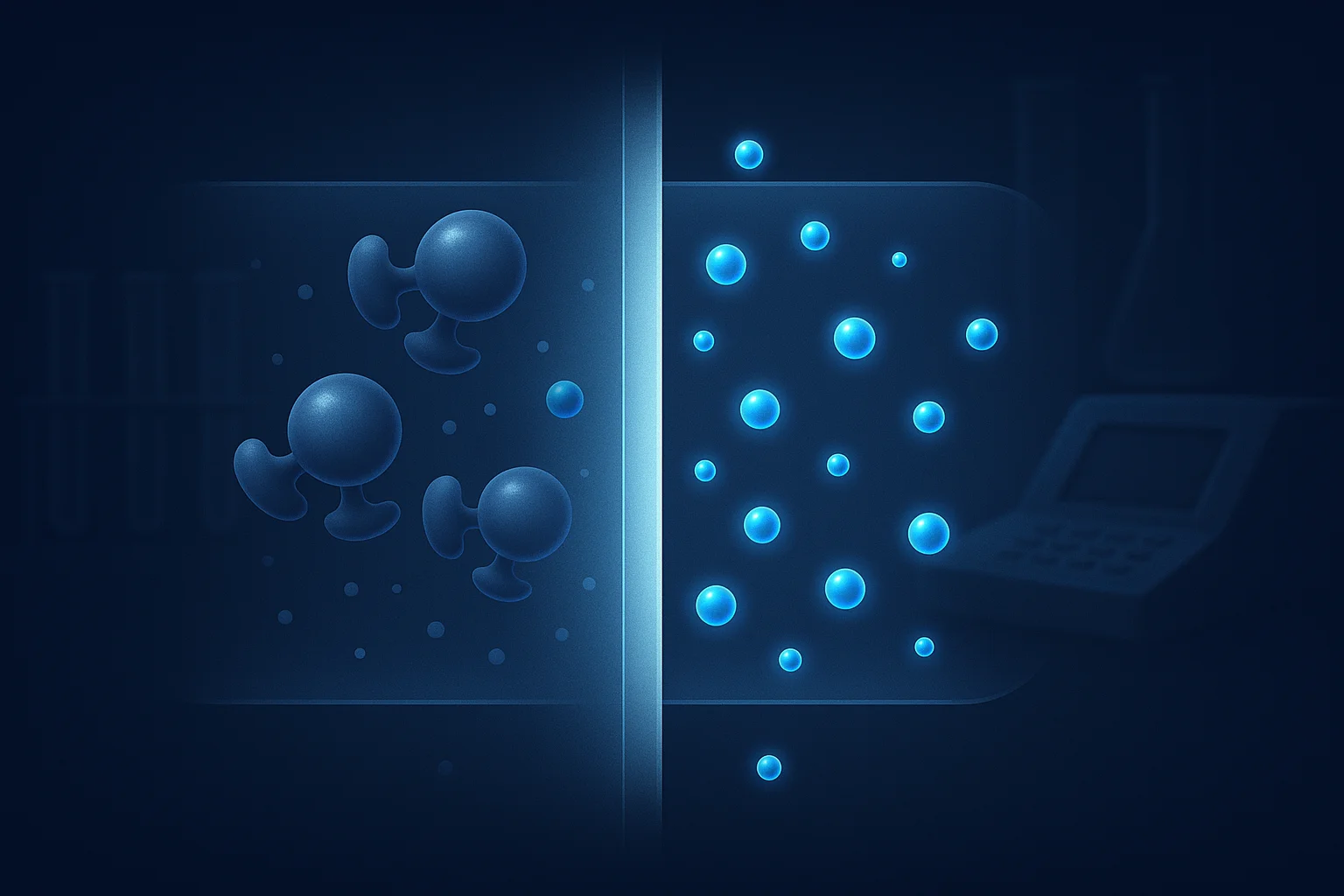
This method physically separates free testosterone from bound testosterone using a dialysis membrane. It is the most accurate technique but is expensive, time-consuming, and available only at specialized reference laboratories. Most clinical labs do not offer it.
Calculated Free Testosterone (Vermeulen Equation)
The most practical and widely used method. The Vermeulen equation calculates free T from three inputs: total testosterone, SHBG, and albumin. Studies show strong correlation with equilibrium dialysis results.
The equation requires:
Total testosterone (ng/dL or nmol/L)
SHBG (nmol/L)
Albumin (g/dL) — often assumed at 4.3 g/dL if not measured
Online calculators are available (the ISSAM calculator is commonly used). Most labs now offer calculated free T as a standard part of hormone panels.
Direct Analog Immunoassay
Some labs offer a direct free T measurement by analog immunoassay. This method is convenient but has significant accuracy limitations. It tends to underestimate free T at higher levels and overestimate at lower levels. The Endocrine Society recommends calculated free T over analog immunoassay.
SHBG Deep Dive: The Variable That Changes Everything
Because SHBG is the primary determinant of the relationship between total and free testosterone, understanding it is essential.
Normal SHBG Range
The reference range for SHBG is typically 10-57 nmol/L for adult males, though it varies by lab. Optimal for hormonal balance is generally considered to be 20-40 nmol/L.
Clinical Significance of SHBG
Low SHBG (below 20 nmol/L) is almost always associated with insulin resistance and metabolic syndrome. It inflates free T relative to total T, potentially masking true hypogonadism on total T testing (total T appears lower than expected for the free T level).
High SHBG (above 50 nmol/L) reduces bioavailable testosterone and can produce symptomatic androgen deficiency even with normal total T. High SHBG is the single most common reason for the "my labs are normal but I feel terrible" presentation.
TRT and SHBG
Exogenous testosterone typically lowers SHBG by 10-30%, depending on the route and dose. This is one reason TRT can improve free T disproportionately compared to total T: you are both raising the total supply and reducing the binding protein that sequesters it.
Oral testosterone formulations tend to suppress SHBG more than injectable forms because of the first-pass hepatic effect. This is not necessarily desirable, as very low SHBG can cause rapid testosterone clearance and unstable levels.
What to Order on Your Lab Panel
For accurate assessment of testosterone status, request:
Total testosterone (LC-MS/MS assay preferred)
SHBG (essential for free T calculation)
Albumin (usually included in a comprehensive metabolic panel)
Free testosterone (calculated, or by equilibrium dialysis if available)
Additional context markers:
LH and FSH — to determine if low T is primary (testicular) or secondary (pituitary)
Estradiol (sensitive assay) — to assess testosterone/estrogen balance
Prolactin — elevated prolactin suppresses GnRH and can cause hypogonadism
If your labs show a disconnect between total and free testosterone, working with a provider who understands SHBG dynamics is essential. Compare TRT clinics that run comprehensive panels including SHBG as standard.
Key Takeaways
Only 2% of testosterone is free and immediately bioavailable; 44% is locked up by SHBG
Free testosterone often correlates with symptoms better than total testosterone
SHBG is the key variable: high SHBG can create functional hypogonadism with normal total T; low SHBG can make total T look worse than it is
Always check total T, free T, and SHBG together for an accurate hormonal picture
Calculated free T (Vermeulen equation) is reliable and preferred over direct analog assays
Clinical scenarios where total and free T diverge are common, not rare
This content is for informational purposes only and is not medical advice. Consult a qualified healthcare provider before starting any treatment.
Frequently Asked Questions
Which is more important: total or free testosterone?
Free testosterone is often more clinically relevant because it represents the hormone available to enter cells and activate androgen receptors. However, both values provide important context. Total T without free T can be misleading, and free T without total T and SHBG lacks the full picture.
Why might my free testosterone be low even with normal total testosterone?
The most common cause is elevated SHBG, which binds testosterone tightly and reduces the free fraction. SHBG increases with age, liver disease, hyperthyroidism, low caloric intake, and certain medications. A man with total T of 550 ng/dL and very high SHBG might have free T below the symptomatic threshold.
What is bioavailable testosterone?
Bioavailable testosterone is the sum of free testosterone (about 2%) plus albumin-bound testosterone (about 54%). Unlike SHBG binding, albumin binding is weak and reversible, so albumin-bound testosterone can dissociate and become available to tissues. Bioavailable T is sometimes considered a better marker than free T alone.
How is free testosterone measured?
Free testosterone can be measured directly by equilibrium dialysis or analog immunoassay, or calculated from total T, SHBG, and albumin using the Vermeulen equation. Equilibrium dialysis is the gold standard but expensive and not widely available. Calculated free T using the Vermeulen equation is reliable and commonly used.
What is a normal free testosterone level?
Reference ranges vary by lab and assay, but generally fall between 5-25 ng/dL (50-250 pg/mL) for adult males. Many clinicians consider free T below 5-9 ng/dL consistent with functional hypogonadism, regardless of total T.
What causes high SHBG?
Common causes include aging, liver disease, hyperthyroidism, low caloric intake (especially very low carb diets), HIV, and certain medications like anticonvulsants and estrogen. Genetic variation also plays a role; some men naturally produce more SHBG.
What causes low SHBG?
Obesity and insulin resistance are the most common causes. Others include hypothyroidism, nephrotic syndrome, use of androgenic compounds, and exogenous growth hormone. Low SHBG inflates free T relative to total T.
Should I ask my doctor to check SHBG?
Yes. SHBG is essential for interpreting testosterone results accurately. Without SHBG, you cannot calculate free testosterone or understand why total and free T might not align. Any comprehensive hormone panel should include total T, free T (or calculated free T), and SHBG at minimum.