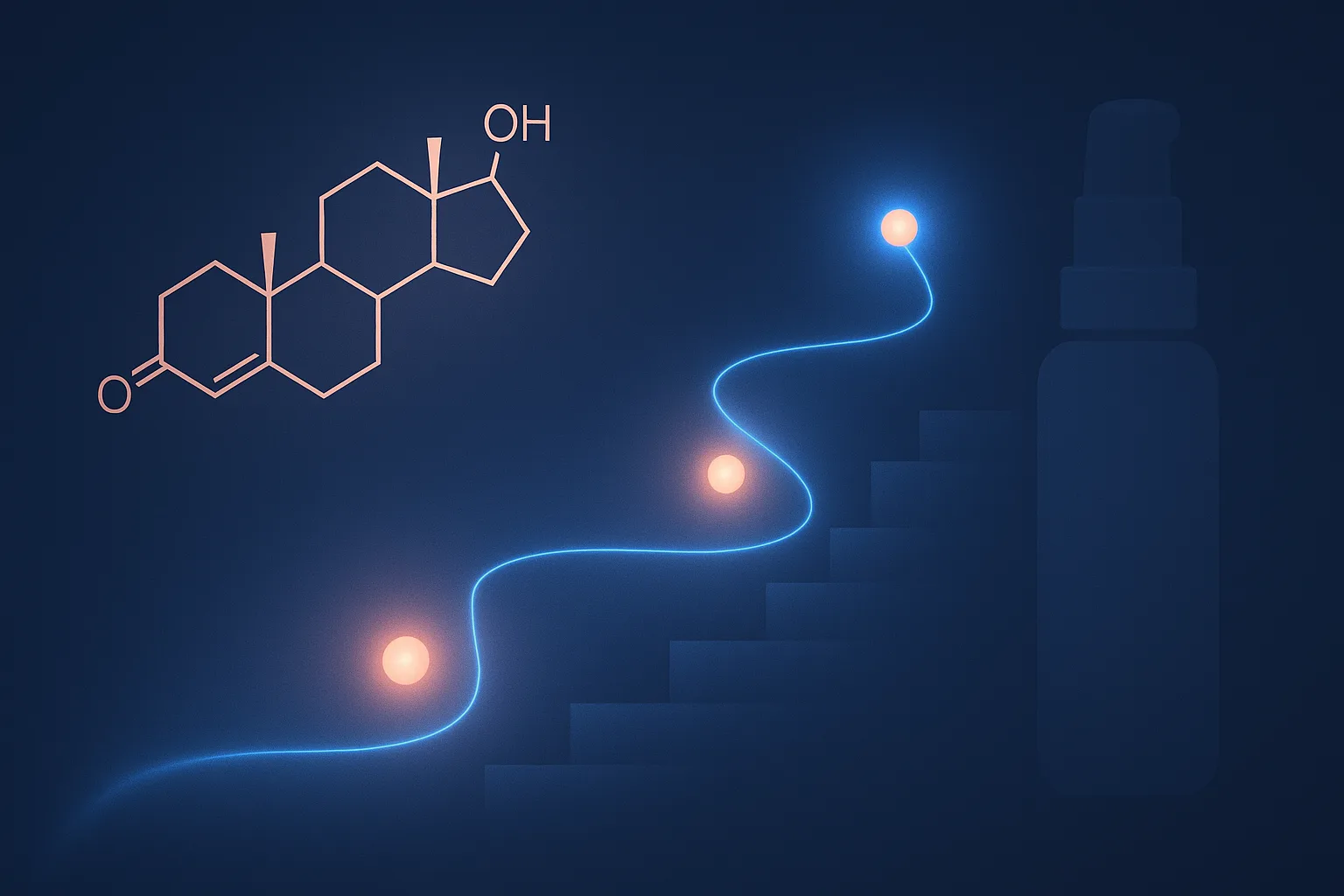
Acrux Advances Female Testosterone to Phase 3 for HSDD

5/3/2026
5 min read
By The TRT Catalog

On April 30, 2026, Acrux announced Phase 3 trials for a transdermal female testosterone product for HSDD. Here is what it means and what is available now.

Acrux advances female testosterone to Phase 3 for HSDD treatment

On April 30, 2026, Australian pharmaceutical company Acrux announced it is moving its Female Testosterone product into Phase 3 clinical trials. The company confirmed FDA feedback validating its Phase 1 and Phase 2 data and establishing a registration pathway in the United States.

If the trial succeeds, this would be the first FDA-approved testosterone product specifically for women. That has been the holy grail of women's sexual health pharmacology for two decades. Three companies have tried before. None have made it.

Key Takeaways

  • Acrux announced Phase 3 advancement on April 30, 2026 for Female Testosterone via "patchless patch" MDTS delivery
  • FDA has confirmed a clear U.S. registration pathway based on Phase 1 and Phase 2 data
  • Target indication is HSDD in peri- and post-menopausal women
  • Realistic earliest availability: 2028 to 2030
  • No FDA-approved systemic testosterone for women exists today
  • Off-label compounded testosterone is widely prescribed now through women's HRT clinics and is supported by major medical societies

What Acrux Actually Announced

The April 30 release confirmed three things.

First, Acrux completed Phase 1 and Phase 2 trials for its Female Testosterone product. Phase 1 establishes pharmacokinetics (how the drug is absorbed and metabolized) and short-term safety. Phase 2 establishes efficacy in a smaller patient population. Both phases passed.

Second, the FDA reviewed those results and provided written feedback confirming a "valid base" for Phase 3 and a clear pathway to U.S. registration. This is the equivalent of the FDA saying: your data so far is acceptable, and we know what trial design will satisfy us for approval.

Third, Acrux is seeking commercial partners with established women's health franchises to co-develop Phase 3. The company has historically licensed late-stage development to larger pharma (Eli Lilly took the male version, Axiron, through Phase 3 and to U.S. market). Acrux is following the same playbook for the female product.

What was not announced: a Phase 3 start date, the specific trial design, the planned dose, or a partner identity. Those details typically appear once a partner is signed.

Why a "Patchless Patch" Matters

Acrux's delivery system, the Metered Dose Transdermal System (MDTS), is not a new technology. The company commercialized it for men in 2010 as Axiron, an underarm-applied testosterone solution that absorbed through the skin. Eli Lilly distributed it. The product worked clinically but was discontinued in 2018 when generic injectable testosterone collapsed the market for branded topicals.

The MDTS platform has three properties that matter for a women's product:

1. Precise low-dose delivery. Women need approximately one-tenth the testosterone dose men need. Compounded creams and off-label use of male products (like cutting AndroGel into smaller doses) routinely produce blood levels above the female physiological range. A metered applicator solves the dosing precision problem.

2. No skin transfer concerns. Topical testosterone for men carries a black box warning about skin-to-skin transfer to children and partners. The MDTS solution dries quickly and leaves no residue once absorbed, reducing transfer risk.

3. No injection burden. Pellets require an in-office procedure every 3 to 6 months. Injections require needle comfort and weekly self-administration. A daily spray fits the women's compliance profile better than either.

These advantages matter because the failure mode of prior women's testosterone candidates was usually safety signal at higher doses. Procter and Gamble's Intrinsa (testosterone patch) was approved in Europe but rejected by the FDA in 2004. BioSante Pharmaceuticals' LibiGel failed Phase 3 in 2011 over efficacy concerns. The challenge has consistently been delivering enough testosterone to improve sexual function without triggering virilization or breast cancer signals.
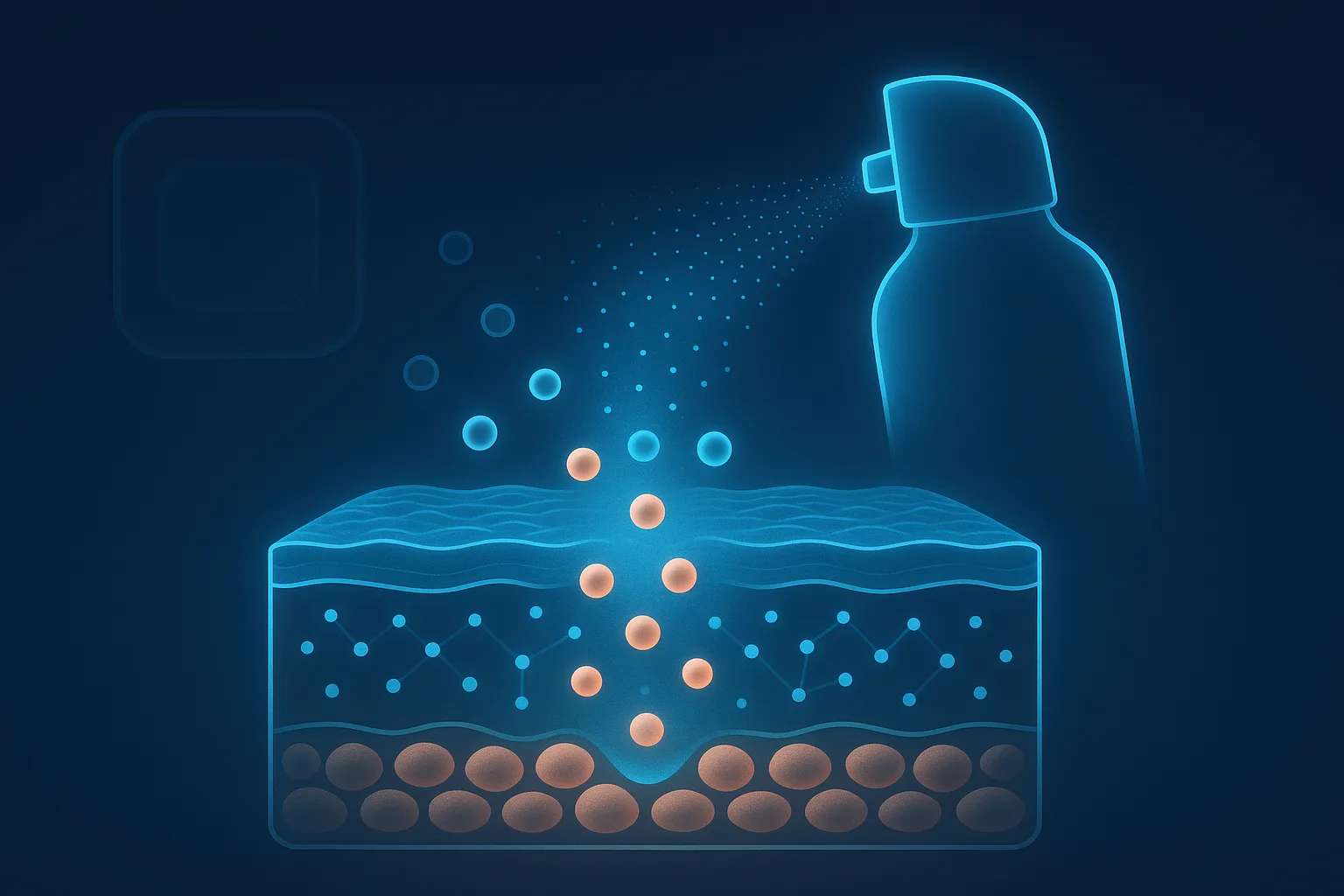
MDTS patchless patch transdermal testosterone delivery system

What HSDD Actually Means

HSDD stands for Hypoactive Sexual Desire Disorder. It is the clinical diagnosis that a women's testosterone product would be approved to treat.

The diagnostic criteria are specific:

  1. Persistent or recurrent absence or deficiency of sexual fantasies and desire for sexual activity
  2. The condition causes marked personal distress
  3. The condition is not better accounted for by another disorder, substance use, or relationship problems

That last criterion is the practical filter. A woman whose libido dropped after starting an SSRI does not have HSDD. A woman whose desire vanished alongside sleep loss in early perimenopause does not have HSDD until those factors are addressed and the desire issue persists. A woman in a chronically conflicted relationship does not have HSDD until the relationship factors are excluded.

Once those exclusions are applied, an estimated 8 to 12 percent of peri- and post-menopausal women meet HSDD criteria. That is the FDA-relevant population for Acrux's product.

For comparison, the Menopause Society's 2023 position statement on testosterone in women endorsed it specifically for HSDD in postmenopausal women, citing consistent benefit across multiple randomized trials with an acceptable safety profile.

What Is Available Today

Phase 3 advancement is news. It is not access. The earliest a Phase 3 trial reads out is typically 2 to 4 years from initiation. Even with Priority Review, FDA approval for a women's testosterone product is unlikely before 2028 and could push into 2030 depending on partner timeline and trial design.

What is available right now:

Compounded Testosterone Cream or Gel

The dominant off-label option. Specialized providers prescribe compounded testosterone cream at doses of 1 to 5 mg/day applied to the inner forearm or thigh. The cream is mixed by a compounding pharmacy to deliver female-physiological doses (versus the 50+ mg/day male products would deliver).

Cost typically runs $40 to $100 per month for the cream itself, plus consultation and lab fees. See our full breakdown in testosterone cream for women.

Testosterone Pellets

Subcutaneous pellets inserted in the hip or buttock release testosterone over 3 to 4 months. The procedure is in-office and costs $300 to $500 per insertion. Pellets produce more steady-state levels than topicals but commit you to a high cumulative dose for the duration. Read more in testosterone pellets for women.

Off-Label Use of Male Topicals

Some providers prescribe a small fraction of a male AndroGel packet (typically 1/10th to 1/8th of a packet daily). This is the cheapest option but has the worst dose precision. Most women on this protocol either underdose or overshoot physiological range.

Why Acrux's Product Would Change This

If approved, an FDA-cleared women's testosterone would solve four problems with the current off-label landscape:

Problem Current State Post-Approval State
Dose precision Compounded creams vary by pharmacy FDA-mandated standardization
Insurance coverage Cash-pay only Insurance reimbursement possible
Provider hesitation Many doctors will not prescribe off-label Standard prescribing
Long-term safety data Limited long-term registries Required post-market surveillance

Off-label treatment works for women whose providers are willing. Approval would expand the prescriber pool dramatically and reduce the financial burden.


Women's HRT — Menopause-First Telehealth

Bioidentical estradiol, progesterone, and low-dose testosterone — all 50 states, unlimited physician access.

Start HRT Consultation

Why Prior Attempts Failed

The FDA has rejected three women's testosterone applications since 2000. Understanding why matters for evaluating Acrux's odds.

Intrinsa (2004)

Procter and Gamble's testosterone patch was approved in Europe but rejected by the FDA. The agency cited insufficient long-term safety data, particularly for cardiovascular and breast cancer endpoints. The clinical efficacy was clear: the patch significantly improved sexual desire and satisfying sexual events versus placebo. The rejection was about safety surveillance requirements P&G could not meet.

LibiGel (2011)

BioSante Pharmaceuticals' transdermal gel failed Phase 3 by missing its primary efficacy endpoint. The placebo arm responded much more strongly than expected, narrowing the gel's effect size below statistical significance. This is a recurring problem in HSDD trials: subjective sexual function measures show large placebo responses that mask real treatment benefit.

Off-Label Patchwork (Ongoing)

After Intrinsa and LibiGel, no major pharma attempted a women's testosterone product. The market shifted to compounding pharmacies and off-label use. Acrux's announcement is the first serious Phase 3 attempt in over a decade.

What Is Different This Time

Three factors favor Acrux's odds versus prior attempts:

  1. MDTS dose precision. The dosing problems that hurt LibiGel's effect-size separation are easier to control with metered delivery than with hand-applied gel.
  2. Better trial design. FDA's pre-Phase 3 feedback presumably specifies endpoints and statistical analyses that account for placebo response patterns observed in earlier trials.
  3. Regulatory environment. The FDA under current leadership has been removing barriers to hormone therapy rather than adding them. The same agency that opened a low libido pathway for men in April 2026 is reviewing Acrux's application.

None of these guarantee success. But the regulatory wind is at Acrux's back in a way it was not for P&G in 2004.

Female testosterone clinical trial timeline and regulatory pathway

Realistic Timeline

For women trying to plan around this announcement, here is the realistic timeline.

Milestone Estimated Date
Phase 3 partnership announcement Late 2026 to early 2027
Phase 3 first patient enrolled Q2 to Q4 2027
Phase 3 readout 2029 to 2031
FDA submission 6 to 12 months after readout
Standard FDA review 10 to 12 months
Earliest U.S. launch 2030 to 2032
Priority Review (if granted) Earliest launch shifts ~6 months sooner

Five to seven years is a long time. Women experiencing HSDD now should not wait for an approved product to exist. The off-label pathway is well-established, the supporting evidence is strong, and the Menopause Society endorses it.

How to Evaluate Off-Label Treatment Today

If the Acrux announcement made you reconsider testosterone for HSDD or low libido, here is the practical checklist for finding off-label treatment.

1. Confirm the Diagnosis

Not every libido issue is HSDD. Before any hormone treatment, rule out:

  • Sleep deprivation (especially in perimenopause)
  • Untreated depression or anxiety
  • Medication side effects (SSRIs, hormonal birth control, certain blood pressure medications)
  • Relationship factors
  • Untreated estrogen deficiency (which often manifests as low libido and resolves with estrogen replacement alone)

If desire problems persist after addressing those factors, testosterone evaluation makes sense.

2. Get Lab Work

Useful baseline labs include:

  • Total testosterone (LC-MS preferred)
  • Free testosterone or SHBG (for calculation)
  • Estradiol
  • DHEA-S
  • TSH and free T4 (thyroid masquerades as low libido)

Read testosterone blood test for women for the specific protocols and interpretation.

3. Find a Knowledgeable Provider

Most general gynecologists and primary care physicians do not prescribe testosterone for women. The providers who do tend to fall into three categories:

  • Menopause specialists (often Menopause Society Certified Practitioners)
  • Functional medicine practitioners
  • Telehealth clinics specializing in women's hormone therapy

The women's HRT clinic comparison covers the major telehealth options and how they handle testosterone prescribing.

4. Plan for Cash-Pay

Until an FDA-approved product exists, expect to pay out of pocket. Typical cost structure:

  • Initial consultation: $150 to $400
  • Labs: $150 to $300 per panel
  • Compounded testosterone cream: $40 to $100 per month
  • Follow-up visits: $100 to $200 every 3 to 6 months

That is roughly $1,000 to $2,500 in the first year, dropping to $800 to $1,500 in subsequent years.

What This Announcement Means for the Field

Beyond the immediate Acrux story, the April 30 announcement signals two larger shifts.

First, women's hormone therapy is being taken seriously as a regulatory category. A decade ago, women's sexual health pharmacology was the wasteland. Two flibanserin products limped to approval, neither commercially successful. Testosterone for women was treated as a backwater, served by compounding pharmacies because no one would invest in trials. The fact that Acrux is willing to invest Phase 3 capital and that the FDA is providing clear pathway feedback represents a meaningful change.

Second, the regulatory shift extends across both sexes. April 2026 saw the FDA open a low libido pathway for men on April 16 and Acrux announce the parallel development for women on April 30. The same regulatory leadership is treating sexual desire as a legitimate therapeutic target rather than a non-medical issue. This is the most consequential shift in sexual function pharmacology in 25 years.

For now, the practical takeaway is straightforward. The pipeline is moving. The science is supportive. The off-label option is here today. If you have been waiting for permission to address HSDD or persistent low libido with testosterone, the answer from clinical evidence and regulatory direction is consistent: the treatment works, and it does not require waiting for Acrux's product to ship.

References

  1. Acrux Limited. Acrux Advances Female Testosterone Therapy to Phase III to Address HSDD Treatment Gap. ASX Announcement, April 30, 2026.
  2. Davis SR, et al. Safety and Efficacy of Testosterone for Women: A Systematic Review and Meta-Analysis of Randomised Controlled Trial Data. Lancet Diabetes Endocrinol. 2019;7(10):754-766.
  3. Parish SJ, et al. International Society for the Study of Women's Sexual Health Clinical Practice Guideline for the Use of Systemic Testosterone for Hypoactive Sexual Desire Disorder in Women. J Sex Med. 2021;18(5):849-867.
  4. The Menopause Society. The Use of Testosterone Therapy in Women: 2023 Position Statement. Menopause. 2023;30(7):700-711.
  5. FDA. Guidance for Industry: Low Sexual Interest, Desire, and/or Arousal in Women: Developing Drugs for Treatment. Draft Guidance, 2016 (revised 2025).
  6. Shifren JL, et al. Testosterone Patch for the Treatment of Hypoactive Sexual Desire Disorder in Naturally Menopausal Women. Menopause. 2006;13(5):770-779.
  7. Snabes MC, Simes SM. Approved Hormonal Treatments for HSDD: An Unmet Medical Need. J Sex Med. 2009;6(7):1846-1849.

Frequently Asked Questions

What did Acrux announce on April 30, 2026?

Acrux, an Australian pharmaceutical company, announced it is advancing its Female Testosterone product into Phase 3 clinical trials. The product uses Acrux's Metered Dose Transdermal System (MDTS), described as a 'patchless patch.' The FDA has confirmed that completed Phase 1 and Phase 2 data establish a clear pathway to U.S. registration. The target indication is Hypoactive Sexual Desire Disorder (HSDD) in peri- and post-menopausal women.

When will Acrux's female testosterone be available?

Phase 3 trials typically take 2 to 4 years to complete, followed by FDA review (10 to 12 months). Realistic earliest U.S. availability is 2028 to 2030, assuming the trial succeeds and a commercial partner takes the product through registration. Acrux has stated it is engaging partners early but has not announced a specific launch date.

Is there an FDA-approved testosterone for women today?

No. As of May 2026, no testosterone product is FDA-approved specifically for women in the United States. Vaginal DHEA (prasterone) is approved for painful intercourse, but no systemic testosterone has cleared the FDA. Women who want testosterone today receive it off-label through compounded creams, gels, or pellets prescribed by knowledgeable providers.

Can I get testosterone for low libido as a woman right now?

Yes, through off-label prescribing. Specialized telehealth clinics and menopause-focused providers prescribe compounded testosterone cream or gel at female-physiological doses (typically 1 to 5 mg/day). The treatment is supported by the Menopause Society, the International Society for the Study of Women's Sexual Health, and a 2019 Lancet meta-analysis covering 46 trials.

What is the MDTS 'patchless patch' technology?

Metered Dose Transdermal System is a spray-style applicator that deposits a precise dose of testosterone solution onto the skin. Unlike a traditional adhesive patch, there is nothing to stick on. Unlike a gel, the dose is metered automatically rather than measured by the user. Acrux previously used the same platform for Axiron, the FDA-approved underarm testosterone solution for men (discontinued 2018).

How is HSDD different from low libido?

HSDD is the clinical diagnosis: persistently low or absent sexual desire that causes personal distress and is not better explained by another condition or medication. Casual 'low libido' may resolve with sleep, stress reduction, or relationship work. HSDD persists despite addressing those factors and is the population testosterone therapy is best documented to help.