On April 16, 2026, the FDA took its first concrete action on testosterone replacement therapy since the December 2025 expert panel. The agency formally invited TRT manufacturers to submit supplemental new drug applications (sNDAs) seeking approval for a narrow but consequential new indication: low libido in men with idiopathic hypogonadism.
Sponsors have until April 30, 2026 to contact the FDA about submission requirements. That is two weeks. The compressed timeline signals the agency is serious about moving.
Key Takeaways
FDA announced April 16, 2026 it will accept sNDAs for TRT products to treat low libido in men with idiopathic hypogonadism
"Idiopathic" means low testosterone with no identifiable cause -- which describes most men with age-related decline
Deadline for sponsors to contact the FDA is April 30, 2026
This is separate from the still-pending descheduling question
Off-label prescribing for low libido is already available through online TRT clinics today
Formal approval is likely 12 to 24 months away if sponsors move quickly
What the FDA Actually Said
The FDA's press release framed the announcement as an "initial step to advance treatment options for men's health." The specific language matters.
The agency said it has identified "data suggesting that TRT may be safe and effective for certain men experiencing low libido related to idiopathic hypogonadism." It encouraged holders of approved TRT new drug applications to contact the agency about submitting a supplemental application.
The FDA emphasized that any approval would still require "substantial evidence of effectiveness and that the benefits outweigh the risks for the intended population." Translation: this is an invitation to apply, not a blanket approval.
Why This Indication, Why Now
The December 2025 expert panel flagged three issues with current TRT regulation: the Schedule III classification, the narrow approved indications, and the outdated prostate cancer warnings. Of those three, the indication expansion is the easiest regulatory lever to pull.
Descheduling requires DEA coordination. Changing prostate cancer labels requires updating 30+ years of label language across multiple manufacturers. But approving a new indication only requires existing TRT sponsors to submit sNDAs with clinical data.
The panel specifically identified low libido in idiopathic hypogonadism as having the strongest evidence base. Multiple randomized controlled trials have shown testosterone improves sexual desire in men with low levels, regardless of whether the cause was identifiable.
What "Idiopathic Hypogonadism" Actually Means
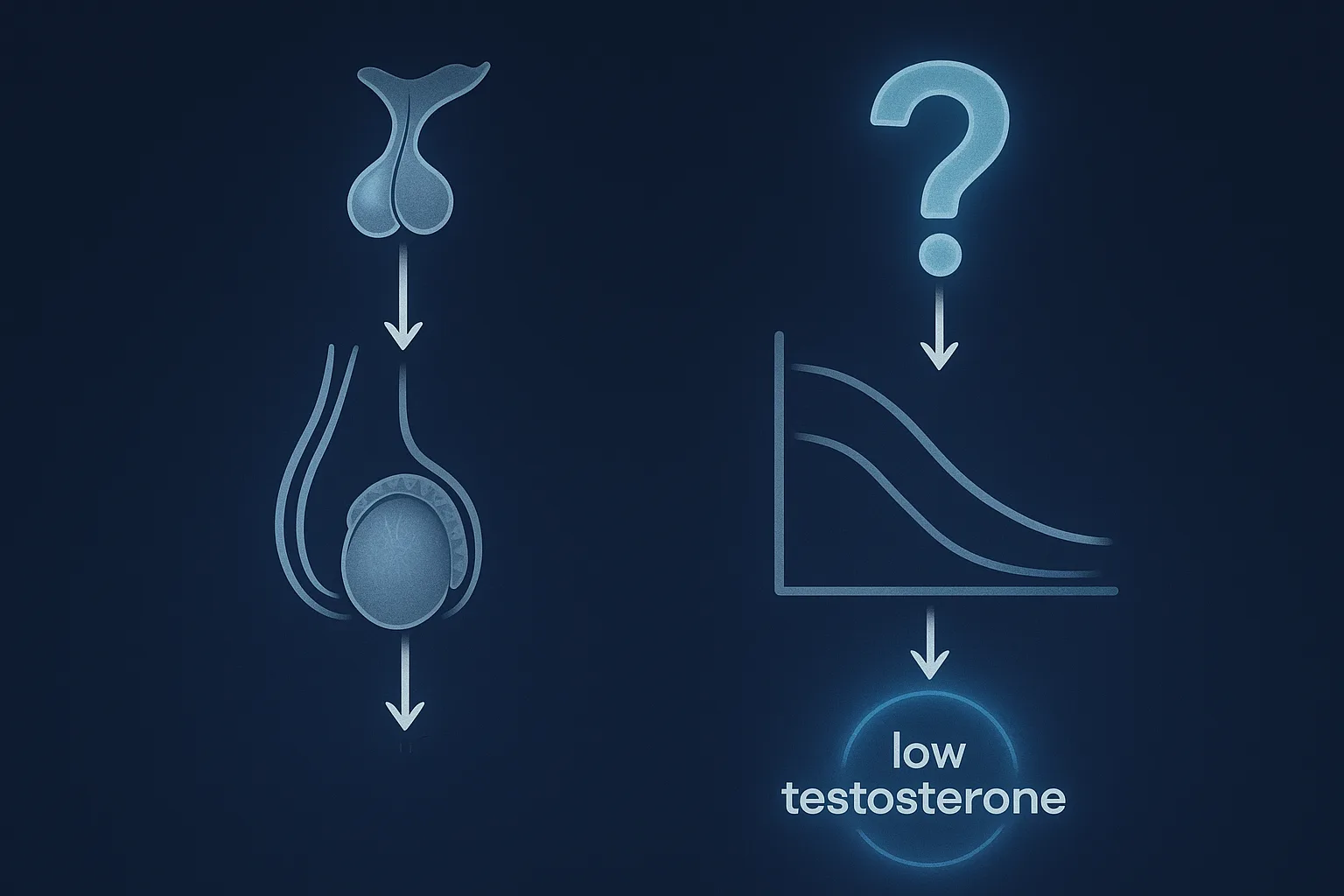
The word "idiopathic" trips people up. It sounds like a specific disease. It is not. Idiopathic hypogonadism simply means: your testosterone is low, and we cannot pinpoint why.
The Current Categories
FDA-approved TRT products today list indications for two categories of hypogonadism:
Category
What It Means
Typical Causes
Primary (testicular)
The testicles themselves do not produce enough testosterone
The brain's signaling to the testicles is disrupted
Pituitary tumor, Kallmann syndrome, brain injury
Men in either category have a clear, identifiable medical reason for their low testosterone. They currently qualify for FDA-approved TRT.
The Idiopathic Majority
Most men with low testosterone do not fit either box. Their levels are low, their symptoms are real, but there is no tumor, no injury, no genetic condition. Blood work shows low testosterone with normal or slightly low LH and FSH. This is the "idiopathic" category.
Age is the most common driver. Testosterone declines roughly 1 to 2 percent per year after age 30. By age 60, many men have levels under 300 ng/dL with no identifiable disease -- just cumulative decline.
Other contributors to idiopathic low testosterone include chronic stress, poor sleep, metabolic syndrome, environmental factors, and likely causes we have not yet identified. The common thread: no specific disease to treat.
This is the group the FDA's April 16 announcement targets. It represents the vast majority of men currently on off-label TRT through online clinics.
What Changes for Patients Today
Practical answer: nothing changes immediately, but the trajectory is clearer.
If You Already Have Low Libido and Low Testosterone
You can get evaluated and treated today. Off-label prescribing is legal and common. Every reputable online TRT clinic already prescribes for men with documented low testosterone and symptoms including decreased libido -- regardless of whether there is an identifiable cause.
The April 16 announcement changes the regulatory framing, not the availability. A man who walks into a telehealth visit tomorrow with symptoms of low testosterone and a morning testosterone below 300 ng/dL can start treatment under the same off-label pathway that has existed for years.
What may shift over the next year:
Insurance coverage. Insurers have leaned on the lack of FDA indication to deny TRT claims for age-related cases. Formal indication approval would make denials harder to defend.
Clinician confidence. Some primary care physicians refuse to prescribe TRT off-label, citing liability concerns. A formal indication removes that hesitation.
Marketing. Pharmaceutical companies can only promote products for FDA-approved uses. Direct-to-consumer advertising for TRT could expand significantly.
If You Are Unsure Whether You Qualify
The diagnostic criteria the FDA will likely set mirror existing Endocrine Society guidelines:
Consistent symptoms of low libido measured by a validated questionnaire (SDI-2, MSHQ, or clinician assessment)
Morning total testosterone below 300 ng/dL confirmed on two separate tests
Free testosterone below normal range if total is borderline
No identifiable cause after basic workup (prolactin, LH, FSH, general health screen)
If you meet those criteria today, you already qualify for off-label treatment. Start with getting tested correctly -- morning sample, fasted, two separate tests on different days.
The FDA did not make this decision in a vacuum. Three lines of evidence converged.
1. Randomized Trial Data
Multiple placebo-controlled trials have shown testosterone improves sexual desire in men with low levels. The Testosterone Trials (T-Trials, published 2016-2017) enrolled 790 men aged 65+ with testosterone below 275 ng/dL. The Sexual Function Trial arm showed significantly improved sexual activity, desire, and erectile function on testosterone versus placebo.
The TRAVERSE Trial (2023, 5,246 men) -- which is the study that removed the cardiovascular boxed warning -- included sexual function as a secondary endpoint. Men on testosterone reported improved libido throughout the study period.
2. Real-World Data
A 2026 retrospective cohort study of over 9,000 men treated for testosterone deficiency found that 89 percent received subcutaneous injection protocols and reported significant quality-of-life improvements over 12 months, including in sexual function domains.
This is exactly the kind of real-world evidence the FDA has been pushing sponsors to generate. It documents actual clinical outcomes in the population the indication would cover.
3. Safety Signal Clearance
The historical barrier to expanded TRT indications was cardiovascular and prostate cancer concerns. Both have been substantially weakened by recent evidence:
Cardiovascular risk: TRAVERSE found no increased risk of heart attack, stroke, or cardiovascular death. The FDA removed the boxed warning in February 2025.
Prostate cancer risk: Multiple meta-analyses have found no causal link between TRT and prostate cancer incidence. The "androgen receptor saturation" model has largely supplanted the older "Huggins hypothesis."
With those two risk concerns addressed, the FDA can focus on the efficacy question for specific indications without fighting safety battles.
Timeline: What Happens Next
Based on typical FDA sNDA review timelines, here is what to expect.
Milestone
Expected Timeframe
Sponsor contact deadline
April 30, 2026
sNDA submissions
Summer to Fall 2026
Standard FDA review
10 months from acceptance
First approvals possible
Late 2027 to early 2028
Label updates propagate
3-6 months after approval
Priority review (6 months instead of 10) is possible if the FDA designates this indication as addressing an unmet medical need. Given the size of the affected population and the compressed deadline for sponsors, that is a plausible outcome.
Which manufacturers are likely to file first? Candidates include the sponsors of testosterone cypionate, testosterone enanthate, and the newer oral formulations like KYZATREX. Topical gels and patches are less likely candidates because the indication specifically targets libido, and injection protocols produce steadier levels that correlate better with sexual function outcomes.
How This Fits the Broader Regulatory Shift
The April 16 announcement is the latest in a series of FDA moves reshaping hormone therapy access:
February 2025: Cardiovascular boxed warning removed from testosterone products
December 2025: FDA expert panel recommends testosterone descheduling and expanded indications
February 2026: FDA approves label changes for six menopausal HRT products
April 2026: FDA invites sNDAs for testosterone indication in idiopathic hypogonadism
The pattern is clear. Both testosterone and estrogen therapy were restricted for decades based on safety interpretations that newer, larger trials have disproven. The FDA is systematically working through those restrictions, one at a time.
For testosterone specifically, three regulatory questions remain open:
Indication expansion (now in motion): Formal approval for idiopathic hypogonadism -- starting with low libido, likely followed by broader symptom clusters
Prostate cancer warnings (pending): Updates to outdated contraindication language
Descheduling (longer horizon): Removal of Schedule III controlled substance status
The April 16 announcement is a checkpoint, not a destination. But it is the first concrete step in what looks like a coordinated reversal of decades-old restrictions.
What to Do Right Now
If you have been considering TRT for any reason -- libido, energy, body composition, mood -- the April 16 news should tell you something important. The regulatory wind is at your back, not in your face.
Practical next steps:
Get tested correctly. Morning testosterone, fasted, two separate tests on different days. Read our guide on how to test testosterone for the exact protocol.
Understand your numbers. A total testosterone of 380 ng/dL is technically "normal range" but often suboptimal. Our normal vs. optimal guide explains the difference.
Plan for insurance vs. cash-pay. Most TRT today is cash-pay. If FDA approval lands, that may shift. Our insurance breakdown covers current costs both ways.
The FDA taking formal action on testosterone is news. But the most useful takeaway is simpler: you do not need to wait for official approval to get treated. Off-label pathways exist today. The April 16 announcement is confirmation that the regulatory direction matches what clinicians have been doing for years.
References
FDA. FDA Takes Step Forward on Testosterone Therapy for Men. Press Announcement, April 16, 2026.
FDA Expert Panel on Testosterone Replacement Therapy for Men, December 10, 2025. Federal Register Document FDA-2025-N-6743.
Snyder PJ, et al. Effects of Testosterone Treatment in Older Men (The Testosterone Trials). N Engl J Med. 2016;374(7):611-624.
Lincoff AM, et al. Cardiovascular Safety of Testosterone-Replacement Therapy (TRAVERSE). N Engl J Med. 2023;389(2):107-117.
Real-World Outcomes and Safety of Testosterone Therapy: A Longitudinal, Retrospective Cohort Study of Over 9,000 Men. World J Mens Health. 2026.
Endocrine Society. Testosterone Therapy in Adult Men With Androgen Deficiency Syndromes: Clinical Practice Guideline. 2018 update.
FDA. Class-Wide Labeling Changes for Testosterone Products. February 2025.
Bhasin S, et al. Testosterone Therapy in Men With Hypogonadism: An Endocrine Society Clinical Practice Guideline. J Clin Endocrinol Metab. 2018.
Frequently Asked Questions
What exactly did the FDA announce on April 16, 2026?
The FDA formally invited testosterone replacement therapy manufacturers to submit supplemental new drug applications (sNDAs) seeking approval for a new indication: low libido in men with idiopathic hypogonadism. Sponsors have until April 30, 2026 to contact the agency about submission requirements. This is the first time the FDA has signaled openness to approving TRT for sexual desire specifically in men whose low testosterone has no identifiable medical cause.
What is idiopathic hypogonadism?
Idiopathic hypogonadism is low testosterone (usually under 300 ng/dL) with no identifiable cause like a pituitary tumor, Klinefelter syndrome, or testicular injury. Most men with age-related low testosterone fall into this category. The label 'idiopathic' simply means medicine cannot pinpoint why your testosterone is low.
Can I get TRT for low libido right now?
Yes, through off-label prescribing. Online TRT clinics routinely prescribe testosterone for men with documented low levels and symptoms including low libido, even without a formal FDA indication. The April 16 announcement does not change what is available today -- it starts the regulatory process to make this use officially FDA-approved, which could take 12 to 24 months.
Who qualifies for this potential new indication?
Based on the FDA announcement, the target population is men with documented low testosterone (no identifiable cause) whose primary symptom is decreased sexual desire. Men would likely need morning testosterone levels below 300 ng/dL on two separate tests, plus a validated assessment of low libido such as the Sexual Desire Inventory or a clinician-administered questionnaire.
Does this mean TRT will be cheaper or easier to get?
Not immediately. The April 16 step is just the start of the sNDA process. If approved, expect three practical changes over time: insurance companies will have harder time denying coverage, providers will face less legal ambiguity, and marketing restrictions on TRT products will loosen. Direct cash-pay prices through online clinics are unlikely to drop significantly because they already compete for this market.
How is this different from the FDA descheduling news?
They are separate regulatory tracks. Descheduling (removing Schedule III controlled substance status) would require DEA coordination and possibly Congress -- a 1 to 3 year process. The April 16 indication expansion is a narrower, faster pathway that only requires manufacturers to submit sNDAs with existing clinical evidence. The indication expansion could arrive a year or two before any descheduling decision.