Menopause Cold Flashes: Why You Feel Cold All the Time
6/13/2026
5 min read
By The TRT Catalog
Hot flashes get all the attention, but feeling cold and cold flashes are real menopause symptoms too. Why estrogen decline causes them and how HRT helps.
Cold flashes and constant cold intolerance are real, under-recognized menopause symptoms — the overlooked flip side of hot flashes
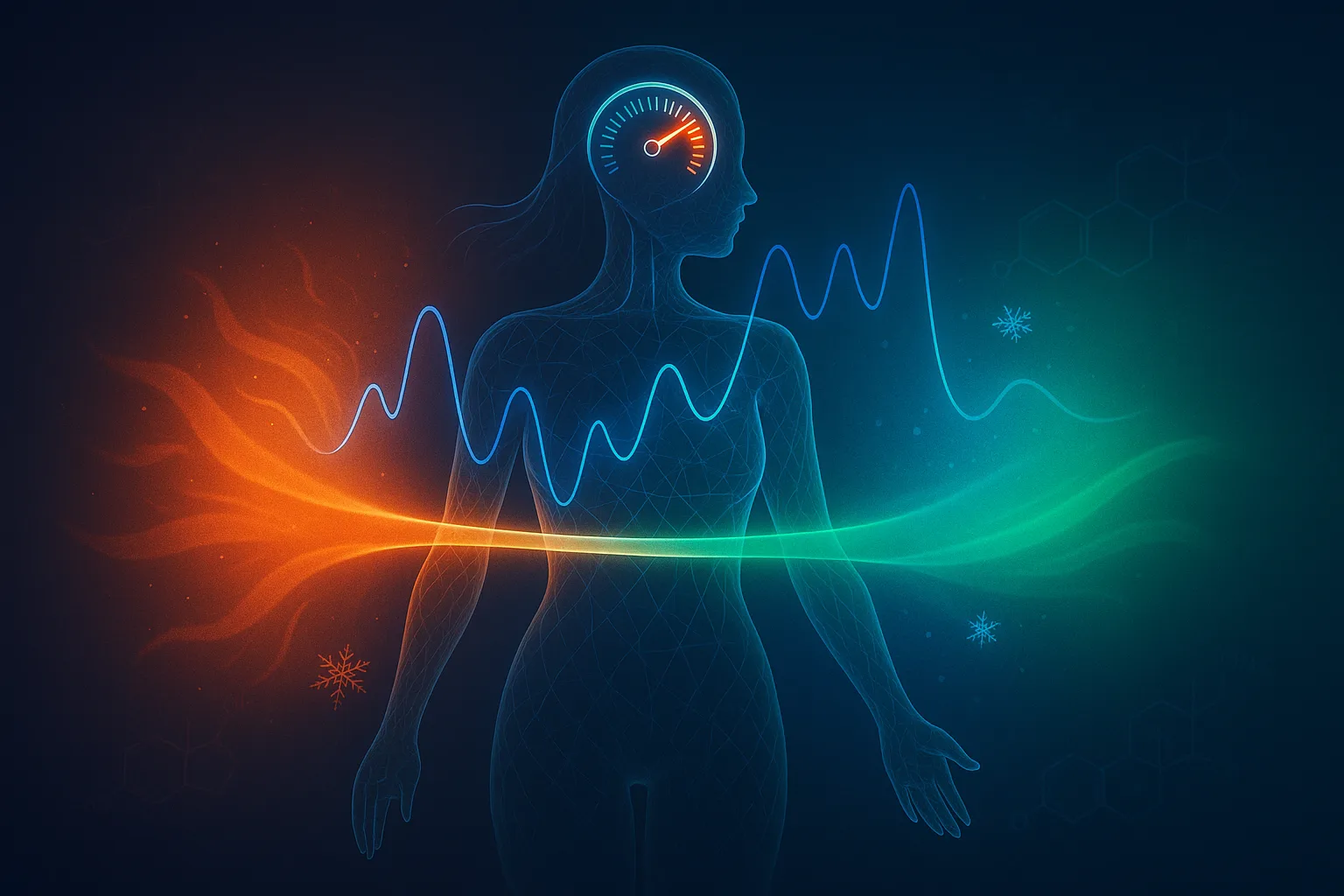
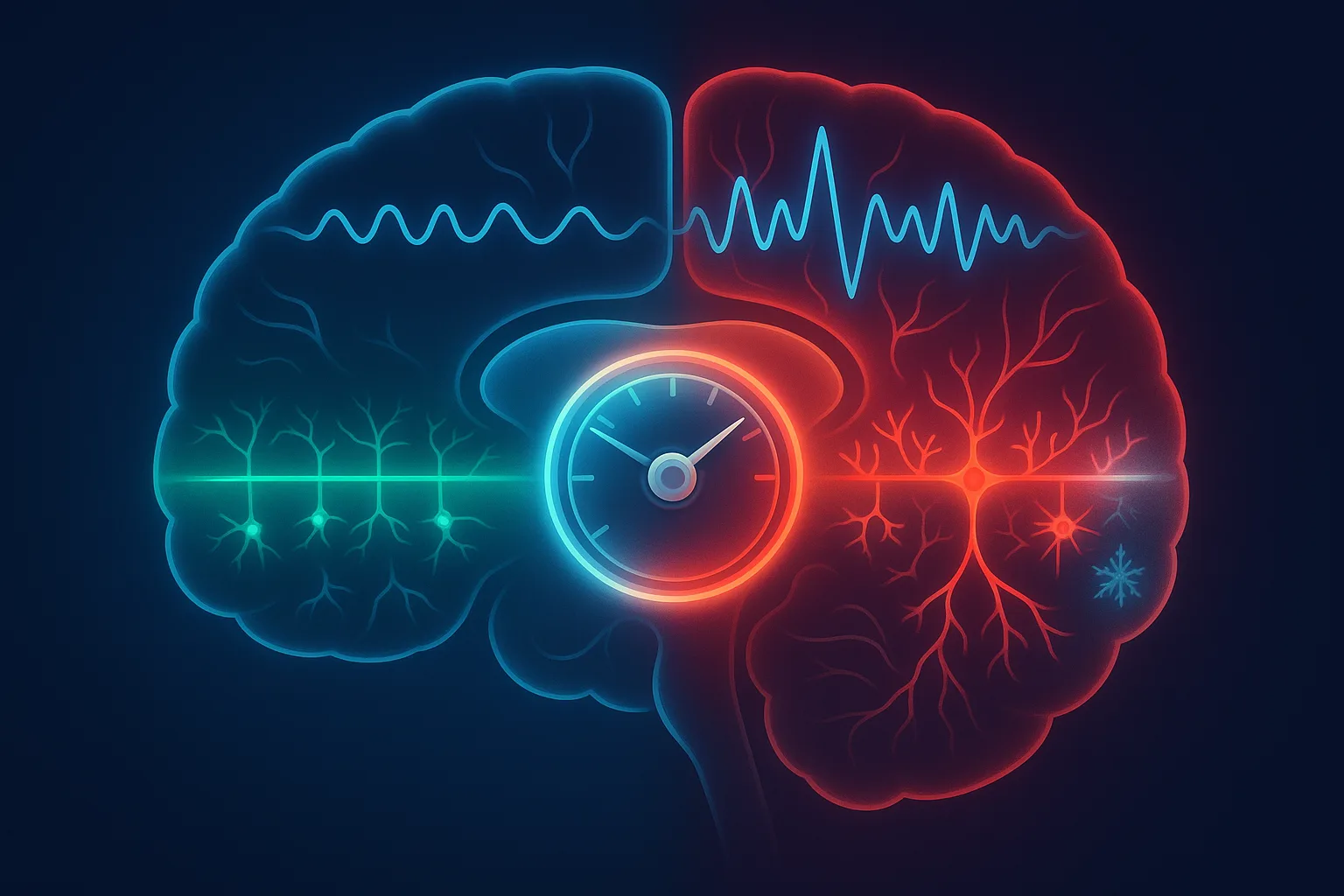
The mechanism is the same: fluctuating estrogen disrupts the hypothalamus, the brain's thermostat, narrowing the temperature range your body tolerates
A chill often follows a hot flash because the body overcorrects after dumping heat and sweating
Feeling cold all the time (as opposed to in waves) is also a classic sign of hypothyroidism and iron-deficiency anemia — both common in midlife and easily tested
Loss of muscle mass in menopause lowers your internal heat generation, making you feel colder
HRT (especially transdermal estradiol) often helps by stabilizing estrogen and calming the volatile thermostat
Resistance training, thyroid and iron checks, and layering are practical non-hormonal strategies
Everyone warned you about the hot flashes. Nobody mentioned the cold.
So when you suddenly feel chilled to the bone in a warm room, or your hands and feet have turned to ice while everyone around you is comfortable, or a wave of cold and shivering washes over you out of nowhere — you assume it must be something else. A virus coming on. Bad circulation. Stress. Almost no one connects it to the same hormonal transition that everyone does talk about.
But cold flashes and persistent cold intolerance are genuine menopause symptoms. They are the overlooked flip side of hot flashes, driven by the very same broken thermostat in your brain. And because they rarely make the standard symptom lists, women experiencing them often spend months confused, cold, and unheard.
The good news: once you understand the mechanism, the cold makes sense — and there are real ways to address it.
Cold Flashes vs. Feeling Cold All the Time
These are two different experiences, and telling them apart matters because they point to different causes and solutions.
Cold flashes are sudden, transient waves of feeling cold — a chill that sweeps over you, sometimes with shivering, goosebumps, or clammy skin, then fades within minutes. They are episodic and abrupt, much like hot flashes but in the opposite direction. They are most clearly a vasomotor symptom of the menopause transition.
Constant cold intolerance is different: a persistent baseline of feeling cold, cold hands and feet much of the time, reaching for sweaters and blankets when others are comfortable. While estrogen decline contributes, this steady-state coldness is also the calling card of other conditions — particularly an underactive thyroid and iron-deficiency anemia — that deserve testing.
Feature
Cold flash
Constant cold intolerance
Pattern
Sudden waves, minutes long
Persistent, ongoing
Trigger
Often after a hot flash; spontaneous
Always present, worse in cold
Main driver
Hypothalamic thermostat dysregulation
Estrogen plus thyroid, iron, muscle loss
First step
Track pattern; consider HRT for the cluster
Test thyroid and iron before anything else
Knowing which one you have shapes everything that follows.
How Estrogen Decline Disrupts Your Thermostat
Your body temperature is governed by the hypothalamus, a small region deep in the brain that acts as a thermostat. It constantly compares your core temperature against a narrow target range — your "thermoneutral zone" — and triggers heating or cooling responses when you drift outside it.
Estrogen helps keep that thermoneutral zone comfortably wide. When estrogen is steady, your body tolerates moderate swings in temperature without dramatic reactions. When estrogen fluctuates and declines, the thermoneutral zone narrows. The thermostat becomes hypersensitive and twitchy, overreacting to small changes in either direction.
Mechanism
What Estrogen Normally Does
What Happens When It Declines
Thermoneutral zone
Keeps the comfortable range wide
Range narrows; small changes trigger reactions
Hypothalamic neurons
Stabilizes KNDy temperature neurons
Neurons become hyperactive and erratic
Circulation
Supports steady blood flow to extremities
Reduced flow leaves hands and feet cold
Autonomic balance
Smooths heating and cooling responses
Overcorrection causes heat-then-chill swings
This is the key insight: hot flashes and cold flashes are two outputs of the same dysregulated circuit. When the narrowed thermostat overreacts to a tiny rise in core temperature, you get a hot flash. When it overcorrects on the way back down — or overreacts to a small drop — you get a cold flash. The thermostat has simply lost its smooth, forgiving middle ground.
The Hot Flash–Cold Flash Connection
One of the most common patterns women report: a chill that arrives right after a hot flash. This is not random. It is the direct, mechanical consequence of how a hot flash resolves.
Here is the sequence. The hypersensitive hypothalamus misreads your core temperature as too high and triggers an aggressive cooling response. Blood vessels near the skin dilate, you flush, and you sweat — sometimes profusely. That is the hot flash. But then the surge passes, and two things happen at once: the evaporating sweat cools your skin rapidly, and the dysregulated autonomic nervous system, prone to overcorrecting, swings too far in the cooling direction. The result is a sudden chill — clammy, shivering, suddenly cold — as your body overshoots on the rebound.
In other words, the post-flash chill is the overcorrection from the body's overaggressive cooling. The same broken thermostat that ran too hot a moment ago now runs too cold.
This shared origin has a practical upside. Because hot flashes and cold flashes travel together as part of the same vasomotor cluster, treatments that calm hot flashes usually calm the cold flashes too. You do not have to treat them separately. Stabilizing the thermostat smooths out both extremes.
Women's HRT — Menopause-First Telehealth
Bioidentical estradiol, progesterone, and low-dose testosterone — all 50 states, unlimited physician access.
Before attributing constant coldness entirely to hormones, it is essential to rule out other causes — several are common in midlife women, easily tested, and very treatable. Feeling cold all the time is one of the classic overlap symptoms where menopause and other conditions look identical.
Hypothyroidism (underactive thyroid). This is the single most important thing to rule out. An underactive thyroid slows your metabolism and lowers heat production, producing persistent cold intolerance, fatigue, weight gain, dry skin, hair thinning, and constipation — a symptom list that overlaps heavily with menopause. Thyroid problems become markedly more common in women in their 40s and 50s, which is exactly when menopause arrives, so the two are easily confused. A simple TSH blood test (ideally with free T4) is the first step. For more on how thyroid and HRT interact, see the HRT and thyroid medication interaction guide.
Iron-deficiency anemia. Low iron reduces your blood's ability to carry oxygen, and a frequent symptom is feeling cold — especially cold hands and feet — alongside fatigue, pallor, and breathlessness. Heavy or irregular perimenopausal bleeding is itself a common cause of iron deficiency, creating a direct link to the menopause transition. A ferritin and complete blood count test identifies it. See low ferritin and iron deficiency for the fuller picture.
Loss of muscle mass. Muscle is your body's primary heat generator. The menopause transition accelerates muscle loss (sarcopenia), which lowers your resting metabolic rate and your internal heat production — leaving you genuinely colder. This is one reason resistance training matters so much in midlife; see testosterone, joint pain, and muscle loss in women.
Raynaud's phenomenon. If your fingers or toes turn white, then blue, then red — and go numb — in response to cold or stress, this is Raynaud's, a circulation disorder that is more common in women and can flare in midlife. It warrants its own evaluation.
Low body weight, poor circulation, and certain medications can also contribute. The pattern that points to menopause: cold flashes that come in waves, cluster with hot flashes and other symptoms, and ebb and flow with hormonal changes. The pattern that points elsewhere: relentless, constant cold paired with fatigue, weight changes, or color changes in the extremities. When in doubt, get the simple blood work.
Does HRT Help?
For women whose cold flashes are genuinely part of the menopausal vasomotor cluster, hormone therapy often helps — for the same reason it helps hot flashes.
The logic follows the mechanism. Cold flashes come from an unstable, narrowed thermostat. By restoring steadier estrogen, HRT widens the thermoneutral zone again, so your body stops overreacting to small temperature changes in either direction. The heat surges ease, and the cold overcorrections that follow them ease with them. In practice:
Transdermal estradiol (patch or gel) is generally preferred over oral estrogen because it delivers more stable blood levels and avoids the daily peaks and troughs that keep a volatile thermostat agitated. Steady is the goal. See the estradiol patch dosing guide.
Combined therapy with progesterone is used for women with an intact uterus; progesterone also has its own mildly thermogenic, calming effect — see progesterone and testosterone in women's HRT.
The benefit is usually part of the whole picture. HRT calms the vasomotor dysregulation behind both hot and cold flashes, so as the flashes settle, the trailing chills settle too.
What about testosterone? Testosterone supports muscle mass, energy, and metabolic rate — all of which influence how warm you feel. It is not prescribed specifically for cold flashes, but if you are already a candidate for it because of low libido, low energy, or muscle loss, maintaining muscle and metabolic drive can help you stay warmer. The complete guide to testosterone for women covers where it fits.
The honest framing: HRT addresses cold flashes that are part of the vasomotor cluster, but it will not fix an underlying thyroid or iron problem. If your dominant complaint is constant cold rather than waves of it, rule those out first — and treat them on their own if found.
Non-Hormonal Strategies That Help
Whether or not you pursue HRT, these measures raise your warmth and target the common contributors:
Build and protect muscle:
Resistance training — muscle is your body's heat furnace; building and preserving it directly raises baseline warmth and metabolic rate
Adequate protein — supports muscle maintenance, especially important as estrogen and testosterone decline
Rule out and correct the common culprits:
Thyroid — get a TSH (and free T4) test; an underactive thyroid is a leading, fixable cause of feeling cold
Iron / ferritin — test for iron-deficiency anemia, especially if perimenopausal bleeding has been heavy
Vitamin B12 and vitamin D — both are commonly low in midlife and support energy and circulation
Manage the swings day to day:
Layer clothing so you can add or shed as your temperature swings — and keep hands and feet specifically warm with socks and gloves
Stay active — movement supports circulation to the extremities
Stabilize blood sugar and manage stress — glucose dips and stress hormones can trigger cold, shaky sensations
Limit alcohol — it causes a deceptive warm flush followed by a deeper chill
Layer your bedding so you can adjust through the night as hot and cold flashes alternate
Track the pattern. Keep a brief log of when the cold hits, what preceded it (a hot flash? cold exposure? stress?), and whether it comes in waves or stays constant. This distinguishes the menopausal pattern from one that needs a thyroid or iron workup — and gives your provider useful information.
When to See a Doctor
Occasional cold flashes that come and go with other menopause symptoms are benign. See a doctor if:
You feel cold all the time rather than in waves — this warrants thyroid and iron testing
Cold comes with fatigue, weight gain, dry skin, or hair thinning (possible hypothyroidism)
Cold comes with pallor, breathlessness, or known heavy bleeding (possible iron-deficiency anemia)
Your fingers or toes turn white or blue and numb in the cold (possible Raynaud's)
You have drenching night sweats followed by chills, with weight loss or fever (needs prompt evaluation)
The cold is severe, worsening, or interfering with daily life
A basic workup typically includes TSH and free T4, ferritin and a complete blood count, and sometimes vitamin B12 and D. Ruling these out is reassuring and frequently uncovers a simple, fixable cause.
The Bigger Picture
Cold flashes and cold intolerance belong to a large, under-discussed category of menopause symptoms that go far beyond the famous hot flashes — burning mouth, formication, electric shocks, tinnitus, dizziness, heart palpitations. They are all downstream of the same hormonal transition reshaping your nervous system and autonomic function. They are real, they are common, and they are too often dismissed because they do not appear on the standard checklist.
The encouraging reality: cold flashes are almost always benign and self-limiting, fading as hormone levels stabilize in postmenopause. And because they share a mechanism with hot flashes, the same comprehensive approach to your hormones tends to relieve them — while the simple step of checking your thyroid and iron rules out the most common impostors.
Women experiencing cold flashes alongside other menopause symptoms often benefit from an integrated evaluation through online HRT clinics that assess the full hormonal picture — and check thyroid and iron — rather than treating each odd symptom in isolation. The best online HRT clinics for women comparison can help you find a provider who takes the lesser-known symptoms seriously.
References
Freedman RR. Menopausal hot flashes: mechanisms, endocrinology, treatment. The Journal of Steroid Biochemistry and Molecular Biology. 2014;142:115-120. doi:10.1016/j.jsbmb.2013.08.010
Rance NE, Dacks PA, Mittelman-Smith MA, Romanovsky AA, Krajewski-Hall SJ. Modulation of body temperature and LH secretion by hypothalamic KNDy neurons: a novel hypothesis on the mechanism of hot flushes. Frontiers in Neuroendocrinology. 2013;34(3):211-227. doi:10.1016/j.yfrne.2013.07.003
Charkoudian N, Stachenfeld N. Sex hormone effects on autonomic mechanisms of thermoregulation in humans. Autonomic Neuroscience. 2016;196:75-80. doi:10.1016/j.autneu.2015.11.004
Stuenkel CA, Davis SR, Gompel A, et al. Treatment of symptoms of the menopause: an Endocrine Society clinical practice guideline. The Journal of Clinical Endocrinology & Metabolism. 2015;100(11):3975-4011. doi:10.1210/jc.2015-2236
Cold flashes are sudden waves of feeling cold or chilled, sometimes with shivering, goosebumps, or clammy skin — essentially the temperature-dysregulation opposite of a hot flash. They happen because declining and fluctuating estrogen disrupts the hypothalamus, the brain's thermostat, narrowing the temperature range your body tolerates before it reacts. The same dysregulated circuit that overreacts to warmth with a hot flash can overcorrect and leave you suddenly cold. Many women experience a cold flash immediately after a hot flash: the body floods with heat and sweat, then overcompensates with a chill as the sweat evaporates and the autonomic system swings the other way. Cold flashes are usually brief, harmless, and tend to settle as hormone levels stabilize in postmenopause.
Why do I feel cold all the time during perimenopause and menopause?
Persistent cold intolerance — as opposed to brief cold flashes — has several overlapping causes in midlife. Estrogen helps regulate both circulation and the hypothalamic thermostat, so when it declines, your body becomes less efficient at maintaining and distributing core warmth, and blood flow to the hands and feet can drop. Loss of muscle mass that often accompanies menopause matters too: muscle generates heat, so less of it means a lower resting metabolic furnace. But feeling cold all the time is also a classic sign of an underactive thyroid (hypothyroidism) and of iron-deficiency anemia, both of which become more common in midlife women and both of which are easily tested. If cold intolerance is constant rather than coming in waves, getting thyroid and iron levels checked is the sensible first step before assuming it is purely hormonal.
Does HRT help with cold flashes and feeling cold?
It often does, because the mechanism is the same one that drives hot flashes — an unstable hypothalamic thermostat. By restoring steadier estrogen levels, hormone therapy widens the temperature range your body tolerates without overreacting, which reduces both the heat surges and the cold overcorrections that follow them. Transdermal estradiol (patch or gel) is generally preferred because it delivers more stable blood levels than oral estrogen, and stability is exactly what calms a volatile thermostat. The benefit is usually part of treating the whole vasomotor picture rather than targeting cold flashes alone. That said, if your main problem is constant cold rather than flashes, HRT will not fix an underlying thyroid or iron problem — those need to be ruled out and treated on their own.
Why do I get a chill right after a hot flash?
This is one of the most common patterns women report, and it reflects how a hot flash actually works. When the hypothalamus misreads your core temperature as too high, it triggers a heat-dumping response: blood vessels near the skin dilate, you flush, and you sweat. Once that surge passes, the evaporating sweat cools your skin rapidly, and the autonomic nervous system — which tends to overcorrect when it is dysregulated — can swing too far the other way, leaving you suddenly cold, clammy, and shivering. So the post-flash chill is essentially the rebound from the body's overaggressive cooling. As HRT or other treatments smooth out the hot flashes, the trailing cold flashes usually ease as well.
Are menopause cold flashes a sign of something serious?
In most cases, no — occasional cold flashes that come and go with other menopause symptoms are a benign feature of temperature dysregulation. But because feeling cold can also signal treatable medical conditions, it is worth paying attention to the pattern. Constant cold intolerance, unexplained fatigue, weight gain, dry skin, and hair thinning together point toward hypothyroidism. Cold hands and feet with fatigue, pallor, and breathlessness can indicate iron-deficiency anemia. Fingers or toes that turn white or blue and numb in the cold may be Raynaud's phenomenon. And drenching night sweats followed by chills, especially with weight loss or fever, deserve prompt evaluation for non-hormonal causes. If your cold symptoms are persistent, severe, or paired with any of these red flags, see a doctor rather than assuming menopause is the only explanation.
What can I do to feel warmer during menopause besides HRT?
Several practical steps help. Build and preserve muscle with resistance training — muscle is your body's primary heat generator, and protecting it directly raises your baseline warmth and metabolic rate. Get thyroid and iron levels checked and corrected if low, since both are common, fixable causes of feeling cold. Layer clothing so you can adjust to the swings, keep your hands and feet warm specifically (warm socks, gloves), and stay physically active to support circulation. Manage stress and stabilize blood sugar, since both stress hormones and glucose dips can trigger cold, shaky sensations. Limit alcohol, which causes a deceptive warm flush followed by a deeper chill. And keep your bedroom cool but layer your bedding so you can shed or add covers as your temperature swings overnight.
Can low testosterone make women feel cold too?
Indirectly, yes. Testosterone is part of the female hormone picture and supports muscle mass, energy, and metabolic rate — all of which influence how warm you feel. As testosterone declines alongside estrogen in midlife, the loss of muscle and the drop in energy and metabolic drive can contribute to feeling colder and more fatigued. Testosterone is not prescribed specifically to treat cold intolerance, but if you are already a candidate for it because of low libido, low energy, or muscle loss, restoring it may help you maintain the muscle and metabolic activity that keep you warm. The complete guide to testosterone for women covers where it fits in the broader hormonal picture, and a thorough clinic evaluation looks at estrogen, progesterone, testosterone, thyroid, and iron together rather than in isolation.