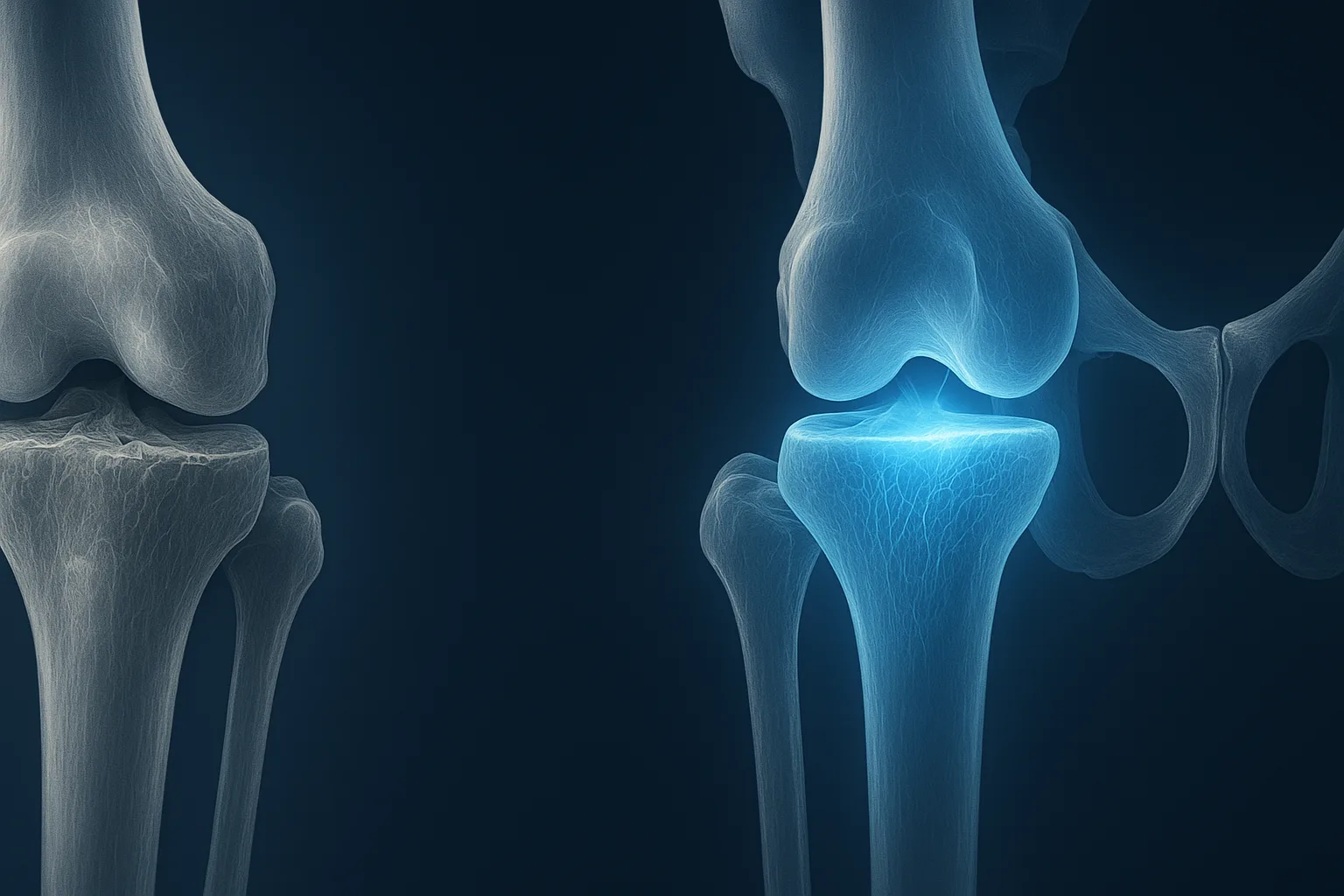
Key Takeaways: Joint pain affects up to 71% of women during the menopausal transition, making it one of the most common yet underdiagnosed symptoms of hormone decline. Testosterone plays a direct role in cartilage maintenance, collagen synthesis, and muscle preservation. Women with higher free testosterone levels have significantly lower rates of sarcopenia and joint degeneration. Addressing testosterone alongside estrogen may be necessary for complete musculoskeletal symptom relief.
The Symptom Nobody Talks About
Ask any woman about menopause symptoms and she will mention hot flashes. Maybe mood swings or sleep problems. What she probably will not mention -- because no one told her it was related -- is the joint pain that crept in during her 40s and never left.
This is not a minor complaint. A 2020 systematic review and meta-analysis found that 71% of perimenopausal women experience musculoskeletal pain, making it more prevalent than hot flashes, night sweats, or mood disturbances [1]. Yet it remains one of the most underrecognized symptoms of the menopausal transition.
The typical trajectory looks like this: a woman in her mid-40s starts noticing morning stiffness in her hands. Her knees ache after exercise. Her shoulders feel tight in ways they never did before. She goes to her doctor, who checks inflammatory markers (normal), orders X-rays (unremarkable), and sends her home with ibuprofen.
Nobody checks her hormones.
This is the gap in care that costs women years of unnecessary pain and progressive joint deterioration. The musculoskeletal symptoms of menopause are real, they are common, and they are directly linked to declining sex hormones -- including testosterone.
How Hormone Decline Causes Joint Pain
The Estrogen-Testosterone Double Hit
Most discussions about menopausal joint pain focus exclusively on estrogen. That is only half the story.
Estrogen does play a significant role. It modulates inflammatory cytokines, influences pain perception, and helps maintain synovial fluid viscosity. When estrogen drops at menopause, joints lose a key anti-inflammatory signal [2].
But testosterone matters too -- and it starts declining much earlier. Women lose approximately 50% of their testosterone between ages 20 and 40, well before menopause begins. By the time perimenopause arrives, testosterone levels may already be critically low.
Testosterone affects joint health through several distinct mechanisms:
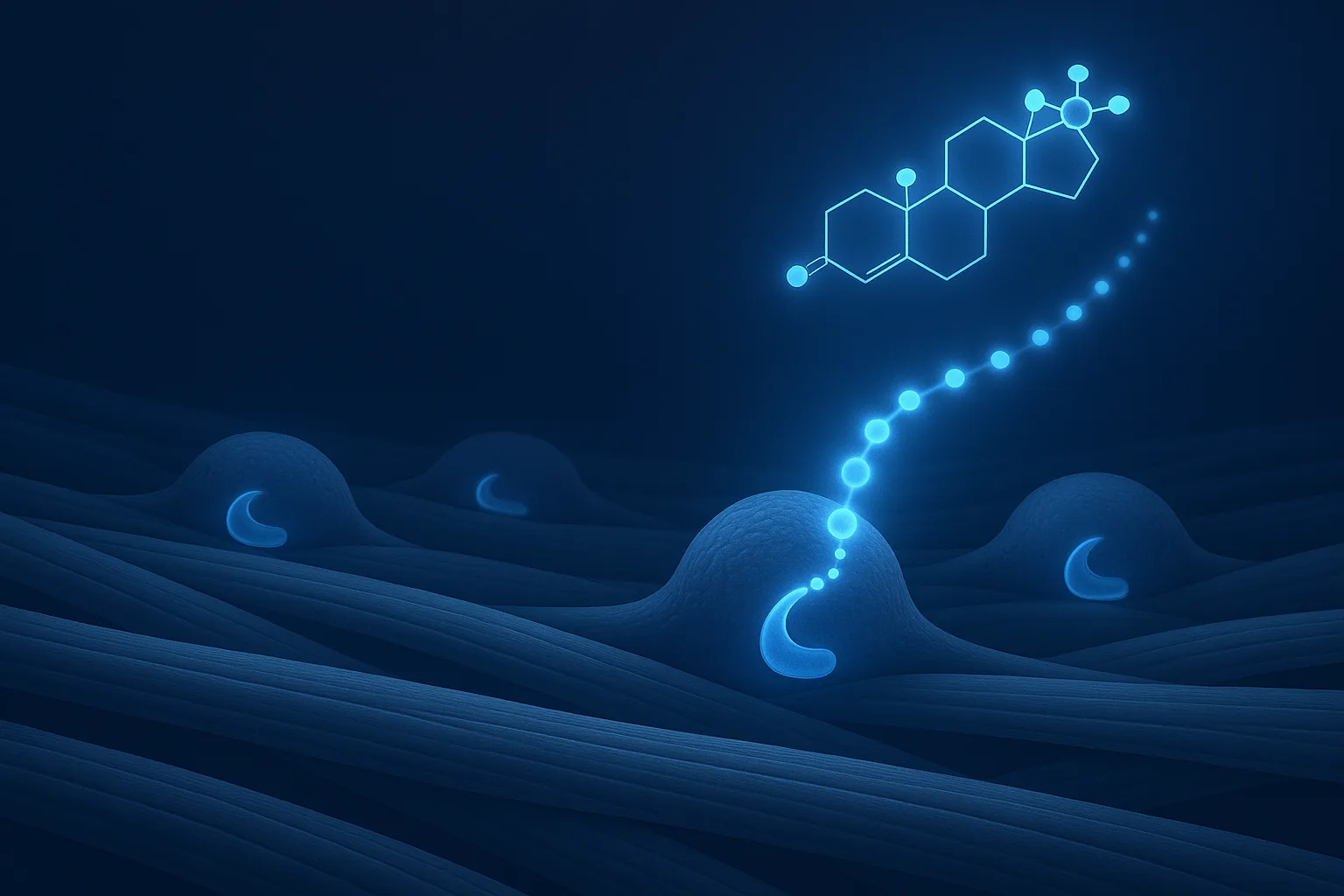
Collagen synthesis. Androgen receptors are present throughout cartilage, bone, and connective tissue. Testosterone directly stimulates collagen production in these tissues. When testosterone drops, the raw material for cartilage repair and tendon maintenance declines [3].
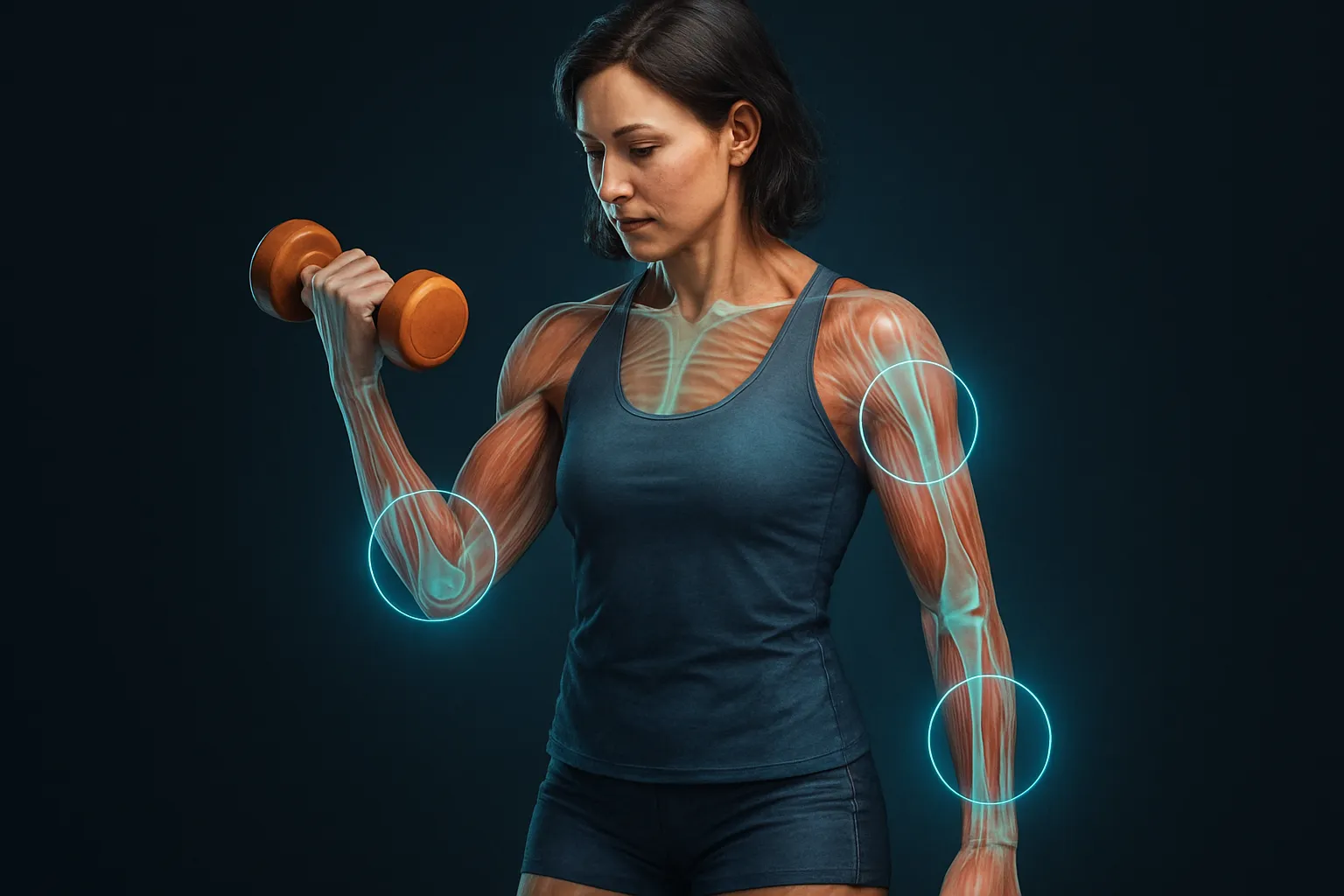
Muscle-mediated joint protection. Strong muscles stabilize joints and absorb impact forces. Testosterone is the primary anabolic hormone driving muscle protein synthesis. As testosterone declines, women lose the muscle mass that protects their joints from mechanical stress.
Pain modulation. Testosterone influences pain thresholds through central and peripheral mechanisms. Lower testosterone levels are associated with increased pain sensitivity, which may explain why women experience higher rates of chronic pain conditions after menopause [4].
Inflammatory regulation. While estrogen gets most of the credit here, testosterone also has anti-inflammatory properties. It suppresses certain pro-inflammatory cytokines that drive joint degradation.
Why Women Are Hit Harder Than Men
The sex disparity in joint disease is striking. Women develop osteoarthritis at nearly twice the rate of men after age 50. They experience higher rates of joint hypermobility syndrome. They report more severe joint pain at every age [3].
This is not coincidence. Before menopause, women have lower baseline testosterone levels than men. When those already-lower levels decline further with age and menopause, women cross a threshold where connective tissue maintenance can no longer keep pace with daily wear.
Men, by contrast, maintain relatively higher testosterone levels well into their 60s and 70s. Their cartilage continues receiving anabolic signals that support repair and regeneration. The protection is not absolute -- men get arthritis too -- but the hormonal buffer is substantially larger.
What the Research Shows
The WHI Data on Hormones and Joint Pain
The Women's Health Initiative (WHI) provided some of the strongest evidence that hormone therapy improves joint symptoms. In a study of 10,739 postmenopausal women randomized to estrogen-alone therapy or placebo, the hormone group showed significantly lower joint pain frequency (76.3% vs 79.2%, P = 0.001) and reduced severity [5].
The effect was modest but sustained through three years of follow-up. This matters because it demonstrates a hormonal mechanism behind menopausal joint pain -- not just aging or wear-and-tear.
However, the WHI studied estrogen alone. It did not measure testosterone levels or test testosterone therapy. This is a critical gap. The estrogen-only improvement was statistically significant but clinically modest. The question is whether adding testosterone would produce a larger effect by addressing the collagen synthesis and muscle maintenance pathways that estrogen does not directly drive.
Testosterone and Connective Tissue Biology
The biological plausibility for testosterone's role is strong. Androgen receptors are present in chondrocytes (cartilage cells), osteoblasts (bone-building cells), tenocytes (tendon cells), and fibroblasts throughout connective tissue [3].
In vitro studies show that testosterone at physiological concentrations stimulates extracellular matrix synthesis in connective tissue cells. It increases expression of collagen type I and type II -- the structural proteins that give cartilage its tensile strength and resilience.
A 2024 review in Lancet Rheumatology documented the association between female sex, low androgen levels, and higher rates of musculoskeletal pain and osteoarthritis. The authors noted that the striking sex disparity in these conditions points directly to a role for sex hormones, particularly androgens, in joint protection [4].
Testosterone and Pain Thresholds
Chronic widespread pain conditions -- fibromyalgia, myofascial pain, generalized arthralgia -- are 2-3 times more prevalent in women than men. This sex difference emerges at puberty and widens at menopause, tracking precisely with relative androgen levels.
Animal studies demonstrate that testosterone has direct anti-nociceptive (pain-reducing) effects. Gonadectomized animals develop widespread muscle pain that resolves with testosterone replacement. The mechanism involves testosterone's modulation of central pain processing pathways and peripheral nerve sensitization.
For women, this means that testosterone deficiency may lower the pain threshold at which normal joint wear becomes symptomatic. The same degree of cartilage thinning that produces no symptoms in a woman with adequate testosterone may cause significant pain when testosterone is depleted.
The Sarcopenia Connection
Sarcopenia -- the progressive loss of muscle mass and function with aging -- is both a consequence of testosterone decline and a driver of joint deterioration.
The relationship between free testosterone and sarcopenia is dose-dependent. A 2021 study found that women in the highest quartile of free testosterone had 55% lower odds of sarcopenia compared to those in the lowest quartile [6]. Low free testosterone was specifically associated with decreased handgrip strength, a validated predictor of functional decline and disability.
Menopause accelerates muscle loss through multiple hormonal pathways. Declining estrogen, testosterone, growth hormone, and IGF-1 all contribute [7]. But testosterone's role is uniquely important because it is the primary signal for muscle protein synthesis -- the process that repairs and builds muscle tissue after exercise or daily activity.
When muscle mass drops, the downstream effects on joints are predictable:
Reduced shock absorption. Muscles act as dynamic stabilizers that absorb ground reaction forces before they reach joint surfaces. Less muscle means more mechanical load directly on cartilage.
Joint instability. Weakened muscles around the knee, hip, and shoulder allow greater joint play, leading to abnormal wear patterns and accelerated cartilage breakdown.
Impaired recovery. The muscle-tendon units that support joints need anabolic signaling to repair after daily use. Without adequate testosterone, micro-damage accumulates.
This creates a vicious cycle: low testosterone causes muscle loss, which increases joint stress, which causes more pain, which reduces physical activity, which accelerates further muscle loss.
Practical Protocols: Addressing Joint Pain and Muscle Loss
Step 1: Get the Right Labs
Before starting any hormone therapy, you need a complete picture. For joint pain and muscle loss specifically, request:
Total testosterone (sensitive assay -- standard assays are inaccurate at female levels)
Free testosterone (calculated or equilibrium dialysis, not the analog assay)
SHBG (sex hormone-binding globulin -- high SHBG binds testosterone, reducing the active fraction)
Estradiol
DHEA-S (the adrenal androgen precursor)
Inflammatory markers (CRP, ESR) to rule out inflammatory arthritis
Vitamin D (deficiency worsens both joint pain and muscle weakness)
Thyroid panel (hypothyroidism mimics many of these symptoms)
Testing should be done in the morning when testosterone peaks. If you are perimenopausal with irregular cycles, test on day 3-5 of your cycle if possible.
The 2019 Global Consensus Position Statement on testosterone therapy for women established that there is no universally agreed-upon threshold for female testosterone deficiency [8]. This means diagnosis relies on the combination of symptoms plus low-normal or below-range levels -- not a single cutoff number.
Step 2: Optimize the Foundation
Hormone therapy works best on a solid foundation. Before or alongside starting testosterone:
Resistance training. This is non-negotiable for joint pain and sarcopenia. Strength training 2-3 times per week stimulates muscle protein synthesis that testosterone amplifies. Without the mechanical stimulus, testosterone has less substrate to work with. Focus on compound movements that load multiple joints: squats, deadlifts, rows, presses.
Protein intake. Most women over 40 undereat protein. Target 1.2-1.6 g/kg body weight daily, distributed across 3-4 meals with at least 30g per serving to maximize muscle protein synthesis.
Vitamin D and omega-3s. Vitamin D deficiency is endemic and directly impairs both muscle function and joint health. Target 40-60 ng/mL. Omega-3 fatty acids (2-3g EPA/DHA daily) provide meaningful anti-inflammatory support for joints.
Sleep. Growth hormone and testosterone recovery both depend on adequate sleep. 7-9 hours is the target. Poor sleep accelerates muscle loss and increases pain sensitivity.
Step 3: Testosterone Therapy Options
For women, testosterone is typically prescribed at 1/10th to 1/20th of the male dose. The goal is restoring levels to the upper end of the normal premenopausal range, not achieving supraphysiological levels.
Common delivery methods for women include:
Transdermal cream (1-5 mg/day): Most commonly prescribed. Applied to inner thigh, inner arm, or labia. Provides steady levels with daily application.
Testosterone pellets (25-75 mg every 3-4 months): Subcutaneous implant providing consistent release. Avoids daily dosing but cannot be adjusted once implanted.
Compounded sublingual troches or drops: Less commonly used but effective for some women.
Follow-up labs at 6-8 weeks after starting or adjusting dose. Key targets:
Free testosterone in the upper third of the premenopausal reference range
No virilization symptoms (acne, unwanted hair growth, voice changes) -- if present, the dose is too high
Joint pain assessment at baseline and every 3 months using a simple 0-10 visual analog scale
Most women notice initial improvements in joint stiffness within 4-8 weeks. Full connective tissue remodeling and meaningful muscle gains take 3-6 months. If there is no improvement in joint symptoms after 6 months at therapeutic testosterone levels, the pain likely has a non-hormonal primary driver.
Combining Estrogen and Testosterone
For most perimenopausal and postmenopausal women with joint pain, the best outcomes come from addressing both estrogen and testosterone. The WHI showed estrogen alone provides modest joint pain improvement [5]. Testosterone adds the anabolic and collagen-stimulating effects that estrogen alone does not provide.
This combination approach is consistent with the Global Consensus Statement, which recognizes testosterone therapy as an adjunct to standard menopausal hormone therapy when symptoms warrant it [8].
If you are already on estrogen-based HRT and still experiencing joint pain or muscle loss, adding testosterone is a logical next step. If you are not on any hormone therapy, a comprehensive protocol addressing both hormones from the start may produce faster and more complete relief.
Hypothyroidism -- causes diffuse myalgia and arthralgia that mimics hormonal joint pain
Vitamin D deficiency -- widespread musculoskeletal pain is a classic presentation
Autoimmune conditions -- lupus, Sjogren's syndrome, and other conditions peak in women during midlife
Mechanical problems -- rotator cuff tears, meniscus injuries, disc herniations need imaging and orthopedic evaluation
The key differentiator: hormonal joint pain tends to be bilateral, symmetrical, worse in the morning, and accompanied by other menopausal symptoms (hot flashes, sleep disruption, mood changes, low libido). If your joint pain is unilateral, localized, or associated with swelling, redness, or warmth, it needs a different workup.
The Bigger Picture: Musculoskeletal Health as a Longevity Issue
Joint pain and muscle loss are not just quality-of-life issues. They are predictors of long-term disability and mortality.
Sarcopenia is an independent risk factor for falls, fractures, hospitalization, and death in older adults [7]. Grip strength -- a direct measure of muscle function influenced by testosterone -- is one of the strongest predictors of all-cause mortality in aging populations.
Joint deterioration leads to reduced mobility, which leads to reduced physical activity, which accelerates cardiovascular disease, metabolic syndrome, cognitive decline, and further muscle loss. The cascade is predictable and devastating.
Addressing testosterone as part of a comprehensive musculoskeletal strategy is not vanity medicine. It is preventive care that targets the upstream hormonal drivers of disability.
For women considering hormone therapy, the best online HRT clinics for women offer comprehensive evaluation including testosterone assessment.
For dose-response on joint and lean-mass outcomes specifically, the 1-5mg dosing protocol breaks down ranges by delivery method (cream, pellet, injection).
References
Sipila S, et al. Musculoskeletal Pain during the Menopausal Transition: A Systematic Review and Meta-Analysis. Int J Environ Res Public Health. 2020;17(24):9327. PMID: 33299396
Watt FE. Musculoskeletal pain and menopause. Post Reprod Health. 2018;24(1):34-43. PMID: 29412042
Giltay EJ, et al. Hormonal modulation of connective tissue homeostasis and sex differences in risk for osteoarthritis of the knee. Maturitas. 2013;75(1):49-54. PMID: 23374322
Pereira D, et al. The influence of sex hormones on musculoskeletal pain and osteoarthritis. Lancet Rheumatol. 2024;6(2):e103-e115. PMID: 38251525
Chlebowski RT, et al. Estrogen alone and joint symptoms in the Women's Health Initiative randomized trial. Menopause. 2013;20(6):600-608. PMID: 23511705
Kim S, et al. Sex-Specific Differences in the Effect of Free Testosterone on Sarcopenia Components in Older Adults. Front Endocrinol. 2021;12:695614. PMID: 34630322
Messier V, et al. Menopause and sarcopenia: A potential role for sex hormones. Maturitas. 2011;68(4):331-336. PMID: 21353405
Davis SR, et al. Global Consensus Position Statement on the Use of Testosterone Therapy for Women. J Clin Endocrinol Metab. 2019;104(10):4660-4666. PMID: 31474158
Frequently Asked Questions
Does low testosterone cause joint pain in women?
Declining testosterone contributes to joint pain through multiple mechanisms: reduced collagen synthesis in cartilage, decreased muscle mass that destabilizes joints, increased inflammatory signaling, and lower pain thresholds. While estrogen decline gets most of the attention, testosterone plays a direct role in connective tissue maintenance.
How long does it take for testosterone to help joint pain?
Most women notice initial improvements in joint stiffness and pain within 4-8 weeks of starting testosterone therapy. Meaningful cartilage and connective tissue remodeling takes 3-6 months. Muscle-mediated joint stabilization improvements occur over 3-12 months as lean mass increases.
Can testosterone prevent sarcopenia in women?
Yes. Testosterone is directly anabolic to skeletal muscle. Women in the highest quartile of free testosterone have 55% lower odds of sarcopenia compared to the lowest quartile. Combined with resistance training, testosterone therapy can meaningfully slow or reverse age-related muscle loss.
Is testosterone or estrogen more important for joint pain in menopause?
Both matter, but they work through different mechanisms. Estrogen primarily modulates inflammation and pain signaling. Testosterone drives collagen synthesis, muscle maintenance, and connective tissue repair. Optimal joint health in menopause likely requires addressing both hormones.