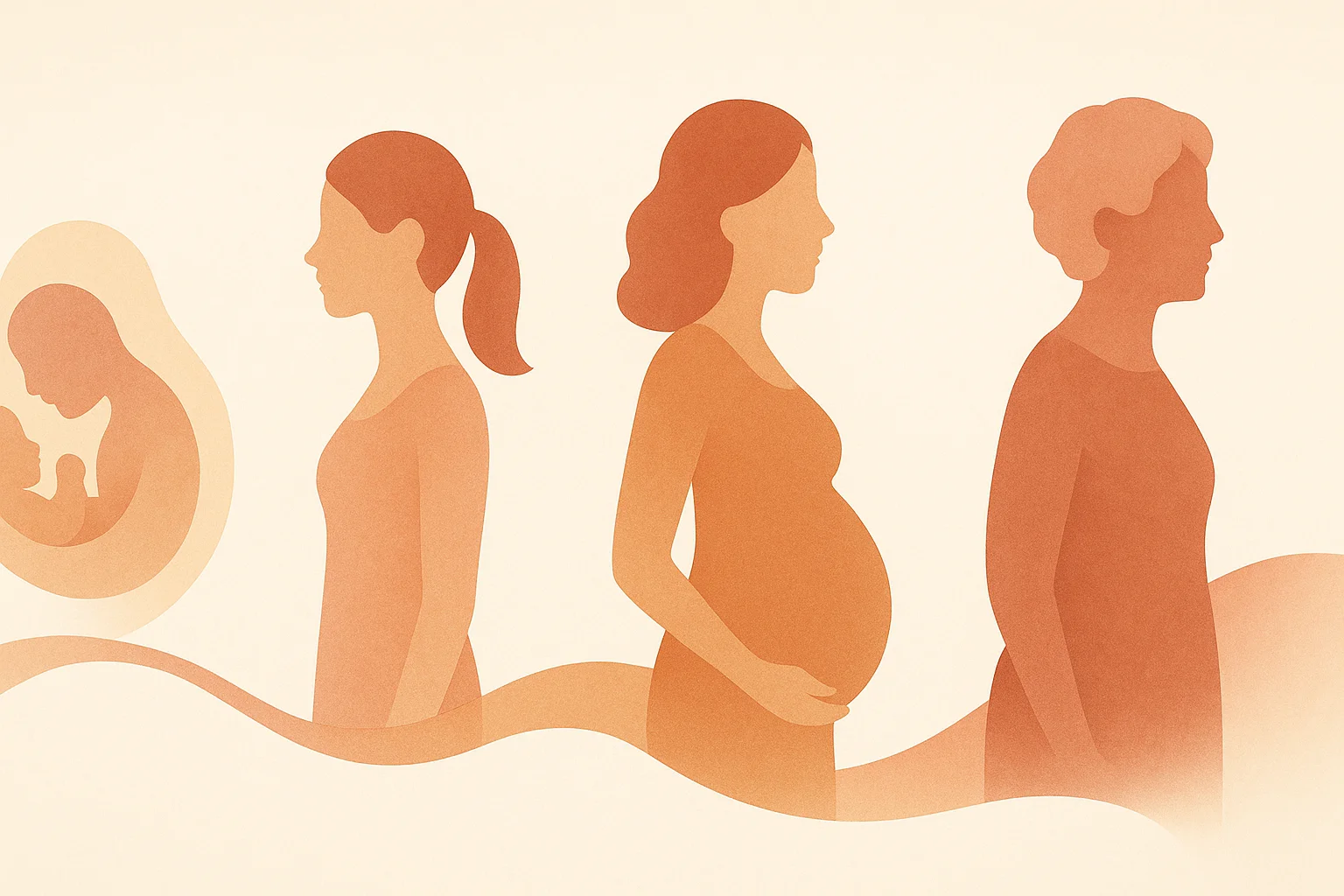
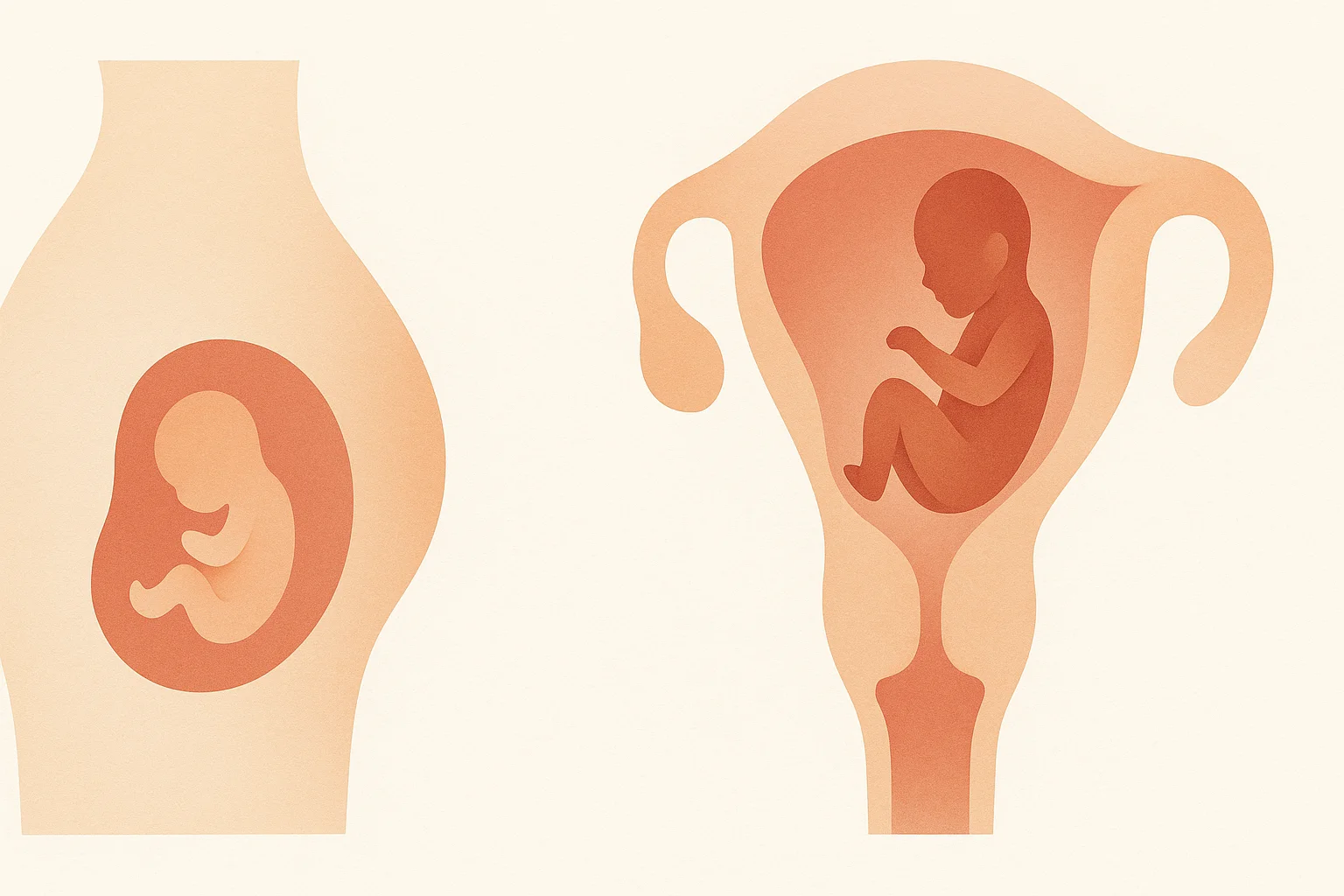
Key Takeaways: Perimenopause lasts a median of 7 years, starts at an average age of 47, and ends at the final menstrual period around age 51-52. The transition has two phases — early perimenopause (cycle length changes, mood, sleep, palpitations) and late perimenopause (skipped periods, hot flashes, intensifying symptoms). The "34 symptoms" list captures the breadth of tissue effects when estrogen fluctuates and then declines. HRT is appropriate and often most helpful during perimenopause, not after menopause, because it stabilizes the swings that drive the worst symptoms.
The Transition Most Women Don't See Coming
The textbook version of menopause is "periods stop at 51 and you get hot flashes." The real version is a 4-10 year neuroendocrine transition that usually begins in the mid-40s — or earlier — and includes dozens of symptoms that most women don't connect to hormones.
Heart palpitations at 44. New anxiety at 42. Sleep that breaks at 3 a.m. for the first time. Knees that hurt without an injury. Brain fog in meetings. Periods that arrive 3 days early. None of these feel like menopause. All of them often are.
This is perimenopause. And for most women, it is when HRT helps the most — not after.
Defining the Transition
Menopause is a single day: 12 months after the final menstrual period. The average woman in North America reaches menopause at 51-52.
Perimenopause is the transition before it. The STRAW+10 staging system, widely used in research, divides it into late reproductive years and the actual transition [1, 2]:
Stage
Description
Typical Age
-3b
Late reproductive, regular cycles, subtle changes
35-42
-3a
Subtle cycle length changes, FSH may begin to rise
40-45
-2
Early perimenopause: cycle length varies by ≥7 days
45-50
-1
Late perimenopause: ≥60 days between periods
47-52
+1a
First year after FMP (official menopause)
51-53
+1b-c
Early postmenopause
52-57
+2
Late postmenopause
57+
The SWAN study found a median transition duration of ~4 years between stage -2 and the FMP, but total symptomatic duration averages 7 years when late reproductive symptoms are counted [3]. Women whose symptoms begin in their late 30s often transition for 8-10 years.
Why the Symptoms Are So Varied
Estrogen receptors are present in nearly every tissue — brain, heart, blood vessels, bone, skin, joints, bladder, vagina, breast, gut, thyroid. Progesterone receptors are similarly distributed. When hormone levels fluctuate and eventually decline, every tissue with these receptors can generate a symptom.
This is why perimenopause does not look like one condition. It looks like 15 conditions at once.
And it is why many women are misdiagnosed: palpitations get a cardiology workup, anxiety gets an SSRI, joint pain gets an orthopedic referral, sleep problems get a sleep study. Each specialist sees their organ. None of them see the hormonal axis.
The "34 Symptoms" — What's On the List and Why
The "34 symptoms of perimenopause" is a marketing-shorthand list that has gained traction in the last decade. It is not a validated clinical scale, but it is directionally correct — perimenopause really does affect most body systems. Here is the full list, grouped by mechanism:
Reproductive and Genitourinary
Irregular periods — cycle length changes are the defining diagnostic feature
Heavy or prolonged bleeding — anovulatory cycles produce unopposed estrogen exposure
Spotting between periods — erratic progesterone production
Vaginal dryness — early GSM
Painful intercourse — late GSM
Low libido — multifactorial; estrogen, testosterone, sleep, mood all contribute
Urinary urgency and frequency — urethral and bladder tissue thinning
Insomnia — often the earliest symptom, especially 3 a.m. wakings
Restless legs — iron and dopamine contributions
Musculoskeletal
Joint pain — estrogen maintains cartilage and reduces inflammation
Muscle aches — often misdiagnosed as fibromyalgia
Osteoporosis risk — accelerated bone loss in late perimenopause
Skin, Hair, and Tissue
Hair thinning on scalp — reduced estrogen and relative androgen excess
Unwanted facial hair — relative androgen excess
Dry skin — reduced collagen production
Itchy skin (formication) — neurologic
Brittle nails — protein turnover and nutrient status
Neurologic and Sensory
Headaches and migraines — often worsen in perimenopause, improve after
Tingling in extremities — estrogen affects peripheral nerves
Tinnitus — inner ear estrogen receptors
Burning mouth and gum problems — mucosal tissue thinning
Not every woman experiences all 34. Most experience 8-15. The point is the breadth — if something new is happening to your body in your 40s, perimenopause is a plausible driver.
Early vs Late Perimenopause: What Changes
Early Perimenopause (Stage -2)
Cycle length still varies within the normal range, or starts shortening by 2-7 days
First sleep disruptions (3 a.m. wakings)
New or worsened PMS
New anxiety without an obvious trigger
Heart palpitations, especially at night
Heavier bleeding in some cycles
Migraines may intensify
FSH is variable — often normal. Estradiol swings wildly; peaks can be higher than premenopause.
Late Perimenopause (Stage -1)
Skipped periods (≥60 days between them)
Hot flashes and night sweats become frequent
Mood and cognitive symptoms peak
Joint pain and body composition changes accelerate
Vaginal dryness appears
FSH rises more consistently. Estradiol is low more often, with occasional big surges.
The Counterintuitive Point
Symptoms are usually worse in perimenopause than after menopause — because the fluctuations are more violent than the eventual low-and-steady state. This is why women in their mid-40s often feel worse than women in their late 50s. It is also why HRT helps most in perimenopause: stabilizing the hormonal swings is often more valuable than replacing eventually-lost hormones.
Women's HRT — Menopause-First Telehealth
Bioidentical estradiol, progesterone, and low-dose testosterone — all 50 states, unlimited physician access.
FSH fluctuates dramatically month-to-month in perimenopause. A single normal FSH in a 45-year-old with classic symptoms rules out nothing. Repeat testing on different cycle days can trend, but most specialists rely on clinical diagnosis in women over 45.
FSH testing is more meaningful in:
Women under 40 with suspected premature ovarian insufficiency
Women without a uterus where cycle tracking is not possible
Cases where diagnosis is truly uncertain
Estradiol
Also highly variable. A single value reflects the moment, not the trajectory. More useful as a response marker once on HRT (target 50-80 pg/mL for symptom control) than as a diagnostic tool pre-treatment.
TSH, Free T4, Free T3
Always order. Hypothyroidism and hyperthyroidism produce overlapping symptoms (fatigue, hair loss, weight, mood, palpitations). Misdiagnosing perimenopause as thyroid disease or vice versa is extremely common.
Testosterone and SHBG
Useful if fatigue, low libido, or poor training response are prominent. Free testosterone trending in the low half of the female range plus high SHBG is the common pattern.
A Sensible Baseline Panel
For a 45-year-old with new-onset perimenopausal symptoms:
FSH, LH, estradiol (on day 3-5 if still cycling)
TSH, free T4, free T3, TPO antibodies
Total and free testosterone, SHBG, DHEA-S
CBC, ferritin (anemia and iron stores)
Fasting glucose, HbA1c, insulin
Lipid panel
25-OH vitamin D
Comprehensive metabolic panel
This costs roughly $150-250 through direct-to-consumer labs, or is often fully covered by insurance with a primary care order.
When to Start HRT
The 2022 NAMS hormone therapy position statement, updated since 2017, establishes the core framework: HRT is first-line for bothersome vasomotor symptoms and genitourinary syndrome, and the benefit-risk profile is most favorable when started in women under 60 or within 10 years of menopause.
In perimenopause specifically, HRT is appropriate when:
Vasomotor symptoms disrupt sleep or function
Mood, anxiety, or cognitive symptoms are new and significant
Irregular heavy bleeding indicates anovulatory cycles
GSM symptoms have begun
Sleep is fragmented in a way that is not explained by lifestyle
You do not need to wait for periods to stop. In fact, waiting often means tolerating symptoms for 3-5 unnecessary years.
Typical Perimenopause HRT Protocol
Transdermal estradiol 0.025-0.05 mg/day patch, twice weekly. Lower doses are often sufficient because endogenous estradiol is still present intermittently.
Oral micronized progesterone 200 mg at bedtime, either:
Cyclic (12-14 days per month) if still ovulating and menstruating regularly
Continuous in later perimenopause or after skipping cycles for several months
Testosterone (optional) 0.5 mg/day transdermal cream if indicated by low libido, poor training response, or low baseline.
Reassess at 6-8 weeks and adjust. Most women feel meaningfully better within 4-8 weeks of starting a reasonable protocol.
When to Avoid or Delay HRT
Active or recent estrogen-sensitive cancer
Recent VTE, stroke, or MI
Active liver disease
Undiagnosed vaginal bleeding (investigate first)
Pregnancy possibility (perimenopausal women can still conceive)
These are the absolute contraindications. Most "don't take HRT" warnings come from the WHI's problematic framing of older women started on oral synthetic hormones and should not apply to a 45-year-old on transdermal estradiol and micronized progesterone.
Birth Control vs HRT in Perimenopause
A combined hormonal contraceptive pill can suppress the hormonal swings in early perimenopause and also provide pregnancy prevention. It is a reasonable option for women who still need contraception and have disruptive cycle-related symptoms.
However:
Combined pills contain higher estrogen doses than HRT
Synthetic progestins in many pills are less favorable than micronized progesterone
Most guidelines recommend switching from combined contraception to HRT by age 50-55
For a woman in her late 40s who does not need contraception, HRT is usually the better tool.
Mental Health in Perimenopause
The perimenopause window carries a roughly doubled risk of new-onset major depression, and a substantial increase in anxiety disorders. Women with a history of postpartum depression or premenstrual dysphoric disorder are at highest risk — their systems are already sensitive to hormonal fluctuation.
Key points:
New anxiety or depression in the 40s deserves a hormonal workup, not just an SSRI prescription
Many women respond to HRT alone when the primary driver is hormonal
Some need HRT plus an SSRI/SNRI
Micronized progesterone has mild anxiolytic effects via allopregnanolone
Testosterone supports dopamine signaling — useful for women with low energy and drive alongside mood symptoms
Sleep is the earliest and most disruptive symptom for many women. The 3 a.m. wake pattern is almost pathognomonic. Poor sleep compounds every other symptom — mood, weight, cognition, palpitations.
What helps:
Oral micronized progesterone at bedtime. Converts to allopregnanolone, a GABA-A positive modulator. Dose 100-200 mg.
Stable transdermal estradiol. Reduces night sweats and stabilizes autonomic tone.
Sleep hygiene: consistent schedule, cool room (65-68°F), no alcohol within 3 hours of bed.
Magnesium glycinate 200-400 mg at bedtime.
Screen light and caffeine cutoffs. Midlife caffeine clearance slows.
If HRT plus basic sleep hygiene does not resolve the problem by 3 months, investigate sleep apnea — prevalence rises sharply in postmenopause.
What to Expect Month-by-Month on HRT
Weeks 1-2
Sleep begins to consolidate
Baseline anxiety lowers
Palpitations decrease in frequency
Weeks 3-4
Hot flashes drop by ~50%
Mood is steadier
Vaginal dryness begins to improve
Weeks 6-8
Most women report they "feel like themselves again"
Cycle regularity may improve in earlier perimenopause
Joint aches decrease
Months 3-6
Full response, body composition effects visible
Skin and hair improvements
Sexual function improves (often adding low-dose vaginal estrogen if GSM is prominent)
If Not Improving by 12 Weeks
Verify serum estradiol (target 50-80 pg/mL)
Review progesterone timing (should be bedtime)
Consider adding testosterone
Rule out thyroid, iron, depression, sleep apnea as confounders
Who Should You See
A good perimenopause provider:
Knows STRAW staging and does not require you to be postmenopausal before treating
Uses transdermal estradiol and oral micronized progesterone as defaults
Will run a full hormonal and metabolic panel
Is willing to prescribe testosterone in women when indicated
Follows up at 6-8 weeks and titrates
The wrong provider:
Tells you "your labs are normal, nothing is wrong"
Prescribes only an SSRI for mood symptoms without assessing hormones
Uses medroxyprogesterone instead of micronized progesterone
Refuses to prescribe until periods stop
Many general OB-GYN practices still practice WHI-era caution. Midlife-focused telehealth clinics often move faster and more evidence-appropriately. Compare vetted options at our best online HRT clinic for women review.
The Bottom Line
Perimenopause is a 4-10 year neuroendocrine transition that starts at an average age of 47 and ends at the final menstrual period around 51-52. Symptoms span every organ system that carries estrogen receptors — which is most of them. The early phase is often worse than the postmenopausal state because the hormonal swings are more destabilizing than the eventual low-estrogen steady state.
HRT is appropriate and often most helpful in perimenopause itself. Waiting until periods stop means tolerating disruption that is straightforward to treat. Transdermal estradiol plus oral micronized progesterone, adjusted for cycling vs non-cycling status, is the foundation. Testosterone is a useful addition for a subset.
If you are in your 40s, feeling off, and have been told "it's just stress" — consider that it might be perimenopause, and that the tools to fix it are better than most primary care practices acknowledge.
Harlow SD, Gass M, Hall JE, et al. Executive summary of the Stages of Reproductive Aging Workshop +10: addressing the unfinished agenda of staging reproductive aging. J Clin Endocrinol Metab. 2012;97(4):1159-68.
Santoro N. Perimenopause: from research to practice. J Womens Health (Larchmt). 2016;25(4):332-9. PMID: 26653408
Greendale GA, Sternfeld B, Huang M, et al. Changes in body composition and weight during the menopause transition. JCI Insight. 2019;4(5):e124865. PMID: 30843880
The 2023 nonhormone therapy position statement of The North American Menopause Society. Menopause. 2023;30(6):573-590. PMID: 37252752
Rossouw JE, Anderson GL, Prentice RL, et al. Risks and benefits of estrogen plus progestin in healthy postmenopausal women: principal results from the Women's Health Initiative randomized controlled trial. JAMA. 2002;288(3):321-33. PMID: 12117397
Joffe H, Guthrie KA, LaCroix AZ, et al. Low-dose estradiol and the serotonin-norepinephrine reuptake inhibitor venlafaxine for vasomotor symptoms: a randomized clinical trial. JAMA Intern Med. 2014;174(7):1058-66. PMID: 24861828
Frequently Asked Questions
How long does perimenopause last?
Perimenopause lasts 4-10 years for most women, with a median of about 7. The average age of onset is 47, and the average age at the final menstrual period is 51-52. Women whose symptoms start earlier tend to have a longer transition — the SWAN data shows early-onset women average 8.6 years, while late-onset women average 4.3 years.
What is the first sign of perimenopause?
For most women, the earliest sign is a change in menstrual cycle length — cycles getting shorter by a few days or occasionally longer. Sleep disruption, new anxiety, heart palpitations, and worsening PMS often appear before hot flashes. Hot flashes are actually a late-stage sign in many women.
Can you start HRT in perimenopause?
Yes. HRT is appropriate in perimenopause when symptoms are disrupting sleep, mood, or function. You do not need to wait until periods stop. Low-dose transdermal estradiol plus cyclic or continuous micronized progesterone is the usual starting protocol, adjusted based on whether ovulation is still occurring.
Is FSH testing useful in perimenopause?
Less useful than many providers assume. FSH levels fluctuate dramatically month-to-month in perimenopause and a single normal value does not rule out the transition. Diagnosis in women over 45 is primarily clinical — based on cycle changes and symptoms. FSH testing is mainly useful for suspected premature ovarian insufficiency in women under 40.
What are the 34 symptoms of perimenopause?
The '34 symptoms' is a marketing-shorthand list that includes: irregular periods, hot flashes, night sweats, sleep disturbance, mood swings, anxiety, depression, brain fog, fatigue, heart palpitations, joint pain, muscle aches, headaches, dizziness, weight gain, bloating, vaginal dryness, painful sex, low libido, urinary urgency, UTIs, hair thinning, brittle nails, dry skin, itchy skin, electric shocks, tingling extremities, burning tongue, gum problems, tinnitus, breast tenderness, allergies, body odor changes, and irregular heartbeat.
Does perimenopause cause anxiety?
Yes. The drop in progesterone and erratic estradiol swings directly affect GABA and serotonin signaling. New or worsened anxiety is one of the most common and under-recognized perimenopause symptoms, often appearing in the late 30s to mid-40s, years before obvious menstrual changes.