Key Takeaways: Heart palpitations affect 20 to 40% of perimenopausal women and up to 54% of postmenopausal women, yet most women are never told this is a hormonal symptom. Fluctuating estrogen destabilizes the autonomic nervous system, and palpitations cluster tightly with hot flashes, night sweats, and anxiety. For most women, transdermal estradiol resolves palpitations within 4 to 8 weeks. A one-time cardiac workup is warranted, but in the absence of arrhythmia, palpitations in midlife women are usually hormonal and usually fixable.
The Symptom No One Warned You About
You are 44. You are lying in bed, and your heart suddenly pounds so hard you can feel it in your throat. It skips. It thuds. It races at 110 for no reason. You Google it and spiral into a panic that you are having a heart attack.
This is perimenopause. Nobody told you.
Palpitations are one of the most common and most terrifying symptoms of the menopause transition, and they are one of the least talked about. A 2021 analysis in Menopause found that moderate-to-severe palpitations affected 40% of women aged 40 to 59, and the severity correlated directly with vasomotor symptom burden and anxiety levels [1].
The feeling is real. The cause is usually hormonal. And in most cases, it is fixable.
What Perimenopause Palpitations Actually Feel Like
Palpitations are the conscious awareness of your heartbeat. In perimenopause, they show up in a few distinct patterns:
Sudden pounding. A forceful thump or series of thumps, often felt in the chest, throat, or ears. Frequently happens at rest.
Racing (tachycardia). Heart rate suddenly climbs to 100-130 bpm without exertion. Often lasts 30 seconds to a few minutes.
Skipped or "extra" beats. The sensation of a missed beat followed by a stronger one. These are usually premature atrial or ventricular contractions (PACs or PVCs) and are almost always benign.
Flutter. A rapid, irregular fluttering sensation, sometimes described as a "butterfly" in the chest.
Nocturnal palpitations. The most disruptive pattern. Palpitations that wake you from sleep, often at 3 a.m., frequently tied to night sweats or a cortisol surge.
Most women describe palpitations as more anxiety-provoking than painful. They do not hurt. They feel wrong.
Why Perimenopause Causes Palpitations
This is not a vague "hormone imbalance." There are specific mechanisms driving the racing-heart feeling, and understanding them explains why HRT works.
1. Estradiol Fluctuations Destabilize the Autonomic Nervous System
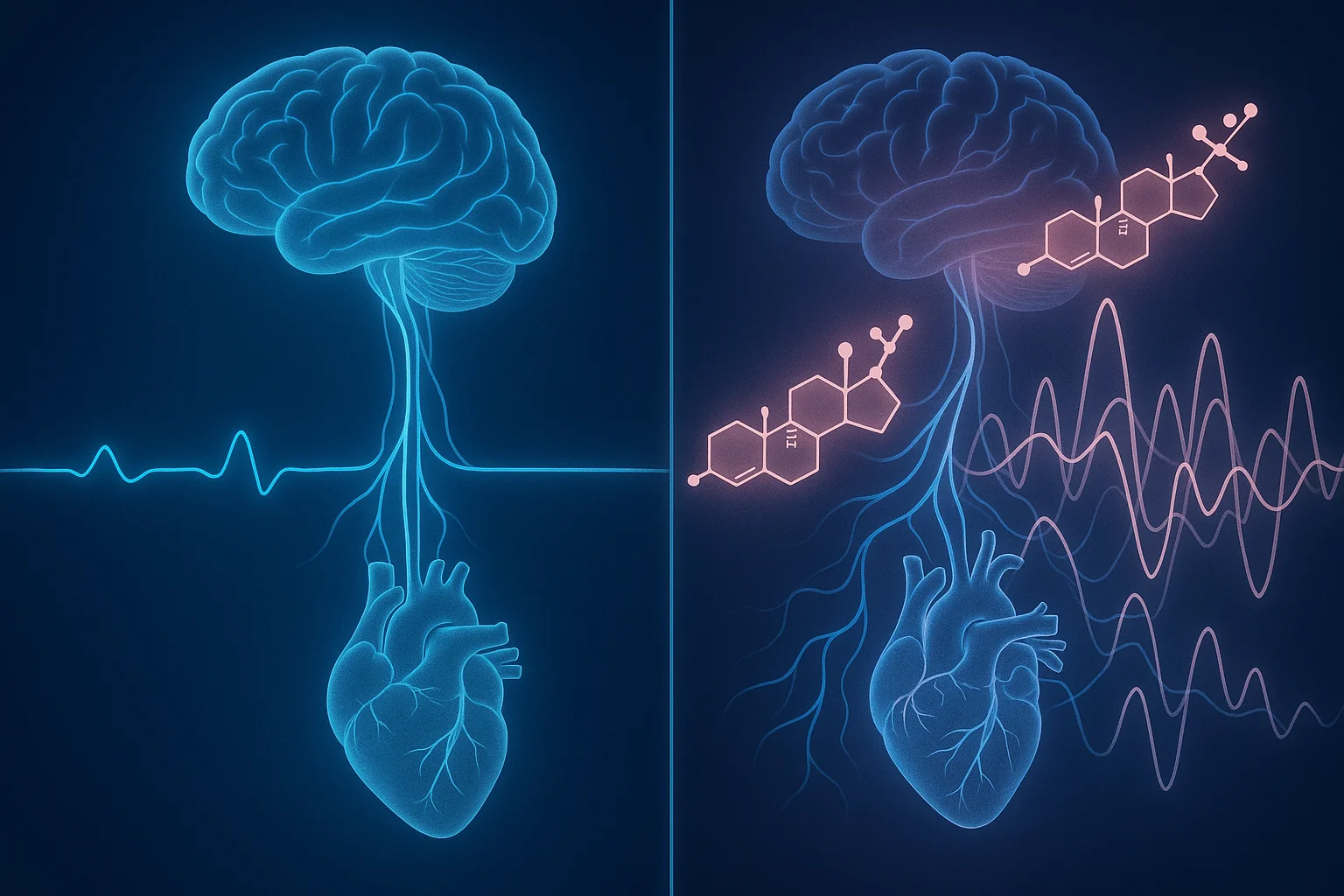
Estradiol is not just a reproductive hormone. It directly modulates the autonomic nervous system, which controls your heart rate and blood vessel tone without your conscious input.
During perimenopause, estradiol does not simply decline. It swings wildly. Cycles become anovulatory, estradiol can surge to twice premenopausal levels, then crash. The autonomic nervous system loses a stable reference point.
A 2002 study published in PubMed (PMID: 11686907) found that 6 months of hormone replacement therapy improved cardiac autonomic balance in postmenopausal women, measured as improved heart rate variability — specifically increased parasympathetic (HF) tone and reduced sympathetic (LF) dominance [2]. Translation: HRT moves the nervous system out of "fight or flight" mode and back toward "rest and digest."
2. Palpitations Cluster with Vasomotor Symptoms
Hot flashes and night sweats are not just uncomfortable. They are cardiovascular events. During a hot flash, peripheral blood vessels dilate rapidly, heart rate can jump 7-15 bpm, and systolic blood pressure transiently rises.
The 2021 Menopause study quantified this relationship: for every 1-point increase in vasomotor symptom score, the odds of moderate-to-severe palpitations increased by 18% [1]. Women with frequent hot flashes are dramatically more likely to experience palpitations, and the two symptoms often occur together in the same episode.
This is why treating hot flashes with estradiol — the most effective vasomotor therapy available — also treats palpitations for most women.
3. Anxiety Amplifies the Signal
The same 2021 analysis found that Hospital Anxiety and Depression Scale scores had an even stronger association with palpitations than vasomotor symptoms (OR 1.19 per point) [1]. This is a feedback loop:
Estrogen drops reduce GABA and serotonin signaling, increasing baseline anxiety
Higher anxiety increases perception of normal cardiac sensations
Perceived palpitations trigger panic, which increases sympathetic drive
Sympathetic drive produces real tachycardia, which feeds more anxiety
Breaking the loop usually requires addressing both the hormonal driver (estradiol) and the anxiety component (sleep, progesterone, and sometimes testosterone for dopamine-mediated mood stability).
4. Sleep Disruption and Cortisol
Perimenopause destroys sleep. Night sweats wake you at 3 a.m. Progesterone — a natural anxiolytic — is the first hormone to decline in perimenopause. Sleep fragmentation drives higher morning cortisol, and cortisol spikes directly trigger palpitations.
Women who describe "waking up with my heart pounding" are usually describing this cortisol-cortisol-adrenaline cascade, not a cardiac event.
Women's HRT — Menopause-First Telehealth
Bioidentical estradiol, progesterone, and low-dose testosterone — all 50 states, unlimited physician access.
Before assuming perimenopause, rule out the imitators. Every woman with new-onset palpitations in her 40s should have, at minimum:
ECG. A single 12-lead ECG rules out obvious arrhythmias and QT abnormalities. If symptoms are frequent, a 24-48 hour Holter monitor or 2-week event monitor is appropriate.
Electrolytes. Low potassium or magnesium can cause palpitations. Magnesium deficiency is common in midlife women.
Basic metabolic panel. Rule out glucose abnormalities.
Ferritin. Low iron stores cause palpitations long before frank anemia appears.
You should seek immediate evaluation if palpitations occur with:
Chest pain, pressure, or tightness
Shortness of breath at rest
Fainting or near-fainting
A known heart condition or family history of sudden cardiac death
Exercise that previously did not trigger symptoms
In the absence of these red flags, and after a normal basic workup, perimenopause palpitations are a diagnosis of hormones.
The Reassuring Data on Long-Term Heart Risk
Palpitations feel catastrophic. The long-term data says they are usually not.
The Study of Women's Health Across the Nation (SWAN) followed 3,276 women across the menopause transition and identified three distinct trajectories of palpitations: high, moderate, and low probability [3]. After adjusting for traditional cardiovascular risk factors, palpitation trajectories were not associated with carotid atherosclerosis, arterial stiffness, or other subclinical cardiovascular disease markers.
Translation: perimenopause palpitations, in the absence of structural heart disease, do not predict future heart attacks or strokes. They are a symptom of the hormonal transition, not a harbinger of cardiac disease.
That said, menopause itself is a cardiovascular risk event. Loss of estrogen accelerates LDL accumulation, insulin resistance, visceral fat gain, and vascular stiffening. The palpitations are not the problem. The hormonal state that causes them is a reason to assess and manage long-term cardiometabolic health.
How HRT Stops Perimenopause Palpitations
The first-line treatment for hormonally driven palpitations is restoring stable estradiol levels. The goal is not to maximize estrogen — it is to stop the wild swings that are destabilizing the autonomic nervous system.
Transdermal Estradiol: The Foundation
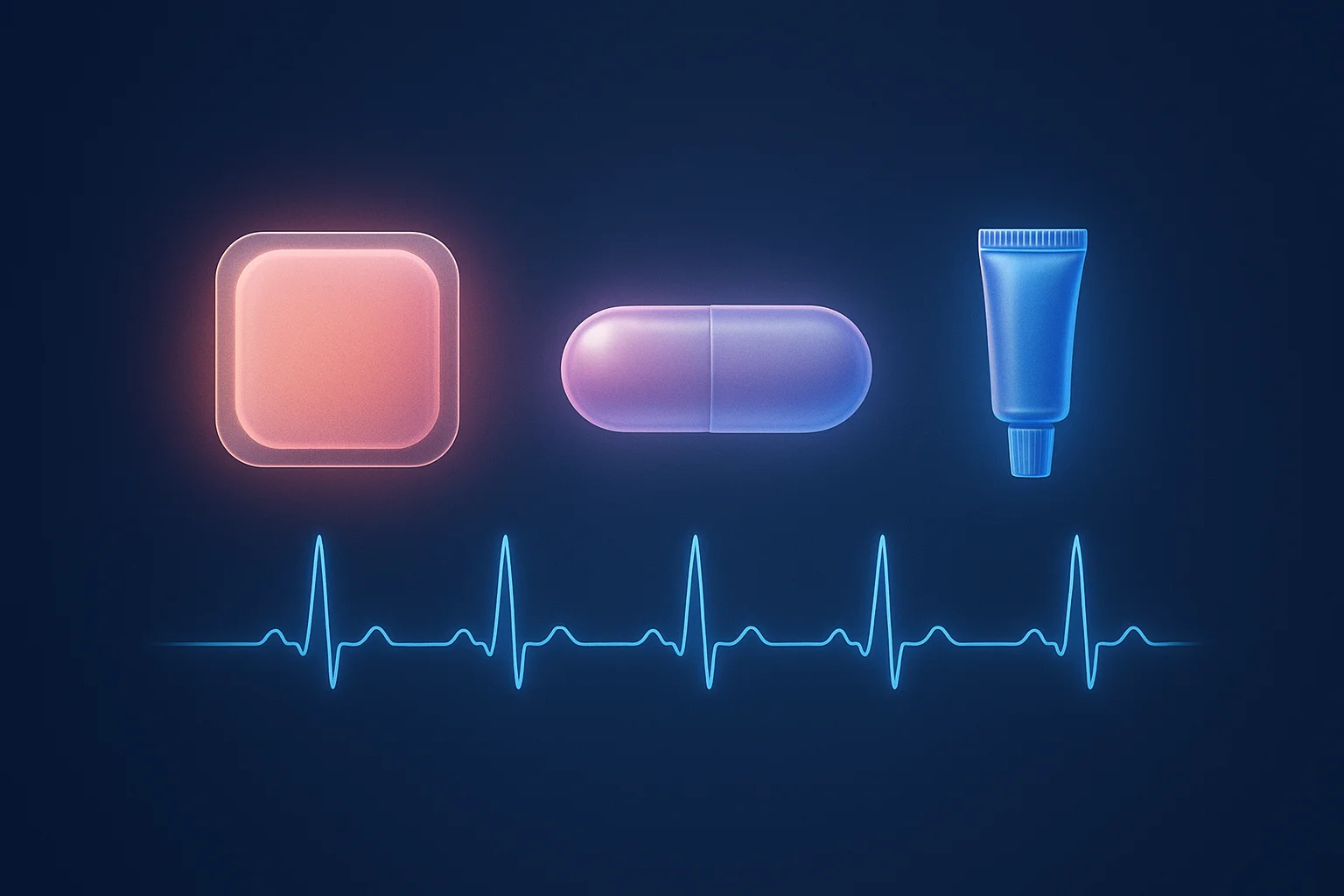
Transdermal estradiol (patch, gel, or spray) is strongly preferred over oral estradiol for palpitations because:
It produces steady serum levels, which is exactly what an over-reactive nervous system needs. Oral estradiol causes daily peaks and troughs.
It avoids first-pass liver metabolism and the associated increase in clotting factors.
It does not raise C-reactive protein or triglycerides the way oral estradiol can.
Multiple observational studies associate transdermal estradiol with lower stroke and venous thromboembolism risk compared to oral.
A typical starting dose is a 0.05 mg/day transdermal patch or 0.5-1 mg/day of transdermal gel. For women with severe symptoms, 0.075-0.1 mg/day patches may be needed.
Most women notice reduced palpitation frequency within 2-4 weeks. Full stabilization often takes 6-8 weeks as autonomic tone normalizes.
Micronized Progesterone: The Nighttime Lever
If you have a uterus, you need a progestogen to protect the endometrium. But the right progestogen does far more than that.
Oral micronized progesterone at 100-200 mg taken at bedtime has three useful effects for women with palpitations:
Anxiolysis. Progesterone converts to allopregnanolone, which positively modulates GABA receptors — the same pathway benzodiazepines target, but without the dependence.
Sleep improvement. Micronized progesterone is mildly sedating. It reduces middle-of-night awakenings and the 3 a.m. cortisol surge that triggers nocturnal palpitations.
Cardiac neutrality. Unlike medroxyprogesterone acetate (the synthetic progestin used in the original Women's Health Initiative), micronized progesterone does not appear to negatively affect cardiovascular outcomes [4].
For women in early perimenopause who still have periods but experience luteal-phase palpitations, cyclic progesterone (12-14 days per month) can be more appropriate than continuous.
Testosterone: The Overlooked Third Hormone
Women with persistent palpitations despite optimized estradiol often have an anxiety component that testosterone addresses more effectively than estrogen alone.
Low-dose transdermal testosterone in women supports dopamine signaling in the prefrontal cortex, which improves mood stability and reduces anxiety-driven cardiac sensations. Typical dosing is 0.5-1 mg/day of transdermal cream, targeting free testosterone in the upper quartile of the female reference range.
Testosterone is not first-line for palpitations, but it is a powerful addition for women who have optimized estradiol and still experience anxiety-driven episodes. Review the full testosterone for women dosage guide before starting.
A Typical Palpitation-Focused HRT Protocol
Hormone
Delivery
Typical Dose
Purpose
Estradiol
Transdermal patch
0.05-0.075 mg twice weekly
Stabilize autonomic tone, reduce vasomotor symptoms
Micronized progesterone
Oral, bedtime
100-200 mg
Endometrial protection, sleep, anxiolysis
Testosterone (optional)
Transdermal cream
0.5-1 mg/day
Dopamine support if anxiety persists
Doses should be individualized based on symptoms, blood levels, and response. Work with a provider experienced in comprehensive women's HRT rather than a standard gynecology practice that may only offer a birth control pill as a solution.
What to Expect: The Timeline
Weeks 1-2
Nocturnal palpitations often improve first, especially if micronized progesterone is taken at bedtime
Sleep quality begins to improve
Subjective "calm" starts to return
Weeks 3-4
Daytime palpitation frequency drops
Hot flashes decrease in frequency and intensity
Anxiety baseline lowers
Weeks 6-8
Most women report that palpitations are either resolved or reduced to rare, brief episodes
Autonomic tone stabilizes on wearable data (lower resting heart rate, higher HRV)
Months 3-6
Full stabilization
Any residual palpitations usually have a non-hormonal driver (caffeine, alcohol, specific foods, stress) that becomes identifiable once the hormonal noise is gone
If Palpitations Persist After 3 Months
Re-evaluate:
Estradiol levels. A serum estradiol of 50-80 pg/mL is a reasonable target for symptom control. If lower, increase the patch.
Thyroid. TSH may have been normal initially but shifted. Recheck.
Caffeine, alcohol, nicotine. All three lower the threshold for palpitations. Midlife caffeine tolerance drops.
Cardiac rhythm. A 2-week event monitor may catch episodic arrhythmia that a one-time ECG missed.
Anxiety disorder. Some women need concurrent SSRI or CBT alongside HRT.
Lifestyle Levers That Help
HRT is the primary tool, but a few lifestyle changes reduce palpitation frequency meaningfully:
Magnesium glycinate, 200-400 mg at bedtime. Low magnesium is common in women over 40 and directly triggers palpitations. Glycinate is better tolerated than oxide.
Caffeine after noon. The midlife liver metabolizes caffeine slower. Afternoon coffee increasingly causes evening palpitations.
Alcohol. Alcohol is arrhythmogenic and disrupts sleep architecture. Even 1-2 drinks can trigger next-morning palpitations.
Sleep hygiene. Consistent sleep and wake times stabilize cortisol, which stabilizes heart rate.
Zone 2 cardio, 150 min/week. Regular moderate aerobic training increases vagal tone and reduces resting heart rate.
These do not replace HRT. They amplify it.
Finding the Right Provider
A provider who shrugs at your palpitations and tells you "perimenopause is normal" is not the right provider. A provider who prescribes a beta-blocker without discussing hormones is also not the right provider.
You want someone who:
Will run estradiol, FSH, TSH, and a testosterone panel
Prefers transdermal estradiol over oral
Uses micronized progesterone, not MPA
Will consider low-dose testosterone if symptoms warrant
Follows up at 6-8 weeks and adjusts based on response
Most general gynecologists and primary care physicians do not have this level of HRT experience. Midlife-focused telehealth clinics often do. Compare options at our best online HRT clinic for women review.
Heart palpitations in perimenopause are common, under-discussed, and usually hormonal. They are not a sign of impending heart attack in the absence of other cardiac symptoms. They respond, in most women, to stable transdermal estradiol within 4-8 weeks.
The playbook is straightforward:
Get a baseline workup once. ECG, thyroid, CBC, electrolytes, ferritin. Rule out the non-hormonal causes.
Start transdermal estradiol with micronized progesterone. This is the treatment with the most evidence for palpitation relief and the best long-term safety profile.
Add testosterone if anxiety persists. Not first-line, but useful for women who have optimized estradiol and still experience anxiety-driven symptoms.
Fix the obvious lifestyle amplifiers. Magnesium, caffeine timing, alcohol, sleep.
Re-evaluate at 3 months. If still symptomatic, look for a second driver rather than just increasing doses.
If you are in your 40s, waking up with a pounding heart, and being told to "just manage stress," that is not the right answer. The right answer is hormone testing, a proper HRT trial, and a provider who treats perimenopause as a neuroendocrine-cardiovascular transition — which is exactly what it is.
Lee J, Han Y, Cho HH, Kim MR. Independent association of palpitation with vasomotor symptoms and anxiety in middle-aged women. Menopause. 2021;28(7):820-825. PMID: 34033601
Liu CC, Kuo TB, Yang CC. Effects of estrogen on gender-related autonomic differences in humans. Am J Physiol Heart Circ Physiol. 2003;285(5):H2188-93. PMID: 11686907
Carson MY, Thurston RC. Palpitations across the menopause transition in SWAN: trajectories, characteristics, and associations with subclinical cardiovascular disease. Menopause. 2023;30(1):18-25. PMID: 36256921
Sarri G, Pedder H, Dias S, Guo Y, Lumsden MA. Vasomotor symptoms resulting from natural menopause: a systematic review and network meta-analysis of treatment effects from the National Institute for Health and Care Excellence guideline on menopause. BJOG. 2017;124(10):1514-1523. PMID: 28276200
Thurston RC, Aslanidou Vlachos HE, Derby CA, et al. Menopausal Vasomotor Symptoms and Risk of Incident Cardiovascular Disease Events in SWAN. J Am Heart Assoc. 2021;10(3):e017416. PMID: 33470142
Carpenter JS, Sheng Y, Pike C, Elomba CD, Alwine JS, Chen CX, Tisdale JE. Effect of menopausal symptom treatment options on palpitations: a systematic review. Climacteric. 2022;25(1):11-26. PMID: 34346265
Frequently Asked Questions
Are heart palpitations normal during perimenopause?
Yes. Palpitations affect 20 to 40% of perimenopausal women and up to 54% of postmenopausal women. They are one of the most under-discussed symptoms of the menopause transition, driven primarily by fluctuating estrogen and its downstream effects on the autonomic nervous system. They are usually benign but should be evaluated once to rule out arrhythmia or thyroid dysfunction.
Does HRT stop heart palpitations?
For most women, yes. Palpitations tied to vasomotor symptoms and estrogen fluctuations often resolve within 4 to 8 weeks of starting transdermal estradiol. A 2021 systematic review found estrogen therapy reduced palpitations in the majority of studies where palpitations were tracked. If palpitations persist on HRT, thyroid, anxiety, and arrhythmia should be investigated.
When should I see a doctor about perimenopause palpitations?
See a doctor if palpitations last more than a few minutes, occur with chest pain, shortness of breath, fainting, or a known heart condition, or happen more than a few times a week. Every woman with new-onset palpitations in midlife deserves at minimum a baseline ECG, TSH, and electrolyte panel before assuming hormonal cause.
Can low testosterone cause heart palpitations in women?
Indirectly. Low testosterone in women correlates with increased anxiety, poor sleep, and worsened vasomotor symptoms, all of which drive palpitations. Restoring testosterone to the upper physiological range as part of comprehensive HRT often reduces the anxiety-driven palpitations that estradiol alone does not fully address.
Do palpitations in perimenopause mean heart disease?
Usually not. A large SWAN study analysis found that trajectories of palpitations across the menopause transition were not independently associated with subclinical cardiovascular disease markers like carotid atherosclerosis or arterial stiffness. However, perimenopause is still the right time for a full cardiovascular risk assessment because long-term heart disease risk accelerates after menopause.