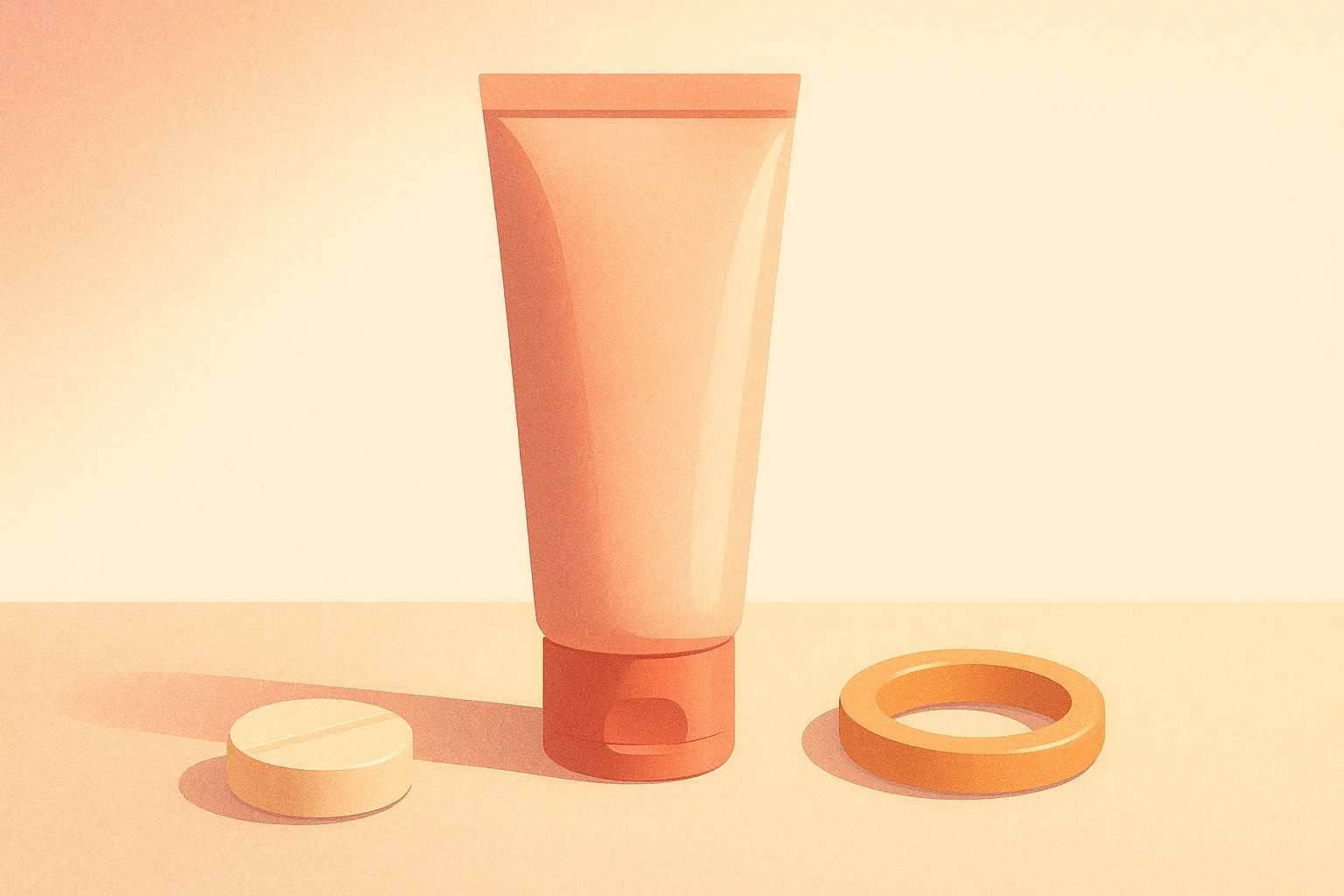
Key Takeaways: Genitourinary syndrome of menopause (GSM) affects 50-70% of postmenopausal women — and only about 7% get treated. Low-dose vaginal estrogen is the most effective therapy, with minimal systemic absorption. Creams, tablets, and rings are roughly equivalent; choice is driven by preference and cost. A progestogen is not required. Even women with a history of breast cancer can often use it safely, per ACOG. Relief begins at 2-4 weeks, and treatment is lifelong — symptoms return when it stops.
The Most Undertreated Condition in Menopausal Medicine
Genitourinary syndrome of menopause is the umbrella term for what used to be called vulvovaginal atrophy. It was renamed in 2014 to reflect that the problem is not just the vagina — it is the full spectrum of estrogen-dependent tissue changes in the vulva, vagina, urethra, and bladder.
Symptoms include:
Vaginal dryness
Painful intercourse (dyspareunia)
Vulvar burning, itching, or irritation
Urinary urgency and frequency
Recurrent urinary tract infections
Post-coital bleeding
Loss of vaginal rugae and elasticity
Per the 2020 NAMS position statement, GSM affects 27% to 84% of postmenopausal women depending on how symptoms are ascertained [1]. A realistic mid-point is 50-70%. Yet surveys consistently find that only 4-7% of affected women ever receive effective treatment.
The reason is mostly embarrassment — patients don't bring it up, and clinicians don't ask. The treatment, however, is simple, safe, and works.
Why This Happens
Estrogen maintains the vaginal epithelium, the vulvar skin, the urethral mucosa, and the trigone of the bladder. All of these tissues express estrogen receptors at high density.
When estrogen falls at menopause:
Vaginal epithelium thins from 20+ cell layers to 3-5
Glycogen stores drop, so lactobacilli decline
Vaginal pH rises from 3.5-4.5 to 5.5-6.5
Blood flow decreases
Connective tissue loses elasticity
Urethral mucosa thins, so UTIs become easier
Pelvic floor tone decreases, worsening urinary urgency
Unlike hot flashes, which typically resolve after a decade, GSM is progressive. It gets worse without treatment. A woman at age 75 will usually have more severe symptoms than she did at 55, because tissue loss accumulates.
The Evidence for Vaginal Estrogen
Vaginal estrogen produces dramatic tissue restoration at doses 10-100x lower than systemic HRT. The vaginal epithelium is exquisitely estrogen-sensitive — tiny amounts restore normal histology.
A 2024 Annals of Internal Medicine systematic review evaluated hormonal treatments and moisturizers for GSM. Vaginal estrogen, vaginal DHEA, and ospemifene all outperformed placebo and non-hormonal moisturizers for symptom relief and physical exam findings [2]. Vaginal estrogen produced the most consistent effect with the longest track record.
The 2020 NAMS position statement on GSM concluded that low-dose vaginal estrogen is the preferred first-line therapy for moderate-to-severe GSM [1]. The 2025 AUA/SUFU/AUGS guideline reached a similar conclusion for urinary symptoms.
What "Low-Dose" Means
Systemic absorption from correctly dosed low-dose vaginal estrogen is clinically trivial. Representative data:
10 mcg estradiol tablets: serum estradiol increase <5 pg/mL
0.5 g conjugated equine estrogen cream 2x/week: mild transient peak, returns to baseline
For context, a premenopausal woman's estradiol ranges 30-400 pg/mL across the cycle, and a standard 0.05 mg/day estradiol patch produces serum levels of 40-60 pg/mL. Vaginal dosing adds essentially nothing measurable to systemic estrogen exposure.
The Three Main Formulations
Vaginal Estradiol Tablets
Dose: 10 mcg tablets inserted vaginally, usually with a small applicator.
Schedule: Nightly for 2 weeks as loading, then 2x/week maintenance indefinitely.
Pros:
Measured, consistent dose
Minimal mess
Most favorable systemic absorption profile
Well tolerated
Cons:
Applicator required
Does not treat vulvar-only symptoms directly
Vaginal Estrogen Cream
Two options: conjugated equine estrogen cream (0.625 mg/g) and estradiol vaginal cream (0.1 mg/g).
Dose: 0.5-1 g per application, using a calibrated applicator.
Schedule: Nightly for 2 weeks as loading, then 2x/week maintenance. The cream can also be applied by fingertip to the vulva and introitus for women whose main symptoms are external.
Pros:
Flexible dose
Can treat vulvar symptoms directly
Often lowest cost (generic estradiol cream)
Cons:
Messier
Potential for over-dosing if applicator is filled past the mark
Some compounded high-dose versions do produce meaningful systemic absorption
Vaginal Estradiol Ring (Estring)
Dose: 7.5 mcg/day released continuously.
Schedule: Inserted every 90 days. Remains in place during intercourse.
Pros:
Set-and-forget convenience
Steadiest hormone delivery
Nothing to remember daily
Comfortable for most women
Cons:
Higher up-front cost
Some women dislike the sensation or cannot retain it if pelvic floor is very weak
Occasional discharge
Note: there is a separate higher-dose vaginal ring (Femring, 50 or 100 mcg/day) used as systemic HRT. This is not a low-dose local therapy — it requires the same precautions as transdermal estradiol. Do not confuse the two.
Vaginal DHEA (Prasterone)
Dose: 6.5 mg nightly, continuous.
A steroid precursor converted locally to estrogen and androgen inside vaginal tissue. Approved by the FDA for dyspareunia due to GSM. Serum sex-hormone levels do not rise meaningfully. Useful for women who want to avoid "estrogen" on their chart for insurance or personal reasons.
Ospemifene
Dose: 60 mg oral daily.
A selective estrogen receptor modulator (SERM). Agonist in vaginal tissue, mostly antagonist in breast. Effective for dyspareunia. Not topical — it is an oral pill with the usual caveats about VTE risk.
Which Formulation for Whom
Patient
Best Choice
Mild-to-moderate symptoms, wants clean routine
Estradiol tablets 10 mcg
Vulvar burning or introital pain predominant
Estradiol cream, applied externally
Wants to forget about it for 3 months
Estradiol ring 7.5 mcg/day
Recurrent UTIs, frail elderly
Estradiol tablets or ring
Breast cancer history (estrogen-avoidant preference)
Vaginal DHEA (prasterone)
Cannot use a vaginal insert
Ospemifene oral
Budget-constrained
Generic estradiol cream
Women's HRT — Menopause-First Telehealth
Bioidentical estradiol, progesterone, and low-dose testosterone — all 50 states, unlimited physician access.
Observational and small randomized data do not show an increase in breast cancer incidence with low-dose vaginal estrogen. The 2016 ACOG committee opinion specifically addresses this: there is no evidence linking low-dose vaginal estrogen to development of breast cancer, and in women with a history of estrogen-dependent breast cancer, low-dose vaginal estrogen may be considered after non-hormonal options are insufficient and in consultation with oncology.
Practical approach in breast cancer survivors:
Start with non-hormonal lubricants and moisturizers (hyaluronic acid-based products, vitamin E suppositories, silicone lubricants).
If insufficient after 8-12 weeks, discuss low-dose vaginal estrogen with the oncologist.
Women on aromatase inhibitors warrant more caution, since AIs suppress systemic estrogen aggressively and even tiny rises are theoretically unwanted. Evidence still supports use in selected cases.
The 2024 systematic review in gynecologic oncology literature found no signal of increased recurrence with low-dose vaginal estrogen in breast cancer survivors, though definitive RCT data are lacking.
Endometrial Cancer
Low-dose vaginal estrogen does not produce systemic estrogen levels sufficient to stimulate the endometrium in most women. NAMS states that a progestogen is not indicated with standard low-dose local therapy [1]. However:
Unexplained postmenopausal bleeding on vaginal estrogen always requires endometrial evaluation
Women on high-dose or compounded vaginal estrogen preparations may warrant periodic ultrasound or endometrial sampling
Long-term data beyond a few years is limited but reassuring
Blood Clots and Cardiovascular Disease
Low-dose vaginal estrogen does not increase VTE, stroke, or cardiovascular event risk. This is one of its main advantages over systemic HRT for women whose primary complaint is GSM.
Bladder and UTI Benefit
Vaginal estrogen reduces recurrent UTI incidence by roughly 40-60% in postmenopausal women, per multiple trials. It restores the lactobacillus-dominated vaginal flora that protects the urethra and changes urinary pH. For women with 3+ UTIs per year, vaginal estrogen is often more effective than prophylactic antibiotics and with far fewer downsides.
How to Start: Week-by-Week
Weeks 1-2: Loading
Estradiol tablet 10 mcg nightly, or
Estradiol cream 0.5 g nightly, or
Insert ring on day 1, then nothing to do for 90 days
Weeks 3-12: Maintenance
Tablet or cream 2x/week (e.g., Monday and Thursday)
Ring continues until 90-day mark
Expect
Week 2: Mild improvement in dryness
Week 4: Clear reduction in burning and irritation
Week 8: Intercourse becomes comfortable in most women
Week 12: Full tissue restoration on exam; vaginal pH returns toward premenopausal range
If Not Improving by 8 Weeks
Verify adherence and correct insertion technique
Check that the right formulation is being used (some women accidentally use a systemic product)
Consider adding pelvic floor physical therapy for women with chronic pain patterns
Add vaginal DHEA or switch formulations
Non-Hormonal Options for Mild Cases
Women with mild GSM who prefer to avoid hormones have several evidence-backed options:
Vitamin E suppositories: modest evidence, soothing
Silicone-based lubricants for intercourse: last longer than water-based, less irritating than oil-based (which can disrupt latex condoms)
Pelvic floor physical therapy: essential for women with pain patterns rooted in muscle guarding
These are usually insufficient for moderate-to-severe GSM but can substantially help mild symptoms. Many women use a moisturizer plus vaginal estrogen — they are complementary, not competitive.
What Does Not Work
"Laser" therapies (MonaLisa Touch, FemiLift): The FDA issued a warning in 2018 about unproven claims. Multiple RCTs have failed to show benefit over sham or over vaginal estrogen. Expensive and not recommended.
"Vaginal rejuvenation" surgeries: not indicated for GSM.
Coconut oil, olive oil, etc.: Can provide short-term lubrication but do not address the underlying tissue pathology. Safe but insufficient.
Duration: This Is a Long-Term Therapy
Unlike hot flash HRT, which some women taper after the menopause transition, vaginal estrogen is indefinite. Within 4-8 weeks of stopping, symptoms typically return and tissue reverts. There is no "training" effect.
Current NAMS and AUA guidance supports continuation as long as symptoms require it, which for most women means lifelong. This is safe. The long-term data on standard low-dose local therapy does not show accumulating risk.
A reasonable approach:
Annual clinical review
Pelvic exam with pap/HPV per usual screening intervals
Investigate any unexplained bleeding
Reconfirm that the dose is still the minimum effective dose
Cost and Access
Formulation
Typical Monthly Cost (US)
Generic estradiol cream
$20-60
Branded estradiol tablets
$80-200
Generic estradiol tablets
$40-100
Estradiol vaginal ring
$150-300
Vaginal DHEA (prasterone)
$200-400
Ospemifene
$250-400
Insurance coverage varies widely. Generic estradiol cream is usually the most accessible option. Telehealth clinics often prescribe all three forms and can negotiate pharmacy pricing.
When to Escalate to a Specialist
Persistent dyspareunia after 12 weeks of adequate therapy
Bleeding on vaginal estrogen
Suspicion of lichen sclerosus or another vulvar condition (whitening, architectural changes, itching disproportionate to exam)
Recurrent UTIs that do not respond to vaginal estrogen
A pelvic floor physical therapist, urogynecologist, or menopause-certified practitioner is the right referral.
Finding a Provider
Most general primary care and gynecology practices can prescribe vaginal estrogen, but many still underprescribe or reflexively worry about breast cancer risk that modern data does not support. A provider who treats GSM well:
Discusses it at routine midlife visits without being asked
Knows the difference between low-dose local and systemic formulations
Will prescribe for women with breast cancer history after shared decision-making
Uses a pH strip or vaginal maturation index to confirm tissue response
Vaginal estrogen is the most undertreated therapy in menopausal medicine. It is simple, safe, and effective. Systemic absorption is minimal. A progestogen is not required. Most women with a history of breast cancer can use it after discussion with their oncology team.
The choice between tablet, cream, and ring is largely about preference. The choice between treating and not treating is the one that matters — and the evidence is clear that untreated GSM progresses.
If you have dryness, painful sex, or recurrent UTIs after menopause, this is a solved problem. Ask your provider, or find one who will ask you.
The 2020 genitourinary syndrome of menopause position statement of The North American Menopause Society. Menopause. 2020;27(9):976-992. PMID: 32852449
Danan ER, Sowerby C, Ullman KE, et al. Hormonal treatments and vaginal moisturizers for genitourinary syndrome of menopause: a systematic review. Ann Intern Med. 2024;177(10):1400-1414.
The 2023 nonhormone therapy position statement of The North American Menopause Society. Menopause. 2023;30(6):573-590. PMID: 37252752
Rossouw JE, Anderson GL, Prentice RL, et al. Risks and benefits of estrogen plus progestin in healthy postmenopausal women: principal results from the Women's Health Initiative randomized controlled trial. JAMA. 2002;288(3):321-33. PMID: 12117397
Santoro N. Perimenopause: from research to practice. J Womens Health (Larchmt). 2016;25(4):332-9. PMID: 26653408
Frequently Asked Questions
Is vaginal estrogen safe?
Yes, extremely. Low-dose vaginal estrogen produces minimal systemic absorption and does not increase breast cancer, stroke, or blood clot risk. NAMS, ACOG, and AUA all endorse it as first-line therapy for moderate-to-severe genitourinary syndrome of menopause. Long-term data beyond 1 year on endometrial safety is limited but reassuring.
Do I need progesterone with vaginal estrogen?
No. Low-dose vaginal estrogen (estradiol 10 mcg tablets, 0.5 g conjugated equine estrogen cream, or the 7.5 mcg/day ring) does not meaningfully raise serum estradiol and does not require a progestogen for endometrial protection in the vast majority of women. High-dose compounded vaginal creams are different and may warrant monitoring.
How long does vaginal estrogen take to work?
Vaginal dryness typically improves within 2-4 weeks. Pain with intercourse improves by 6-8 weeks. Full tissue restoration takes 12 weeks. Treatment is indefinite — symptoms return within weeks of stopping.
Is vaginal estrogen safe after breast cancer?
Often yes, per ACOG. Current evidence does not link low-dose vaginal estrogen to increased breast cancer recurrence. ACOG recommends trying non-hormonal moisturizers first, but when those fail, low-dose vaginal estrogen is reasonable after shared decision-making with the oncology team. Women on aromatase inhibitors should discuss options more carefully.
Which is better: cream, ring, or tablet?
They are roughly equivalent for symptom relief. Creams offer flexible dosing and allow targeted application to the vulva. Tablets are cleaner and measured. The ring requires placement only every 3 months, which many women prefer. Choice usually comes down to convenience, cost, and preference.
Can men use vaginal estrogen through sexual contact?
Low-dose vaginal estrogen produces negligible transfer. Waiting 2-4 hours after application before genital contact is a reasonable precaution but not strictly necessary with modern low-dose formulations.