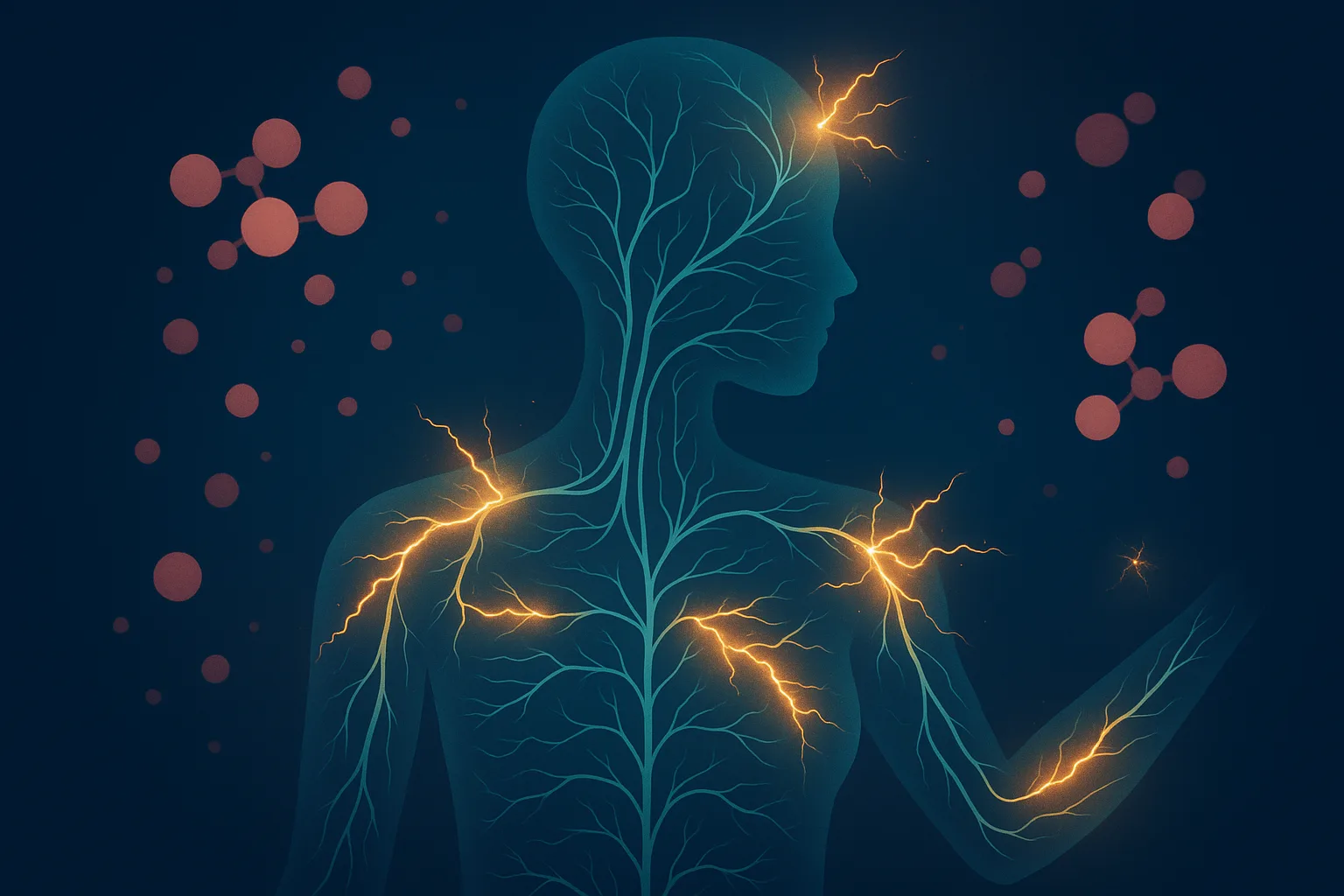
Electric shock sensations are a real, under-recognized perimenopause symptom — a brief zap, jolt, or rubber-band snap under the skin
The leading mechanism is estrogen instability disrupting nerve signaling, myelin integrity, and neurotransmitter balance
Many women feel an electric shock immediately before a hot flash — the two share an autonomic origin in the brain
HRT (especially transdermal estradiol) often reduces the shocks indirectly by stabilizing estrogen and calming vasomotor dysregulation
Always rule out vitamin B12 deficiency, low magnesium, and other neurological causes that mimic the sensation
Caffeine, alcohol, stress, dehydration, and blood-sugar swings are common triggers
The sensations are almost always benign and tend to fade in postmenopause
It happens without warning. A sudden electric jolt under your skin — across your scalp, down an arm, around your torso — gone in a flash. No pain exactly, but unmistakable. Like a static shock from the inside, or a rubber band snapping against a nerve. And then, sometimes, a hot flash follows.
If this sounds familiar, you are not imagining it and you are not alone. Electric shock sensations are a genuine perimenopause and menopause symptom — one that rarely makes the standard symptom lists, so most women experiencing it have no idea it is hormone-related. They search "random electric shocks in my body," worry about their nerves or their heart, and never connect it to the same hormonal transition driving their hot flashes and insomnia.
The connection is real. The same estrogen decline that dismantles your sleep, your mood, and your temperature regulation also disrupts the way your nervous system carries signals. Understanding that mechanism is the first step to treating it properly instead of cycling through unrelated worries.
What an Electric Shock Sensation Feels Like
Women describe these sensations in remarkably consistent ways:
A sudden zap or jolt, like touching a live wire briefly
A rubber-band snap under the skin
A buzzing or vibrating feeling that pulses and fades
A wave of tingling that shoots across the scalp, face, neck, arms, or torso
A brief electric current running along a limb
The defining features: they are sudden, brief (a fraction of a second to a few seconds), painless or nearly so, and come without obvious cause. They can strike anywhere but are most often reported in the head and scalp, the arms, and across the upper body.
A distinct subset of women describe brain zaps — an electric shock sensation specifically inside the head, sometimes with a fleeting whooshing sound. While brain zaps are most famous as an antidepressant-withdrawal symptom, the same sensation occurs in perimenopause through a related mechanism: disrupted serotonin signaling.
How Hormones Disrupt Nerve Signaling
Your nervous system runs on electrical signals, and estrogen is deeply involved in keeping those signals orderly. When estrogen fluctuates and declines, several things change at once:
Mechanism
What Estrogen Normally Does
What Happens When It Declines
Neuron excitability
Modulates ion channels that control how easily neurons fire
Neurons become more excitable; signals can misfire
Neurotransmitters
Supports serotonin, GABA, and norepinephrine balance
Imbalance increases nerve "noise" and reactivity
Myelin integrity
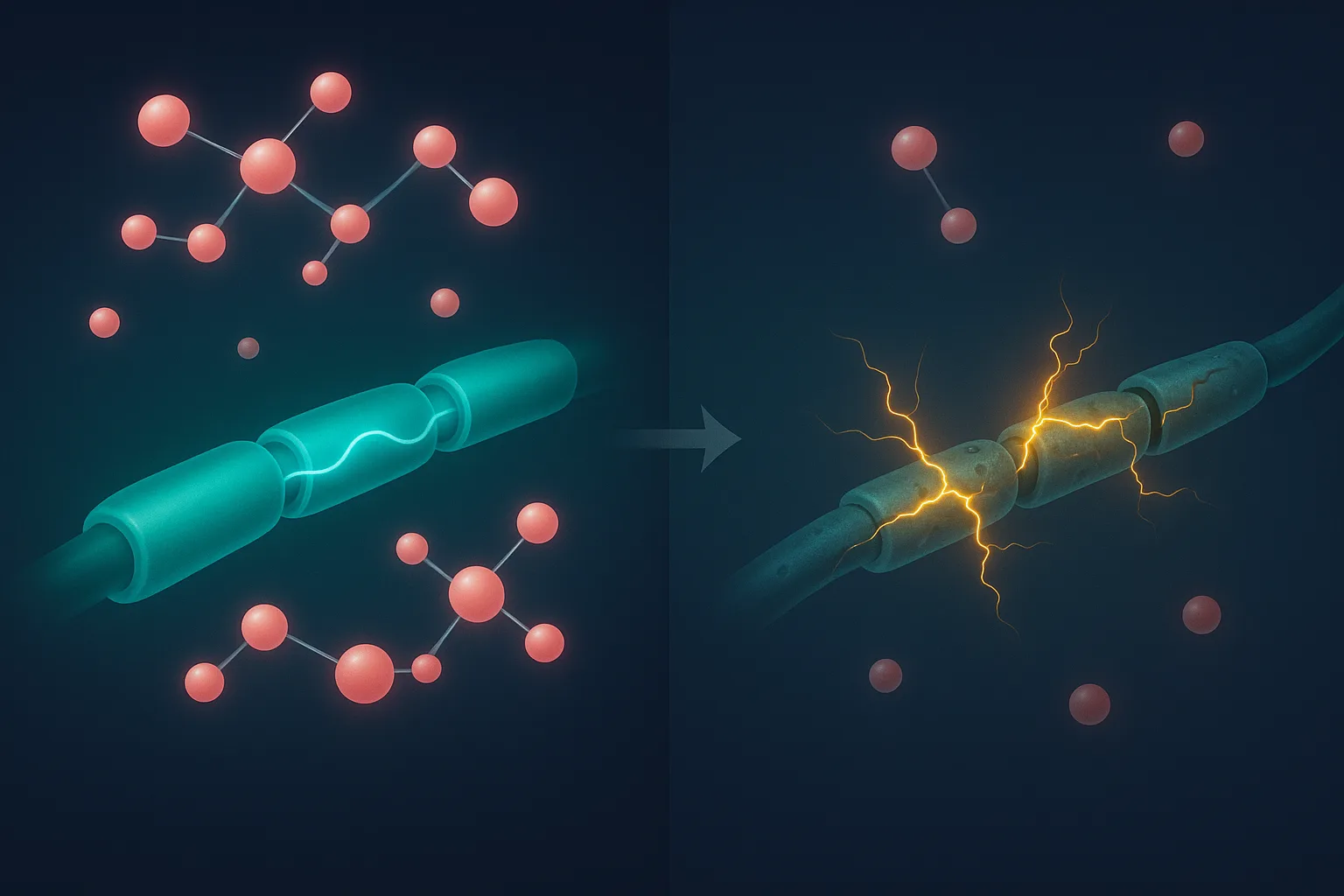
Helps maintain the insulating sheath around nerves
Reduced insulation lets signals leak or distort
Autonomic regulation
Stabilizes the hypothalamus and autonomic nervous system
Dysregulation produces hot flashes and nerve misfires
The core idea is this: estrogen is a neuromodulator, not just a reproductive hormone. Estrogen receptors are densely present throughout the brain and peripheral nervous system. Estrogen influences how readily neurons fire, how cleanly signals travel along insulated nerve fibers, and how balanced your key neurotransmitters are.
When estrogen is high and steady, this system hums along quietly. When estrogen swings erratically — as it does in late perimenopause — the signaling becomes briefly distorted. A normal sensory nerve can fire when it should be quiet, or a signal can short-circuit and amplify. The brain interprets that misfire as an electric shock.
This is also why the sensations track hormonal volatility. They are often worst in late perimenopause, when estrogen is swinging most wildly, and tend to fade in postmenopause once levels settle into a low but stable baseline. It is the instability, not just the low level, that drives the symptom.
The Hot Flash Connection
One of the most telling patterns women report: an electric shock immediately before a hot flash. This is not a coincidence — it is a clue to the shared mechanism.
Hot flashes originate in the hypothalamus, the brain region that acts as your internal thermostat. When estrogen declines, the hypothalamus becomes hypersensitive and its temperature-regulating neurons (particularly the KNDy neurons) become hyperactive. This sets off the cascade of a hot flash: blood vessels dilate, you flush, you sweat.
The autonomic nervous system that carries out this cascade appears to misfire first. That brief, distorted autonomic signal is felt as the electric shock — a split-second nervous-system "static" that precedes the temperature surge. The shock and the flash are two outputs of the same dysregulated circuit.
This shared origin has a practical upside: treatments that reduce hot flashes frequently reduce the pre-flash electric shocks too. When you calm the vasomotor system — whether with HRT or non-hormonal options — you often calm the nerve misfires that travel with it.
Women's HRT — Menopause-First Telehealth
Bioidentical estradiol, progesterone, and low-dose testosterone — all 50 states, unlimited physician access.
Before attributing electric shocks entirely to hormones, it is worth ruling out other causes that produce identical sensations. Several are common, easily tested, and treatable:
Vitamin B12 deficiency. B12 is essential for maintaining the myelin sheath around your nerves. A deficiency produces tingling, buzzing, and electric shock-like sensations that closely mimic menopausal nerve symptoms. B12 deficiency becomes more common with age and in people taking metformin or acid-reducing drugs. A simple blood test (B12, ideally with methylmalonic acid) is a sensible first step.
Low magnesium. Magnesium is involved in nerve and muscle function, and low levels can cause twitching, cramping, and electric sensations. It is frequently low in midlife women and easy to supplement.
Anxiety and stress. Heightened autonomic arousal lowers the threshold for nerve misfires. Anxiety can both cause and amplify electric shock sensations, and the menopausal transition often raises baseline anxiety — see perimenopause panic attacks for the broader picture.
Pinched or compressed nerves. A herniated disc or carpal tunnel produces electric, shooting sensations — but these are typically localized to one limb or one nerve distribution rather than appearing randomly across the body.
Blood sugar swings and dehydration. Both can provoke transient nerve symptoms. Diabetic peripheral neuropathy specifically causes electric, burning sensations, usually in the feet and hands.
Medication effects. Antidepressant withdrawal classically causes brain zaps. Starting or stopping certain medications can trigger electric sensations.
The pattern that points to menopause: shocks that are brief, random in location, painless, and appear alongside other perimenopause symptoms like hot flashes, irregular cycles, and sleep changes. The pattern that points elsewhere: shocks that are persistent, localized to one area, paired with weakness or lasting numbness, or accompanied by other neurological signs. When in doubt, get evaluated.
Does HRT Help?
For women whose electric shocks are genuinely hormone-driven, hormone therapy often helps — though usually as part of treating the broader symptom picture rather than for the shocks alone.
The logic follows the mechanism. The shocks are driven by estrogen instability, so restoring steadier estrogen levels reduces the volatility that triggers them. In practice:
Transdermal estradiol (patch or gel) is generally preferred over oral estrogen because it produces more stable blood levels and avoids the daily peaks and troughs that can themselves provoke nerve symptoms. Steady is the goal. See the estradiol patch dosing guide for how this is managed.
Combined therapy with progesterone is used for women with an intact uterus, and progesterone has its own calming, GABA-supportive effect on the nervous system that may help — see progesterone and testosterone in women's HRT.
The benefit is usually indirect. HRT calms the vasomotor and autonomic dysregulation that the shocks are tied to. As hot flashes settle, the pre-flash electric shocks often settle with them.
What about testosterone? Testosterone is part of the female hormone picture and has its own role in nervous-system and mood regulation, but it is not prescribed specifically for electric shock sensations. If you are already a candidate for testosterone for other reasons — low libido, energy, mood — its broader neurological effects may contribute to overall symptom relief. The complete guide to testosterone for women covers where it fits.
The honest framing: if electric shocks are your only symptom, most clinicians will check for B12, magnesium, and other causes before reaching for HRT. If they sit alongside hot flashes, insomnia, and mood changes, HRT addresses the whole cluster — and the shocks usually improve as part of that.
Non-Hormonal Strategies That Help
Whether or not you pursue HRT, these measures reduce nerve excitability and target the common triggers:
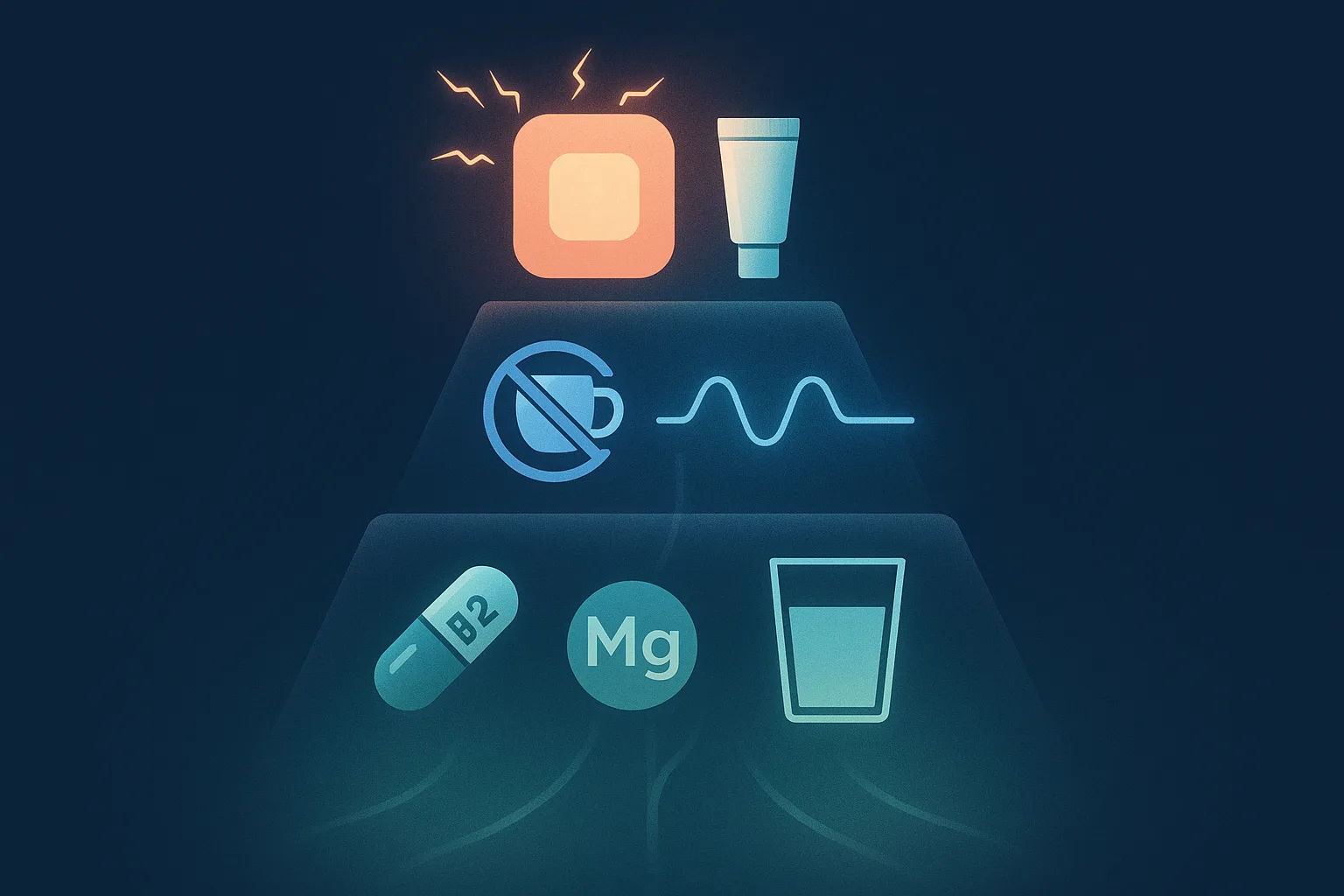
Check and correct nutrient levels:
Vitamin B12 — test, and supplement if low or borderline (essential for myelin)
Magnesium — 200-400 mg daily (glycinate or citrate forms) supports nerve and muscle function
Vitamin D — commonly low in midlife women and involved in nerve health
Reduce nervous-system triggers:
Caffeine — a stimulant that raises neuronal excitability; cut back if shocks are frequent
Alcohol — disrupts nerve function and sleep, and is a common hot-flash and nerve-symptom trigger
Stress — heightened autonomic arousal lowers the threshold for misfires; paced breathing and stress reduction help directly
Blood sugar — avoid large glucose swings; pair carbohydrates with protein and fat
Sleep — poor sleep amplifies nervous-system reactivity, and the perimenopause insomnia cycle makes everything worse
Exercise — regular movement lowers baseline autonomic reactivity over time
Track the pattern. Keep a brief log of when shocks occur, what preceded them, and whether a hot flash followed. This helps you identify personal triggers and gives your provider useful information — and it confirms the menopausal pattern (brief, random, clustered with other symptoms) versus a pattern that needs neurological workup.
When to See a Doctor
Most menopause electric shock sensations are benign and need no specific treatment beyond the measures above. See a doctor if:
The shocks are frequent, severe, or worsening rather than fading
They are localized to one area and paired with weakness, numbness, or loss of function
You have other neurological symptoms — vision changes, balance problems, persistent numbness, difficulty speaking
You have risk factors like diabetes, or take metformin or long-term acid-reducers (B12 risk)
The sensations are interfering with daily life or sleep
A workup typically includes B12, magnesium, vitamin D, blood glucose, and thyroid testing — and, if anything is atypical, a neurological exam. Ruling these out is reassuring and occasionally identifies a simple, fixable cause.
The Bigger Picture
Electric shock sensations belong to a large and under-discussed category of perimenopause symptoms that go beyond the famous hot flashes and night sweats. Burning mouth, formication (skin crawling), tinnitus, dizziness, histamine reactions — these are all downstream of the same hormonal transition affecting nervous-system and autonomic function. They are real, they are common, and they are too often dismissed because they do not appear on the standard symptom checklist.
The encouraging reality: electric shocks are almost always benign and self-limiting, fading as hormone levels stabilize in postmenopause. And because they share a mechanism with hot flashes and the broader vasomotor cluster, the same comprehensive approach to your hormones tends to relieve them.
Women experiencing electric shocks alongside other perimenopause symptoms often benefit from an integrated evaluation through online HRT clinics that assess the full hormonal picture rather than treating each odd symptom in isolation. The best online HRT clinics for women comparison can help you find a provider who takes the lesser-known symptoms seriously.
References
Genazzani AR, Pluchino N, Luisi S, Luisi M. Estrogen, cognition and female ageing. Human Reproduction Update. 2007;13(2):175-187. doi:10.1093/humupd/dml042
Brinton RD, Yao J, Yin F, Mack WJ, Cadenas E. Perimenopause as a neurological transition state. Nature Reviews Endocrinology. 2015;11(7):393-405. doi:10.1038/nrendo.2015.82
Freedman RR. Menopausal hot flashes: mechanisms, endocrinology, treatment. The Journal of Steroid Biochemistry and Molecular Biology. 2014;142:115-120. doi:10.1016/j.jsbmb.2013.08.010
Rance NE, Dacks PA, Mittelman-Smith MA, Romanovsky AA, Krajewski-Hall SJ. Modulation of body temperature and LH secretion by hypothalamic KNDy neurons. Frontiers in Neuroendocrinology. 2013;34(3):211-227. doi:10.1016/j.yfrne.2013.07.003
Stuenkel CA, Davis SR, Gompel A, et al. Treatment of symptoms of the menopause: an Endocrine Society clinical practice guideline. The Journal of Clinical Endocrinology & Metabolism. 2015;100(11):3975-4011. doi:10.1210/jc.2015-2236
Stabler SP. Vitamin B12 deficiency. New England Journal of Medicine. 2013;368(2):149-160. doi:10.1056/NEJMcp1113996
What causes electric shock sensations during menopause?
The leading explanation is that fluctuating and declining estrogen disrupts the way your nervous system transmits signals. Estrogen modulates the activity of neurons and the integrity of the myelin sheath that insulates nerve fibers, and it influences neurotransmitters like serotonin and GABA that regulate nerve excitability. When estrogen swings or drops, nerve signaling can become briefly distorted or hyper-excitable, producing the sensation of a sudden zap, jolt, or rubber-band snap under the skin. Many women notice these shocks immediately before a hot flash, which suggests they share a common origin in the brain's temperature-regulating and autonomic centers. The sensations are typically brief, harmless, and tend to settle as hormone levels stabilize in postmenopause.
Does HRT help with electric shock sensations?
It often does, although electric shocks alone are rarely the reason HRT is prescribed. Because the sensations are driven by estrogen instability, restoring steadier estrogen levels with transdermal estradiol (patch or gel) can reduce both the frequency and intensity of the shocks for many women. The effect is usually indirect: HRT calms the vasomotor and autonomic dysregulation that the shocks are tied to. Transdermal estradiol is generally preferred over oral because it produces more stable blood levels and avoids the daily peaks and troughs that can themselves trigger nerve symptoms. If shocks are your only symptom and you have no other menopausal complaints, most clinicians will first rule out non-hormonal causes before considering HRT.
Are menopause electric shocks dangerous?
In the vast majority of cases, no. Menopause-related electric shock sensations are benign — they reflect temporary changes in nerve signaling, not nerve damage. They do not cause harm and they tend to diminish over time. However, electric shock sensations can occasionally signal other conditions that deserve evaluation: vitamin B12 deficiency, low magnesium, anxiety disorders, pinched nerves, diabetes-related neuropathy, migraine, or, rarely, neurological conditions. If your shocks are frequent, localized to one area, accompanied by weakness or numbness that persists, or paired with other neurological symptoms, see a doctor to rule out these causes rather than assuming menopause is the only explanation.
Why do I get an electric shock feeling right before a hot flash?
This is one of the most commonly reported patterns, and it points to a shared mechanism. Hot flashes originate in the hypothalamus — the brain's thermostat — which becomes hypersensitive when estrogen declines. The same autonomic dysregulation that triggers the hot flash appears to send a brief, distorted signal through the nervous system first, felt as an electric shock or jolt. Think of it as the nervous system's misfire that precedes the temperature surge. Because they share an origin, treatments that reduce hot flashes — including HRT and certain non-hormonal options — frequently reduce the pre-flash electric shocks as well.
Can low vitamin B12 cause electric shock sensations in menopause?
Yes, and it is worth checking. Vitamin B12 is essential for maintaining the myelin sheath that insulates your nerves, and a deficiency can produce tingling, buzzing, and electric shock-like sensations that closely mimic menopausal nerve symptoms. B12 deficiency becomes more common with age, in people who eat little animal protein, and in those taking metformin or acid-reducing medications. Because the symptoms overlap so closely with menopause, a simple B12 (and ideally methylmalonic acid) blood test is a sensible first step. Correcting a deficiency is inexpensive and can resolve the sensations entirely if B12 was the cause.
How long do menopause electric shock sensations last?
Both per episode and overall, they are usually short-lived. An individual electric shock lasts a fraction of a second to a few seconds — a quick zap rather than a sustained sensation. Over the menopausal transition, they tend to come and go with hormonal fluctuations, often most noticeable during late perimenopause when estrogen is swinging most erratically. For most women they become less frequent and eventually stop in postmenopause as hormone levels settle into a new, stable baseline. If they persist for years into postmenopause or worsen, that is a reason to investigate non-hormonal causes.
What can I do to reduce electric shock sensations besides HRT?
Several non-hormonal steps help. Check and correct vitamin B12 and magnesium levels — both support healthy nerve function. Reduce common triggers including caffeine, alcohol, and high stress, all of which increase nervous-system excitability. Stay well hydrated and keep blood sugar stable, since dehydration and glucose swings can provoke nerve symptoms. Regular exercise, good sleep, and stress-reduction practices like paced breathing lower overall autonomic reactivity. Some women find that the same lifestyle measures that reduce hot flashes — avoiding triggers, keeping cool, managing stress — also cut down on the electric shocks, because the two symptoms share a common autonomic origin.