Formication in Menopause: Why Your Skin Crawls and How HRT Helps
6/1/2026
5 min read
By The TRT Catalog
The creepy-crawling, bugs-under-the-skin sensation of perimenopause is called formication. Here's the estrogen-nerve mechanism, what it isn't, and how HRT and targeted treatment stop it.
Key Takeaways: Formication -- the sensation of insects crawling on or under the skin with nothing there -- is a real, under-recognized symptom of perimenopause and menopause. It is a neuropathic phenomenon, not a sign of infestation or losing your mind. Declining estrogen drives it through two mechanisms at once: it makes sensory nerves hyper-excitable so they generate phantom crawling and tingling signals, and it thins, dries, and weakens the skin barrier so nerve endings are more exposed and reactive. Up to half of women report chronic itch or abnormal skin sensations during the transition. Because the root cause is hormonal, transdermal estradiol -- which calms nerve excitability and rebuilds skin collagen and hydration -- is the most effective treatment for most women, often improving symptoms within 4 to 12 weeks. Barrier moisturizers, antihistamines, and in refractory cases low-dose gabapentin manage symptoms while HRT corrects the cause. The critical first step is ruling out non-hormonal mimics: scabies, eczema, diabetic neuropathy, thyroid disease, and B12 deficiency.
The Symptom Women Are Afraid to Describe
A woman in her late 40s lies in bed and feels it again: a crawling, prickling sensation moving across her arms, scalp, or legs, as if something is walking on her skin. She checks. There is nothing there. No rash, no bites, no insects. But the feeling is unmistakable, and it is worse at night.
She hesitates to tell anyone. It sounds delusional. Bugs crawling on the skin is the kind of thing that gets you a psychiatric referral, not a hormone panel. So she suffers quietly, scratches until the skin is raw, and assumes it is anxiety or dry skin or her imagination.
It is none of those. It has a name -- formication -- and it is a recognized neurological symptom of the menopausal transition. The word comes from the Latin formica, meaning ant. It belongs to a family of abnormal nerve sensations called paresthesias, the same category as the pins-and-needles, tingling, and burning that many women also report during perimenopause [1].
Formication is not on the standard menopause symptom checklist that most clinicians work from, which is exactly why so many women go undiagnosed. But surveys of midlife women consistently surface it alongside the better-known complaints, and up to half of perimenopausal and menopausal women report chronic itch or abnormal skin sensations of some kind [2]. The crawling sensation is one of its most distressing forms.
Why Estrogen Loss Makes Skin Crawl
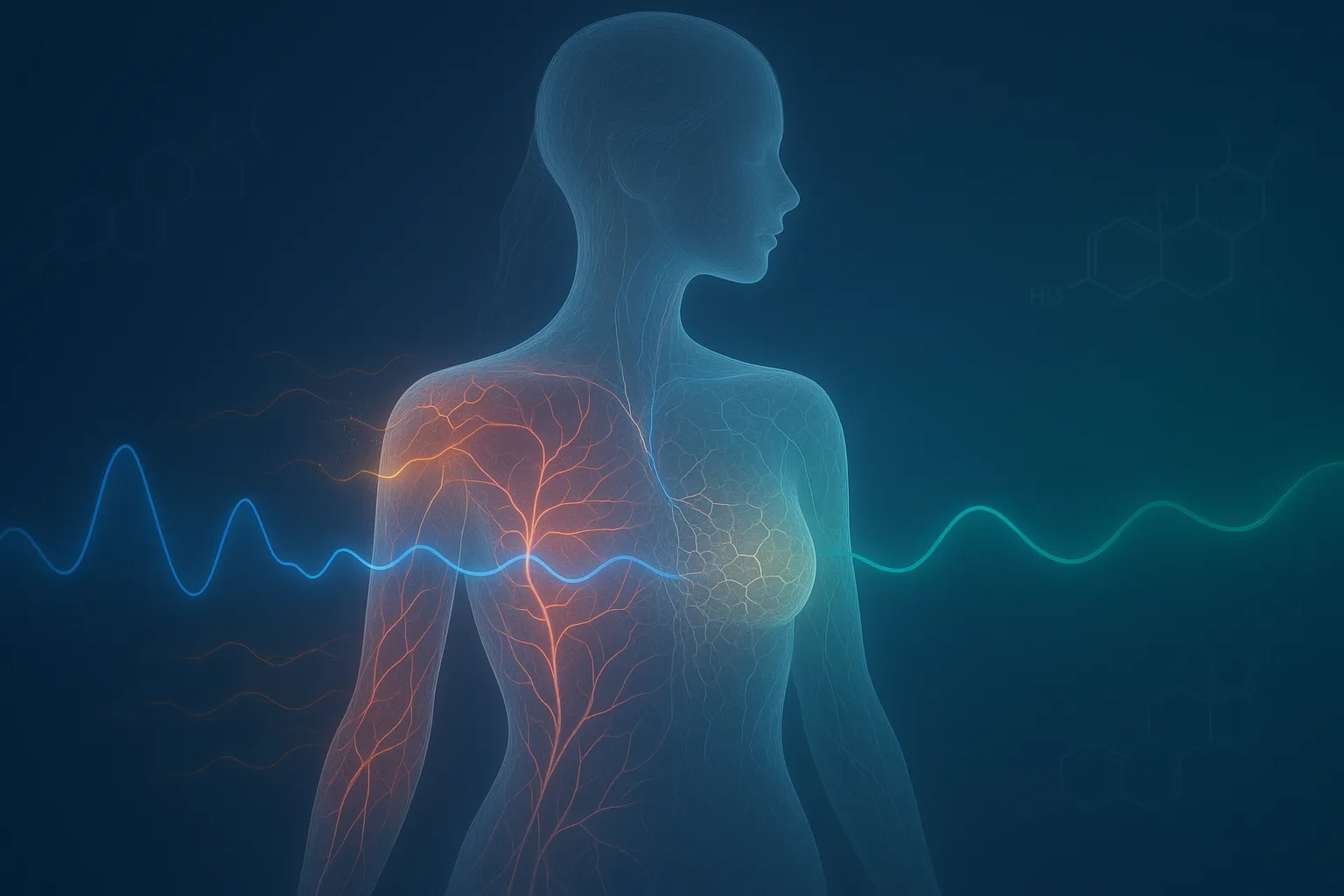
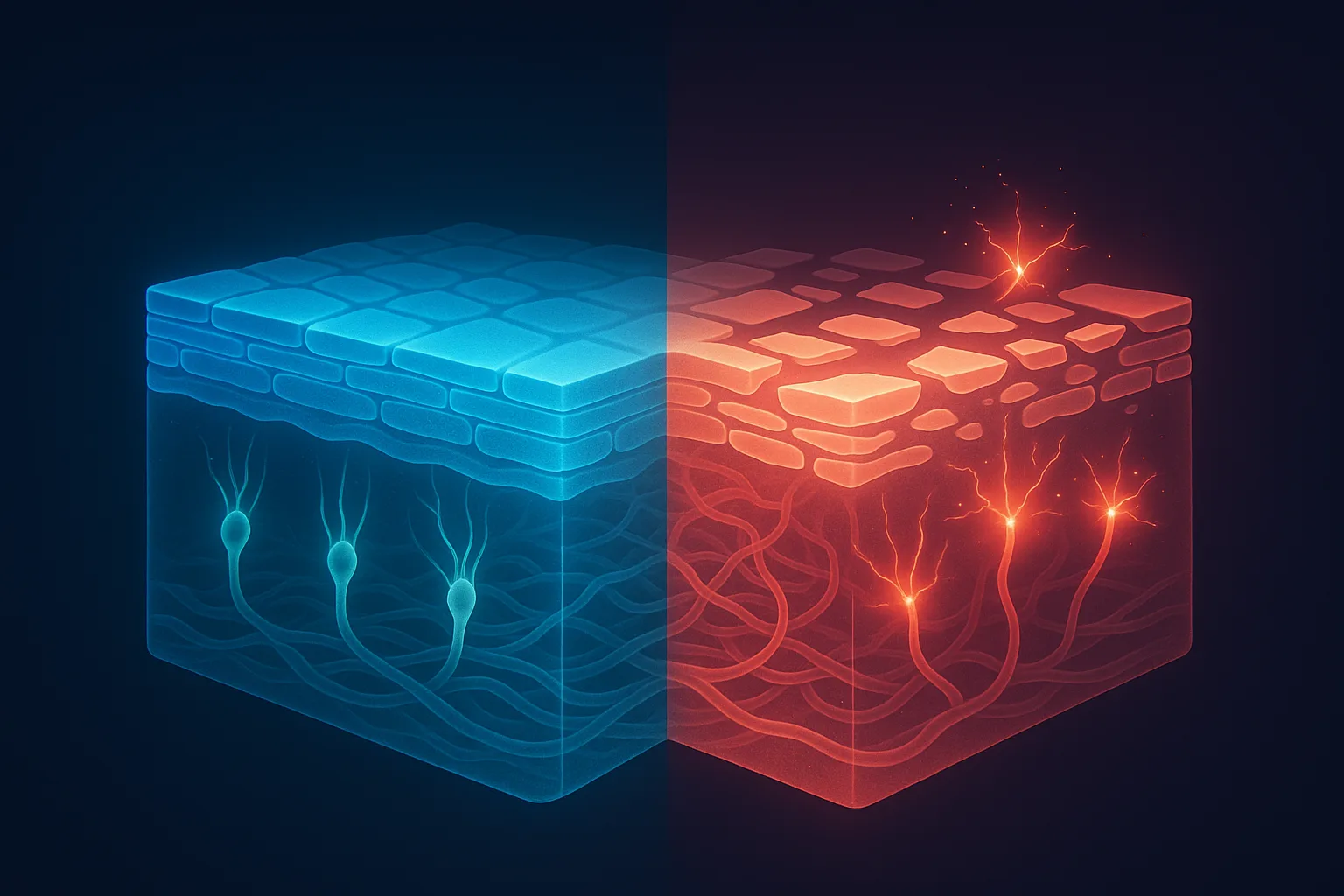
Formication during menopause is driven by estrogen acting in two places at once: on the nerves and on the skin. When estrogen declines or swings violently, both systems are affected, and the combination produces the crawling sensation.
The Nerve Side: Hyper-Excitable Sensory Signaling
Estrogen is a neuromodulator. It influences how readily sensory nerves fire and how the brain processes the signals they send. Estrogen receptors are present throughout the peripheral and central nervous system, and estrogen helps regulate the excitability of the sensory neurons that report touch, temperature, and itch [3].
When estrogen drops -- and especially when it fluctuates unpredictably, as it does in perimenopause -- these nerves can become dysregulated. They misfire, generating sensations with no external trigger. The brain interprets these phantom signals as crawling, tingling, prickling, or burning on the skin. This is why formication is classified as a neuropathic itch or sensation: the problem originates in the nerves themselves, not in something touching the skin.
This same mechanism explains why other paresthesias -- numb patches, electric-shock sensations, the feeling of water trickling down the skin -- cluster together in perimenopause and why they often travel and change location, which a true skin condition rarely does.
Women's HRT — Menopause-First Telehealth
Bioidentical estradiol, progesterone, and low-dose testosterone — all 50 states, unlimited physician access.
Estrogen is also one of the most important hormones for skin health. It drives collagen synthesis, maintains hydration through hyaluronic acid and natural moisturizing factors, supports the lipid barrier that keeps water in and irritants out, and sustains blood flow to the dermis [4].
As estrogen falls through menopause, skin collagen drops sharply -- studies estimate women lose roughly 30 percent of skin collagen in the first five years after menopause. The skin becomes thinner, drier, less elastic, and more reactive. The protective barrier weakens, leaving nerve endings closer to the surface and more easily provoked.
This is the second half of the formication mechanism. A drier, thinner, barrier-compromised skin is more itch-prone and more sensitive, so the phantom signals from over-excitable nerves land on a surface that is already primed to feel uncomfortable. The result is the classic crawling, itching, prickling sensation that intensifies at night when skin is warm and dry under bedding and there are no distractions.
What Formication Is Not
Before attributing crawling skin to hormones, it is essential to rule out the conditions it can mimic. This is not optional -- some of the mimics are treatable and some are serious. A responsible evaluation distinguishes hormonal formication from:
Scabies and other infestations. Real scabies produces a visible rash, burrows (thin gray lines), and intense itching, often between the fingers and in skin folds. Formication has no rash, no burrows, and no lesions -- it is a sensation without a skin finding. If there is anything visible, it is not simple formication.
Eczema, contact dermatitis, and hives. These produce visible redness, scaling, or welts. Formication does not.
Peripheral neuropathy from diabetes. Diabetic neuropathy is a leading cause of paresthesia and typically starts in the feet and hands in a stocking-glove pattern. A fasting glucose and HbA1c should be checked.
Thyroid disease. Both hypo- and hyperthyroidism can cause skin and nerve symptoms; thyroid disease also rises in midlife women and overlaps heavily with menopause. A TSH and free T4 are standard.
Vitamin B12, folate, or iron deficiency. B12 deficiency in particular causes paresthesias and is common, especially in women on certain diets, with GI conditions, or on metformin or acid-reducing drugs.
Kidney or liver disease. Both can cause generalized itch and abnormal sensations.
Medication and substance effects. Some prescription drugs and stimulant withdrawal cause formication. Review the medication list.
Anxiety and stress. These genuinely amplify the perception of crawling skin and frequently coexist with the hormonal cause, but they are usually an amplifier rather than the sole driver in midlife women with other menopause symptoms.
The pattern that points to a hormonal cause is: new onset in the 40s or 50s, no visible rash, sensations that travel and worsen at night, and the company of other perimenopause symptoms -- hot flashes, sleep disruption, mood changes, brain fog, joint aches, dry skin. When that picture is present and the bloodwork rules out the mimics, hormonal formication is the working diagnosis.
How HRT Treats Formication
Because hormonal formication is driven by estrogen loss acting on nerves and skin, restoring estrogen treats both halves of the mechanism at once. This is what makes HRT the most effective intervention for most women whose crawling skin is hormonally driven [5].
Estrogen replacement calms the over-excitable sensory nerves, reducing the phantom signals, and over weeks to months it rebuilds skin collagen, hydration, and barrier function, making the skin less reactive. Women who treat the root cause rather than just the symptom tend to get more durable relief than those who rely on moisturizers and antihistamines alone.
Transdermal Is the Preferred Route
For formication specifically, the route of estrogen matters. Transdermal estradiol -- delivered by patch, gel, or spray -- is generally preferred over oral estrogen for two reasons. First, it produces steadier blood levels and avoids the peaks and troughs that can themselves provoke nerve symptoms; since formication is partly a problem of estrogen volatility, smooth delivery is logical. Second, transdermal estradiol bypasses first-pass liver metabolism and carries a lower clot risk than oral estrogen.
A typical starting point is a low-dose transdermal estradiol patch (for example, 25 to 50 mcg per day) titrated to symptom relief rather than to a specific blood number. Women with a uterus also need micronized progesterone for endometrial protection, and progesterone has a useful bonus here: its calming, GABA-active metabolites can ease the nighttime nerve agitation and sleep disruption that ride along with formication.
The Role of Testosterone
Testosterone is not a direct treatment for crawling skin, but it is part of the complete hormonal picture in women. It contributes to skin thickness and collagen and to overall energy and wellbeing, so optimizing it as part of a full protocol can support skin resilience. A clinician who treats women's hormones comprehensively will consider estradiol, progesterone, and where appropriate low-dose testosterone together rather than treating estrogen in isolation. You can compare clinics that prescribe complete women's hormone protocols with proper lab monitoring rather than a single hormone in isolation.
How Long Until It Improves
Because two systems have to recover -- nerve excitability and skin structure -- improvement is gradual rather than instant. Many women notice the nerve component (the crawling and tingling) settling within 4 to 8 weeks of stable transdermal estradiol, while the skin component (dryness, thinning, reactivity) continues improving over 3 to 6 months as collagen and barrier function rebuild. Setting that expectation prevents women from abandoning treatment too early.
Symptom Relief While HRT Takes Effect
HRT corrects the cause, but several measures provide relief in the meantime and complement it long-term:
Restore the skin barrier. A fragrance-free moisturizer with ceramides, colloidal oatmeal, or hyaluronic acid, applied to damp skin twice daily and especially before bed, rebuilds the barrier and reduces both itch and reactivity. This is the single most useful self-care step.
Cool the environment. Keep the bedroom cool and avoid hot showers before bed; heat and vasomotor activity worsen the nighttime crawling.
Antihistamines. Over-the-counter H1 antihistamines (cetirizine, loratadine, fexofenadine) can blunt the itch component, and a sedating antihistamine at night can help both itch and sleep.
Avoid triggers. Skip harsh soaps, hot water, rough fabrics, and known irritants. Soften laundry and choose breathable cotton bedding.
Address stress and sleep. Because anxiety amplifies the sensation, sleep hygiene, paced breathing, and stress reduction genuinely reduce the perceived intensity.
Refractory cases. For severe, persistent neuropathic crawling that does not respond to the above, clinicians sometimes prescribe low-dose gabapentin or pregabalin, which dampen the nerve firing directly. These are the same agents the major menopause societies list as non-hormonal options for vasomotor symptoms, and they target the neuropathic component of formication.
What Bloodwork Should Include
If you suspect hormonal formication, request labs that both confirm the menopausal context and rule out the mimics:
Hormonal panel: FSH, estradiol, progesterone (drawn around day 21 if still cycling), free and total testosterone, DHEA-S. This establishes where you are in the transition and guides dosing.
Mimic rule-outs: TSH and free T4 (thyroid), fasting glucose and HbA1c (diabetic neuropathy), vitamin B12 and folate, ferritin and iron studies, comprehensive metabolic panel (kidney and liver function), and vitamin D.
The hormonal panel tells you whether perimenopause is plausibly the driver; the rule-out panel ensures you are not missing a treatable non-hormonal cause before committing to HRT. A provider who understands the estrogen-nerve-skin connection can interpret these together and design a protocol that targets the root cause.
The Bottom Line
Formication is not a sign that something is crawling on you and it is not a sign that you are imagining things. It is a genuine neuropathic symptom of estrogen loss, produced by hyper-excitable sensory nerves landing on a thinning, drying skin barrier. It is common, it is under-recognized, and it is treatable.
The work-up rules out scabies, eczema, diabetes, thyroid disease, and B12 deficiency. Once those are excluded and the picture is hormonal, transdermal estradiol -- often with micronized progesterone and, where appropriate, low-dose testosterone -- treats both halves of the mechanism and resolves the symptom for most women over a few months. Barrier moisturizers, antihistamines, and in stubborn cases low-dose gabapentin bridge the gap while the hormones take effect.
If your skin has started crawling in your 40s or 50s and no one can find a cause, the answer may be the one no one thought to check. A clinician experienced in women's hormone therapy can confirm it and treat it.
References
Bachmann GA, Leiblum SR. The impact of hormones on menopausal sexuality and somatic symptoms. Maturitas. 2004;49(1):3-9.
Duarte GV, et al. Itch and dysesthesia in menopause: prevalence and the role of estrogen deficiency. International Journal of Women's Dermatology. 2022;8(3):e045.
Smith YR, et al. Pronociceptive and antinociceptive effects of estradiol through the central nervous system. Pain. 2006;120(1-2):8-15.
Thornton MJ. Estrogens and aging skin. Dermato-Endocrinology. 2013;5(2):264-270.
Brincat MP, et al. Hormone replacement therapy and the skin. Maturitas. 2005;51(1):67-72.
What is formication and is it normal during menopause?
Formication is the medical term for the sensation of insects crawling on or under the skin when nothing is there. It is a recognized but under-discussed symptom of perimenopause and menopause, driven by declining estrogen's effect on nerve signaling and skin integrity. It is a form of paresthesia (abnormal nerve sensation), not a sign of a parasite or infestation. While distressing, it is benign in the hormonal context and typically resolves when estrogen levels are stabilized. It commonly worsens at night and is often accompanied by itching, tingling, or a pins-and-needles feeling. If you are in your 40s or 50s and have new-onset crawling skin with no rash or visible cause, the hormonal transition is the most likely explanation.
Why does low estrogen make your skin feel like bugs are crawling?
Estrogen acts on the nervous system and the skin simultaneously. In the nervous system it modulates the excitability of sensory nerves; when it drops or fluctuates wildly during perimenopause, peripheral nerves can misfire and generate phantom sensations like crawling, tingling, and burning. In the skin, estrogen drives collagen production, hydration, and the lipid barrier. As it declines, the skin thins, dries, and loses its protective barrier, which makes nerve endings more exposed and reactive. The combination of hyper-excitable nerves and a compromised skin barrier produces the classic formication sensation. This is why it is considered a neuropathic itch rather than a simple dry-skin itch.
Does HRT stop formication and skin crawling?
For most women whose formication is hormonally driven, restoring estrogen with HRT is the most effective treatment because it addresses the root cause -- it calms over-excitable sensory nerves and rebuilds skin collagen, hydration, and barrier function. Transdermal estradiol (patch, gel, or spray) is generally preferred because it produces steadier levels than oral estrogen and avoids the spikes that can themselves trigger nerve symptoms. Many women report meaningful improvement within 4 to 12 weeks of stable dosing as both the nerve and skin components recover. Topical estrogen and good barrier moisturizers can add local benefit. HRT will not help formication caused by non-hormonal conditions, which is why ruling those out matters.
How is menopause formication different from anxiety or a skin condition?
Anxiety can amplify the perception of crawling skin and the two often coexist, but hormonal formication has a physical basis in nerve excitability and skin changes rather than being purely psychological. It is distinguished from primary skin conditions such as eczema, scabies, or contact dermatitis by the absence of a visible rash, burrows, or lesions -- formication is a sensation without a corresponding skin finding. It differs from restless legs syndrome in that it affects the skin surface broadly rather than producing an urge to move the legs. The hormonal pattern -- onset in the 40s or 50s, cyclical or nocturnal worsening, and association with other perimenopause symptoms -- is the strongest clue.
When should I see a doctor about crawling skin sensations?
See a clinician if the sensation is persistent, worsening, or interfering with sleep, if there is any visible rash or skin lesion, if you have numbness or weakness alongside it, or if you have risk factors for non-hormonal causes such as diabetes (peripheral neuropathy), thyroid disease, B12 deficiency, kidney disease, or you take medications known to cause paresthesia. A proper workup rules out these mimics with bloodwork before attributing the symptom to hormones. If the picture is clearly hormonal -- midlife onset with other menopause symptoms and no skin findings -- a provider experienced in HRT can address it directly. Sudden onset of tactile hallucinations with no hormonal context warrants prompt evaluation.
What helps formication at night when it is worst?
Formication frequently spikes at night because cortisol falls, distractions disappear, and skin can become warm and dry under bedding. Practical measures include applying a fragrance-free ceramide or colloidal-oatmeal moisturizer before bed to restore the barrier, keeping the bedroom cool to reduce vasomotor triggers, avoiding hot showers right before sleep, and using a non-sedating or sedating antihistamine if itching is prominent. Some clinicians prescribe low-dose gabapentin or pregabalin at night for refractory neuropathic crawling because these calm nerve firing. These are symptom-control measures; stabilizing estrogen with HRT addresses why the nerves are misfiring in the first place.
Can testosterone or progesterone help formication too?
Estrogen is the primary driver and the main treatment target, but the full hormonal picture matters. Micronized progesterone (needed for endometrial protection in women with a uterus) has calming, GABA-active effects that can ease the nighttime nerve agitation and sleep disruption that accompany formication. Low-dose testosterone is not a direct treatment for crawling skin, but because it supports skin thickness, collagen, and overall wellbeing, optimizing it as part of a complete protocol can contribute to skin resilience. A clinician experienced in women's hormones can design a combined estradiol, progesterone, and where appropriate testosterone protocol rather than treating estrogen in isolation.