Restless Legs in Menopause: Hormonal Causes & HRT Fix
5/16/2026
5 min read
By The TRT Catalog
Up to 15.7% of midlife women develop restless legs. Here's the estrogen-dopamine-iron link, why it spikes in perimenopause, and how HRT actually helps.
Key Takeaways: Restless legs syndrome is roughly twice as prevalent in women as men, and prevalence climbs sharply across the menopause transition — reaching 15.7% in some midlife cohorts. The mechanism is a collision of three forces: falling estradiol destabilizes dopamine signaling, decades of menstrual blood loss leaves most perimenopausal women functionally iron deficient even at "normal" ferritin, and disrupted sleep amplifies the nocturnal symptom pattern. HRT alone is not an RLS cure, but combined with iron repletion to ferritin above 75-100 ng/mL, it resolves or substantially reduces symptoms in most women. The protocol is concrete and the science is finally catching up to what women have been describing for years.
The Symptom Women Don't Connect to Hormones
You are 47. You finally crawl into bed after the toddler-grandchild-work-marathon of your day, and within ten minutes your legs feel wrong. Itchy from the inside. Crawling. An almost electric urge to move them. You kick. You stretch. You walk to the kitchen. The sensation eases for two minutes, then returns the moment you lie down. By the third week, you are sleeping in a chair.
You search "restless legs perimenopause" and find half-written blog posts that mention magnesium, a few Reddit threads, and a single neurology paper from 2008. Your doctor offers gabapentin or a dopamine agonist. Nobody mentions estrogen. Nobody mentions ferritin.
This is one of the most under-recognized hormonal symptoms of midlife. Restless legs syndrome (RLS), now formally renamed Willis-Ekbom disease, is at least twice as common in women as men [1], and the prevalence rises with each decade of life through and beyond the menopause transition. A Swedish population study found 15.7% of midlife women met diagnostic criteria for RLS, with severity that disrupted sleep weekly or more [2].
The science is not exotic. The reason RLS clusters with menopause comes down to three biological systems that all destabilize during the transition: dopamine, iron, and sleep architecture. HRT does not fix RLS on its own, but it changes the playing field on all three.
What Restless Legs Syndrome Actually Is
RLS is a sensorimotor neurological disorder defined by four diagnostic criteria, all of which must be present:
An urge to move the legs, usually accompanied by uncomfortable sensations
The urge worsens during rest or inactivity
The urge is partially or fully relieved by movement
The urge is worse in the evening or at night
The sensations are notoriously hard to describe. Women report "crawling," "buzzing," "pulling," "itching deep in the bone," and "electrical static." The discomfort is not pain. It is a relentless, restless need to move that vanishes the moment you actually start moving — and returns the second you stop.
About 80% of people with RLS also have periodic limb movements of sleep (PLMS), where the legs jerk involuntarily every 20-40 seconds during light sleep, often for hours. PLMS fragments sleep architecture even when the person is unaware they are happening. Partners often notice before the patient does.
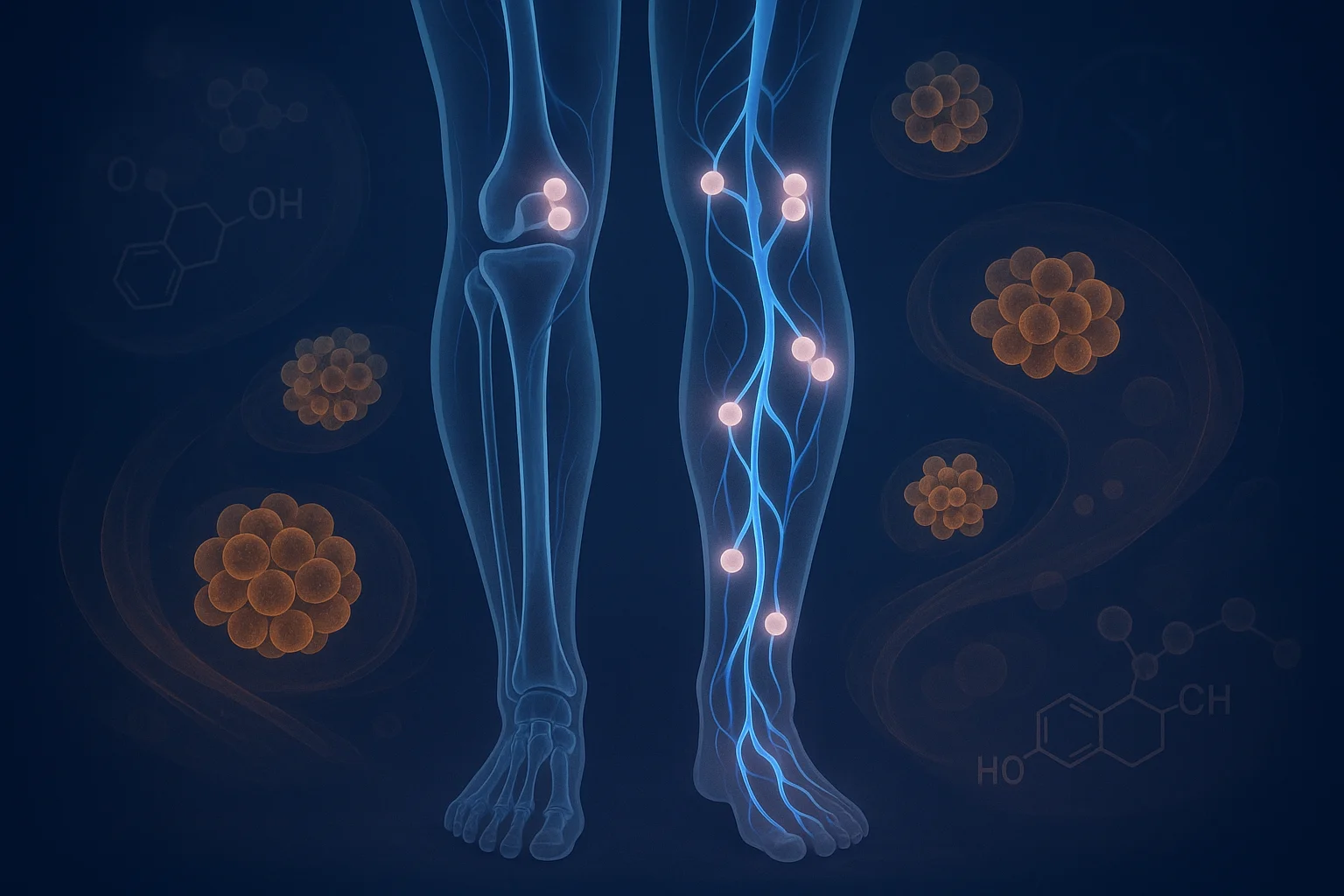
RLS is not a psychosomatic condition. It has a measurable neurological signature: reduced iron stores in the substantia nigra and striatum on imaging, altered cerebrospinal fluid proteomics consistent with brain iron deficiency, and dopamine receptor dysregulation in dopaminergic pathways [3].
Why It Strikes Women in Midlife
The reason RLS preferentially attacks women — and especially perimenopausal and postmenopausal women — comes down to overlapping biology.
1. Brain Iron Deficiency Is the Core Defect
Iron is the rate-limiting cofactor for tyrosine hydroxylase, the enzyme that converts tyrosine to L-DOPA, the precursor of dopamine. Without adequate brain iron, dopamine synthesis slows, dopamine receptors upregulate compensatorily, and the dopaminergic system becomes unstable [3].
Women lose roughly 30 mg of iron per menstrual cycle. Multiplied across 30+ years of cycling and pregnancies, the average perimenopausal woman enters her late 40s with body iron stores a fraction of her male peer's. Serum ferritin in the 20-50 ng/mL range is routinely labeled "normal" but is a red flag for RLS. The International Restless Legs Syndrome Study Group recommends targeting ferritin above 75-100 ng/mL and transferrin saturation above 20% before pharmacologic RLS treatment [4].
Even more important: serum ferritin is an imperfect proxy for brain iron. A woman can have a ferritin of 60 and still have inadequate iron crossing the blood-brain barrier into the substantia nigra. This is why iron repletion is worth a trial even when standard labs look "fine."
2. Estradiol Modulates the Dopamine Pathway
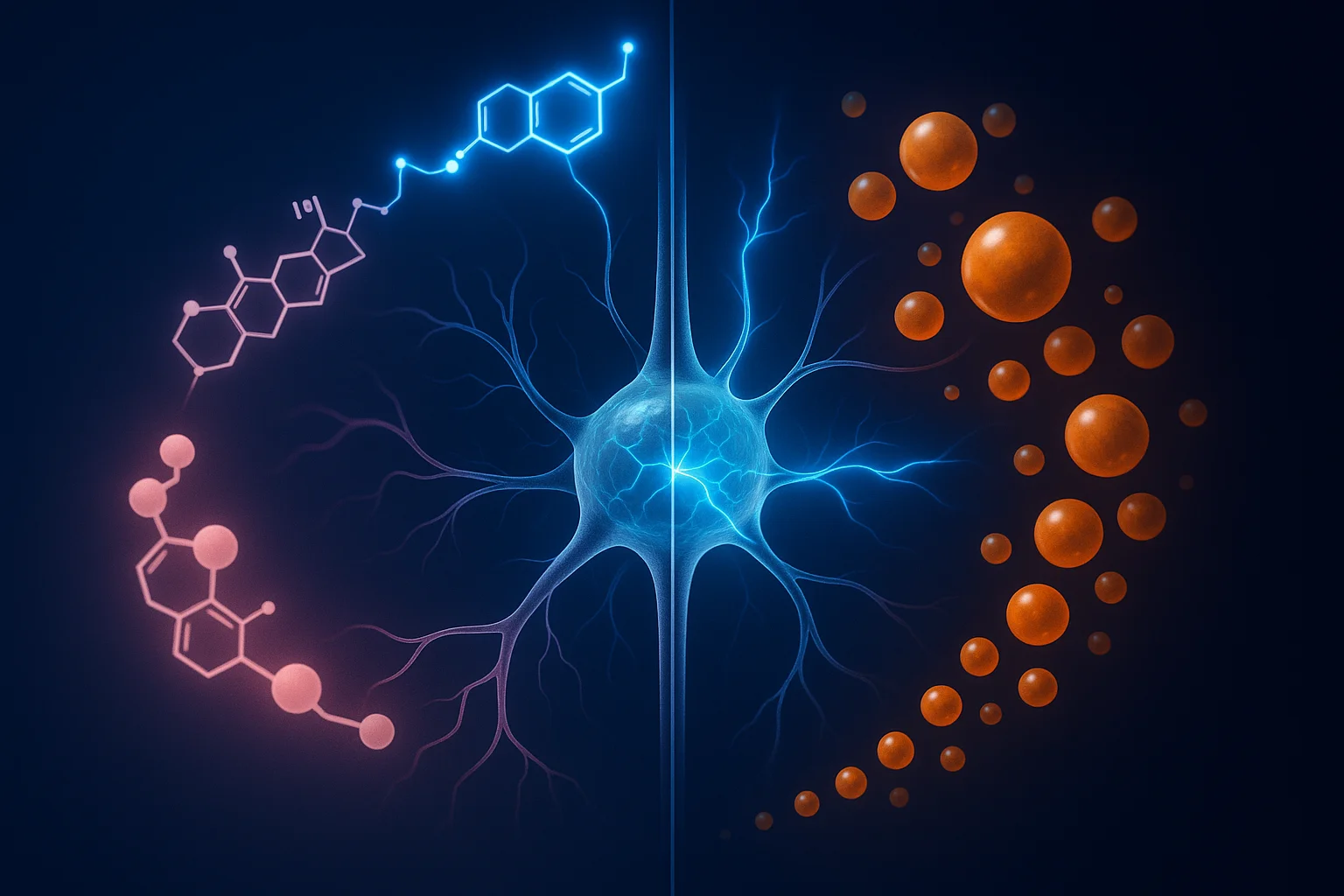
Estrogen has well-documented effects on dopaminergic transmission. Estradiol upregulates tyrosine hydroxylase, enhances dopamine release in the striatum, and modulates dopamine D2 receptor sensitivity [1]. In perimenopause, estradiol does not simply decline — it swings unpredictably, and these oscillations destabilize dopamine signaling.
A small 2012 study presented at the American Academy of Neurology found that hormone replacement therapy in midlife women was associated with reduced periodic limb movements during sleep, with researchers attributing the effect to estradiol's modulation of dopaminergic tone [5]. Earlier work in Climacteric suggested estrogen replacement may reduce nocturnal limb movements [6].
The evidence is not yet at the level of guideline-changing trial data, but the mechanistic case is strong: fluctuating estrogen worsens a dopaminergic disorder, and stabilizing estrogen often reduces the symptoms.
3. The Nocturnal Cluster Amplifies Symptoms
RLS has a built-in circadian pattern — symptoms peak in the evening and overnight, mirroring the daily nadir of dopaminergic tone. In perimenopause, several other nighttime disruptors converge:
Hot flashes and night sweats fragment sleep and increase autonomic arousal
Cortisol surges at 3 a.m. wake you into the most symptomatic RLS window
Low progesterone reduces the GABAergic tone that would otherwise quiet motor arousal
Estradiol nadir at night further destabilizes dopamine
Each individual driver is mild. Together they turn a tolerable evening sensation into a wide-awake, leg-kicking 2-7 a.m. ordeal.
Women's HRT — Menopause-First Telehealth
Bioidentical estradiol, progesterone, and low-dose testosterone — all 50 states, unlimited physician access.
Before assuming menopausal RLS, rule out other drivers. New-onset RLS in midlife warrants a baseline workup:
Ferritin and transferrin saturation. The single most important test. Target ferritin > 75-100 ng/mL.
Complete blood count. Anemia of any cause worsens RLS.
Vitamin B12 and folate. Both support dopaminergic function.
TSH, free T4, free T3. Hypothyroidism mimics fatigue plus restlessness.
Magnesium, calcium, phosphate. Electrolyte derangements can cause neuromuscular irritability.
HbA1c and fasting glucose. Diabetic peripheral neuropathy can be confused with RLS.
Creatinine and eGFR. Chronic kidney disease is a major RLS trigger.
Medication review. Antidepressants (especially SSRIs and SNRIs), antihistamines (diphenhydramine), antipsychotics, and antinausea drugs (metoclopramide) commonly trigger or worsen RLS by antagonizing dopamine.
Pregnancy and end-stage renal disease are the two highest-risk states for secondary RLS. In midlife women not on dialysis, iron deficiency is by far the leading cause of treatable RLS.
The Hormonal-Iron-Sleep Protocol
The best results come from addressing all three drivers in parallel, not sequentially. This is the protocol the better midlife-focused clinics are converging on.
Step 1: Iron Repletion Is Non-Negotiable
If ferritin is below 75-100 ng/mL or transferrin saturation is below 45%, oral iron is first-line.
Ferrous bisglycinate or ferrous sulfate, 60-65 mg elemental iron, every other day. Alternate-day dosing has equal or superior absorption versus daily dosing because daily iron upregulates hepcidin and blocks the next day's absorption [4].
Take with vitamin C (250-500 mg) on an empty stomach.
Separate from coffee, tea, calcium, thyroid medication, and antacids by at least 2 hours.
Recheck ferritin at 8-12 weeks. Most women need 3-6 months of supplementation to reach target.
Intravenous iron (ferric carboxymaltose) is appropriate for women who cannot tolerate oral iron or who do not respond after 3 months. A single 750-1000 mg infusion can raise ferritin to target levels and has direct evidence for RLS improvement.
This step alone resolves or substantially reduces RLS in a meaningful fraction of midlife women.
Step 2: Transdermal Estradiol Stabilizes the Dopaminergic System
The goal is not to maximize estrogen — it is to stop the wild perimenopausal swings.
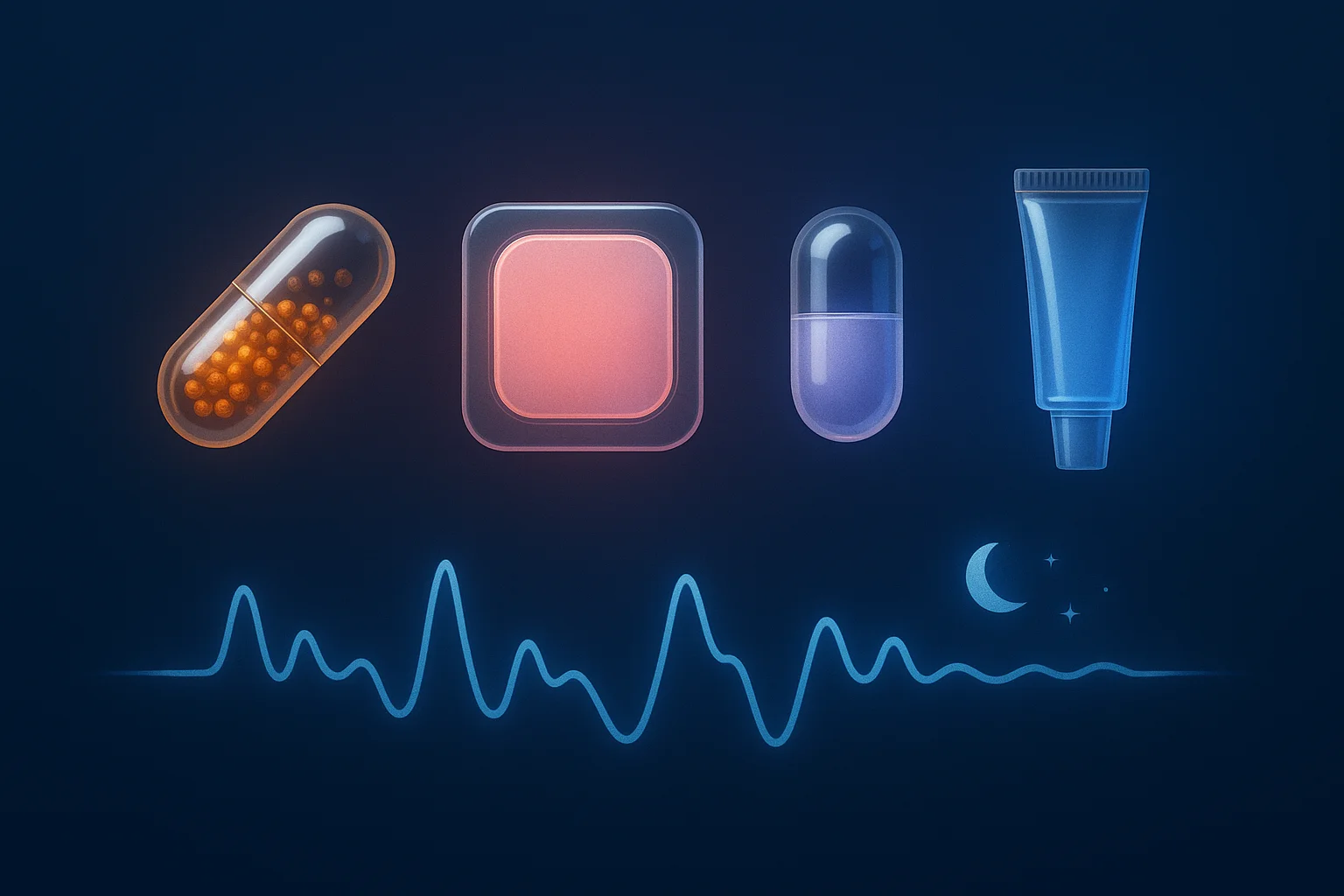
Transdermal estradiol patch 0.05-0.075 mg twice weekly, or transdermal gel 0.5-1 mg/day. Transdermal is preferred over oral for the same reasons as in palpitations and migraines: steady serum levels, no first-pass liver effect, and lower thromboembolic risk.
Target serum estradiol in the 50-80 pg/mL range for symptom control.
Expect 4-8 weeks for autonomic and dopaminergic stabilization.
Some women report RLS symptoms transiently worsen in the first 2-3 weeks of HRT as the system recalibrates, then improve as serum levels stabilize.
Step 3: Micronized Progesterone for Sleep Architecture
If you have a uterus, progesterone is required for endometrial protection. The right progestogen does more.
Oral micronized progesterone 100-200 mg at bedtime.
Allopregnanolone, a metabolite of progesterone, positively modulates GABA-A receptors and produces mild sedation, reduced nighttime arousal, and longer sleep cycles.
Better sleep architecture reduces the percentage of the night spent in light sleep — exactly the stage where periodic limb movements concentrate.
Step 4: Testosterone for the Daytime Floor
Testosterone is not a primary RLS therapy, but women in surgical menopause or with very low free testosterone often have a constellation of fatigue, low motivation, and "wired but tired" jitteriness that overlaps with RLS perception.
Low-dose transdermal testosterone (typically 0.5-1 mg/day of compounded cream) supports dopamine signaling, improves daytime energy, and indirectly reduces the nighttime symptom load by improving overall sleep efficiency. Review the testosterone for women dosage guide before adding it.
For women navigating the entire midlife hormonal picture rather than just RLS, the testosterone for menopause protocol covers the broader use case.
Step 5: Address Medications That Worsen RLS
A surprisingly common mistake: women are prescribed an SSRI for "perimenopause mood symptoms," develop new RLS, and are then prescribed gabapentin for the RLS. The SSRI was usually the trigger.
Review with your provider:
SSRIs and SNRIs (sertraline, venlafaxine, escitalopram) — common RLS aggravators
Diphenhydramine in OTC sleep aids (ZzzQuil, Tylenol PM, Benadryl) — significantly worsens RLS
Cetirizine and other sedating antihistamines — milder but additive
Many women on these medications can switch to a non-RLS-triggering alternative (bupropion for depression, doxepin or trazodone for sleep, fexofenadine for allergies) and see substantial improvement.
A Typical Menopausal RLS Protocol
Intervention
Dose & Delivery
Mechanism
Notes
Iron
Ferrous bisglycinate 60-65 mg elemental, every other day, with vitamin C
Replenish brain iron, restore dopamine synthesis
Target ferritin > 75-100 ng/mL; recheck at 8-12 weeks
Estradiol
Transdermal patch 0.05-0.075 mg twice weekly
Stabilize dopaminergic tone, reduce vasomotor amplifiers
This is the comprehensive protocol. Not every woman needs every layer — start with iron and HRT, layer the rest as needed.
What to Expect: The Timeline
Weeks 1-2
Iron supplementation begins; expect mild GI upset that resolves in a few days
HRT initiation; vasomotor symptoms often start improving first
Sleep onset may improve from micronized progesterone within nights
Weeks 3-6
RLS frequency starts to drop, especially nocturnal severity
Hot flashes and night sweats decline, removing one of the nighttime amplifiers
Daytime energy improves
Weeks 8-12
Recheck ferritin and transferrin saturation; adjust iron dosing
Most women report substantial RLS improvement, though not always full resolution
Sleep efficiency on wearables typically increases by 5-15%
Months 3-6
Full stabilization. Persistent RLS at this point usually has a non-hormonal driver (a missed medication, renal disease, undertreated iron deficiency, or a primary neurological RLS subtype that needs pharmacologic therapy).
When Pharmacologic RLS Treatment Is Needed
If symptoms persist despite optimized iron, HRT, and medication review, a sleep medicine or neurology referral is appropriate. The current evidence base favors alpha-2-delta ligands (gabapentin enacarbil, pregabalin) over dopamine agonists (pramipexole, ropinirole) as first-line because dopamine agonists cause a phenomenon called augmentation — symptoms paradoxically worsening over months to years of use. Augmentation is now considered one of the most important reasons to avoid dopamine agonists as first-line.
Lifestyle Levers That Help
These do not replace iron repletion and HRT, but they amplify the protocol:
Magnesium glycinate 200-400 mg at bedtime. Glycinate is better tolerated than oxide and supports neuromuscular relaxation.
Avoid alcohol within 4 hours of bed. Alcohol disrupts dopamine and worsens RLS dose-dependently.
Limit caffeine after noon. Midlife liver metabolism slows; afternoon caffeine reaches the bloodstream at bedtime.
Consistent sleep and wake times. Circadian regularity supports dopaminergic stability.
Moderate aerobic exercise. 150 minutes per week of zone-2 cardio improves sleep efficiency and reduces RLS severity in trials. Avoid intense exercise within 4 hours of bedtime — paradoxically worsens symptoms in some women.
Pneumatic compression or warm baths. Mechanical and thermal stimulation can interrupt the symptom cycle when it strikes.
Finding the Right Provider
A general primary care provider who prescribes a dopamine agonist without checking ferritin is missing the modern standard of care. A sleep medicine doctor who never asks about menopause is missing the hormonal half of the picture.
You want someone who will:
Order ferritin, transferrin saturation, and a full anemia panel — not just hemoglobin
Run estradiol, FSH, TSH, and a free testosterone panel
Prefer transdermal estradiol over oral and micronized progesterone over MPA
Review your full medication list for RLS triggers
Use dopamine agonists as a last resort, not first-line
Follow up at 8-12 weeks and adjust based on response
Most midlife-focused women's HRT telehealth practices now check ferritin as part of intake. Compare options at our best online HRT clinic for women review.
Restless legs syndrome in midlife is not in your head, it is not "just stress," and it is not a normal part of aging that you have to accept. It is a specific, mechanistically understood neurological disorder that disproportionately affects women in the perimenopausal and postmenopausal years because three biological systems — brain iron, dopamine, and sleep architecture — all destabilize at once.
The playbook:
Check ferritin and transferrin saturation. Target ferritin > 75-100 ng/mL. Most midlife women fall well below this and feel dramatically better once repleted.
Start transdermal estradiol + micronized progesterone. Stabilize dopaminergic tone and improve sleep architecture in parallel.
Review your medication list. SSRIs, sedating antihistamines, and dopamine antagonists are common silent triggers.
Add testosterone if surgical menopause or persistent fatigue. Not first-line, but a high-leverage addition for the right woman.
Reserve gabapentinoids and dopamine agonists for residual symptoms. Avoid dopamine agonists as first-line — augmentation is a real and progressive risk.
If you are losing sleep to crawling legs at 2 a.m. and your doctor has not mentioned iron, estrogen, or your medication list, you are not getting the modern standard of care. Compare midlife-focused HRT providers at our best online HRT clinic for women review, or browse all clinics with transparent scoring to find someone who will treat the full hormonal-iron-sleep picture, not just the surface symptom.
References:
Manconi M, Ulfberg J, Berger K, et al. When gender matters: restless legs syndrome. Report of the "RLS and woman" workshop endorsed by the European RLS Study Group. Sleep Med Rev. 2012;16(4):297-307. PMID: 22075215
Wesström J, Nilsson S, Sundström-Poromaa I, Ulfberg J. Restless legs syndrome among women: prevalence, co-morbidity and possible relationship to menopause. Climacteric. 2008;11(5):422-428. PMID: 18781488
Connor JR, Patton SM, Oexle K, Allen RP. Iron and restless legs syndrome: treatment, genetics and pathophysiology. Sleep Med. 2017;31:61-70. PMID: 28057495
Allen RP, Picchietti DL, Auerbach M, et al. Evidence-based and consensus clinical practice guidelines for the iron treatment of restless legs syndrome/Willis-Ekbom disease in adults and children: an IRLSSG task force report. Sleep Med. 2018;41:27-44. PMID: 29425576
Hachul H, Bittencourt LR, Andersen ML, Haidar MA, Baracat EC, Tufik S. Effects of hormone therapy with estrogen and/or progesterone on sleep pattern in postmenopausal women. Int J Gynaecol Obstet. 2008;103(3):207-212. PMID: 18812205
Polo-Kantola P, Rauhala E, Erkkola R, Irjala K, Polo O. Estrogen replacement therapy and nocturnal periodic limb movements: a randomized controlled trial. Obstet Gynecol. 2001;97(4):548-554. PMID: 11275024
Trenkwalder C, Allen R, Högl B, Paulus W, Winkelmann J. Restless legs syndrome associated with major diseases: a systematic review and new concept. Neurology. 2016;86(14):1336-1343. PMID: 26944272
Frequently Asked Questions
Can menopause cause restless legs syndrome?
Yes. Restless legs syndrome is roughly twice as common in older women as men, and population studies show prevalence in midlife women as high as 15.7%. Estrogen modulates dopamine signaling in the substantia nigra and striatum, and the perimenopausal estrogen swing destabilizes the same dopamine pathways that govern RLS. Add the iron loss from decades of heavy bleeding before menopause, and you have the perfect storm for new-onset or worsening symptoms.
Does HRT help restless legs syndrome?
It can, but indirectly. HRT is not an approved treatment for RLS, and the direct evidence is mixed. However, transdermal estradiol stabilizes dopaminergic tone, micronized progesterone improves sleep architecture, and treating the broader menopausal symptom cluster (hot flashes, anxiety, insomnia) removes the amplifiers that make RLS feel worse at night. Many women report meaningful symptom reduction within 4-8 weeks of starting HRT. Iron repletion to ferritin above 75-100 ng/mL is the single most evidence-backed step.
What ferritin level is needed to treat restless legs syndrome?
International RLS guidelines recommend targeting a serum ferritin above 75-100 ng/mL and transferrin saturation above 20% before considering dopamine agonist drugs. Most women with RLS have ferritin in the 20-50 range — technically 'normal' on a lab report but well below the RLS-relevant threshold. Decades of menstrual blood loss leave most perimenopausal women functionally iron deficient even when hemoglobin is normal.
Why do restless legs get worse at night in perimenopause?
RLS follows a circadian pattern tied to evening dopamine decline. Layered on perimenopause, three things converge after dark: estradiol levels reach their daily nadir (further destabilizing dopamine), progesterone is already low so GABA tone is reduced, and night sweats and cortisol surges fragment sleep. The same nocturnal pattern that worsens hot flashes and palpitations also worsens RLS.
Should I take iron for menopausal restless legs?
If your ferritin is below 75-100 ng/mL and transferrin saturation is below 45%, yes. Oral ferrous sulfate or ferrous bisglycinate 65 mg of elemental iron every other day, taken with vitamin C and away from coffee, calcium, and thyroid medication, is first-line. Recheck ferritin in 8-12 weeks. Avoid daily dosing — alternate-day iron has equal or better absorption with less GI upset. If oral iron is intolerable or ineffective, IV ferric carboxymaltose is the next step.
Can low testosterone cause restless legs in women?
Indirectly. Testosterone supports dopamine signaling in the same pathways disrupted in RLS. Women in surgical menopause or with very low free testosterone often experience an RLS-like jitteriness alongside fatigue and brain fog. Restoring testosterone to the upper end of the female physiologic range can sharpen daytime focus and improve sleep efficiency, both of which reduce the nighttime RLS burden, though it is not a primary RLS therapy.