Perimenopause Histamine Intolerance: Why It Flares and How HRT Helps
5/30/2026
5 min read
By The TRT Catalog
New allergies, hives, migraines, and gut issues in your 40s may be histamine intolerance triggered by perimenopause. Here's the estrogen-mast cell mechanism and how HRT protocols help.
Key Takeaways: Many women develop new allergies, hives, migraines, and food intolerances in their late 30s to mid 40s -- and the driver is not environmental exposure but hormonal. Fluctuating estrogen during perimenopause directly activates mast cells, stimulates histamine production, and suppresses diamine oxidase (DAO), the primary enzyme that breaks down histamine. The result is systemic histamine overload that mimics allergic disease, irritable bowel syndrome, and anxiety disorders. A 2018 nationwide study found that HRT decreased the risk of tinnitus in menopausal women, suggesting broad mast-cell-stabilizing effects. A 2026 Frontiers in Allergy review confirmed that declining estrogen and progesterone modulate mast cell activity across multiple allergic phenotypes -- asthma, rhinitis, urticaria, and anaphylaxis. Transdermal estradiol started low and titrated gradually, combined with micronized progesterone (which directly stabilizes mast cells), forms the hormonal foundation. DAO supplements, quercetin, and a temporary low-histamine diet address the symptom side while HRT corrects the root cause.
The Pattern No One Connects to Hormones
A woman in her early 40s who has never had allergies suddenly cannot drink wine without flushing, wakes at 3 AM with heart palpitations, develops hives after eating aged cheese, and notices her hayfever has become unbearable for the first time in decades.
She sees an allergist. Skin-prick tests are negative or inconclusive. She is told to take antihistamines. They help partially, but the symptoms keep cycling -- worse some weeks, better others, with no clear environmental trigger.
What she does not know: the trigger is not pollen or food. It is estrogen.
This is perimenopause-driven histamine intolerance, and it is one of the most under-diagnosed presentations of the hormonal transition. The 2026 Frontiers in Allergy review on women's hormones and hypersensitivity documented that declining and fluctuating estrogen and progesterone modulate mast cell activity and contribute to distinct phenotypes across asthma, allergic rhinitis, chronic cough, urticaria, drug hypersensitivity, and anaphylaxis [1]. A separate 2018 nationwide cohort study of menopausal women found that HRT use significantly decreased tinnitus risk, suggesting that hormone stabilization has effects on mast-cell-mediated symptoms well beyond classic allergy [2].
Yet most women go through years of allergist visits, elimination diets, and antihistamine rotations before anyone checks their hormones.
How Estrogen Drives Histamine Overload
The mechanism is a feedback loop between estrogen and mast cells that becomes destructive during perimenopause.
The Estrogen-Mast Cell Axis
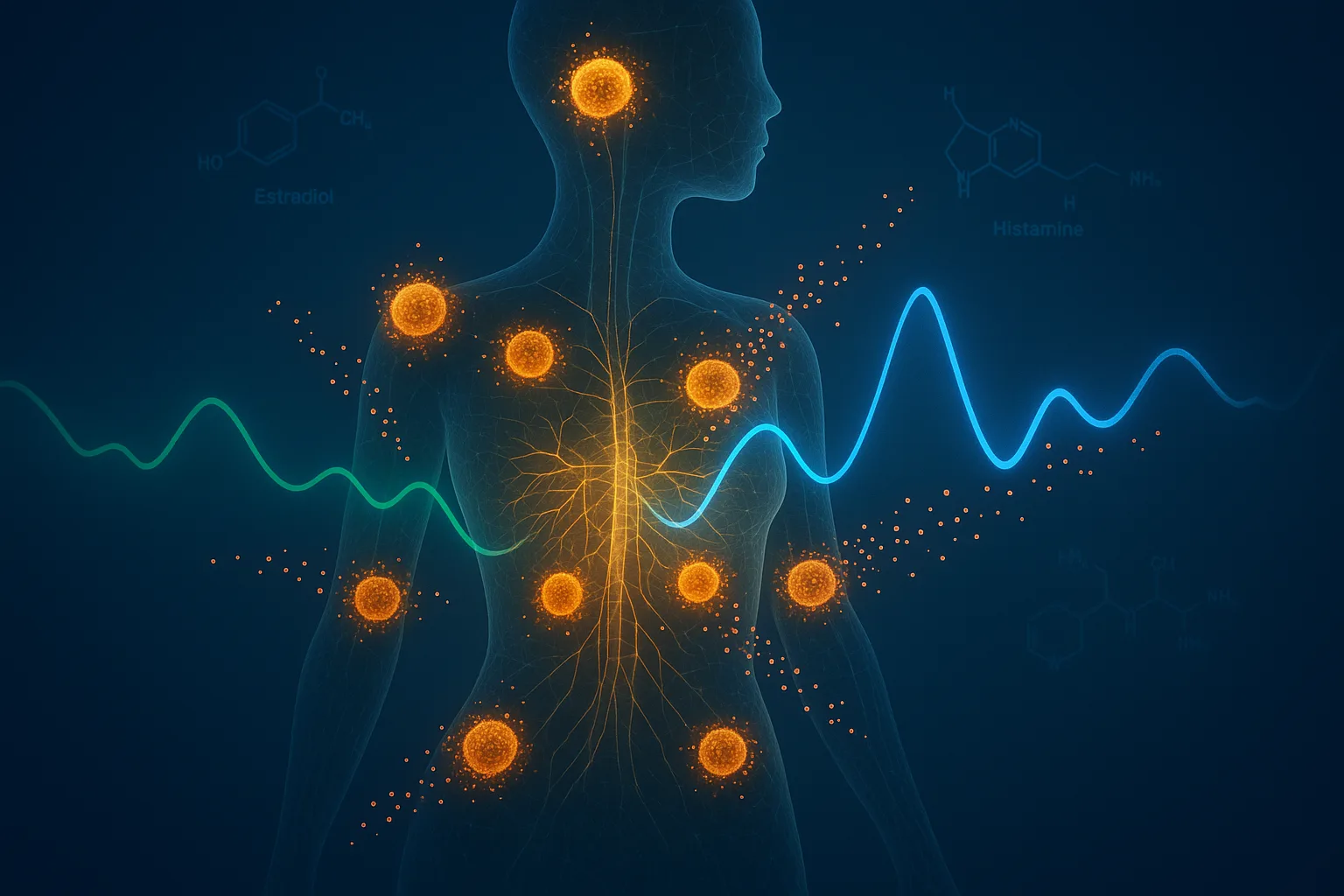
Mast cells -- the immune cells that release histamine -- have estrogen receptors on their surface. When estrogen binds these receptors, three things happen simultaneously:
Mast cell degranulation increases. Estrogen triggers mast cells to release their stored histamine into surrounding tissue. This is why histamine symptoms often spike around ovulation, when estradiol peaks [3].
Histamine production ramps up. Estrogen upregulates histidine decarboxylase, the enzyme that converts the amino acid histidine into histamine. More estrogen means more raw histamine is manufactured [3].
DAO enzyme activity drops. Diamine oxidase (DAO) is the primary enzyme responsible for breaking down extracellular histamine, particularly histamine from food. Estrogen suppresses DAO activity, so the histamine that gets released and produced lingers longer before being cleared [4].
Why Perimenopause Makes It Worse
In premenopause, this system is manageable. Estrogen follows a predictable monthly cycle, progesterone rises in the luteal phase to counterbalance mast cell activation, and DAO activity fluctuates within a narrow range.
Perimenopause breaks all three stabilizers:
Estrogen volatility. Estradiol no longer follows a predictable arc. It can swing from 30 pg/mL one week to 400 pg/mL the next, with erratic spikes that aggressively activate mast cells at unpredictable intervals.
Progesterone collapse. Progesterone drops first in perimenopause -- often years before estrogen declines. Since progesterone stabilizes mast cells and supports DAO function, its early loss removes the primary brake on histamine release [5].
Relative estrogen dominance. Even as estrogen eventually declines in absolute terms, the estrogen-to-progesterone ratio shifts toward estrogen dominance in early perimenopause. The mast cells see more estrogen stimulation with less progesterone protection.
The result is a vicious cycle: estrogen spikes activate mast cells, released histamine stimulates the ovaries to produce more estrogen, estrogen further degrades DAO capacity, and the histamine load spirals upward [3].
Women's HRT — Menopause-First Telehealth
Bioidentical estradiol, progesterone, and low-dose testosterone — all 50 states, unlimited physician access.
The challenge is that histamine intolerance symptoms overlap almost completely with standard perimenopause symptoms. The distinction lies in the pattern.
The single most reliable clinical signal is premenstrual worsening. If symptoms flare during the luteal phase (days 21 to 28), around ovulation (day 14), or correlate with the erratic cycles of perimenopause, histamine is likely involved.
A second diagnostic clue: symptom flares after high-histamine meals. If wine, aged cheese, cured meats, fermented foods, or leftover food consistently trigger flushing, headaches, or GI symptoms, the DAO pathway is compromised.
A third clue: antihistamines help, but incompletely. Women with perimenopause histamine intolerance often report that cetirizine or fexofenadine takes the edge off but does not resolve the underlying pattern -- because antihistamines block the receptor without addressing the hormonal driver of overproduction.
The HRT Protocol for Histamine Intolerance
Addressing histamine intolerance during perimenopause requires stabilizing the hormonal substrate that drives it. This is where HRT protocol design matters significantly -- the wrong approach can make symptoms worse before they get better.
Transdermal Estradiol: Start Low, Go Slow
Oral estrogen is generally a poor choice for women with histamine sensitivity. It undergoes first-pass hepatic metabolism, which produces estrogen spikes, increases inflammatory markers (including C-reactive protein and SHBG), and can trigger acute mast cell activation.
Transdermal estradiol (patch, gel, or spray) bypasses the liver, produces steadier blood levels, and avoids the inflammatory first-pass effect. The critical principle is to start at the lowest available dose and titrate upward gradually over weeks to months:
Begin with 25 mcg/day patch (or equivalent gel dose)
Assess symptoms after 4 to 6 weeks
Increase to 50 mcg/day if hot flashes and other vasomotor symptoms persist
Some women need 75 to 100 mcg/day for full symptom control
The slow titration allows mast cells to adapt to rising estradiol levels without the acute degranulation that comes from a sudden estrogen spike.
Micronized Progesterone: The Mast Cell Stabilizer
Micronized progesterone is the cornerstone for women with histamine issues. Unlike synthetic progestins (which can trigger histamine release in sensitive individuals), body-identical micronized progesterone has direct mast cell stabilizing properties [5].
The mechanism: progesterone inhibits mast cell degranulation through progesterone receptor-mediated signaling, and it supports DAO enzyme activity -- meaning more histamine gets cleared rather than accumulating.
For women with an intact uterus, 100 to 200 mg micronized progesterone at bedtime is standard for endometrial protection. The bedtime timing matters: progesterone's metabolite allopregnanolone is a potent GABA-A receptor agonist, providing sedation that helps with insomnia (another histamine-driven complaint).
For women who have had a hysterectomy, progesterone is not required for endometrial protection but may still be worth adding specifically for its mast cell stabilizing and sleep benefits.
Low-Dose Testosterone: Stabilizing the Third Hormone
Testosterone also has mast cell stabilizing effects, and many perimenopausal women have declining testosterone alongside estrogen and progesterone losses. Low-dose testosterone cream (0.5 to 1 mg daily applied to the inner forearm or thigh) can provide additional mast cell stabilization while also addressing fatigue, brain fog, low libido, and muscle loss.
The clinical reality is that women with significant histamine issues often do best on a three-hormone protocol: transdermal estradiol for vasomotor symptoms, micronized progesterone for mast cell stabilization and sleep, and low-dose testosterone for energy, cognition, and additional immune modulation.
While HRT addresses the root cause, managing histamine intolerance during the transition period (and while hormones are being titrated) typically requires a multi-layered approach.
DAO Enzyme Supplementation
DAO supplements contain porcine-derived diamine oxidase that helps break down dietary histamine in the gut before it enters systemic circulation. A 2019 randomized controlled trial found that DAO supplementation improved symptoms in patients with histamine intolerance, with the greatest benefit for digestive and skin symptoms [6].
Practical dosing: take DAO 15 to 30 minutes before meals, particularly before meals that contain higher-histamine foods. DAO supplements do not address endogenous histamine (histamine produced by mast cells inside the body) -- they only work on histamine from food.
Natural Mast Cell Stabilizers
Quercetin (500 mg twice daily) is a flavonoid found naturally in capers, red onion, and apples that inhibits mast cell degranulation and has been used in integrative protocols for histamine intolerance. It works through a different mechanism than antihistamines -- rather than blocking histamine receptors after release, it prevents mast cells from releasing histamine in the first place.
Vitamin C (1000 mg daily in divided doses) supports DAO enzyme function and acts as a natural antihistamine by increasing histamine degradation. Some women find buffered or liposomal vitamin C better tolerated than ascorbic acid, which can irritate the gut.
Vitamin B6 is a required cofactor for DAO enzyme production. Many perimenopausal women are mildly B6 deficient, which compounds the DAO suppression from estrogen fluctuations.
The Low-Histamine Diet: Temporary, Not Permanent
A 2-to-4-week strict low-histamine elimination diet can be diagnostically and therapeutically useful. Key foods to remove:
Cured and smoked meats (salami, bacon, ham, smoked salmon)
Vinegar-based condiments
Canned and leftover fish
Tomatoes, spinach, eggplant, and avocado (higher histamine vegetables)
Citrus fruits and strawberries
Chocolate
Leftovers stored more than 24 hours (histamine levels rise in stored food)
The goal is not to live on a restricted diet permanently. Once HRT stabilizes hormone levels and DAO function recovers, most women can systematically reintroduce moderate amounts of these foods. The elimination phase serves two purposes: confirming that histamine is driving symptoms (if symptoms improve dramatically on the diet, the diagnosis is essentially confirmed) and reducing the histamine burden while HRT is being titrated.
Antihistamine Strategy
Over-the-counter H1 antihistamines (cetirizine, loratadine, fexofenadine) can provide symptomatic relief. For women with significant GI symptoms, adding an H2 blocker (famotidine) can address gut histamine receptors that H1 blockers do not cover.
The combination of an H1 and H2 antihistamine is a well-established approach in clinical allergy practice and can be particularly effective for the mixed presentation (skin + gut + headache) common in perimenopause histamine intolerance.
When It Might Be MCAS
Mast cell activation syndrome (MCAS) is a more severe and systemic version of histamine overload that goes beyond perimenopause-driven intolerance. Some women discover latent MCAS during perimenopause because the loss of progesterone's mast cell stabilizing effect unmasks a pre-existing tendency toward mast cell hyperactivation [7].
Red flags suggesting MCAS rather than simple perimenopause histamine intolerance:
Anaphylaxis or near-anaphylaxis episodes
Symptoms triggered by heat, cold, stress, exercise, or medications (not just food)
Multi-system involvement that is severe and disabling
Symptoms that began well before perimenopause and worsened, rather than appearing for the first time
Poor response to standard antihistamines and HRT
If MCAS is suspected, serum tryptase (measured during a flare if possible) and 24-hour urine N-methylhistamine can support the diagnosis. A referral to an immunologist or allergist with MCAS experience is appropriate, ideally one who understands the hormonal overlay.
For women with confirmed MCAS, HRT protocol design becomes even more critical -- transdermal routes only, extremely slow titration, avoidance of synthetic progestins, and sometimes pre-treatment with mast cell stabilizers before starting estradiol.
Putting It Together: The Practical Protocol
For a perimenopausal woman presenting with new-onset histamine symptoms, the evidence supports a layered approach:
Phase 1 (Weeks 1 to 4): Reduce the histamine load
Begin a low-histamine elimination diet
Start DAO enzyme supplements before meals
Add quercetin 500 mg twice daily
Add vitamin C 1000 mg daily in divided doses
Use antihistamines (H1 and H2 combination) as needed for acute symptoms
Phase 2 (Weeks 2 to 6): Begin hormonal stabilization
Start transdermal estradiol at the lowest dose (25 mcg/day patch or equivalent)
Start micronized progesterone 100 mg at bedtime (200 mg if endometrial protection is needed)
Monitor symptoms weekly -- some women notice initial worsening for 1 to 2 weeks as the body adjusts
Phase 3 (Weeks 6 to 12): Titrate and optimize
Increase estradiol if vasomotor symptoms persist (target symptom relief, not a specific blood level)
Consider adding low-dose testosterone cream if fatigue, brain fog, and libido remain impaired
Begin systematic food reintroduction from the elimination diet
Phase 4 (Months 3 to 6): Consolidation
Most women see significant histamine symptom improvement by month 3 of stable HRT
Taper DAO supplements as tolerated
Liberalize diet based on individual tolerance
Wean antihistamines if symptoms are controlled by HRT alone
Women who need guidance on hormone clinics experienced in complex protocols can compare providers that prescribe women's HRT, including those that offer combined estradiol, progesterone, and testosterone prescriptions with regular lab monitoring.
What the Bloodwork Should Include
If you suspect perimenopause-driven histamine intolerance, request these labs:
Hormonal panel: FSH, estradiol, progesterone (drawn day 21 if still cycling), free and total testosterone, DHEA-S
Histamine-specific: Serum DAO enzyme activity (below 10 HDU/mL is deficient), serum tryptase (elevated suggests mast cell disorder)
General: CBC with differential, TSH and free T4, inflammatory markers (hs-CRP, ferritin), vitamin B6, vitamin D, magnesium
Optional if MCAS is suspected: 24-hour urine N-methylhistamine, serum prostaglandin D2
The hormonal panel establishes where you are in the perimenopausal transition and guides HRT dosing. The DAO level provides objective evidence of impaired histamine metabolism. The general panel rules out thyroid disease, iron deficiency, and other conditions that can mimic or compound histamine symptoms.
References
Fang C, et al. Women hormones and hypersensitivity: allergic diseases in menopause. Frontiers in Allergy. 2026;7:1777688.
Kim SY, et al. Hormone replacement therapy decreases the risk of tinnitus in menopausal women: a nationwide study. PLoS ONE. 2018;13(5):e0197716.
Zierau O, et al. Role of female sex hormones, estradiol and progesterone, in mast cell behavior. Frontiers in Immunology. 2012;3:169.
Maintz L, Novak N. Histamine and histamine intolerance. American Journal of Clinical Nutrition. 2007;85(5):1185-1196.
Zaitsu M, et al. Estradiol activates mast cells via a non-genomic estrogen receptor-alpha and calcium influx. Molecular Immunology. 2007;44(8):1977-1985.
Yacoub MR, et al. Diamine oxidase supplementation improves symptoms in patients with histamine intolerance. Food Science and Biotechnology. 2019;28(6):1779-1784.
Carnahan J. When hormones and histamine collide: why MCAS symptoms so often worsen in perimenopause and menopause. Clinical Review. 2026.
Fluctuating estrogen during perimenopause directly activates mast cells and suppresses diamine oxidase (DAO), the enzyme that breaks down histamine. The result is histamine accumulation that was never a problem before. Many women develop new-onset hives, food sensitivities, hay fever, or worsening asthma in their late 30s to mid 40s without realizing the hormonal connection. If symptoms track with your menstrual cycle -- worsening in the luteal phase or around ovulation when estrogen spikes -- histamine intolerance driven by hormonal shifts is the likely explanation.
What are the symptoms of histamine intolerance during perimenopause?
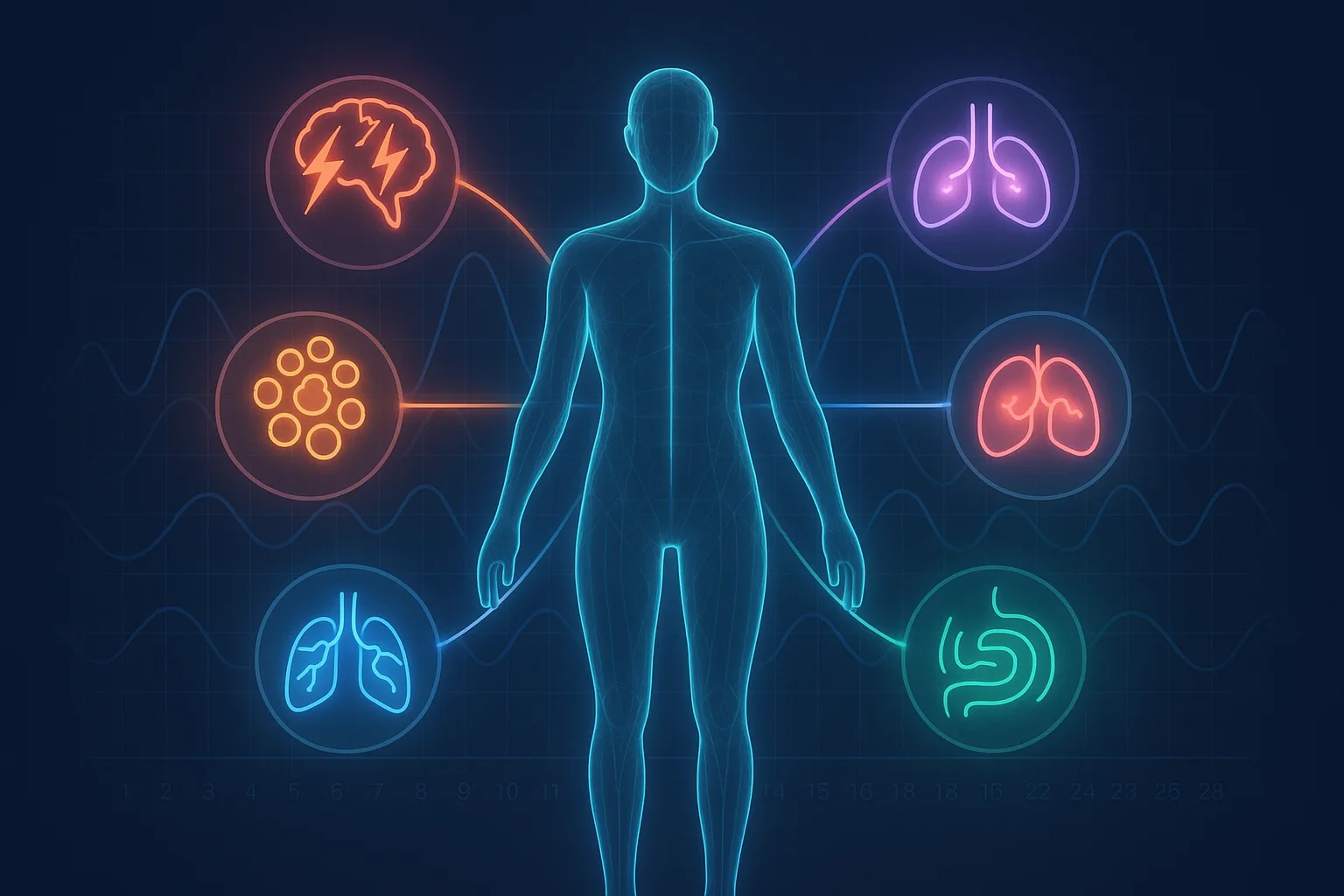
Histamine intolerance symptoms overlap heavily with standard perimenopause complaints, which is why they are frequently missed. The most common include flushing and hives, migraines and headaches, nasal congestion and sinus pressure, heart palpitations, anxiety and panic attacks, insomnia, bloating and digestive distress, brain fog, and itchy skin. The distinguishing feature is that these symptoms worsen after eating high-histamine foods (aged cheese, wine, fermented foods, cured meats) or follow a cyclical pattern tied to estrogen fluctuations.
Does HRT make histamine intolerance better or worse?
It depends on the formulation and dosing strategy. Oral estrogen can initially worsen histamine symptoms because it spikes estradiol levels and undergoes first-pass liver metabolism that increases inflammatory markers. Transdermal estradiol (patches, gel, or spray) started at a low dose and titrated gradually is generally better tolerated because it produces steadier blood levels. Micronized progesterone actively helps -- it has direct mast cell stabilizing properties and supports DAO enzyme activity. Many women find that once HRT stabilizes their hormone fluctuations, histamine symptoms improve significantly within 2 to 3 months.
Can I test for histamine intolerance?
Serum DAO enzyme activity is the most clinically useful test, with levels below 10 HDU/mL considered deficient. Serum histamine can be measured but is unreliable because levels fluctuate rapidly. A 2-to-4-week elimination trial removing high-histamine foods is often more informative than blood tests. Additionally, tracking symptoms against your menstrual cycle for 2 to 3 months can reveal the hormonal pattern -- worsening in the late luteal phase (days 21 to 28) or around ovulation (day 14) strongly suggests estrogen-driven histamine overload.
What is the best diet for perimenopause histamine intolerance?
A low-histamine diet focuses on eating fresh foods and avoiding aged, fermented, and processed items. Key eliminations include aged cheeses, wine and beer, cured meats (salami, bacon, ham), fermented foods (sauerkraut, kimchi, kombucha, soy sauce), vinegar, canned fish, and leftovers stored more than 24 hours. Freshly cooked meat, fresh vegetables (except tomatoes, spinach, and eggplant which are higher in histamine), rice, potatoes, fresh fruit (except citrus and strawberries), and fresh-caught fish are generally well tolerated. Most women do not need to follow a strict low-histamine diet permanently -- once HRT stabilizes hormones and DAO function recovers, many can reintroduce moderate amounts of previously problematic foods.
What supplements help with histamine intolerance in perimenopause?
DAO enzyme supplements (such as those containing diamine oxidase from porcine kidney) taken 15 to 30 minutes before meals can help break down dietary histamine. Quercetin at 500 mg twice daily acts as a natural mast cell stabilizer. Vitamin C at 1000 mg daily supports DAO enzyme function and helps degrade histamine. Vitamin B6 is a required cofactor for DAO production. Magnesium glycinate supports histamine metabolism and also helps with sleep and anxiety. These supplements complement rather than replace hormonal management -- addressing the root cause (estrogen volatility) with appropriate HRT is the most effective long-term strategy.
When should I see a specialist about histamine symptoms?
See a clinician experienced in women's hormonal health if you have new-onset allergic symptoms in your late 30s to 40s that correlate with menstrual cycle changes, if over-the-counter antihistamines provide only partial relief, if you develop anaphylaxis-like reactions, if symptoms significantly impair daily function, or if you suspect mast cell activation syndrome (MCAS). The ideal workup includes DAO enzyme levels, serum tryptase, hormone panel (FSH, estradiol, progesterone, free and total testosterone), thyroid function, and a detailed symptom diary tracking symptoms against cycle days and food intake. A provider who understands the estrogen-histamine connection can coordinate HRT with histamine management rather than treating them as separate problems.