When to Start HRT in Menopause: Timing Hypothesis

5/8/2026
5 min read
By The TRT Catalog

Why HRT started within 10 years of menopause cuts mortality 39% and CVD risk 50%, but late starts can backfire. The timing-hypothesis evidence.

When to start HRT in menopause: the timing hypothesis explained

Key Takeaways: Menopausal hormone therapy started within roughly 10 years of the final menstrual period or before age 60 is associated with a 39% reduction in all-cause mortality, up to 50% reduction in coronary heart disease, and slower atherosclerosis progression. The same therapy started 10 or more years past menopause shows neutral or potentially harmful cardiovascular effects. The clinical principle, called the timing hypothesis or the window of opportunity, was confirmed by the ELITE trial, supported by re-analysis of the Women's Health Initiative, and is now embedded in major society guidelines. The FDA's 2026 removal of the broad black-box warning on HRT reflects this updated evidence. Practical translation: if you are in perimenopause or within several years of menopause and HRT is otherwise indicated, the time-sensitive case for starting is stronger than most women have been told.

The Question That Changed Menopause Medicine

For two decades, a generation of women was told that hormone replacement therapy was risky and probably unnecessary. That message was anchored to the 2002 Women's Health Initiative findings and the FDA black-box warning that followed. Prescriptions fell by more than 70%. Many primary care doctors stopped offering HRT. Many women who would have benefited went without it.

The Women's Health Initiative was a real trial with real findings. What was missing from the public translation was a critical detail: the average woman in the WHI was 63 years old at enrollment and more than a decade past menopause. The trial answered a specific question -- "what happens when we start HRT in older women, many of whom already have subclinical cardiovascular disease?" -- and the answer was, on average, not great.

It did not answer the more clinically relevant question: "what happens when we start HRT in a 50-year-old in perimenopause with vasomotor symptoms and no established vascular disease?" Subsequent re-analyses, the ELITE trial, the KEEPS trial, and a series of meta-analyses converged on a different answer to that question.

The framework that emerged is the timing hypothesis. It is now the dominant interpretation of the trial evidence and is embedded in 2026 guidelines from the Menopause Society, the British Menopause Society, the International Menopause Society, and -- as of late 2025 and into 2026 -- in updated FDA labeling.

What the Timing Hypothesis Actually Says

The clinical claim has three parts:

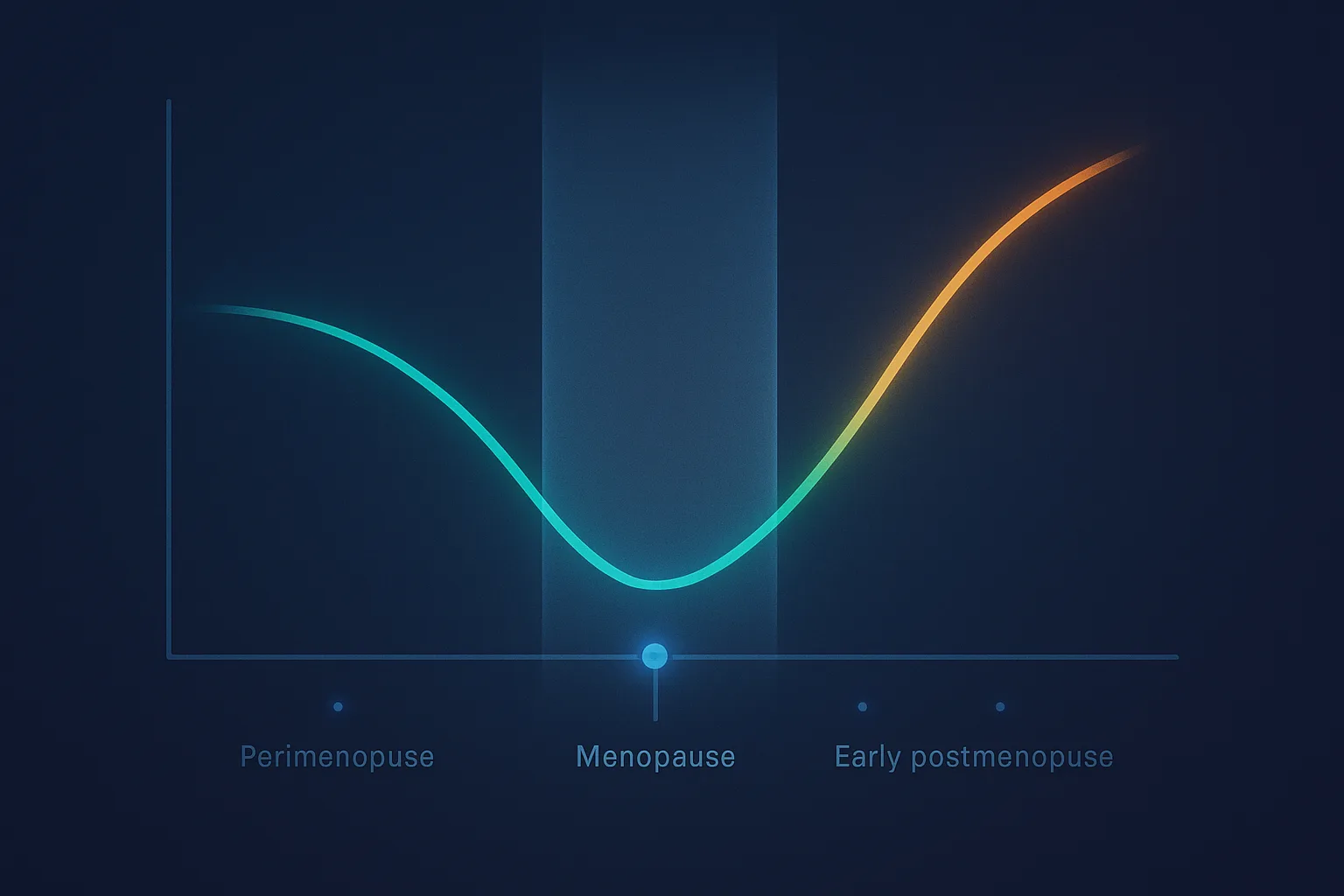
  1. Cardiovascular outcomes of menopausal hormone therapy depend on when it is started relative to vascular health, not on whether HRT is intrinsically "good" or "bad."
  2. Started early -- within roughly 10 years of menopause or before age 60 -- HRT slows atherosclerosis progression, reduces coronary heart disease, and reduces all-cause mortality.
  3. Started late -- more than 10 years past menopause, in women who already have subclinical atherosclerosis -- HRT does not reduce cardiovascular events and may destabilize existing arterial plaque.

The mechanism is now reasonably well understood. Estradiol acts on endothelium, vascular smooth muscle, and platelets in fundamentally different ways depending on the underlying state of the artery. In a vascularly young artery, estradiol promotes nitric oxide release, inhibits smooth muscle proliferation, and prevents the early steps of atherogenesis. In an artery with established lipid-rich plaque, the same hormone can increase plaque inflammation and contribute to plaque rupture and thrombus formation.

The 10-year mark is a population-level approximation. The actual variable is vascular age. Women with cardiometabolic risk factors -- diabetes, hypertension, dyslipidemia, smoking -- may exit the protective window earlier. Metabolically healthy women may have a slightly longer window. But for most clinical decisions, "within 10 years of menopause or before age 60" captures the relevant signal.
Timing hypothesis: HRT effect on cardiovascular outcomes by years since menopause

The Trial Evidence Stack

The timing hypothesis is not based on a single study. It rests on a coherent stack of randomized and observational evidence. Five datasets are central.

The Women's Health Initiative — Re-Analyzed

The WHI enrolled 27,347 postmenopausal women in two arms: conjugated equine estrogens alone (in women with prior hysterectomy) and CEE plus medroxyprogesterone acetate (in women with intact uteri). The 2002 stop announcement reported increased risk of breast cancer and cardiovascular events in the combined arm, which drove the practice change.

The 18-year cumulative follow-up published in 2017 produced a different headline. Across both arms, there was no significant difference in all-cause mortality between hormone therapy and placebo: 27.1% versus 27.6% [1]. When stratified by age at initiation, women who started HRT in their 50s showed lower coronary heart disease and all-cause mortality than the placebo group. Women who started in their 60s and 70s showed neutral or worse outcomes.

The same data, two readings: "HRT is risky" (2002, average-effect framing) versus "HRT effects depend on age at initiation" (2017, stratified framing). The second reading is the timing hypothesis.

The ELITE Trial

The Early versus Late Intervention Trial with Estradiol was designed specifically to test the timing hypothesis. ELITE randomized 643 healthy postmenopausal women -- stratified into early postmenopause (less than 6 years out) and late postmenopause (10 or more years out) -- to either oral 17β-estradiol or placebo. The primary endpoint was carotid intima-media thickness, a validated surrogate for atherosclerosis progression.

After median follow-up of 5 years, estradiol slowed CIMT progression in the early-postmenopause stratum but had no effect in the late-postmenopause stratum [2]. The interaction between time since menopause and treatment effect was statistically significant. ELITE is the cleanest randomized confirmation of the timing hypothesis.

KEEPS

The Kronos Early Estrogen Prevention Study enrolled 727 healthy women within 3 years of menopause and randomized them to oral conjugated equine estrogens, transdermal estradiol patch, or placebo, all with cyclical micronized progesterone. After 4 years, there was no difference in CIMT progression between groups [3]. KEEPS did not show benefit, but it also did not show harm, in a young postmenopausal population. Critically, KEEPS-Continuation follow-up suggested favorable long-term cognitive outcomes in the transdermal estradiol arm.

KEEPS is sometimes cited against the timing hypothesis, but the more accurate reading is that 4 years is a short window for atherosclerosis-progression endpoints in healthy women -- the trial may have been underpowered for the cardiovascular signal.

Salpeter Meta-Analyses

The 2004 and 2009 Salpeter meta-analyses pooled randomized HRT trials and stratified mortality outcomes by mean age at initiation. In the younger group (mean age 54), HRT was associated with a 39% reduction in total mortality [4]. In the older group (mean age 66), HRT showed no mortality benefit. The 2009 Bayesian re-analysis of 19 trials and 16,000 younger postmenopausal women confirmed a relative risk of 0.73 with high probability of net benefit.

These pooled estimates are consistent with the WHI age-stratified re-analysis and with ELITE. The convergence across designs strengthens the timing-hypothesis interpretation.

Hodis and Mack Synthesis

Howard Hodis and Wendy Mack -- ELITE's principal investigators -- published two synthesis papers in 2013 making the explicit case that the timing hypothesis represents a paradigm shift in primary cardiovascular prevention for women [5]. Their argument: HRT initiated in younger postmenopausal women has effect sizes on coronary heart disease prevention comparable to statins and antihypertensives, but with a different risk profile and indication footprint.

The broader synthesis paper extending this analysis through 2022 confirms that across observational and randomized data, HRT in women under 60 or within 10 years of menopause is associated with significant mortality and cardiovascular benefit [6].

What This Means in 2026

Three practical changes follow from the timing-hypothesis framework, all of which are already showing up in 2026 prescribing practice.

The FDA Black-Box Warning Is Being Removed

In late 2025 and into 2026, HHS and the FDA initiated removal of the broad black-box warning that had been on menopausal hormone therapy products since shortly after the WHI announcement. The agency cited the accumulated evidence that the warning -- which was applied uniformly across all HRT products and all patient ages -- substantially misrepresented the risk-benefit profile for women starting therapy near the menopausal transition.

The practical effect: many primary care providers and gynecologists who reflexively avoided HRT for the past 20 years are reconsidering. Women who were previously told HRT was too risky are being offered the therapy they should have been offered earlier. See HRT Black Box Warning Removed for the regulatory detail.

HRT Prescriptions Are Rising 72% Since 2021

Independent prescription data show menopausal hormone therapy prescriptions up 72% since 2021. The rise has been concentrated in women aged 40 to 55 -- exactly the population the timing hypothesis identifies as most likely to benefit. Telehealth platforms specializing in women's hormone care have driven much of this prescribing growth, in large part because they apply timing-hypothesis-aware protocols rather than the legacy avoid-HRT-by-default posture.

Guideline Convergence

Major society positions in 2026 align around timing-hypothesis-informed practice:

  • The Menopause Society: HRT is appropriate first-line treatment for vasomotor symptoms in healthy women within 10 years of menopause and under age 60
  • British Menopause Society: HRT benefit-risk profile is favorable for symptomatic women under 60 or within 10 years of menopause
  • International Menopause Society: Timing of HRT initiation relative to menopause is a critical determinant of risk-benefit balance
  • American College of Obstetricians and Gynecologists: Hormone therapy should be considered for symptomatic women without contraindications, with the most favorable profile in those starting within 10 years of menopause

The doctrinal convergence is striking after two decades of fragmented messaging.

Women's HRT — Menopause-First Telehealth

Bioidentical estradiol, progesterone, and low-dose testosterone — all 50 states, unlimited physician access.

Start HRT Consultation

Building a Timing-Aware Protocol

A timing-aware HRT protocol has four architectural decisions, each shaped by the evidence above.

Decision 1: Initiate Early If Indicated

If a woman is in perimenopause or within several years of the final menstrual period and has indications for HRT -- vasomotor symptoms, sleep disruption, genitourinary symptoms, mood changes, joint pain, bone-density decline -- the case for starting now rather than waiting is stronger than most women are told. Each year of delay narrows the window during which estradiol's vascular effects are net protective.

The most common mistake is "let's see how bad it gets" deferral. The cost of waiting is not just symptom burden during the wait -- it is also the loss of the early-initiation cardiovascular and cognitive benefits, which cannot be recovered by starting later.

Decision 2: Transdermal Estradiol Over Oral

Transdermal estradiol -- patches, gels, sprays -- bypasses first-pass liver metabolism and produces a steadier physiologic estradiol level than oral preparations. The clinical implications:

  • Lower venous thromboembolism and stroke risk than oral
  • Steadier mood and migraine effects (fewer peak-and-trough symptoms)
  • No significant elevation of clotting factors, SHBG, or thyroid-binding globulin
  • Generally cleaner metabolic profile

Oral estradiol is not contraindicated and works for many women. But the transdermal route is the safer default in the 2026 framework, particularly for women with elevated thrombotic risk, migraine history, or hypertension.

Decision 3: Body-Identical Progesterone

For women with an intact uterus, progesterone is required for endometrial protection. Body-identical micronized progesterone -- typically 100 to 200 mg taken at bedtime -- is preferred over synthetic progestins (medroxyprogesterone acetate, norethindrone) because of better breast safety profile, sleep benefit, and tolerability.

Continuous combined regimens (daily progesterone with daily estradiol) are typical in established postmenopause. Cyclical regimens (12 to 14 days of progesterone per month) may be appropriate during perimenopause when the patient is still cycling.

Decision 4: Testosterone Where Indicated

Testosterone is not part of standard HRT in many practice patterns, but the Global Consensus Position Statement supports low-dose testosterone for postmenopausal women with hypoactive sexual desire disorder [7]. Many women also report broader benefits -- energy, mood, exercise tolerance, joint pain, body composition -- though the evidence for these indications is less robust than for libido.

Practical translation: women already on appropriately dosed estradiol and progesterone who continue to have residual symptoms -- particularly fatigue, low libido, or joint pain -- are reasonable candidates for adding low-dose testosterone cream or gel for women.

For women weighing combined hormone therapy, comprehensive women's clinics that handle estradiol, progesterone, and testosterone together produce better outcomes than fragmented care. See Best Online HRT Clinics for Women for clinics that apply timing-hypothesis-aware protocols rather than legacy avoid-by-default posture.

Timing-aware HRT architecture: transdermal estradiol, body-identical progesterone, low-dose testosterone

When the Window May Already Have Closed

The corollary of the timing hypothesis is harder. For women who are more than 10 years past menopause and have not been on HRT, the case for new initiation as a disease-prevention strategy is weak. The trial evidence does not show cardiovascular benefit in this population, and there is some signal of harm in women with established subclinical atherosclerosis.

This does not mean HRT is contraindicated in women over 60. It means the framing changes:

  • Symptom-driven HRT is still reasonable -- low-dose transdermal estradiol for severe vasomotor symptoms, with shared decision-making about the smaller risk-benefit margin
  • Vaginal estrogen is appropriate at any age -- local vaginal estradiol or estriol for genitourinary syndrome of menopause has minimal systemic absorption and is well tolerated even in elderly women
  • Disease-prevention framing weakens -- starting HRT at 65 to "prevent dementia" or "protect the heart" is not supported by the trial evidence and may carry more harm than benefit

For women in the older or longer-out group who want symptom relief, the dose-route-formulation decisions matter more than for younger initiators. Lower doses, transdermal route, and shorter durations are typical.

What If You Started, Stopped, and Are Considering Restarting?

A common 2026 scenario: a woman started HRT in her early 50s, stopped at the 2002 WHI announcement or shortly after, and is now in her early 60s wondering whether she should restart. The framework here is essentially the same as the new-initiation framework -- the decision depends on time since menopause and current vascular health, not on prior HRT use.

Practical considerations:

  • If symptoms have returned and she is still within roughly 10 years of menopause, restarting is reasonable
  • If she is well past 10 years but has severe symptoms, low-dose transdermal estradiol may still be appropriate as symptom-driven therapy
  • The cardiovascular case for restart is weaker than the case for never having stopped

Many women in this group are angry, often justifiably, that they were taken off HRT prematurely on the basis of evidence that did not actually apply to their age group. The current task is forward-looking: what makes sense given where they are now, not litigating the past.

How to Find a Clinician Who Applies the Timing-Hypothesis Framework

The doctrinal change in major guidelines has not yet fully reached every primary care office. Many gynecologists and internists still default to a 2002-era HRT-is-risky posture. Identifying a clinician who applies the contemporary framework matters.

Indicators of a timing-hypothesis-aware clinician:

  • Asks about menopause timeline, vasomotor symptoms, and prior HRT history at intake -- not just about contraindications
  • Defaults to transdermal estradiol unless oral is specifically indicated
  • Uses body-identical micronized progesterone rather than synthetic progestins by default
  • Considers testosterone where libido or energy concerns are prominent
  • Frames the 10-year window as part of shared decision-making, not as a hard cutoff

For women who do not have local access to a clinician working in the contemporary framework, comprehensive online HRT clinics now offer timing-aware protocols at a price point that is often less than out-of-pocket cost at a local concierge practice. See Best Online HRT Clinic for Women for vetted options.

Bottom Line

The timing hypothesis reframes menopausal hormone therapy from "is HRT good or bad" to "for whom, started when, with what formulation." The accumulated evidence -- from the WHI age-stratified re-analyses, from ELITE, from the Salpeter meta-analyses, and from the 2026 society guidelines -- converges on a clearer answer than the 2002 framing suggested. For symptomatic women in perimenopause or within roughly 10 years of menopause, body-identical transdermal HRT reduces all-cause mortality, cardiovascular events, fractures, and possibly dementia, while controlling vasomotor and genitourinary symptoms.

The 2026 FDA black-box-warning removal, the 72% rise in HRT prescriptions since 2021, and the convergence of major society guidelines all point in the same direction. The real cost of the post-WHI HRT avoidance era was not borne by older women who would have had marginal benefit anyway -- it was borne by 50-year-olds who needed treatment they were told to avoid.

If you are in the timing window and HRT is otherwise indicated, the evidence-aligned default in 2026 is to start, not to wait.

Related Reading

References

  1. Manson JE, Aragaki AK, Rossouw JE, et al. Menopausal Hormone Therapy and Long-term All-Cause and Cause-Specific Mortality: The Women's Health Initiative Randomized Trials. JAMA. 2017;318(10):927-938. PMID: 28898378

  2. Hodis HN, Mack WJ, Henderson VW, et al. Vascular Effects of Early versus Late Postmenopausal Treatment with Estradiol. N Engl J Med. 2016;374(13):1221-1231. PMID: 27028912

  3. Harman SM, Brinton EA, Cedars M, et al. KEEPS: The Kronos Early Estrogen Prevention Study. Climacteric. 2005;8(1):3-12. PMID: 15804727

  4. Salpeter SR, Cheng J, Thabane L, Buckley NS, Salpeter EE. Bayesian meta-analysis of hormone therapy and mortality in younger postmenopausal women. Am J Med. 2009;122(11):1016-1022.e1. PMID: 19854329

  5. Hodis HN, Mack WJ. The timing hypothesis and hormone replacement therapy: a paradigm shift in the primary prevention of coronary heart disease in women. Part 1: comparison of therapeutic efficacy. J Am Geriatr Soc. 2013;61(6):1005-1010. PMID: 23414520

  6. Hodis HN, Mack WJ. Menopausal Hormone Replacement Therapy and Reduction of All-Cause Mortality and Cardiovascular Disease: It's About Time and Timing. Cancer J. 2022;28(3):208-223. PMID: 35594469

  7. Davis SR, Baber R, Panay N, et al. Global Consensus Position Statement on the Use of Testosterone Therapy for Women. J Clin Endocrinol Metab. 2019;104(10):4660-4666. PMID: 31474158

  8. Salpeter SR, Walsh JM, Greyber E, Ormiston TM, Salpeter EE. Mortality associated with hormone replacement therapy in younger and older women: a meta-analysis. J Gen Intern Med. 2004;19(7):791-804. PMID: 15209595

Frequently Asked Questions

What is the HRT timing hypothesis?

The timing hypothesis is the clinical principle that menopausal hormone therapy started within roughly 10 years of the final menstrual period or before age 60 produces meaningfully different outcomes than HRT started later. Early initiation is associated with reduced all-cause mortality, lower coronary heart disease risk, slower atherosclerosis progression, and possible cognitive protection. Late initiation in women with established subclinical vascular disease shows neutral or potentially harmful cardiovascular effects. The hypothesis emerged from re-analysis of the Women's Health Initiative, the ELITE and KEEPS trials, and multiple meta-analyses, and is now embedded in major society guidelines.

Is there really a 10-year window for starting HRT?

The 10-year mark is a clinical heuristic, not a biological cliff. The relevant variable is vascular age and the presence of subclinical atherosclerosis, not chronological years since menopause. For most women, the 10-year window approximates the period during which arteries are still vascularly young enough that estradiol promotes endothelial function rather than destabilizing existing plaque. Women with cardiometabolic risk factors may exit the window earlier; metabolically healthy women may benefit slightly later. The simpler rule that captures most of the value: start during perimenopause or within a few years of the final menstrual period if HRT is otherwise indicated.

What changed about HRT guidelines in 2026?

In late 2025 and into 2026, the FDA initiated removal of the broad black-box warning that had been on menopausal hormone therapy products for over two decades, citing two decades of accumulating evidence that the warning misrepresented risk for women starting therapy near the menopausal transition. Major societies including the Menopause Society, British Menopause Society, and International Menopause Society now explicitly endorse the timing-hypothesis framework. The practical effect is that many primary care providers who avoided HRT for the past 20 years are reconsidering, and women who were previously discouraged are being offered therapy.

Can I start HRT in my 60s if I never started earlier?

It is possible but the risk-benefit calculation changes. For asymptomatic women over 60 or more than 10 years past menopause, the cardiovascular and dementia-prevention case for new initiation is weak and possibly harmful. For women in this group with severe vasomotor symptoms or genitourinary symptoms, low-dose transdermal estradiol or vaginal estrogen may still be reasonable, particularly if the goal is symptom relief rather than disease prevention. The framing shifts from 'should I start HRT to protect future health' to 'is HRT the best tool for this current symptom.' Local vaginal estrogen for genitourinary symptoms has minimal systemic exposure and is appropriate at any age.

Does the timing hypothesis apply to women with surgical menopause?

Yes, with adjustments. Women who undergo bilateral oophorectomy before natural menopause experience an abrupt loss of estradiol and androgens, and untreated surgical menopause carries excess cardiovascular, cognitive, and bone risk. Most guidelines recommend systemic estradiol therapy until at least the average natural menopausal age (around 51) for women with surgical menopause, with the timing window measured from surgery rather than from any hypothetical natural menopause. The case for early initiation is, if anything, stronger in surgical menopause than in natural menopause.

Should I start HRT in perimenopause or wait until full menopause?

Perimenopausal initiation is well within the timing window and is often the better moment to start if symptoms warrant it. Perimenopause is when symptom burden is typically highest -- erratic cycles, vasomotor symptoms, sleep disruption, mood changes, cognitive symptoms -- and waiting for cessation of menstruation before treating means living through years of preventable symptoms. The main practical adjustment is that perimenopausal women still cycling may need cyclical or combined regimens to manage breakthrough bleeding rather than the continuous combined regimens used in established postmenopause. An experienced women's HRT clinic can adjust the protocol as the cycle pattern changes.

What is the difference between the WHI trial findings and the timing hypothesis?

The 2002 Women's Health Initiative report drove HRT prescriptions down by over 70% by reporting increased cardiovascular and breast cancer risk in HRT users. What was less emphasized at the time: the average WHI participant was 63 years old at enrollment and on average more than 10 years past menopause. The cardiovascular harm signal was concentrated in the older subgroup. Later analyses stratified by age and time since menopause showed neutral or beneficial cardiovascular effects in women who started HRT in their 50s. The timing hypothesis is essentially the corrected reading of WHI: HRT is not uniformly risky -- it is risky in the wrong population at the wrong time, and beneficial in the right population at the right time.