Tinnitus & Ringing Ears in Perimenopause: HRT Guide
6/3/2026
5 min read
By The TRT Catalog
Up to 1 in 3 perimenopausal women develop tinnitus. Here's the estrogen-cochlea mechanism, what the HRT evidence actually shows, and how to be evaluated.
Key Takeaways: Tinnitus, the perception of ringing, buzzing, or hissing with no external source, affects up to one in three perimenopausal and menopausal women, yet it rarely appears on standard menopause symptom lists. The inner ear is densely populated with estrogen and progesterone receptors, and declining, fluctuating estradiol destabilizes both the blood supply and the electrochemical environment of the cochlea. A nationwide cohort study found HRT users developed tinnitus less often than non-users, with risk falling further over time, though the overall evidence is mixed and HRT is not a stand-alone tinnitus treatment. Pulsatile, one-sided, or sudden tinnitus always needs evaluation to exclude non-hormonal causes. When tinnitus coexists with other menopausal symptoms, treating the hormonal picture, stabilizing estradiol and improving sleep, often reduces how loud and intrusive the ringing feels.
The Ringing Nobody Connected to Your Hormones
You are 46. A few months ago you started noticing a faint high-pitched ring in your right ear at night. At first you blamed a loud concert, then headphones, then stress. Now it is there most evenings, and on bad weeks it is there all day. Your GP looked in your ears, said they were clear, and suggested you "try to ignore it."
Nobody asked whether your periods had changed. Nobody mentioned perimenopause.
Tinnitus during the menopause transition is far more common than the silence around it suggests. Surveys and clinic data estimate that as many as one in three women experience some degree of tinnitus during perimenopause and menopause [1]. Yet ringing in the ears almost never makes the official list of menopause symptoms women are handed, so it gets worked up as an isolated ear problem, or dismissed entirely, while the hormonal driver goes unaddressed.
This guide explains why falling estrogen affects your hearing, what the 2026 evidence actually says about hormone therapy and tinnitus, and how to get properly evaluated rather than told to live with it.
Why Estrogen Matters to Your Inner Ear
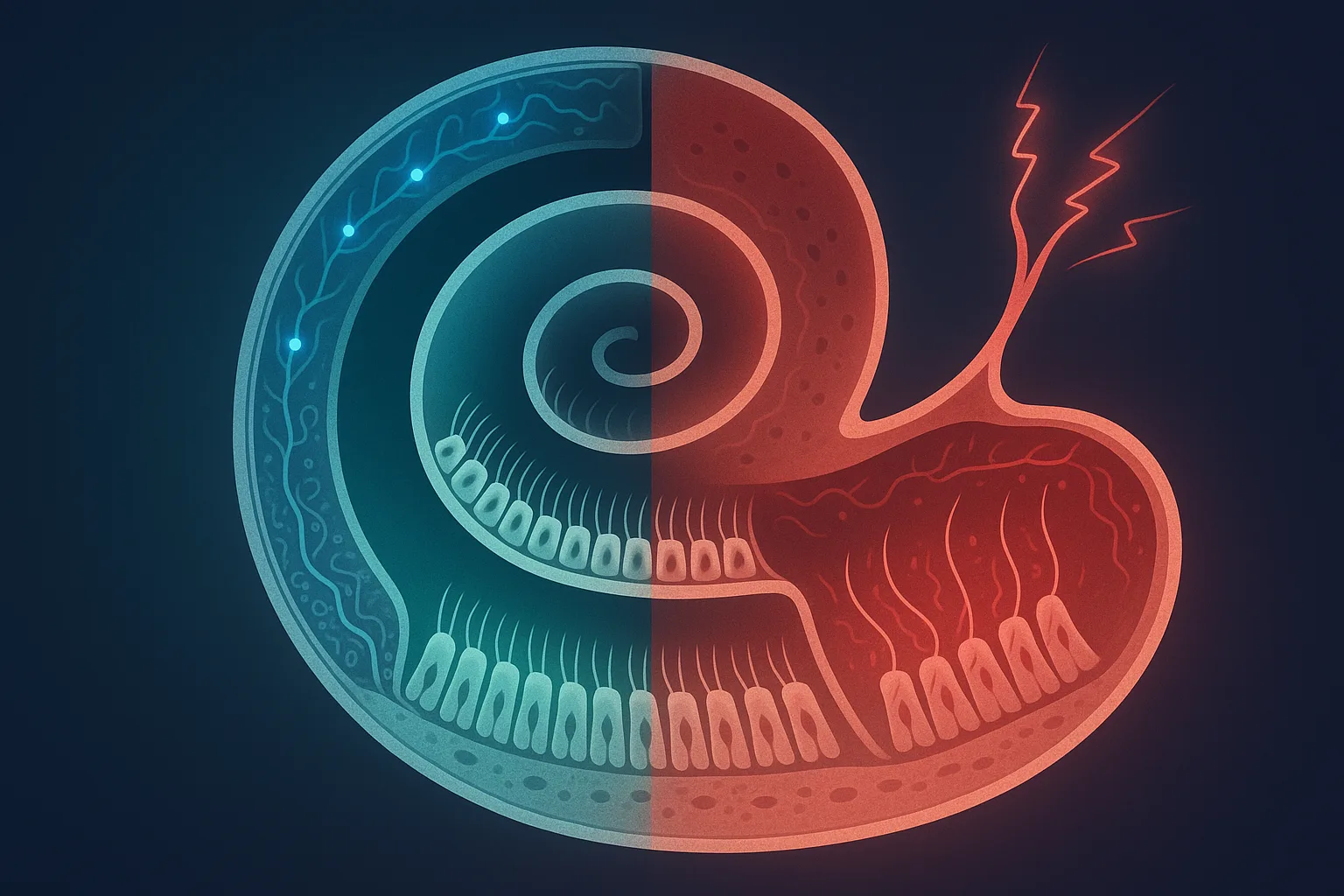
The cochlea, the snail-shaped organ that converts sound into nerve signals, is not a passive microphone. It is a metabolically demanding structure that depends on a precise chemical environment and a steady, high-volume blood supply. Both are influenced by estrogen.
Estrogen and Progesterone Receptors in the Cochlea
Estrogen receptor alpha and beta, along with progesterone receptors, have been identified throughout the inner ear, including the cochlear hair cells, the spiral ganglion neurons that carry sound to the brain, and the stria vascularis, the tissue that pumps potassium-rich fluid (endolymph) into the cochlea [2]. These receptors are functional, not decorative. Estradiol helps regulate:
Inner-ear blood flow via nitric oxide production in the small endothelial vessels feeding the cochlea
The ionic composition of endolymph and perilymph, the fluids that bathe the hair cells and make hearing possible
The electrochemical impulses generated by hair cells, which translate sound and, when they misfire, generate phantom signals
Protection against oxidative and inflammatory damage to delicate cochlear structures
When estradiol swings unpredictably during perimenopause, from high cyclical peaks down to near-menopausal lows within days, the cochlea loses a stable regulatory signal. The downstream result is transient changes in blood flow and fluid chemistry that can let the auditory system generate the spontaneous activity the brain interprets as ringing.
The Vascular Link
Tinnitus and the inner ear are exquisitely sensitive to blood flow. Estrogen promotes vasodilation and endothelial health, so when it declines, perfusion to the cochlea can become less consistent. This is the same vascular mechanism implicated in menopausal hearing changes and in the dizziness many women experience at the same time, because the cochlea and the balance organs share a blood supply [3].
Women's HRT — Menopause-First Telehealth
Bioidentical estradiol, progesterone, and low-dose testosterone — all 50 states, unlimited physician access.
Tinnitus is not one sound. Perimenopausal women describe a range of patterns, and recognizing yours helps a clinician sort hormonal from non-hormonal causes.
Continuous High-Pitched Ringing
The classic presentation: a steady high tone, often more noticeable in quiet environments and at night. This pattern is the most common and the most consistent with the diffuse cochlear changes of the hormone transition.
Buzzing, Humming, or Hissing
A lower, broader sound, sometimes described as static, a kettle, or an electrical hum. Often bilateral and intermittent, frequently tracking with stress, poor sleep, or the perimenstrual estradiol dip.
Pulsatile Tinnitus
A whooshing or thumping that follows your heartbeat. This pattern deserves specific attention because it can reflect blood-flow changes near the ear, including raised blood pressure, which itself becomes more common in perimenopause. Pulsatile tinnitus should always be evaluated rather than assumed hormonal.
One-Sided Tinnitus
Ringing strictly in one ear, especially with hearing loss on that side, is a flag for evaluation. While it can be benign, unilateral tinnitus needs an audiogram and sometimes imaging to exclude structural causes before it is attributed to menopause.
Why It Often Worsens Premenstrually
A pattern many women notice but few clinicians ask about: tinnitus that flares in the days before a period during perimenopause. The trigger is the perimenstrual drop in estradiol. In a normal cycle that dip is modest and predictable. In perimenopause it becomes steeper and more erratic, and the inner ear appears to react to rapid estrogen withdrawal, not merely to low levels.
This is the same timing that drives premenstrual worsening of hot flashes, migraines, and sleep disruption, and it is a useful clue. If your ringing tracks with your cycle, the hormonal contribution is more likely, and stabilizing estradiol is more likely to help.
The Evidence: Does HRT Help Tinnitus?
This is where honesty matters, because the data are genuinely mixed and some clinics overstate the case.
The Case For
The strongest supportive study is a nationwide population cohort from Taiwan that followed menopausal women aged 45 to 79. HRT users developed tinnitus at a lower rate than non-users (0.43% versus 0.59%), and the protective association strengthened with longer duration of therapy [1]. The authors proposed that estrogen and progesterone stabilize the chemical composition of inner-ear fluids and the electrochemical activity of cochlear hair cells, reducing the aberrant signaling that produces tinnitus.
Supporting this, lower serum estradiol has been linked to reduced hearing sensitivity in postmenopausal women, and estradiol's protective effects on the cochlea and auditory nerve are well described in laboratory work [2][3].
The Case Against, and the Caveats
The picture is not uniform. A cross-sectional study of Korean postmenopausal women found that longer duration of HRT was associated with more perceived tinnitus, the opposite direction [4]. And a large analysis of female nurses found that women on hormone therapy for five to ten years had a higher risk of hearing loss, with risk rising the longer they stayed on it [5]. Hearing loss and tinnitus are related but not identical outcomes, which is part of why the literature looks contradictory.
The honest synthesis: HRT may reduce the risk and burden of the tinnitus that begins around the menopause transition, particularly when it is driven by estrogen withdrawal and accompanies other menopausal symptoms. It is not a proven cure, the evidence quality is modest, and HRT should not be prescribed for tinnitus alone. It is reasonable to expect some benefit when tinnitus is one symptom among several that already justify hormone therapy. If you want to understand the broader risk-benefit picture before starting, a clinician at an online HRT clinic can review your full symptom profile and personal risk factors.
The Workup: Ruling Out Other Causes
Before attributing ringing to hormones, other causes must be excluded. Tinnitus has a long list of contributors, and several are common in midlife women.
Hearing and ear assessment:
Audiogram to characterize any hearing loss and its pattern
Examination to exclude earwax impaction, middle-ear fluid, or infection
Imaging (MRI) only if tinnitus is strictly one-sided, pulsatile with concerning features, or accompanied by neurological signs
Blood and metabolic tests:
TSH and free T4, because both over- and under-active thyroid can cause tinnitus and are common in this age group
Complete blood count and ferritin, because anemia and iron deficiency increase tinnitus
Fasting glucose and HbA1c
FSH and estradiol to characterize where you are in the transition (drawn early in the cycle if still menstruating)
Cardiovascular and medication review:
Blood pressure measurement, since hypertension drives pulsatile tinnitus
Review of ototoxic medications, including high-dose NSAIDs, certain antibiotics, loop diuretics, and some antidepressants
If you need comprehensive hormone testing as part of a tinnitus workup, an online HRT clinic can order the full panel and connect you with a clinician experienced in perimenopausal assessment rather than leaving you to coordinate it across separate specialists.
How HRT Addresses the Hormonal Component
When tinnitus is part of a broader menopausal picture, hormone therapy targets the underlying instability in several ways.
Restoring Steady Inner-Ear Blood Flow
Transdermal estradiol promotes nitric oxide production and endothelial health, supporting consistent perfusion of the cochlea. Steady blood flow reduces the transient ischemic episodes that can provoke aberrant hair-cell activity.
Stabilizing the Estrogen Signal
Because the inner ear reacts to estrogen fluctuation as much as to low levels, the goal is steady-state delivery. This is why transdermal routes are generally preferred over oral estrogen, which creates daily peaks and troughs.
Improving Sleep and Lowering Distress
Much of tinnitus suffering is driven by the brain's attention and threat response, not the raw signal. By improving sleep (especially with bedtime micronized progesterone) and easing anxiety, HRT can substantially reduce how loud and intrusive the ringing feels even when the signal itself changes little.
The Practical Protocol
When a clinician decides HRT is appropriate based on the overall symptom picture, a typical approach looks like this.
First-Line: Transdermal Estradiol
Delivery: Patch, gel, or spray, chosen for steady blood levels and to avoid first-pass liver effects
Starting dose: Commonly 25 to 50 mcg/day patch or 0.5 to 1 mg/day gel, titrated to symptoms
Timeline: Hot flashes and sleep typically improve first; any tinnitus benefit is gradual and is best judged over 3 months
Why transdermal: Minimizes the estradiol swings the inner ear is sensitive to
Endometrial Protection: Micronized Progesterone
Women with an intact uterus need progesterone to protect the uterine lining. Micronized progesterone at bedtime (commonly 100 to 200 mg) also improves sleep through its calming, GABA-active metabolites, which indirectly reduces tinnitus distress. For a deeper look at the endometrial-protection side, see our guide on progesterone with testosterone in women's HRT.
Optional: Low-Dose Transdermal Testosterone
For women with persistent fatigue, low mood, or poor sleep despite adequate estradiol, low-dose transdermal testosterone may improve energy and wellbeing, which lowers the bandwidth the brain devotes to monitoring the ringing. The effect on tinnitus is indirect but real for some women.
Tinnitus-Specific Strategies Alongside HRT
HRT addresses the hormonal substrate, but tinnitus management is multimodal. Sound enrichment (a fan, white noise, or low background music at night), cognitive behavioral therapy for tinnitus distress, hearing aids if there is measurable hearing loss, and reducing caffeine and alcohol all work synergistically with hormone therapy.
What to Expect: Timeline on HRT
Timeframe
Expected Changes
Week 1-2
Hot flashes begin to settle; sleep may improve; tinnitus usually unchanged
Week 3-4
Better sleep and lower anxiety reduce night-time tinnitus awareness
Week 6-8
Premenstrual tinnitus flares often soften as estradiol stabilizes
Month 3
Best point to judge any direct tinnitus benefit; distress and intrusiveness typically lower
If tinnitus does not change at all by 3 months on adequate HRT, the hormonal contribution is probably small, and the focus should shift to audiological and sound-therapy approaches.
When Tinnitus Is NOT Hormonal
HRT will not fix every cause of ringing in midlife. Seek prompt evaluation, not a hormone prescription, for:
Sudden hearing loss in one ear with new tinnitus, which is a medical urgency
Tinnitus strictly in one ear, especially with one-sided hearing loss
Pulsatile tinnitus that beats with your pulse, which warrants blood-pressure and vascular assessment
Roaring tinnitus with episodic vertigo and fullness, which can indicate Meniere disease
Tinnitus with neurological symptoms such as facial weakness or visual changes
A competent clinician rules these out before attributing tinnitus to perimenopause. If your provider dismissed your ringing without a hearing test or a hormone review, a specialist in women's hormone health can provide a more thorough assessment.
Lifestyle Measures That Help
While you wait for HRT to take effect, or as standalone support:
Protect your sleep. Fatigue magnifies tinnitus more than almost anything else. Bedtime progesterone, sleep hygiene, and treating night sweats all help.
Use sound enrichment at night. Silence makes tinnitus louder. A fan or white-noise app gives the brain something else to attend to.
Limit caffeine and alcohol. Both are common amplifiers and worsen the autonomic instability of perimenopause.
Manage blood pressure. Hypertension drives pulsatile tinnitus and is increasingly common across the transition.
Reduce stress load. The brain's threat response sets tinnitus volume. Breathing practices, exercise, and CBT measurably lower distress.
Check your medications. Ask whether any of your current drugs are known to cause or worsen tinnitus.
Finding the Right Clinician
Tinnitus in midlife women falls between specialties. Audiologists and ENTs assess the ear. Gynecologists and HRT clinicians manage the hormones. The ideal evaluator recognizes that a clear ear exam does not rule out a hormonal driver, and that a hormone review belongs in the workup of new tinnitus during the transition.
Online HRT clinics that focus on perimenopausal and menopausal hormone therapy are often the most efficient route to the hormone side of the picture. They can order the comprehensive panel, judge whether HRT is appropriate given your overall symptoms and risk factors, and prescribe transdermal estradiol with proper monitoring, while you arrange an audiogram in parallel.
References
Kim SY, et al. "Hormone replacement therapy decreases the risk of tinnitus in menopausal women: a nationwide study." Oncotarget. 2018;9(28):19972-19980.
Stenberg AE, et al. "Estrogen receptors in the normal adult and developing human inner ear and in Turner's syndrome." Identification of ER-alpha and ER-beta in cochlear and vestibular structures. Hearing Research.
Hederstierna C, et al. "The menopause triggers hearing decline in healthy women." Hearing Research; and related work on estradiol and cochlear function.
Park HJ, et al. "Association of perceived tinnitus with duration of hormone replacement therapy in Korean postmenopausal women: a cross-sectional study." BMJ Open. 2017.
Curhan SG, et al. "Menopause and postmenopausal hormone therapy and risk of hearing loss." Menopause. Analysis within the Nurses' Health Study II.
Can perimenopause actually cause tinnitus or ringing in the ears?
Yes. Estrogen and progesterone receptors are present throughout the inner ear, including the cochlea, the stria vascularis (which produces the fluid that bathes the hair cells), and the auditory nerve. When estradiol declines and fluctuates during perimenopause, blood flow and the chemical balance of inner-ear fluid become less stable, which can generate or worsen the phantom ringing, buzzing, or hissing of tinnitus. Surveys suggest up to a third of perimenopausal and menopausal women report some degree of tinnitus, yet it almost never appears on the standard menopause symptom checklist.
Does HRT help with menopausal tinnitus?
The evidence is mixed but leans favorable for the tinnitus that begins around the menopause transition. A nationwide Taiwanese cohort of women aged 45 to 79 found HRT users developed tinnitus at a lower rate than non-users (0.43% vs 0.59%), and risk fell further the longer women stayed on therapy. The proposed mechanism is that stabilizing estradiol restores steady inner-ear blood flow and normalizes the electrochemical signaling of the cochlear hair cells. However, other data are conflicting, and HRT is not prescribed to treat tinnitus on its own. It is reasonable when tinnitus accompanies other menopausal symptoms that warrant hormone therapy.
What does perimenopausal tinnitus sound like?
It varies. Women describe a high-pitched ringing, a buzzing or humming, a hissing like a kettle or radio static, or a pulsing or whooshing that seems to follow the heartbeat (pulsatile tinnitus). It may affect one or both ears, be constant or intermittent, and is often more noticeable at night when the room is quiet. Tinnitus that pulses in time with your heartbeat or is strictly one-sided should always be evaluated by a clinician, because those patterns can have non-hormonal causes.
Why does my tinnitus get worse around my period?
The perimenstrual drop in estradiol is the likely trigger. In perimenopause the cyclical estrogen swings become steeper and more erratic, and the inner ear appears sensitive to rapid estrogen withdrawal, not just to low levels overall. Many women notice their tinnitus, like their hot flashes and sleep disruption, intensifies in the days before a period and eases once levels stabilize. Stress, poor sleep, caffeine, and dehydration, all common in perimenopause, can amplify the perception further.
Should I be worried about tinnitus during menopause?
Most menopause-associated tinnitus is benign and related to hormonal and vascular changes, but it should not be self-diagnosed. Red flags that need prompt evaluation include sudden hearing loss in one ear, tinnitus strictly on one side, pulsatile tinnitus that beats with your pulse, vertigo with roaring tinnitus (which can suggest Meniere disease), or tinnitus with neurological symptoms. A clinician will check your hearing, review medications that cause tinnitus, and rule out thyroid disease, anemia, and blood-pressure issues before attributing it to hormones.
Can low testosterone in women affect tinnitus?
Directly, the evidence is thin, but indirectly there is a plausible link. Low testosterone in midlife women correlates with poor sleep, fatigue, anxiety, and low mood, all of which amplify how loud and intrusive tinnitus feels. Tinnitus distress is driven as much by the brain's attention and threat response as by the signal itself. Some clinicians include low-dose transdermal testosterone within comprehensive HRT for women with persistent fatigue and mood symptoms, which can indirectly reduce tinnitus bother even if it does not change the underlying signal.