This article reports what published trial data and clinical observation describe about TRT and erectile dysfunction. It is not medical advice. ED has multiple causes, and a licensed prescriber should evaluate persistent issues before and during testosterone therapy.
The most common reason men start testosterone replacement is some combination of low energy, low libido, and unreliable erections. Of those three, erectile dysfunction is the one with the largest gap between what marketing implies and what the published data actually supports. TRT helps — but it is not a universal fix, the timeline is longer than for libido, and a meaningful share of men still need a PDE5 inhibitor added to get reliable erections back. This page lays out what the trial data shows, when TRT alone is enough, when it is not, and how to read your own response curve so you do not chase the wrong intervention.
If you are weighing a TRT clinic and want to know whether testosterone is likely to address the erectile complaint that brought you in, this is the reference page.
What the Trial Data Shows About TRT and ED
Two endpoints matter when reading TRT-and-ED studies: change in International Index of Erectile Function (IIEF) score and the proportion of men who go from dysfunctional to functional. The published trial literature speaks to both.
Snyder et al., Testosterone Trials (2016): the largest randomized data
The Sexual Function Trial within the Testosterone Trials randomized 470 men aged 65 and older with low testosterone and low libido to 12 months of testosterone gel or placebo. The IIEF erectile-function subscale improved significantly over placebo, with the gap widening through month 6 and holding through month 12. The effect size was modest in absolute terms — meaningful for the population but not transformational for every individual.
The same trial showed sexual desire (libido) responded faster and with a larger effect size than erectile function. This pattern — libido leads, erectile function follows more slowly — recurs in nearly every TRT trial that measures both.
Corona et al. meta-analysis: TRT improves ED but combining is better
A meta-analysis pooling 14 randomized trials of testosterone for sexual dysfunction in hypogonadal men found a significant benefit on erectile function compared to placebo. The same group's separate analysis of TRT plus PDE5 inhibitor versus PDE5 inhibitor alone found additive benefit when both low testosterone and ED were present — combining outperformed either alone.
Spitzer et al.: testosterone plus PDE5 vs PDE5 alone
Men with ED unresponsive to sildenafil monotherapy and confirmed low testosterone were randomized to testosterone gel plus sildenafil or sildenafil alone. The combination group showed greater improvement in erectile function than sildenafil alone, supporting the practice of combining when monotherapy fails and labs are low.
What the data does not support
Trials in eugonadal men — those with already-normal testosterone — have not shown a meaningful erectile-function benefit from added testosterone. Pushing testosterone above the mid-normal range to chase ED is not supported by the literature and frequently worsens estradiol, hematocrit, and sleep without improving erections.
Week-by-Week Erectile Function Curve on TRT
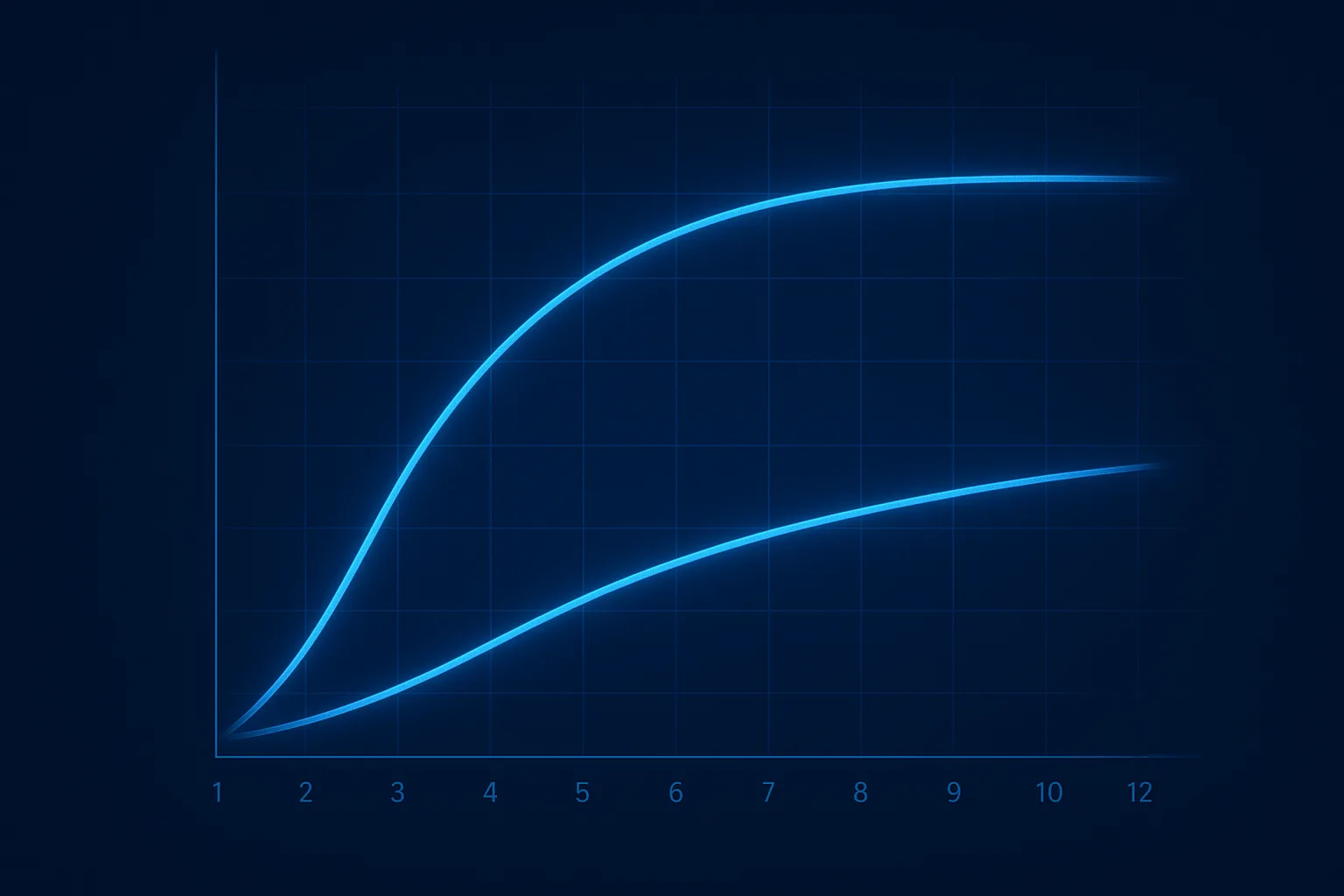
The curve below synthesizes published trial timelines with patterns experienced TRT clinics describe. Use it as orientation rather than a guarantee.
| Time on TRT | What Most Men Report | What the Data Supports |
|---|---|---|
| Week 1-2 | Mood lift, mixed erection changes, some report nothing yet | Testosterone levels rising; central libido pathways adapting |
| Week 2-4 | Morning and nocturnal erections begin to reappear | Earliest measurable change in spontaneous erection in trial data |
| Week 4-8 | Daytime erectile reliability slowly improves; libido climbs faster | First detectable separation from placebo on IIEF erectile-function subscale |
| Month 2-4 | Erections more reliable but still inconsistent for some | IIEF gains accumulate; libido has typically plateaued |
| Month 4-6 | Most of the erectile-function improvement that will occur is established | Trial curves still ascending but slope flattening |
| Month 6-12 | Mature response; smaller continued gains | Endpoint of Sexual Function Trial; further large gains unlikely |
What "morning wood" tells you about the workup
Spontaneous nocturnal and morning erections depend largely on testosterone-driven central pathways. Their return early in TRT — usually weeks 2-4 — is a useful signal that the testosterone signal is reaching the brain and the central machinery works. If morning erections come back reliably but daytime erections during sex still fail, the issue is more likely vascular, neurogenic, performance-anxiety driven, or pharmacological than a testosterone problem. That distinction changes the workup.
When the curve is faster than the table
Younger men with isolated low testosterone, no metabolic syndrome, no SSRI exposure, and no vascular disease frequently report fully restored erections inside 8-12 weeks of TRT alone, sometimes faster. The trial data above came from older men with more comorbidities; younger and healthier patients respond more completely and more quickly.
When the curve is slower or incomplete
Men with established vascular ED — diabetes, hypertension, dyslipidemia, smoking history, or atherosclerotic disease — frequently see libido and morning erections return on TRT while daytime erections remain unreliable. This is the population where TRT alone does not close the gap and a PDE5 inhibitor becomes part of the protocol. Men on SSRIs or 5-alpha reductase inhibitors often see a similar pattern: central response improves, peripheral reliability does not.
When TRT Alone Is Enough — and When It Is Not
The single most useful question in this space is whether testosterone is the upstream driver of the erectile complaint or one of several drivers. The answer changes the protocol.
TRT alone is usually enough when
- Total testosterone trough is below 300 ng/dL or free testosterone is below 70 pg/mL on confirmed labs
- Libido is also low (the central pattern dominates)
- No diabetes, no significant cardiovascular disease, no smoking history
- No SSRI, finasteride, or dutasteride exposure
- Sleep is reasonable, no untreated sleep apnea
- Age under 55 with otherwise good metabolic health
In this population, the trial and clinical literature supports TRT alone restoring erectile function in most men inside 3-6 months, with PDE5 inhibitors used short-term during the climb if needed and stopped once response is established.
TRT plus a PDE5 inhibitor outperforms TRT alone when
- Vascular risk factors are present (diabetes, hypertension, dyslipidemia, smoking, obesity)
- ED has been present for years and likely involves established vascular changes
- Erection quality has not improved at month 3 despite in-range trough labs
- The patient describes reliable libido return with unreliable mechanical response
The Spitzer trial and the Corona meta-analysis both support combining in this population. The combination produces faster and more complete response than either alone.
TRT is unlikely to be the right answer when
- Total and free testosterone are already in the mid-normal range
- Libido is intact and the only complaint is erectile reliability
- The pattern is performance anxiety with reliable erections in non-pressured contexts (morning, masturbation)
- The complaint started shortly after a new SSRI, finasteride, or beta-blocker
- The pattern is partner-specific or context-specific rather than global
Adding TRT here adds risk — estradiol elevation, hematocrit elevation, suppression of fertility, ongoing therapy commitment — without addressing the actual driver. A urologist or sexual-medicine workup is the better first move.
What to Check When ED Has Not Improved by Month 3
If trough total and free testosterone are in target range at the 3-month recheck and erectile reliability has not improved, the literature points to a short list of usual suspects. A clinic that takes erectile complaints seriously will work this list before raising the testosterone dose.
Estradiol off range — high or low
Erectile function depends on estradiol the same way libido does. Below roughly 20 pg/mL on standard immunoassay, both libido and erection quality often fall — the "crashed E2" pattern in men running aggressive aromatase inhibitor doses. Above roughly 60 pg/mL, water retention, gynecomastia symptoms, and ED can all worsen. The middle of the male range is where most men land for best response. See estradiol management on TRT for target ranges and titration logic.
Vascular workup
A man at 3 months with in-range testosterone and persistent ED deserves a vascular evaluation: lipid panel, fasting glucose, blood pressure, and an honest review of cardiovascular risk. ED is frequently the first symptom of vascular disease — penile arteries are smaller than coronary arteries and tend to show flow problems first. A persistent ED complaint in this setting is a workup signal, not just a sexual-medicine question.
PDE5 responsiveness trial
A short trial of sildenafil 25-50 mg or tadalafil 5-10 mg as-needed before partnered sex is a low-risk diagnostic. Strong response confirms vascular component is present and the answer is combination therapy. Poor response despite adequate dose shifts the workup toward neurogenic ED, low-grade hormone issues missed at first pass, or psychological factors.
Prolactin elevation
Hyperprolactinemia suppresses both libido and erectile function. Prolactin is part of the standard 3-month TRT workup at well-run clinics for exactly this reason. An elevated prolactin can identify a pituitary issue that testosterone alone will not fix.
Medications that suppress sexual response
The two most common pharmacologic ED contributors in the TRT population:
- SSRIs and SNRIs are estimated to cause ED or delayed orgasm in 30-70% of users depending on the agent. Bupropion and mirtazapine are commonly used as lower-impact alternatives when this is a factor.
- Finasteride and dutasteride suppress DHT and produce sexual dysfunction in a substantial minority of users — sometimes persisting after discontinuation. A man on a 5-alpha reductase inhibitor with persistent ED despite in-range testosterone has a recognized non-testosterone cause.
Beta-blockers, certain antipsychotics, and high-dose opioids also commonly contribute and deserve review.
Sleep apnea
Untreated obstructive sleep apnea suppresses testosterone, raises hematocrit, fragments REM-related erections, and contributes to vascular disease. A clinic that takes TRT and sleep seriously screens for OSA and does not just titrate testosterone in someone with severe untreated sleep-disordered breathing.

Libido vs Erectile Function — Two Different Mechanisms
A common source of confusion in TRT forums and clinic conversations: libido and erection are different mechanisms with different response patterns to testosterone. Understanding the split changes the protocol.
Libido is mostly central
Sexual desire is generated by hypothalamic and limbic pathways dense with androgen receptors. Restoring testosterone restores the central drive. This is why libido responds quickly and the response is largely complete by month 3 for the men who do respond. The libido machinery is downstream of testosterone in a clean way.
Erection is central plus peripheral
The erection itself depends on intact vascular endothelium, autonomic neural pathways, smooth muscle responsiveness, and adequate nitric-oxide signaling. Testosterone supports these systems but cannot create them. A man with vascular disease has a peripheral problem that responds partially to testosterone and more fully to PDE5 inhibitors that act locally on the nitric-oxide pathway.
This is why the trial data shows libido improvements peaking around month 3 while erectile-function gains continue out to 12 months — the central piece responds quickly, the peripheral piece accumulates more slowly and incompletely.
What this means for protocol decisions
If at month 3 you have strong libido and unreliable erections, the answer is not more testosterone. The answer is to evaluate the peripheral side — vascular workup, PDE5 trial, estradiol check, medication review. Pushing trough testosterone above the mid-normal range to chase reliability rarely produces it and frequently produces estradiol, hematocrit, and sleep problems that make erections worse.
Injection Frequency, Trough Levels, and Erection Stability
The shape of the testosterone curve from injection to injection influences erection reliability the same way it influences libido — though the effect is usually smaller for erectile function than for libido.
Once-weekly intramuscular: peak-trough swing
A once-weekly cypionate or enanthate injection produces serum levels that climb sharply through days 2-4 and decline through day 7. Some men report better erection quality in the first half of the cycle and noticeably worse quality in the trough. This is the predictable shape of a once-weekly ester, not a treatment failure.
Twice-weekly or every-other-day: smoother curve
Splitting the same weekly dose into two or three smaller injections smooths the curve. Men who notice cycle-related erection swings on once-weekly schedules often report more consistent function on twice-weekly or every-other-day subcutaneous protocols. The total weekly dose is unchanged. See injection frequency: weekly vs every-other-day for the full comparison and subcutaneous vs intramuscular for the route question.
Why the curve matters at the 3-month assessment
If you are evaluating TRT response at month 3 and the assessment falls during a trough, the read can underestimate the protocol. Using trough rather than peak labs and tracking response across multiple weeks rather than single sessions produces a fairer evaluation. A clinic that respects this pattern does the recheck during a trough window and tracks symptoms longitudinally.
What This Looks Like in a Clinic That Manages It Well
A clinic that takes erectile complaints seriously builds the realistic timeline and the diagnostic split into the workup rather than promising a fast fix or pushing a higher dose.
The pattern most experienced TRT clinics follow:
- Baseline workup includes total testosterone, free testosterone, SHBG, estradiol, prolactin, TSH, lipids, A1c, and a sexual-function questionnaire. The clinic asks about morning erections separately from daytime erections and from libido.
- Patient is told to expect a longer curve for erectile function than for libido — gains accumulating out to month 6 with smaller continued improvement out to month 12.
- PDE5 inhibitors are offered as a bridge during the climb if erectile reliability is the primary complaint, with the option to taper once TRT response is established.
- At the 3-month recheck, if labs are in target and ED has not improved, the clinic evaluates estradiol, prolactin, vascular risk, medications, and sleep — not a higher testosterone dose.
- The clinic refers to urology or sexual medicine when the workup points to vascular, neurogenic, or psychological drivers that are outside its scope.
If a clinic offers to raise your dose at week 4 because erections are not yet reliable, that is a flag. The trial data does not support a meaningful erectile-function gain from dose escalation in the first month, and pushing trough testosterone above target rarely helps erections and frequently worsens estradiol, hematocrit, and sleep. The clinic comparison hub ranks clinics by how disciplined they are about this exact pattern.
Common Pitfalls in Reading the ED Response
Forum advice and DIY protocols frequently misread the erectile-function response in ways that lead to bad dose decisions. The most common errors:
- Calling week 4 a treatment failure. Erectile-function gains in the trial literature accumulated through month 6 and beyond. Week 4 is too early to evaluate.
- Pushing the dose to chase reliability. Above mid-normal testosterone, erections more often worsen from elevated estradiol and hematocrit than improve from extra testosterone.
- Ignoring estradiol when ED is the complaint. Both crashed and elevated estradiol commonly cause ED; the testosterone level alone does not tell the story.
- Skipping the vascular workup. ED in a 50-year-old with metabolic syndrome is a vascular signal. Treating only the testosterone arm misses the upstream issue and the cardiovascular implication.
- Refusing PDE5 inhibitors out of pride or fear. The combination is what the data supports for the population most likely to read this page. PDE5 inhibitors are well-tolerated, well-studied, and not a sign that TRT failed — they are a parallel intervention for a different mechanism.
- Stopping TRT after one month of mediocre erection response. The libido curve peaks around month 3 and the erection curve peaks around month 6. Quitting at month 1 means quitting before the answer is in.
Bottom Line
TRT improves erectile function when low testosterone is the upstream driver, but the response curve is slower than for libido and a meaningful share of men need a PDE5 inhibitor added to get reliable erections back. Trial data shows measurable gains accumulating through month 6 with smaller continued improvement out to 12 months, and combination therapy (TRT plus PDE5 inhibitor) outperforms either alone in men with low testosterone and vascular ED. The right move at week 4 is patience and lab review. The right move at month 3 with persistent ED is a workup of estradiol, prolactin, vascular health, and medications — not a higher testosterone dose. A clinic that respects the curve and runs the full workup is the one most likely to deliver the response that brought you in.