Key Takeaways: Testosterone directly modulates mood, anxiety, and cognition through androgen receptors in the brain, neurosteroid production, and dopamine/serotonin signaling. Most men notice mood improvement within 2-4 weeks, with full effects by 3-6 months. Brain fog typically clears by month 2-3. However, TRT only resolves mental health symptoms caused by low testosterone -- it is not a substitute for treating clinical depression, anxiety disorders, or other psychiatric conditions with independent causes.
The Neuroscience: How Testosterone Affects Your Brain
Testosterone is not just a muscle and sex hormone. It is a potent neurosteroid with direct and indirect effects on brain function. Understanding the mechanisms explains both why low testosterone causes mental health symptoms and why TRT resolves them.
Androgen Receptors in the Brain
Androgen receptors are densely concentrated in several brain regions critical for mood, cognition, and emotional regulation:
Hippocampus -- memory formation and spatial reasoning
Amygdala -- emotional processing and threat assessment
Prefrontal cortex -- executive function, decision-making, impulse control
Basal ganglia -- motivation, reward processing, motor function
When testosterone levels are low, these receptors are understimulated. The result is a constellation of symptoms that many men describe as feeling "flat," "foggy," and "unmotivated" without understanding the hormonal cause.
Neurosteroid Conversion
Testosterone is converted in the brain to several neurosteroids with direct psychoactive properties:
5-alpha-dihydrotestosterone (DHT): More potent androgen receptor agonist than testosterone. Important for motivation, confidence, and assertive behavior. Also modulates GABA signaling.
3-alpha-androstanediol: A testosterone metabolite that acts as a potent positive allosteric modulator of GABA-A receptors -- the same receptor class that benzodiazepines target. This is the primary mechanism behind testosterone's anxiolytic (anti-anxiety) effects.
Estradiol (via aromatase): Estrogen is neuroprotective and important for mood in both men and women. Adequate estradiol from testosterone conversion supports serotonin synthesis and synaptic plasticity.
Neurotransmitter Modulation
Testosterone directly influences the major neurotransmitter systems:
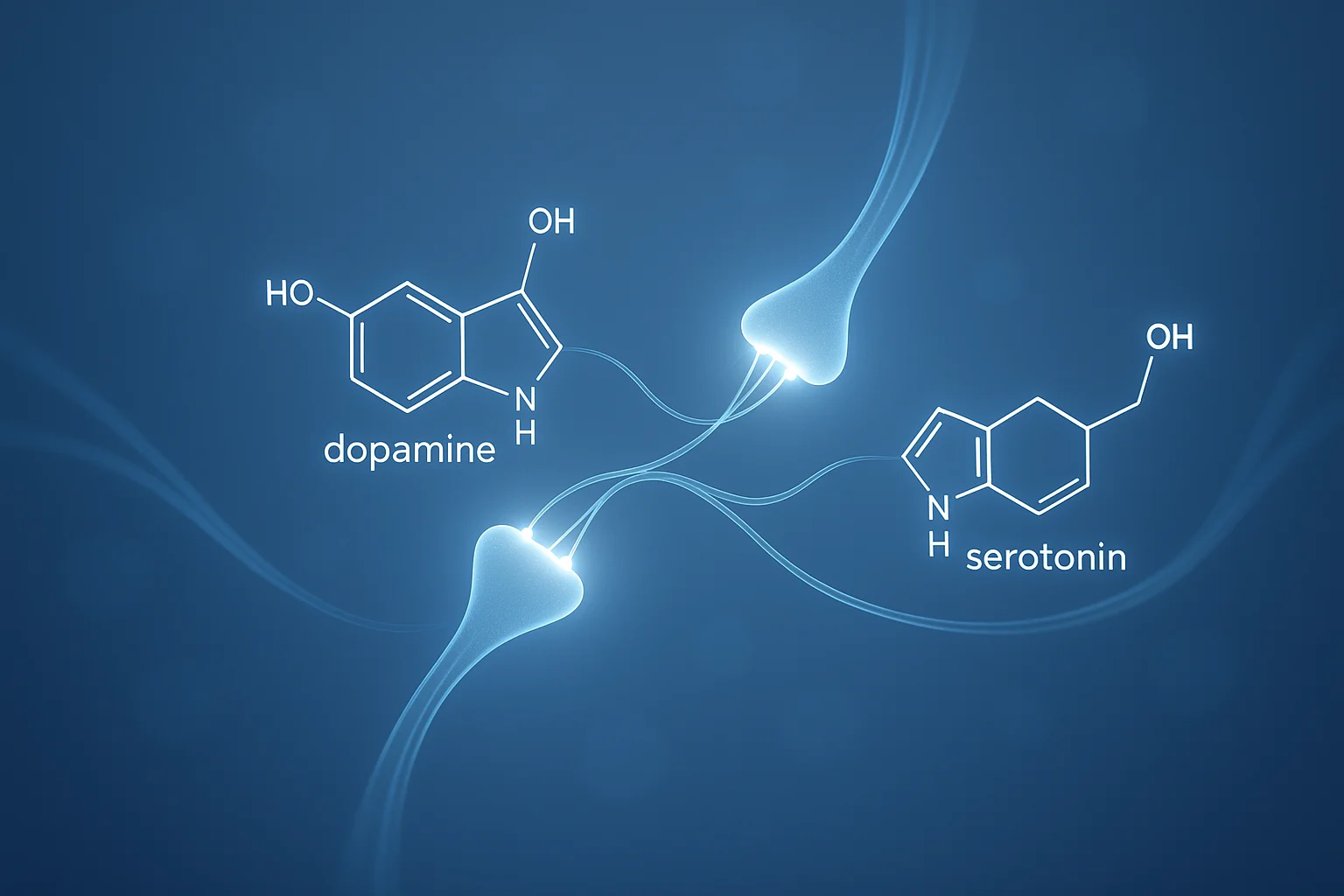
Dopamine: Testosterone upregulates dopamine synthesis and D2 receptor density. This affects motivation, reward sensitivity, pleasure, and drive. Low testosterone = low dopamine signaling = anhedonia and amotivation.
Serotonin: Testosterone (via estradiol conversion) modulates serotonin synthesis and receptor sensitivity. Low testosterone is associated with reduced serotonergic function, which parallels the neurochemistry of depression.
GABA: Through neurosteroid metabolites, testosterone enhances GABAergic inhibition, reducing anxiety, promoting relaxation, and improving stress tolerance.
Cortisol: Testosterone antagonizes cortisol at the receptor level and modulates the HPA axis stress response. Low testosterone means less cortisol buffering, which manifests as heightened stress reactivity.
The Mental Health Timeline: Week by Week
Weeks 1-2: Subtle Shifts
The brain is the fastest-responding tissue to changing testosterone levels. Even in the first two weeks, neurological changes are occurring.
What you may notice:
A slight lift in baseline mood -- not euphoria, but the absence of the heavy, flat feeling
Marginally better motivation to engage with tasks
Sleep quality may begin improving (testosterone affects sleep architecture)
A vague sense that "something is different"
What is happening biologically:
Androgen receptors in the limbic system are responding to rising testosterone
Dopamine signaling is beginning to shift upward
Neurosteroid production is increasing
Cortisol sensitivity is beginning to decrease
What to be aware of: Some men experience increased irritability in the first 1-2 weeks as their hormonal axis adjusts. This is temporary and typically resolves within days.
Weeks 2-4: Noticeable Improvement
By week 3-4, most men report clear, undeniable mood improvement. This is not placebo -- though placebo contributes, the neurochemical changes are real and measurable.
What you will likely notice:
Morning motivation returns. The dread of getting out of bed decreases.
Emotional flatness lifts. You start caring about things again.
Stress feels more manageable. The same problems provoke less anxiety.
Social interactions become less draining. Confidence begins emerging.
Verbal fluency improves -- words come more easily.
Irritability and short temper begin resolving.
Brain fog specifically: By weeks 3-4, most men report the beginning of cognitive clearing. The sensation of "thinking through mud" starts to fade. You can hold complex thoughts, maintain focus in meetings, and recall words without the frustrating tip-of-the-tongue experience.
Weeks 4-8: The E2 Variable
This is the period where estradiol levels can complicate the mental health picture. As testosterone rises, aromatase converts more of it to estrogen. While some estradiol is essential for brain health, excess can cause:
Mood instability -- swinging between fine and irritable/emotional
Increased anxiety (paradoxically, since testosterone itself is anxiolytic)
Brain fog returning after it had begun clearing
Sleep disruption
A general sense of "not feeling right" that is hard to pinpoint
If you experience a mood dip at weeks 4-8, do not assume TRT is not working. Get bloodwork drawn (specifically sensitive estradiol). If E2 is elevated, addressing it typically resolves the mood symptoms within 1-2 weeks.
Conversely, men who aggressively manage E2 with aromatase inhibitors can crash their estradiol too low, which causes its own set of mental health symptoms: depression, joint pain, anhedonia, and severe anxiety. The goal is balance, not elimination.
Months 2-3: Stabilization
By month 3, the hormonal environment has stabilized. Steady-state testosterone levels are established, and the body has adapted to the new estradiol level (whether through natural adaptation or managed intervention).
Mood at 2-3 months:
Depression symptoms that were present at baseline should be significantly improved or resolved
Emotional regulation is better -- you can feel upset without spiraling
Motivation is consistent rather than fluctuating
Stress tolerance is notably improved
The general sense of well-being is stable and reliable
Cognition at 2-3 months:
Brain fog is largely resolved for most men
Working memory is sharper -- you can hold and manipulate information better
Focus and sustained attention improve
Creative thinking and problem-solving feel more accessible
The "mental energy" to engage with complex tasks returns
Anxiety at 2-3 months:
GABAergic neurosteroid effects are well-established
Baseline anxiety levels are reduced
Social anxiety specifically often improves substantially
The physical symptoms of anxiety (chest tightness, racing thoughts, gut tension) decrease
Stress response is more proportionate to actual threat level
Months 3-6: Full Effect
The mental health benefits of TRT reach their maximum between months 3-6 for most men. By month 6, what you are experiencing is your treatment maximum for psychological effects.
A meta-analysis by Walther et al. (2019) found that testosterone therapy produced significant reductions in depressive symptoms with a standardized mean difference of -0.23 (small-to-moderate effect). Importantly, the effect was larger in men with:
Lower baseline testosterone levels
More severe baseline depressive symptoms
Adequate treatment duration (at least 12 weeks)
The TTrials found statistically significant improvements in mood in older hypogonadal men at 12 months, with the most robust effects in men who had significant depressive symptoms at baseline.
Restores serotonergic function (mood stability, emotional regulation)
Reduces cortisol reactivity (stress resilience)
Improves sleep (which is bidirectionally linked with depression)
Increases energy and functional capacity (reduces the behavioral shutdown component of depression)
Many men with low testosterone meet diagnostic criteria for major depressive disorder or dysthymia. When testosterone is the root cause, TRT can produce mood improvements that rival antidepressant medications -- and it does so by addressing the underlying deficiency rather than modulating a downstream symptom.
What TRT Cannot Do
TRT is not a treatment for:
Clinical depression with normal testosterone -- if your levels are 600 ng/dL and you are depressed, the cause is not hormonal
Bipolar disorder -- testosterone does not stabilize mood cycling
PTSD -- trauma-related depression and anxiety require trauma-specific treatment
Situational depression -- job loss, divorce, grief, and other life circumstances cause depression that testosterone cannot fix
Severe, treatment-resistant depression -- while testosterone may be a helpful adjunct, it is not a primary treatment for severe psychiatric illness
The Realistic Scenario
Most men starting TRT for low testosterone will experience meaningful mood improvement. But "meaningful" does not always mean "complete." If you were depressed for reasons beyond testosterone (and most people have multifactorial depression), TRT will remove one contributing factor. You may still need to address the others through therapy, lifestyle changes, or medication.
The most productive framing: TRT gives you a better hormonal foundation from which to address your mental health. It is easier to do the work of therapy, build healthy habits, and manage stress when your neurochemistry is not undermined by a hormone deficiency.
Anxiety: The Testosterone-GABA Connection
Anxiety improvement on TRT is among the most consistently reported but least discussed benefits.
The Mechanism
The primary anxiolytic pathway of testosterone:
Testosterone is converted to DHT by 5-alpha reductase
DHT is further converted to 3-alpha-androstanediol
3-alpha-androstanediol is a potent positive allosteric modulator of GABA-A receptors
GABA-A activation produces the same calming, anxiolytic effect as benzodiazepines (but at a more physiological level)
This is not theoretical. Animal studies show that testosterone administration reduces anxiety-like behavior through GABA-A modulation, and that blocking 5-alpha reductase (which prevents the conversion to anxiolytic metabolites) abolishes the effect.
Timeline of Anxiety Improvement
Timeframe
What Changes
Week 1-2
Subtle reduction in baseline tension
Week 2-4
Social anxiety begins decreasing; stressful situations feel more manageable
Week 4-8
Significant anxiety reduction; physical symptoms (chest tightness, gut tension) decrease
Month 2-3
Anxiety reaches treatment minimum; new baseline established
Month 3-6
Stable, sustained anxiety reduction
When Anxiety Does Not Improve
If anxiety persists despite optimized testosterone:
Check estradiol: Both high and low E2 can cause or worsen anxiety
Consider caffeine: Many men increase caffeine when energy improves on TRT, inadvertently worsening anxiety
Sleep quality: Poor sleep drives anxiety through HPA axis dysregulation
Underlying anxiety disorder: Generalized anxiety disorder, panic disorder, and social anxiety disorder have genetic and psychological components that testosterone alone may not resolve
Brain Fog: The Cognitive Timeline
"Brain fog" is the colloquial term for the cognitive dysfunction associated with low testosterone. It encompasses difficulty concentrating, poor word recall, reduced processing speed, and a general sense of mental sluggishness.
Marginal improvement; may notice slightly faster recall
Week 2-4
Noticeable improvement in focus and verbal fluency
Month 1-2
Significant clearing; can hold complex thoughts, maintain meeting focus
Month 2-3
Brain fog largely resolved; new cognitive baseline establishing
Month 3-6
Full cognitive optimization; working memory, processing speed, executive function at treatment maximum
Persistent Brain Fog Troubleshooting
If cognitive symptoms persist beyond 3 months with optimized testosterone:
Sleep apnea -- extraordinarily common and severely impairs cognition. Get a sleep study.
Thyroid dysfunction -- subclinical hypothyroidism causes brain fog independent of testosterone
Vitamin B12 and iron deficiency -- both impair cognitive function
Medication effects -- antihistamines, benzodiazepines, certain blood pressure medications, and others cause cognitive dulling
Chronic inflammation -- elevated CRP and inflammatory cytokines impair brain function
ADHD -- may have been masked or compensated for when younger and becomes apparent as other factors change
Confidence: The Psychological Transformation
Confidence changes on TRT deserve their own discussion because they represent an intersection of hormonal, neurological, and psychological factors.
What Is Happening
Testosterone's effect on confidence is not simple bravado or aggression. It operates through:
Dopamine reward signaling: Increased motivation to pursue goals and tolerance for the discomfort of growth
Reduced anxiety: Lower baseline anxiety makes social and professional situations less threatening
Improved body composition: Looking better objectively improves self-perception
Better cognitive function: Thinking more clearly supports confident decision-making
Energy and vitality: Having energy to engage with life rather than merely surviving it
Assertiveness circuitry: Testosterone modulates the neural circuits involved in social hierarchy behavior, competition, and assertiveness
The Timeline
Weeks 2-4: First hints of feeling more "present" and engaged
Month 1-2: Noticeable increase in willingness to speak up, take initiative, and engage socially
Month 3-6: Stable, integrated confidence that does not feel forced
Month 6+: Confidence becomes your default state rather than something you are conscious of
The Nuance
TRT-related confidence is not about becoming aggressive or domineering. Most men describe it as a return to how they used to feel -- capable, engaged, willing to take appropriate risks, and comfortable in their own skin. The absence of this state (due to low testosterone) is what they had normalized as "just getting older" or "just how I am now."
When Mental Health Does Not Improve on TRT
This is a critical section. If you have been on optimized TRT for 3+ months and mental health symptoms persist, here is a structured approach:
Step 1: Verify Protocol Optimization
Trough testosterone 600-1000 ng/dL
Estradiol 20-40 pg/mL (sensitive assay)
Injection frequency adequate for stable levels (twice weekly minimum)
Working with a provider who actively manages these markers is essential -- compare clinics here
Step 2: Rule Out Medical Causes
Thyroid panel (TSH, free T3, free T4)
Vitamin D, B12, iron/ferritin
Sleep study for obstructive sleep apnea
CBC (anemia can cause fatigue and cognitive symptoms)
Metabolic panel (blood sugar regulation)
Step 3: Evaluate Psychiatric Factors
Pre-existing depression or anxiety disorder that predates low testosterone
Unresolved trauma or grief
Relationship or family conflict
Work stress or burnout
Substance use (alcohol, cannabis, and other substances affect mood independently)
Step 4: Consider Professional Support
Therapy (CBT, EMDR, or other evidence-based approaches)
Psychiatric evaluation for medication if warranted
Lifestyle interventions: exercise, social connection, stress management, mindfulness
TRT provides the hormonal foundation. It creates the best possible neurochemical environment for addressing mental health challenges. But some challenges require additional intervention, and there is no weakness in pursuing them.
Combining TRT with Other Mental Health Treatments
TRT and Antidepressants
Many men start TRT while on antidepressant medication. This is safe and often effective -- the interventions address different aspects of mood regulation. Over time, as TRT's effects stabilize, some men work with their prescribers to reduce or discontinue antidepressants. This should always be done gradually and under medical supervision.
Note: SSRIs and SNRIs can cause sexual side effects that TRT may partially counteract. If you are on both, monitor sexual function and discuss with your providers.
TRT and Therapy
Psychotherapy and TRT are complementary. TRT addresses neurochemical deficits that make therapy harder. Therapy addresses cognitive patterns, behavioral habits, and life circumstances that hormones alone cannot change. The combination is often more effective than either alone. Finding a clinic that takes mental health outcomes seriously is the first step -- see our clinic comparison.
TRT and Exercise
Exercise is arguably the most potent adjunct to TRT for mental health. Resistance training increases BDNF (brain-derived neurotrophic factor), improves sleep, reduces anxiety, and produces its own neurochemical benefits. The combination of TRT + consistent exercise often produces mental health improvements that exceed what either intervention achieves alone.
This content is for informational purposes only and is not medical advice. Consult a qualified healthcare provider before starting any treatment.
Frequently Asked Questions
Can TRT help with depression?
TRT can significantly improve depressive symptoms when depression is caused or worsened by low testosterone. The TTrials and multiple meta-analyses show statistically significant mood improvement in hypogonadal men. However, TRT is not a treatment for clinical depression from other causes.
How quickly does brain fog clear on TRT?
Most men report noticeable cognitive improvement within 3-6 weeks. Full resolution of brain fog typically occurs by months 2-3 as steady-state testosterone levels are established and neurological adaptations complete.
Does TRT help with anxiety?
Yes, in many cases. Testosterone has anxiolytic properties mediated through neurosteroid metabolites that act on GABA-A receptors. Most men with low-T-related anxiety see improvement within 4-8 weeks.
Can TRT make anxiety or depression worse?
Rarely, but it can happen -- usually due to poorly managed estradiol levels. High E2 can cause mood instability, and very low E2 (from aggressive AI use) can cause depression and anxiety. Proper E2 management resolves this.
Should I stop my antidepressant when I start TRT?
Never stop psychiatric medication without consulting your prescribing physician. TRT may eventually allow dose reduction or discontinuation of antidepressants, but this should be a gradual, supervised process based on sustained improvement.