Dietary Guidelines Now Cover Testosterone. What Works?
5/23/2026
5 min read
By The TRT Catalog
The 2025-2030 Dietary Guidelines added a testosterone section for the first time. Experts say the evidence is weak. Here's what actually moves the needle.
Key Takeaways: For the first time, the 2025-2030 Dietary Guidelines for Americans include a section on supporting testosterone health in men. The guidelines recommend healthy fats, zinc, vitamin D, fish oil, and weight management. Leading testosterone researchers say the evidence behind these specific dietary recommendations is weak. Weight loss is the only dietary intervention with robust data -- up to 83 ng/dL increase in overweight men -- but it requires roughly 15% body weight loss to produce meaningful change. Supplements like zinc and vitamin D only help when you have a deficiency in that nutrient. For men with clinically confirmed low testosterone, diet alone will not close the gap.
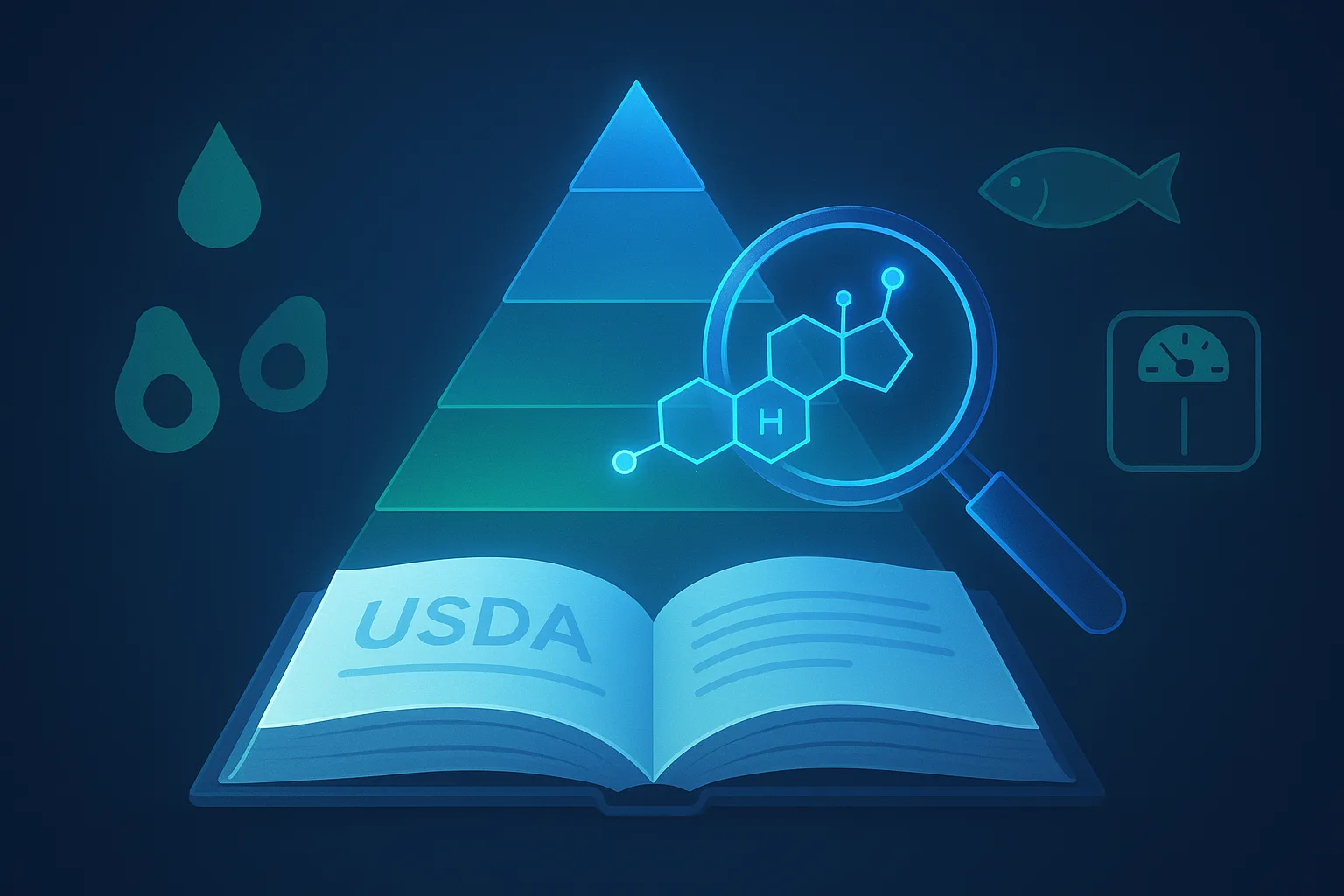
On January 7, 2026, the U.S. Departments of Health and Human Services (HHS) and Agriculture (USDA) released the 2025-2030 Dietary Guidelines for Americans. Buried on page 45 of the supplementary "scientific foundations" appendix was something unprecedented: a section titled "Supporting testosterone health in men" [1].
Eight sentences. Half a page. And it immediately drew criticism from some of the same researchers and clinicians who have spent decades studying testosterone.
The section recommends eating foods rich in healthy fats, avoiding very low-fat diets, supplementing with DHA-rich fish oil and nutrients like zinc and vitamin D, limiting excess protein, and maintaining a healthy body weight. On the surface, reasonable advice. But when testosterone experts reviewed the evidence behind each recommendation, they found significant gaps between the guidelines' confidence and the underlying science.
Here is what the research actually supports, where the guidelines overreach, and what men with genuine symptoms should do.
What the Guidelines Recommend
The testosterone section makes several dietary recommendations [1][2]:
Healthy fats: Men should focus on a balanced diet rich in healthy fats. Research links low-fat diets to modest testosterone decreases.
Fish oil: DHA-rich fish oil supplementation is recommended.
Zinc and vitamin D: Adequate intake of both is encouraged.
Protein moderation: The guidelines caution against excess protein -- somewhat contradicting the broader document's emphasis on increasing protein intake.
Weight management: Maintaining a healthy body weight and staying physically active.
Saturated fat allowance: Up to 10% of calories from saturated fats (butter, beef tallow, whole milk) is permitted.
The guidelines do not mention testosterone replacement therapy, do not define what "low testosterone" means clinically, and do not discuss when medical evaluation is warranted. This is perhaps the most significant omission.
Abraham Morgentaler, a Harvard Medical School urologist who has specialized in testosterone therapy for over two decades, cautioned that "the quality of the evidence on diet and serum T is weak" and emphasized that "there is no single magic substance that can be eaten that will increase T to an appreciable degree" [2].
James Smith, a urology professor at UCSF, acknowledged that how various meats, dairy, and animal fats "play into health has not been studied well enough" to make confident dietary recommendations for testosterone [2].
The guidelines' development process itself raised concerns. The advisory committee's original 421-page report was subjected to an expedited, less-than-six-month review to "correct deficiencies." Critics have noted that the testosterone section, which had not appeared in any previous edition of the guidelines, was added during this revision process without typical scientific rigor [3].
Breaking Down Each Recommendation
Dietary Fat: Weaker Than It Sounds
The guidelines cite research linking low-fat diets to modest testosterone decreases. But the most recent data tells a more nuanced story.
A 2025 systematic review of 11 studies comparing low-fat versus higher-fat diets found the mean difference in testosterone was roughly -15 to +14 ng/dL -- essentially noise [4]. For reference, normal testosterone ranges from 300 to 1,000 ng/dL. A fluctuation of 15 ng/dL is clinically meaningless.
Very low-fat diets (below 20% of calories from fat) may have a modest suppressive effect, but most men eating a standard diet with 25-35% of calories from fat will not see testosterone changes from fat intake alone.
The bigger issue is not dietary fat composition but total caloric surplus. Excess calories leading to weight gain drives testosterone down far more reliably than any specific macronutrient ratio.
Zinc and Vitamin D: Only If You Are Deficient
Zinc supplementation raises testosterone -- but only when baseline zinc levels are low. A landmark study in older men found that zinc supplementation approximately doubled testosterone in zinc-deficient subjects but had no effect in men with adequate zinc status [5]. The same pattern holds for vitamin D: supplementation benefits men with deficiency (below 20 ng/mL) but does not meaningfully boost testosterone in men with sufficient levels [6].
This distinction matters because the guidelines do not differentiate between deficient and replete populations. Telling every man to take zinc and vitamin D without testing creates unnecessary supplementation for the majority while failing to identify the minority who would genuinely benefit.
Fish Oil and DHA: Preliminary at Best
The evidence for DHA-rich fish oil supplementation increasing testosterone is limited to a handful of small studies with mixed results. No randomized controlled trial has demonstrated clinically significant testosterone increases from fish oil supplementation in healthy men. This recommendation may have broader cardiovascular and metabolic benefits, but its specific effect on testosterone remains unestablished.
Weight Loss: The One Intervention With Strong Evidence
This is where the guidelines get it right, though they understate how powerful the effect can be.
Research shows that weight loss can increase testosterone by up to 83 ng/dL in overweight and obese men [7]. The mechanism is straightforward: adipose (fat) tissue contains aromatase enzymes that convert testosterone to estrogen. More body fat means more conversion. Fat tissue also lowers sex hormone binding globulin (SHBG), reducing the amount of usable free testosterone in circulation.
Morgentaler emphasized this point: "Obesity lowers T and losing weight in obese individuals increases T," though he noted that meaningful improvement generally requires approximately 15% body weight loss [2]. For a 250-pound man, that means losing roughly 37 pounds -- a significant undertaking.
Weight loss combined with resistance training produces the best hormonal outcomes. Resistance training independently stimulates testosterone production through acute post-exercise spikes and long-term adaptations in the hypothalamic-pituitary-gonadal (HPG) axis.
The Supplement Industry Concern
Multiple experts flagged that the guidelines' nutrient-specific recommendations "run the risk of directing men toward the supplement industry" [2]. The testosterone booster market is projected to exceed $3 billion by 2027, and much of that revenue comes from products that do not work.
A review of 50 commercially available testosterone booster supplements found only 25% had any data supporting their testosterone claims [8]. Of these products, 90% use proprietary blends with underdosed ingredients. Some exceeded safe amounts of zinc, vitamin B3, and magnesium.
Individual ingredients like ashwagandha (KSM-66) have the most consistent supplement data, with studies showing increases of 15 to 17% in men with baseline levels below 400 ng/dL. But 15% of 350 ng/dL is roughly 52 ng/dL -- potentially noticeable for borderline cases but insufficient for men with genuine hypogonadism.
The dietary guidelines, by highlighting specific nutrients without adequate context about effect sizes, may inadvertently validate an industry built on overpromising.
What the Guidelines Miss Entirely
The section on testosterone makes no mention of:
Clinical thresholds: What level of testosterone is actually "low" (the Endocrine Society defines it as total testosterone below 300 ng/dL on two morning draws) [9]
When to seek medical evaluation: Symptoms like persistent fatigue, reduced libido, loss of morning erections, decreased muscle mass, and cognitive fog warrant blood testing, not just dietary changes
Testosterone replacement therapy: For men with confirmed hypogonadism, TRT is the evidence-based treatment, with robust data from the TRAVERSE trial and multiple outcome studies supporting its safety and efficacy [10]
The limits of lifestyle optimization: For men starting at 200 ng/dL, even a best-case 83 ng/dL boost from weight loss brings them to 283 ng/dL -- still below the clinical threshold
This gap between dietary guidance and clinical reality is where men get stuck. They follow the nutritional advice, buy the supplements, lose some weight, and still feel terrible. Without guidance on when to escalate to clinical evaluation, the guidelines may actually delay appropriate treatment.
What Men Should Actually Do
If Your Testosterone Has Never Been Tested
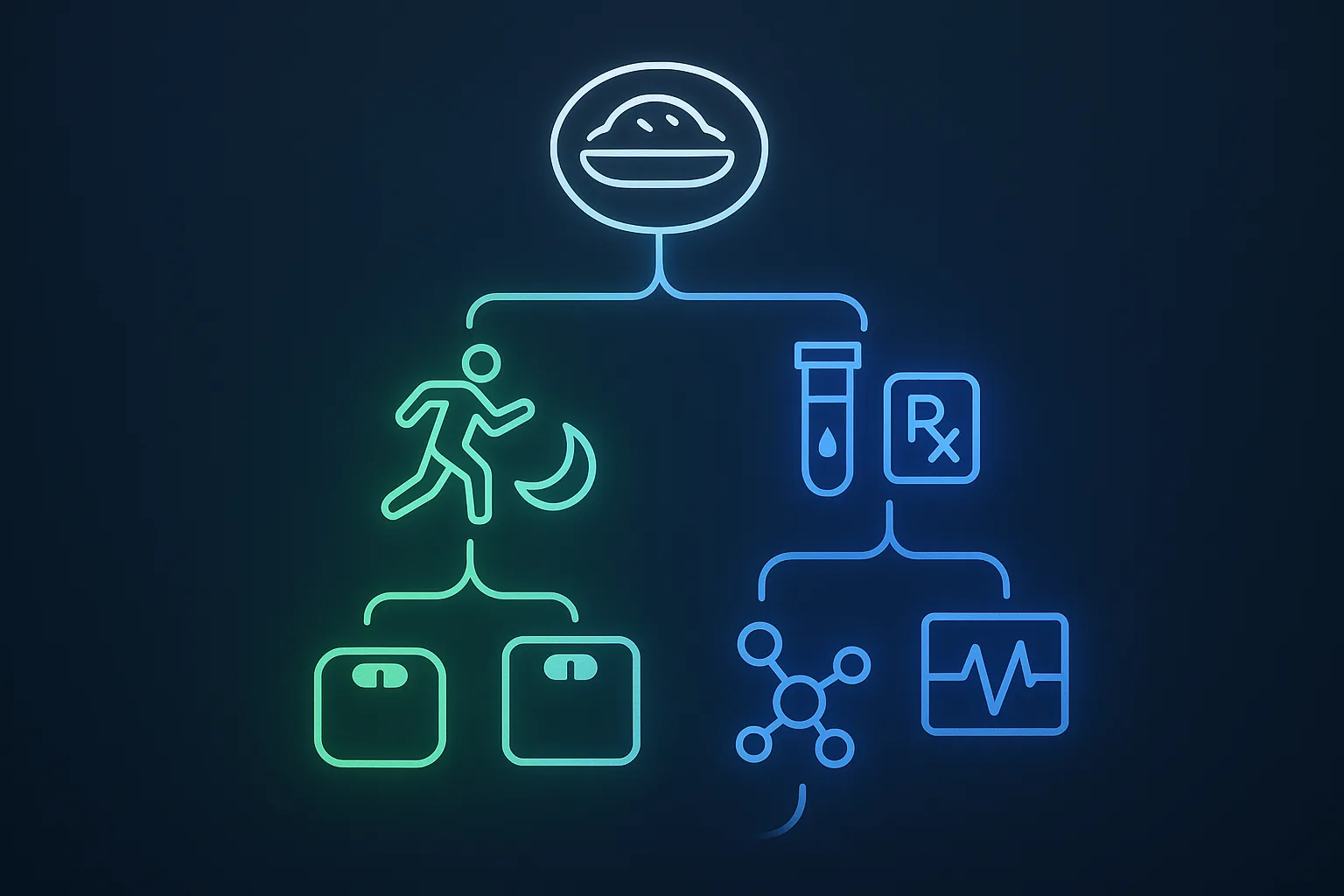
Optimize the fundamentals first: get 7-9 hours of sleep, reduce alcohol intake, manage stress, maintain a caloric deficit if overweight, lift heavy weights 3-4 times per week, and eat a balanced diet with adequate fat (25-35% of calories), sufficient zinc and vitamin D, and quality protein. Give this 3-6 months.
If symptoms persist -- particularly reduced libido, fatigue that does not improve with sleep, loss of morning erections, or difficulty maintaining muscle despite consistent training -- get tested. Two morning blood draws (before 10 AM, fasted) measuring total testosterone, free testosterone, SHBG, LH, FSH, estradiol, and a complete metabolic panel.
If Your Testosterone Is Borderline (300-400 ng/dL)
Lifestyle optimization is reasonable as a first intervention. Weight loss, resistance training, sleep improvement, and stress reduction can collectively raise testosterone by 50-100 ng/dL in some men. Retest in 3-6 months.
If levels remain low or symptoms persist, consult a qualified clinic that offers comprehensive evaluation rather than a supplement company that offers a quiz.
If Your Testosterone Is Confirmed Low (Below 300 ng/dL)
Diet is not going to fix this. You need clinical evaluation. The best online TRT clinics require two confirmed morning blood tests, comprehensive lab panels, physician oversight, and ongoing monitoring. This is the evidence-based pathway.
The dietary guidelines are not wrong to encourage good nutrition. They are wrong to imply that good nutrition is sufficient for testosterone health without acknowledging the clinical context that determines when it is not.
The Bottom Line
The 2025-2030 Dietary Guidelines marking testosterone as a public health topic is itself noteworthy. Testosterone health has been largely ignored by federal nutrition policy until now, and bringing it into the mainstream conversation has value.
But the specific dietary recommendations are supported by weak evidence, the supplement implications are concerning, and the absence of clinical guidance creates a dangerous gap. Weight loss is the one intervention with strong data. Everything else is marginal at best.
For men with genuine symptoms, the answer is not on page 45 of a government appendix. It is in a morning blood test, a conversation with a qualified physician, and -- when the numbers confirm it -- evidence-based treatment that dietary changes alone cannot replace.
References
U.S. Department of Agriculture and U.S. Department of Health and Human Services. Dietary Guidelines for Americans, 2025-2030. January 2026.
STAT News. "A new entry in the dietary guidelines: advice on maintaining healthy testosterone levels." January 12, 2026.
Medscape. "Experts Question Evidence Behind Testosterone Advice in New Dietary Guidelines." 2026.
Whittaker J, Wu K. "Low-fat diets and testosterone in men: systematic review and meta-analysis of intervention studies." Journal of Steroid Biochemistry and Molecular Biology. 2025.
Prasad AS, Mantzoros CS, Beck FW, et al. "Zinc status and serum testosterone levels of healthy adults." Nutrition. 1996;12(5):344-348.
Pilz S, Frisch S, Koertke H, et al. "Effect of vitamin D supplementation on testosterone levels in men." Hormone and Metabolic Research. 2011;43(3):223-225.
Corona G, Rastrelli G, Monami M, et al. "Body weight loss reverts obesity-associated hypogonadotropic hypogonadism: a systematic review and meta-analysis." European Journal of Endocrinology. 2013;168(6):829-843.
Clemesha CG, Thaker H, Samplaski MK. "Testosterone Boosting Supplements Composition and Claims Are Not Supported by the Academic Literature." World Journal of Men's Health. 2020;38(1):115-122.
Bhasin S, et al. "Testosterone therapy in men with hypogonadism: an Endocrine Society clinical practice guideline." Journal of Clinical Endocrinology and Metabolism. 2018;103(5):1715-1744.
Lincoff AM, et al. "Cardiovascular Safety of Testosterone-Replacement Therapy." New England Journal of Medicine. 2023;389(2):107-117.
What do the new Dietary Guidelines say about testosterone?
The 2025-2030 Dietary Guidelines for Americans include a section titled 'Supporting testosterone health in men' for the first time. The guidelines recommend eating foods rich in healthy fats, avoiding very low-fat diets, supplementing with DHA-rich fish oil, getting adequate zinc and vitamin D, limiting excess protein, maintaining a healthy body weight, and staying physically active. The section appears on page 45 of the supplementary materials and consists of eight sentences.
Can diet alone fix low testosterone?
For men with clinically confirmed hypogonadism (two morning blood tests below 300 ng/dL with consistent symptoms), diet alone is unlikely to restore testosterone to the normal range. Weight loss in overweight men can increase testosterone by up to 83 ng/dL, which is meaningful but often insufficient for men starting well below 300 ng/dL. Nutritional interventions like zinc, vitamin D, or dietary fat adjustments produce changes of roughly 15 to 30 ng/dL in most studies -- too small to resolve true deficiency. Diet optimization should be a baseline strategy, but it does not replace clinical evaluation and, when indicated, testosterone replacement therapy.
Do testosterone booster supplements actually work?
Most do not. A review of 50 commercially available testosterone booster supplements found only 25% had any data supporting their testosterone claims. 90% used proprietary blends with underdosed ingredients. Zinc and vitamin D supplementation can modestly raise testosterone, but only when you have a deficiency in that specific nutrient. Ashwagandha (KSM-66) has the most consistent supplement data, with studies showing increases of 15 to 17% in men with baseline levels below 400 ng/dL, though effect sizes vary. For men with clinically low testosterone, supplements will not close the gap.
Does a low-fat diet lower testosterone?
The evidence is weaker than the guidelines suggest. A 2025 systematic review of 11 studies comparing low-fat versus higher-fat diets found the mean difference in testosterone was roughly negative 15 to positive 14 ng/dL -- essentially statistical noise. Very low-fat diets (below 20% of calories from fat) may have a modest effect, but typical moderate-fat diets do not meaningfully suppress testosterone. The bigger dietary factor is total caloric surplus leading to weight gain, since adipose tissue actively converts testosterone to estrogen.
How much does weight loss increase testosterone?
Research shows that weight loss can increase testosterone by up to 83 ng/dL in overweight and obese men. Fat tissue contains aromatase enzymes that convert testosterone to estrogen and also lowers sex hormone binding globulin (SHBG), reducing the amount of usable free testosterone circulating in the blood. Abraham Morgentaler, a Harvard Medical School urologist specializing in testosterone therapy, notes that obesity lowers testosterone and losing weight in obese individuals increases it, though meaningful improvement generally requires approximately 15% body weight loss.
Should I change my diet before trying TRT?
Optimizing diet, sleep, exercise, and body composition is a reasonable first step for any man with borderline testosterone levels (250 to 400 ng/dL) and mild symptoms. If you are overweight, losing 15% or more of body weight through caloric deficit and resistance training may raise testosterone enough to resolve symptoms without medication. However, if two morning blood tests confirm testosterone below 300 ng/dL and you have consistent symptoms like reduced libido, fatigue, loss of morning erections, and decreased muscle mass, clinical evaluation should not be delayed. A qualified TRT clinic can assess whether lifestyle optimization is sufficient or whether therapy is indicated alongside those changes.