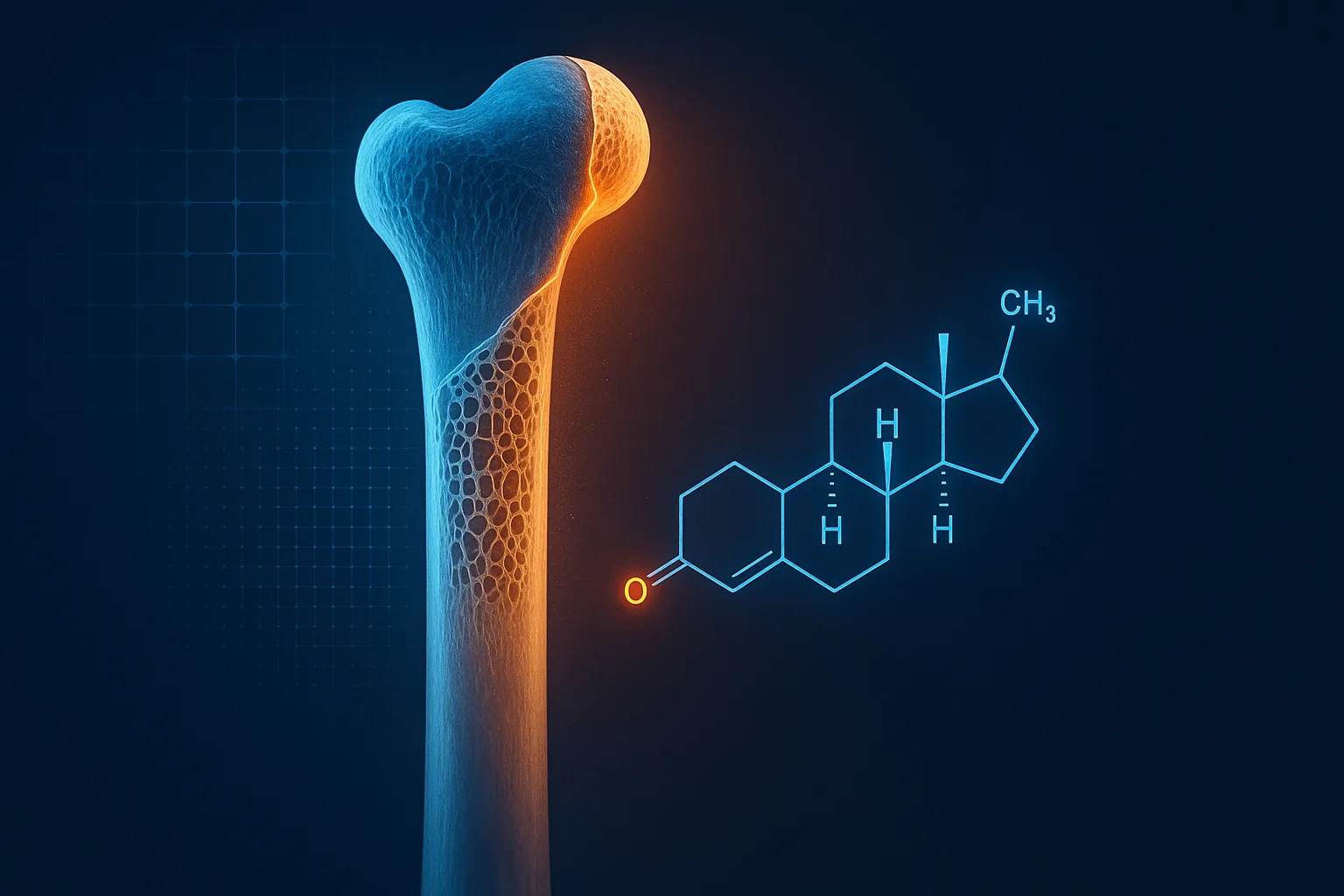
A new analysis published in 2026 found that men on testosterone replacement therapy had roughly three times the rate of proximal humerus (upper arm) fractures compared to matched controls. The finding adds to a growing body of evidence -- including a high-profile substudy of the TRAVERSE trial -- that TRT does not protect against fractures the way improved bone density would suggest.
For decades, the assumption was simple: testosterone builds bone, low testosterone weakens it, so TRT must reduce fracture risk. The 2024 TRAVERSE substudy was the first large randomized trial to test that assumption directly, and the result surprised researchers. The 2026 humerus analysis is a confirmatory signal from real-world data.
Key Takeaways
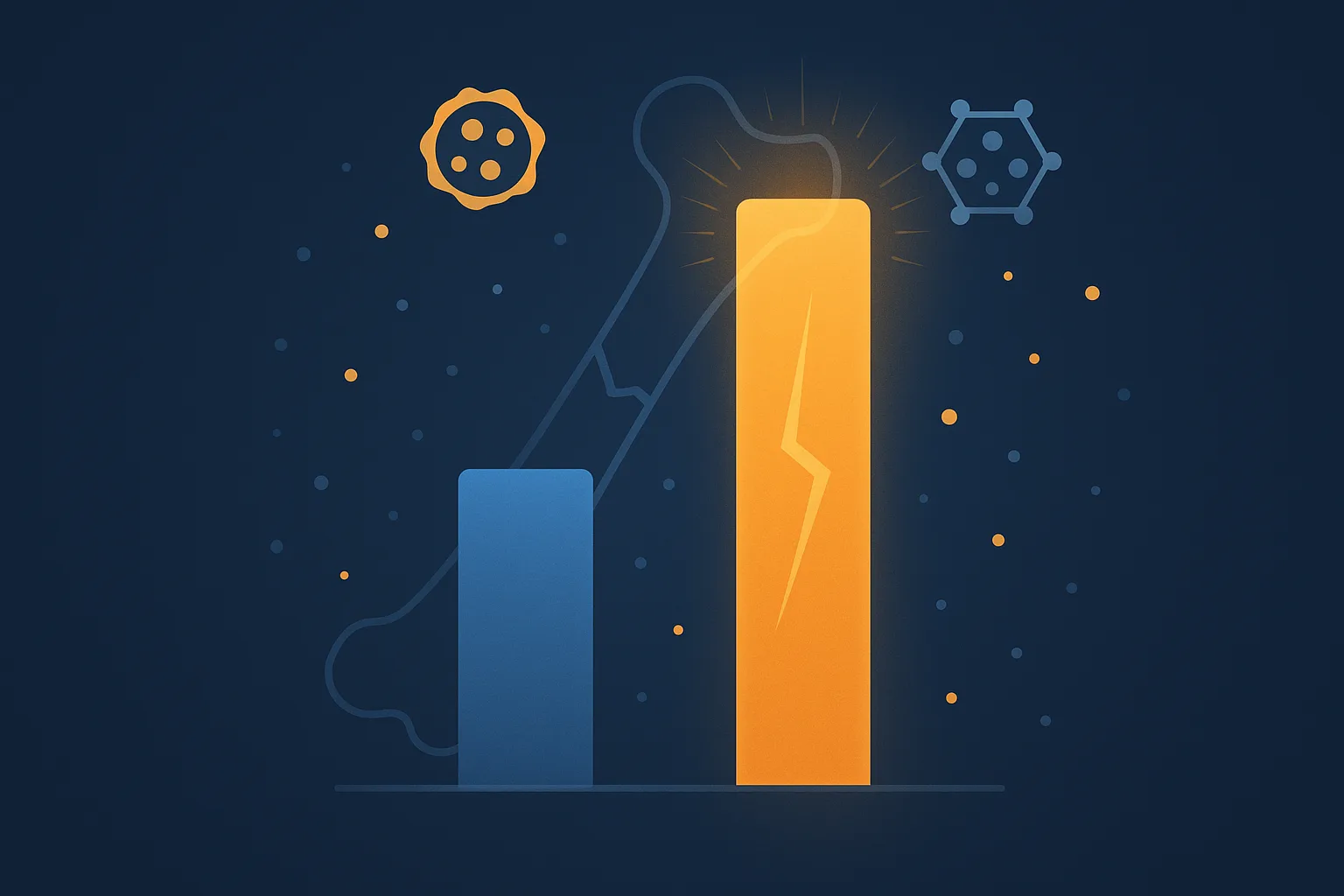
- The 2026 retrospective analysis found a 3.14x adjusted odds ratio for proximal humerus fractures in TRT users vs. matched controls
- The TRAVERSE substudy (NEJM 2024) showed a 1.43x clinical fracture rate in men on TRT (3.5% vs. 2.5% over ~3 years)
- Tendon injuries -- Achilles, rotator cuff -- are also elevated in TRT users in multiple database studies
- TRT still increases bone mineral density on DEXA. The disconnect between density and fracture risk is the central puzzle
- The findings do not change the case for TRT in symptomatic men, but they do change how bone health should be monitored
What the New Study Found
The 2026 analysis pulled records from a large national database and matched men who had received TRT against demographically similar men who had not. Researchers tracked the two-year incidence of proximal humerus fractures -- the type of shoulder fracture most commonly associated with falls or trauma in older men.
| Metric |
TRT Group |
Control Group |
| Proximal humerus fracture incidence |
0.029% |
0.005% |
| Adjusted odds ratio (95% CI) |
3.14 (1.84-5.59) |
-- |
| Statistical significance |
p < 0.001 |
-- |
The absolute rates are low, but the relative increase is striking. After adjusting for age, comorbidities, and other confounders, men on TRT were more than three times as likely to fracture their upper arm in the two years following the start of therapy.
This is consistent with -- and adds shoulder-specific resolution to -- the TRAVERSE fracture substudy, which had previously raised the question.
The TRAVERSE Substudy Context
The TRAVERSE trial randomized 5,246 men aged 45-80 with hypogonadism to testosterone gel or placebo for a median of 3.19 years. The primary endpoint was cardiovascular safety, but a pre-specified substudy tracked fracture rates.
Published in the New England Journal of Medicine in January 2024, the substudy reported:
- Clinical fractures: 91 in TRT group (3.5%) vs. 64 in placebo (2.5%)
- Hazard ratio: 1.43 (95% CI 1.04-1.97)
- Most common fracture sites: vertebral, hip, wrist, and -- yes -- humerus
The result ran counter to decades of assumption. The trial authors and accompanying editorialists offered several possible explanations, none fully satisfying:
- Cortical vs. trabecular bone effects. Testosterone may improve trabecular (spongy interior) density while having less benefit -- or even adverse effects -- on cortical (outer shell) bone, which determines structural strength.
- Behavioral risk compensation. Men feel better, more energetic, and more physically active on TRT. They may take more risks, exercise harder, and sustain more falls and impacts.
- Estradiol balance. Aromatized estrogen is the dominant skeletal signal in men. If men on TRT are also using aromatase inhibitors or have suppressed E2, the bone-protective effect of estrogen is lost.
The 2026 humerus analysis cannot distinguish between these mechanisms, but it confirms the signal exists in real-world data outside the trial setting.
The Tendon Injury Signal
Bone fractures are not the only musculoskeletal concern. Multiple database studies have flagged elevated rates of tendon injuries in men on TRT:
- Achilles tendon ruptures -- several retrospective studies show 1.5-2x higher rates in TRT users
- Rotator cuff tears, repairs, and revision repairs -- a 2023 matched-cohort analysis found significantly higher rates across all three categories
- Distal biceps tendon ruptures -- emerging data suggests elevated risk
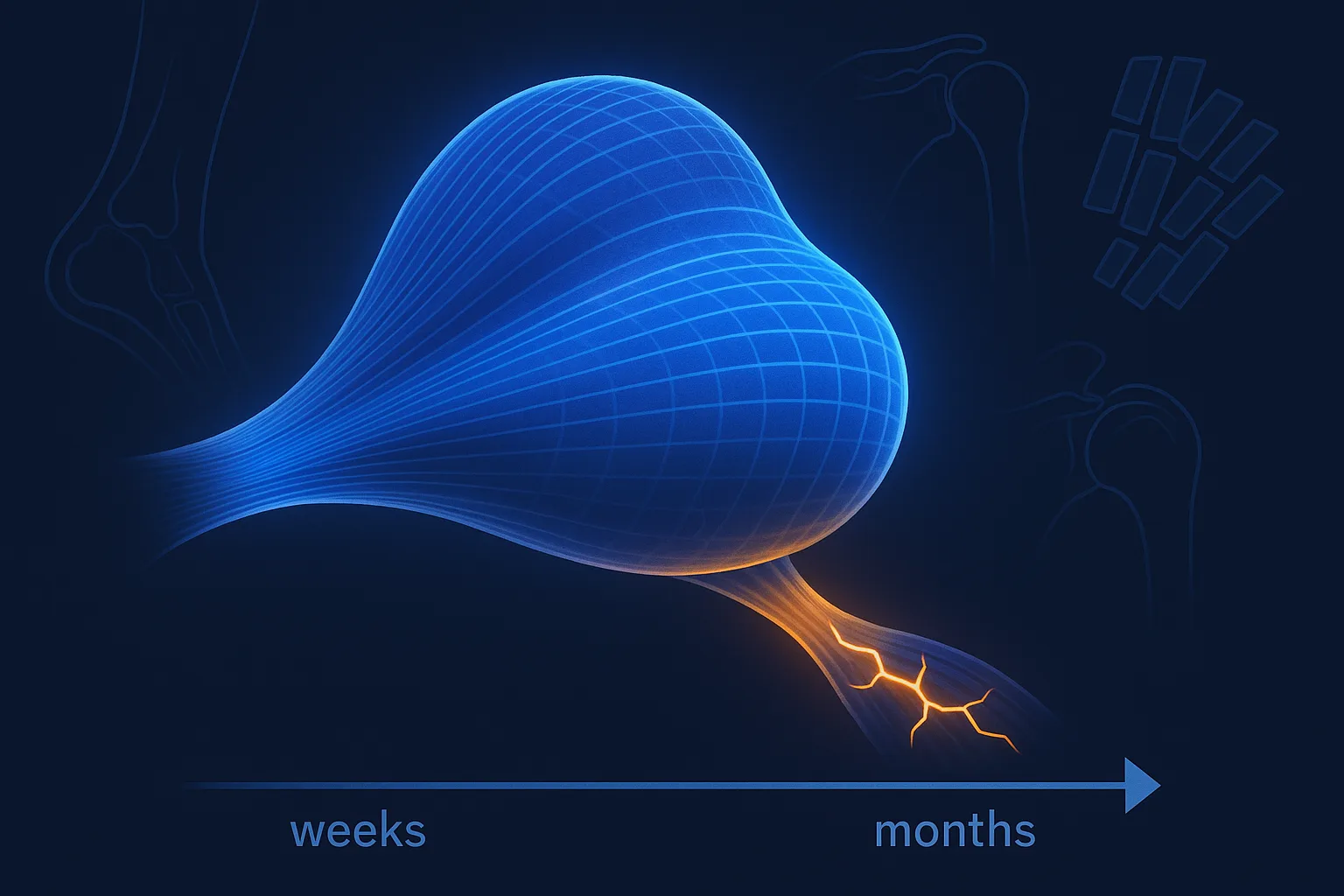
The biological mechanism here is more intuitive than the fracture paradox. Testosterone increases muscle mass and strength faster than tendon collagen can remodel and adapt. Tendons are slow tissues -- they take 6-12 months to upregulate collagen synthesis in response to mechanical loading. Muscles can gain strength in 4-8 weeks.
The result is a strength-tendon mismatch: muscles can generate force the tendon is not yet ready to transmit. The classic injury pattern is a man six months into TRT who returns to heavy training, increases load aggressively, and ruptures an Achilles or biceps tendon during a max-effort lift.
Why Density Doesn't Equal Strength
This is the part of the data that still confuses clinicians. Testosterone reliably increases DEXA-measured bone mineral density. It also improves bone microarchitecture markers on quantitative CT. By every standard imaging metric, TRT looks bone-protective.
So why do fractures go up?
The leading hypothesis is that DEXA measures bone density but not bone quality. Bone strength depends on:
- Density -- how much mineral per volume
- Microarchitecture -- how the trabecular and cortical structures are organized
- Cortical thickness -- the load-bearing outer shell
- Collagen quality -- the protein matrix that gives bone its toughness
DEXA captures the first one well. The other three matter for fracture resistance and are harder to measure routinely. Testosterone may improve density while leaving cortical structure unchanged or even slightly worse -- a possibility raised by smaller mechanistic studies but not yet definitively established.
The other major factor is the human one. Men on TRT report higher energy, better mood, and improved physical performance. They train harder, ski faster, lift heavier, and ride bikes longer. Some of the fracture excess in TRAVERSE may simply be more activity producing more falls.
What This Means for You
The data does not say "TRT causes fractures." It says "TRT does not protect against fractures the way you might expect, and bone health needs separate management."
1. Don't Rely on TRT to Save Your Bones
If you have osteopenia or osteoporosis -- or you're a man over 60 with risk factors -- TRT alone is not adequate bone management. You may also need:
- Bisphosphonates or denosumab if BMD is in the osteoporotic range
- Vitamin D supplementation to a target of 40-60 ng/mL serum 25-hydroxy vitamin D
- Calcium intake of 1000-1200 mg/day from food first, supplements only if needed
- Resistance training -- the only intervention that reliably improves bone quality, not just density
Discuss bone health explicitly with your TRT provider or primary care physician. Don't assume your testosterone level alone is doing the work.
2. Get a Baseline DEXA If You Have Risk Factors
A DEXA scan is the standard of care for fracture risk assessment. If any of the following apply, ask for one before or shortly after starting TRT:
- Age 65+
- History of fragility fracture
- Long-term glucocorticoid use
- Heavy alcohol use
- Smoking history
- Family history of osteoporosis
- BMI under 21
Repeat every 2 years on TRT to track the trajectory.
3. Don't Over-Suppress Estradiol
This is one of the clearest takeaways from the bone health literature. Estradiol -- not testosterone directly -- is the dominant signal for bone maintenance in adult men. Aggressive use of aromatase inhibitors like anastrozole to drive E2 below 20 pg/mL is associated with worsened bone outcomes.
The right approach is in the estradiol management protocol: keep E2 in the 20-40 pg/mL range, use AIs only if symptomatic, and recheck after every dose change.
4. Respect the Tendon Mismatch
If you train hard, the first 6-12 months on TRT are the highest-risk window for tendon injury. The protocol that minimizes risk:
- Add load gradually -- 5-10% per week, not 25%
- Prioritize tendon-loading exercises -- slow eccentrics, isometrics
- Don't chase 1RMs in the first 6 months
- Manage volume -- if you're sore for more than 72 hours, you're loading tendons faster than they can adapt
Older men on TRT who return to heavy lifting after years of inactivity are the highest-risk group. The combination of de-conditioned tendons and rapidly increasing strength is exactly the setup for an Achilles or rotator cuff injury.
5. Choose a Clinic That Tracks Bone Health
Most online TRT clinics focus on hormone labs and basic safety markers. Few proactively track bone health. The better-scoring clinics on our methodology include:
- DEXA scan recommendations for older patients
- Vitamin D testing in baseline panels
- Estradiol management protocols that avoid over-suppression
If your clinic doesn't address bone health -- and you're over 55 or have risk factors -- bring it up explicitly. It's a reasonable question to ask before signing on with any provider.
Context: This Doesn't Undo TRT's Benefits
It is worth keeping perspective. TRT, when properly indicated and monitored, has well-established benefits:
- Improved sexual function and libido (the TRAVERSE sexual function substudy confirmed this)
- Better mood and reduced depressive symptoms
- Improved body composition (more lean mass, less fat mass)
- Increased red blood cell mass (a benefit for men with anemia, a risk for those with already-elevated hematocrit)
- Better insulin sensitivity in some men
The TRAVERSE main trial ruled out the long-feared cardiovascular harm. The 9,537-man real-world safety study confirmed TRT is well-tolerated in routine clinical practice. The European Expert Panel position statement endorsed TRT for symptomatic men with confirmed hypogonadism.
The fracture and tendon signal is one piece of a more complete safety picture, not a reversal of it. The right response is better monitoring, not abandonment of therapy.
The Bottom Line
The 2026 humerus fracture study and the 2024 TRAVERSE fracture substudy together establish that:
- TRT does not reduce fracture risk in older men, despite improving bone density
- The relative risk increase is real but the absolute risk is small
- Men on TRT should manage bone health independently of their testosterone protocol
- Tendon injury risk is a separate, training-dependent concern most relevant in the first year
If you're starting TRT or already on it: get a baseline DEXA if you're over 60 or have risk factors. Optimize vitamin D and protein intake. Don't aggressively suppress estradiol. Ramp training gradually. And work with a clinic that takes bone health seriously, not just testosterone numbers.
For men with diagnosed hypogonadism and quality-of-life impact, the benefits of TRT continue to outweigh the risks. The fracture data refines the picture; it does not change the conclusion.
References
- Reid IR, et al. "Testosterone Treatment and Fractures in Men with Hypogonadism." N Engl J Med. 2024;390(3):203-211. (TRAVERSE fracture substudy)
- Snyder PJ. "Testosterone Treatment and Fractures in Older Men." N Engl J Med. 2024;390(3):278-279. (Editorial)
- "The relationship between testosterone replacement therapy and incidence of proximal humerus fractures in men: a matched retrospective analysis." 2026.
- Lincoff AM, et al. "Cardiovascular Safety of Testosterone-Replacement Therapy." N Engl J Med. 2023;389(2):107-117. (TRAVERSE main trial)
- Cleveland Clinic Consult QD. "TRAVERSE Substudy Links Testosterone Therapy to Increased Fracture Risk in Older Men With Hypogonadism." 2024.
- Zitzmann M, et al. "Cardiovascular safety of testosterone therapy -- Insights from the TRAVERSE trial and beyond: A position statement of the European Expert Panel for Testosterone Research." Andrology. 2026.
Related Reading