TRT Acne: Causes, Prevention, and Treatment Protocol
5/12/2026
5 min read
By The TRT Catalog
Why TRT triggers acne, who is at highest risk, and the dose, frequency, skincare, and DHT-management adjustments that clear it without quitting therapy.
This article describes evidence-based clinical conventions used in TRT prescribing and acne management. It is not medical advice. Diagnosis and treatment of acne on TRT require evaluation by a licensed prescriber.
Acne is one of the most common, most cosmetically distressing, and most preventable side effects of testosterone replacement therapy. It hits hardest in the first 8-12 weeks of therapy, concentrates on the back, shoulders, chest, and jawline, and follows a predictable dose-frequency-DHT mechanism that responds to specific protocol moves. Done right, the breakouts resolve within a few months. Done wrong -- with high doses, weekly injections, and no skincare -- they persist long enough that men quit therapy that was otherwise working.
This page covers the biology that drives TRT acne, who is at highest risk, the protocol adjustments that fix it before reaching for systemic medication, and where dermatology and 5-alpha-reductase inhibitors fit in the treatment ladder. The intervention sequence matters: most men do not need finasteride or isotretinoin if frequency, dose, and topical management are handled correctly first.
Key Takeaways
Acne on TRT is driven by DHT-stimulated sebaceous gland activity, not testosterone alone
Onset is concentrated in weeks 4-12 after starting or after any dose increase
Back, shoulders, chest, and jawline are the most common sites
Frequency changes (twice weekly, EOD, daily) reduce sebum spikes more cleanly than dose cuts
Topical retinoids and benzoyl peroxide remain first-line; oral antibiotics second-line
DHT blockade (finasteride, dutasteride) carries sexual side effect risk -- not first-line
Isotretinoin is compatible with TRT for severe cases but requires lipid and liver monitoring
Most men resolve TRT acne within 12-16 weeks of correct protocol management
Why TRT Causes Acne
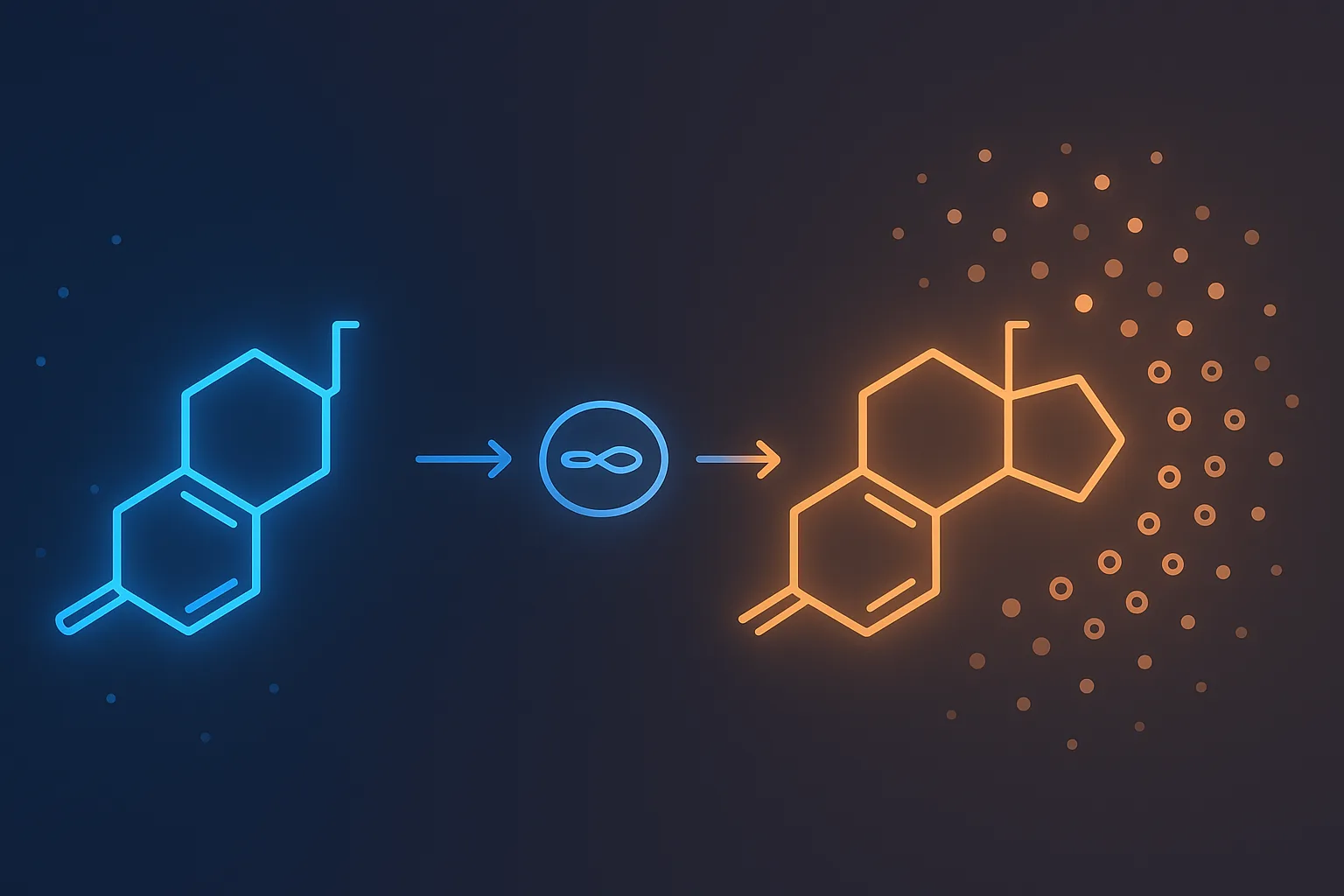
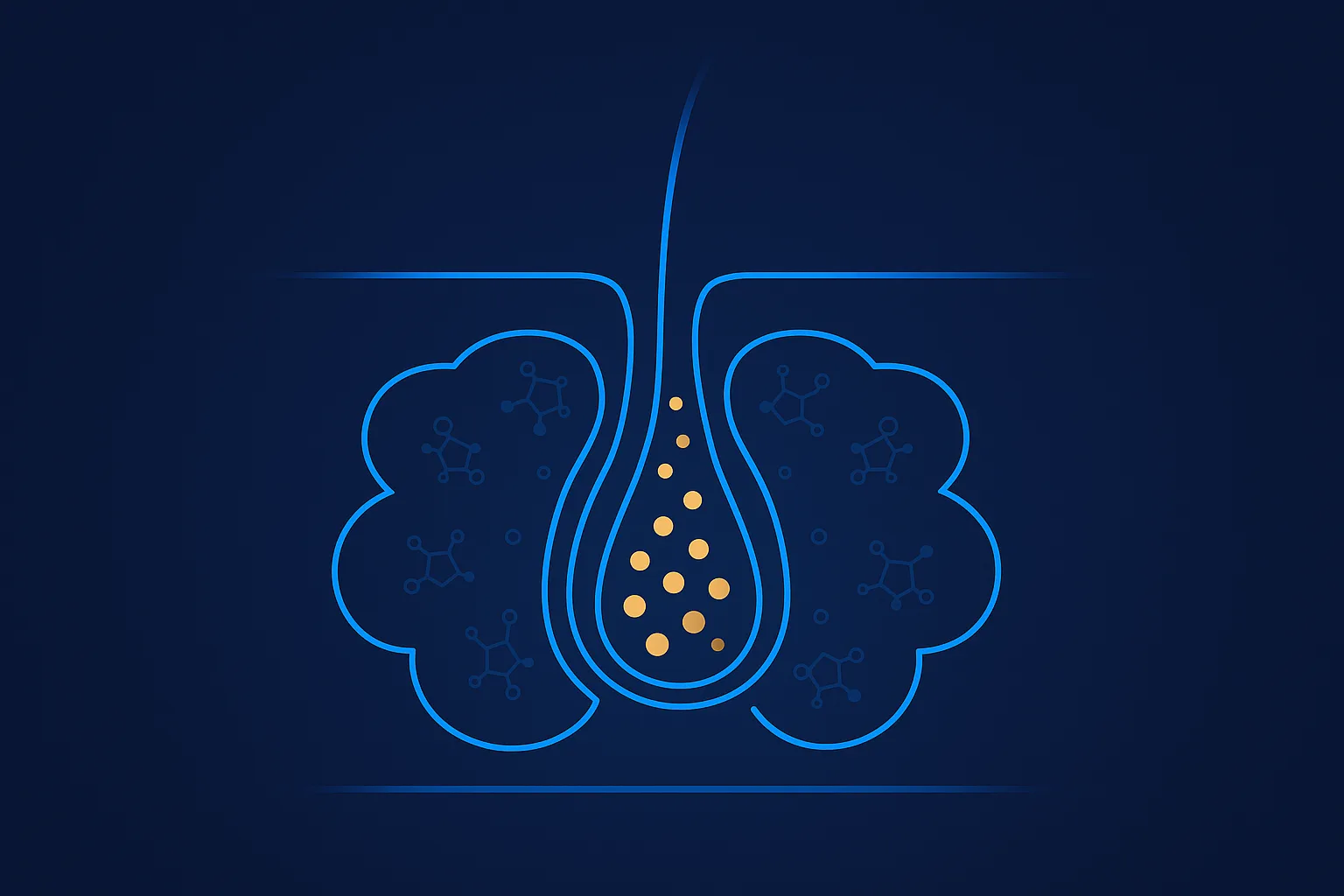
Sebaceous glands in the skin are androgen-responsive tissue. They carry androgen receptors that respond to dihydrotestosterone (DHT) more strongly than to testosterone itself. When testosterone enters the skin, the local enzyme 5-alpha-reductase converts a portion of it to DHT, which then binds sebocyte androgen receptors and triggers three changes:
Increased sebum production. Sebocytes synthesize and secrete more oil into the follicle.
Follicular hyperkeratinization. Skin cells lining the follicle become stickier and shed less effectively, plugging the pore.
Inflammatory cascade. Cutibacterium acnes (formerly P. acnes) proliferates in the trapped sebum, triggering immune-mediated inflammation, papules, pustules, and in severe cases nodules and cysts.
This is the same biology that produces adolescent acne. Starting TRT in adulthood reactivates the pathway in skin that may have been quiet for a decade. The result is breakouts in distribution patterns familiar from puberty -- jawline, neck, back, shoulders, chest -- but in a 35-year-old's body.
The intensity of the breakout is proportional to several factors:
DHT levels. Higher DHT means more sebocyte stimulation. Genetic 5-alpha-reductase activity varies twofold to threefold between individuals.
Sebum-gland androgen sensitivity. Some men have densely receptored sebocytes and react strongly to any androgen rise. Others are nearly insensitive.
Peak-to-trough swings. Weekly injections produce supraphysiologic peaks that briefly drive DHT higher than steady-state values.
Dose magnitude. Higher total dose means more substrate for DHT conversion.
Total adiposity and insulin resistance. Both shift androgen metabolism and inflammatory tone.
A 160 mg weekly dose injected once per week in a man with high 5-alpha-reductase activity can produce far more acne than 200 mg per week split into daily subcutaneous shots in a man with average DHT conversion. The dose was lower. The peaks were higher. The biology rewards stability.
Who Is Most at Risk
Not every man on TRT develops acne. The risk concentrates in specific patient profiles:
Higher Risk
Age under 35. Sebaceous glands are still producing baseline oil; TRT amplifies an already-active system.
Prior history of severe or cystic acne. Androgen-sensitive sebocytes carry forward into adulthood.
Family history of pattern hair loss. Same DHT-driven mechanism; the hair follicles and sebaceous glands share the pathway.
Higher BMI or insulin resistance. Metabolic environment amplifies the androgen-acne signal.
Weekly injection schedules with high peak-trough swing. Supraphysiologic peaks drive sebum spikes.
Age over 45. Sebaceous glands have generally aged down. Acne risk drops.
No prior acne history. Sebocyte androgen sensitivity is naturally lower.
Daily or EOD subcutaneous protocols. Smoothest possible curve.
Total testosterone targeting the 600-900 ng/dL range, not 1100+. Lower substrate.
Standard skincare routine already in place. Less likely to develop visible breakouts even if biology shifts.
If you have a history of adolescent cystic acne and you start TRT at 200 mg per week with a single injection, you are stacking three independent risk factors. That is not a coincidence outcome -- that is a predictable outcome.
Where TRT Acne Typically Appears
The distribution pattern follows androgen receptor density in sebaceous glands. The four most common regions, in roughly descending order:
Back (bacne). The most-reported site. Bilateral, often spreads from upper back down toward mid-back. Includes inflammatory pustules and sometimes nodules.
Shoulders and upper arms. Dense sebaceous gland coverage; visible during summer or in fitted clothing.
Chest. Anterior chest wall, especially on heavier or hairier men. Tends toward smaller pustules and clogged follicles.
Jawline and lower face. Distinct from teenage acne (which often centers on the T-zone) -- adult-onset androgenic acne concentrates along the mandible and neck.
Forehead and temples. Less common but possible, particularly in men with longer hair lines or heavy hair product use.
Acne on the upper back combined with new acne on the jawline strongly points to androgen-driven mechanism rather than incidental adult acne. This pattern is the clinical signature that prescribers use to distinguish TRT-related breakouts from unrelated dermatologic conditions.
Timeline: When Does TRT Acne Hit?
The timeline is consistent across registry data and case series:
Week 0-3. Generally clear. Testosterone is rising but DHT levels have not yet stabilized and sebocyte activity has not ramped up.
Week 4-8. First wave. Breakouts begin appearing, usually on the back or shoulders first. Often mild pustules and small papules.
Week 8-12. Peak severity. If acne is going to be a problem, it tends to be at its worst at this stage. New cystic or nodular lesions may emerge.
Week 12-16. Plateau or resolution. With appropriate protocol management and skincare, most men see substantial improvement by this point.
Week 16+. Persistent acne beyond this window suggests the protocol is not optimized, DHT conversion is excessive, or the patient has unusually sebocyte-sensitive skin.
After a dose increase, the same timeline restarts. Any dose change is also a sebum-curve change, and the body re-equilibrates over 6-12 weeks. Patients who escalate dose every 8 weeks may stay in a continuous adjustment phase.
The strongest prevention is a protocol that does not produce DHT peaks and sebum surges in the first place.
Dose at the Lowest Effective Level
Most men reach symptom resolution at total testosterone in the 600-900 ng/dL range. Pushing into the 1100-1500 ng/dL range raises DHT proportionally and amplifies acne risk without proportional symptom benefit. See average TRT dose per week and TRT dose by body weight for evidence-based dose ranges.
Inject More Frequently, Not Less
Weekly injections produce a peak-trough swing of roughly 2x. That peak is the period of highest DHT conversion and highest sebum output. Splitting the same weekly dose into twice-weekly or every-other-day injections flattens the curve, lowers peak DHT, and frequently resolves acne without changing total dose. Daily subcutaneous protocols produce the smoothest curve.
Patients who begin a basic skincare routine 2-4 weeks before starting therapy report substantially lower visible breakouts. The routine does not need to be elaborate. A gentle non-comedogenic cleanser twice daily, a leave-on benzoyl peroxide 2.5-5% body wash or spray for the back and chest, and an over-the-counter adapalene 0.1% gel applied to acne-prone facial areas covers most prevention.
Monitor DHT If You Have Prior Acne History
Baseline and 8-week sensitive-assay DHT can flag patients trending toward the high end of conversion. DHT in the 70-110 ng/dL range is typical for men on TRT. DHT consistently above 130-150 ng/dL with active acne suggests the conversion pathway is the driver and 5-alpha-reductase blockade may eventually be appropriate -- though not as a first move.
Manage Body Composition
Adipose tissue and insulin resistance both amplify androgen-driven inflammation. A 10-20 lb body fat reduction often reduces breakouts independent of any TRT dose change. The TRT exercise training guide and GLP-1 + testosterone study in obese men cover this interaction.
Treatment Ladder: What to Do When Acne Appears
The treatment ladder starts with the cheapest, lowest-risk intervention and escalates only if necessary.
Step 1: Confirm the Pattern
Identify the distribution. Back, shoulders, chest, and jawline acne starting 4-12 weeks after a TRT start or dose increase is almost certainly androgenic. Acne in atypical distribution (forehead T-zone in a man over 40 with no jawline involvement) may have another cause and warrants dermatology evaluation rather than protocol changes.
Step 2: Adjust Injection Frequency
If you are on weekly injections, switch to twice weekly or every other day with the same total weekly dose. This is the highest-value low-risk move. Most prescribers will support this change on request. Re-evaluate at 6-8 weeks.
Step 3: Add Topical Therapy
Benzoyl peroxide 2.5-5% body wash -- applied to back, chest, shoulders. Use daily, leave on the skin for 30-60 seconds before rinsing. Works as antibacterial and mildly comedolytic.
Adapalene 0.1% gel (over the counter as Differin in the US) -- applied to acne-prone facial areas at night. Normalizes follicular keratinization. Reduces both inflammatory and comedonal lesions over 8-12 weeks of consistent use.
Salicylic acid 2% pads or cleanser -- alternative or adjunct, particularly for clogged-pore-dominant patterns.
Non-comedogenic moisturizer -- using retinoids and benzoyl peroxide without moisturizer produces irritation that mimics worsening acne. Layer a fragrance-free moisturizer at night.
Step 4: Re-Evaluate at 8-12 Weeks
If frequency adjustment plus topical therapy has cleared most lesions, hold the protocol. If acne persists or worsens, escalate.
Step 5: Dose Reduction
A 20-30% reduction in total weekly dose can lower DHT enough to clear acne. The tradeoff is potential return of low-T symptoms, so the dose cut should be paired with re-evaluation of symptoms and labs at 6-8 weeks. See TRT titrate by trough levels for the dose-adjustment framework.
For moderate-to-severe inflammatory acne not responding to topicals, a 6-12 week course of doxycycline 100 mg daily or minocycline 100 mg daily is standard dermatology practice. The course is time-limited to minimize resistance development and is usually paired with continued topical retinoid use.
Step 7: 5-Alpha-Reductase Inhibitor (Carefully)
Finasteride 1 mg daily or dutasteride 0.5 mg daily lowers DHT by 70-90% systemically and can resolve refractory androgenic acne. The downside is real:
Sexual side effects (decreased libido, erectile changes) reported in 5-15% of users in trial data, possibly higher in real-world reports
Mood changes, including depression, reported in a minority of users
Post-finasteride syndrome -- persistent sexual and cognitive effects after discontinuation -- documented in a small number of cases
Concurrent effect on hair loss prevention (a benefit some men want, others do not)
This drug class is reasonable for refractory cases when the patient has been counseled and accepts the risk profile. It is not a first-line move and should not be reflexively prescribed without exhausting Steps 2-6.
Step 8: Isotretinoin
For severe nodulocystic acne unresponsive to all above, isotretinoin (formerly Accutane) is the most effective treatment available. A 4-6 month course at 0.5-1.0 mg/kg/day produces durable remission in roughly 80% of patients. The course is dermatology-supervised with monthly lipid panels and liver enzyme monitoring. Isotretinoin is compatible with TRT but the prescriber should be aware of overlapping lipid effects.
Common Mistakes That Make Acne Worse
Mistake 1: Quitting TRT to "Reset the Skin"
Stopping TRT halts the androgen drive but also restores low-T symptoms. The acne does eventually resolve, but the cost is losing therapy that was working. Frequency and skincare adjustments resolve most cases without cessation. See coming off TRT for the broader cessation framework.
Mistake 2: Self-Prescribing Finasteride
Some men reach for finasteride after the first wave of breakouts. The drug works for refractory cases but carries sexual and cognitive side effect risk that should be weighed before use. Self-prescription bypasses the conversation about risk-benefit tradeoffs and bypasses baseline lab documentation.
Mistake 3: Aggressive Scrubbing or Picking
Mechanical irritation worsens androgenic acne. Avoid loofahs, harsh exfoliants, and picking at lesions. Topical chemistry (retinoids, benzoyl peroxide) does the work that scrubbing cannot.
Mistake 4: Skipping Moisturizer
Patients using retinoids and benzoyl peroxide without moisturizer produce visible irritation that can mimic worsening acne. The irritation triggers more topical use, more irritation, and a feedback loop. A fragrance-free non-comedogenic moisturizer layered at night solves most of this.
Mistake 5: Stacking Untested Supplements
Some men add saw palmetto, zinc, spearmint tea, or DIM after reading internet protocols. The evidence for these in androgenic acne is weak and many have unintended hormonal effects. Saw palmetto in particular blocks DHT through a separate mechanism and can affect libido similarly to finasteride. Stick with the dermatology-validated ladder above.
Mistake 6: Ignoring Dermatology Referral
A clinic that handles TRT but refuses to refer for persistent acne is not serving the patient. Persistent moderate-to-severe acne deserves a dermatologist who has tools that primary care and most TRT clinics do not -- prescription-strength retinoids, oral antibiotics with appropriate monitoring, and isotretinoin pathways. A good TRT clinic coordinates this rather than denying it.
When to Escalate to Dermatology
Escalate to a dermatologist if any of the following are true:
Cystic or nodular lesions appearing on face, chest, or back
Acne unresponsive to 12+ weeks of frequency adjustments plus topical therapy
Scarring developing on face, neck, or upper back
Significant emotional or social impact affecting work or relationships
Persistent inflammatory papules after 16+ weeks of TRT
Any concurrent skin condition (rosacea, folliculitis, hidradenitis) complicating the picture
Dermatology referral does not mean stopping TRT. Most dermatologists will work with the TRT prescriber to manage acne while keeping therapy in place. A combined approach (TRT clinic for protocol, dermatology for skin) is the standard of care for moderate-to-severe cases.
Clinic Expectations: What Good Looks Like
A clinic running the protocol correctly does the following when a patient reports acne:
Acknowledges acne as a known TRT side effect and does not dismiss it as cosmetic
Offers a frequency adjustment (split dose, twice weekly, EOD, daily) as the first intervention
Has a basic topical recommendation or a dermatology referral pathway available
Does not reflexively prescribe finasteride before exhausting protocol and topical management
Re-evaluates at 6-8 weeks rather than at the next quarterly visit
Will adjust dose if frequency change plus topical therapy does not resolve symptoms
A clinic that dismisses acne, refuses to adjust frequency, or jumps straight to finasteride without labs is not running the protocol correctly. See TRT clinic red flags and questions to ask a TRT clinic for the broader evaluation framework.
How Common Is TRT Acne, Really?
Published TRT registries report symptomatic acne in 8-15% of new patients during the first 12 weeks of therapy. The TRAVERSE cardiovascular trial reported acne in 7.1% of testosterone-arm participants over 22 months. Real-world telehealth registries report rates closer to 10-15% in younger patients (under 35) and 4-7% in older patients (over 45). Severe nodulocystic acne is uncommon -- under 2% of TRT patients in dermatology referral data.
The protocol matters more than the underlying biology in most cases. A man on properly dosed twice-weekly or daily TRT with baseline skincare typically has near-zero acne risk. The same man on weekly injections at a high dose with no skincare can hit 20%+ symptomatic acne. The biology is the same; the inputs are not.
Does TRT cause adult-onset cystic acne in men who never had teenage acne?
Rarely. Most TRT acne occurs in men with some prior history of comedonal or inflammatory acne. New-onset cystic acne in a 40+ year-old man with no prior history warrants dermatology evaluation regardless of TRT status.
Will the acne come back if I cycle off TRT and restart?
Often, yes. The first 8-12 weeks of any new androgen exposure or dose change reactivates the sebocyte cycle. Restart protocols benefit from the same prevention framework as initial starts.
Is back acne after TRT permanent?
The acne itself resolves with treatment. Scarring may persist. Patients who address the issue within the first 8-12 weeks rarely develop significant scarring. Patients who tolerate severe cystic acne for 6+ months may develop hypertrophic or atrophic scarring that requires dermatology intervention to manage (laser, microneedling, fillers).
Does TRT-related acne affect cardiovascular risk?
No direct link. Acne itself is a skin condition. Isotretinoin and TRT both shift lipid panels independently, so the combination requires lipid monitoring. See TRT cholesterol HDL LDL changes for the TRT-side lipid framework.
Bottom Line
Acne on TRT is predictable, manageable, and rarely a reason to discontinue therapy. The biology is DHT-driven sebocyte activation; the inputs are dose, frequency, prior acne history, body composition, and skincare. The protocol moves that prevent and resolve TRT acne -- appropriate dose, frequent enough injections to flatten DHT peaks, basic topical management, and dermatology coordination for refractory cases -- are the same moves that produce a clean TRT result generally.
Most men who develop acne in the first 12 weeks of therapy clear it within another 8-12 weeks with frequency adjustments and topical retinoid plus benzoyl peroxide. A small minority needs oral antibiotics or 5-alpha-reductase inhibitors; a smaller minority needs isotretinoin. None of this requires quitting therapy.
If your current clinic dismisses acne as a cosmetic issue or refuses to adjust your injection frequency, that is a clinic-quality problem, not a clinical problem. The main clinic comparison page walks through which TRT clinics handle side-effect management properly and which do not.
Bhasin S, Brito JP, Cunningham GR, et al. Testosterone Therapy in Men With Hypogonadism: An Endocrine Society Clinical Practice Guideline. J Clin Endocrinol Metab. 2018. PubMed
Mulhall JP, Trost LW, Brannigan RE, et al. Evaluation and Management of Testosterone Deficiency: AUA Guideline. J Urol. 2018. PubMed
Lincoff AM, Bhasin S, Flevaris P, et al. Cardiovascular Safety of Testosterone-Replacement Therapy (TRAVERSE). N Engl J Med. 2023. PubMed
Zouboulis CC, Chen WC, Thornton MJ, et al. Sexual hormones in human skin. Horm Metab Res. 2007. PubMed
Thiboutot D, Gilliland K, Light J, Lookingbill D. Androgen metabolism in sebaceous glands from subjects with and without acne. Arch Dermatol. 1999. PubMed
Zaenglein AL, Pathy AL, Schlosser BJ, et al. Guidelines of care for the management of acne vulgaris. J Am Acad Dermatol. 2016. PubMed
Trivedi MK, Shinkai K, Murase JE. A Review of hormone-based therapies to treat adult acne vulgaris in women. Int J Womens Dermatol. 2017. PubMed
Layton AM, Eady EA, Whitehouse H, et al. Oral Spironolactone for Acne Vulgaris in Adult Females: A Hybrid Systematic Review. Am J Clin Dermatol. 2017. PubMed
Frequently Asked Questions
How common is acne on TRT?
Symptomatic acne is reported by roughly 8-15% of men starting TRT, concentrated in the first 8-12 weeks of therapy or after any dose increase. Rates are lower in men over 40 who have already aged out of pubertal sebum patterns and higher in men under 30, men with prior cystic acne history, and men running supraphysiologic doses. Most cases resolve with frequency adjustments and basic skin care within 12-16 weeks.
Why does TRT cause acne?
Testosterone converts to dihydrotestosterone (DHT) inside sebaceous glands via 5-alpha-reductase. DHT binds the androgen receptors on sebocytes and triggers sebum production, follicular hyperkeratinization, and inflammation. The result is the same biology that drives adolescent acne, reactivated. Peak-trough swings from weekly injections produce the highest sebum spikes, which is why frequency changes are usually the first effective intervention.
Will TRT acne go away on its own?
Often yes, but the timeline varies. In men with no prior severe acne history, sebum production typically recalibrates within 8-16 weeks as the body adjusts to steady-state hormones. In men with prior cystic acne or PCOS-adjacent androgen sensitivity, acne can persist as long as therapy continues without active management. The dividing factor is the dose-frequency combination plus whether the prescriber is monitoring and willing to titrate.
Where does TRT acne typically appear?
Back, shoulders, upper chest, and jawline -- the regions with the highest density of androgen-responsive sebaceous glands. Facial acne tends to cluster along the lower jaw and neck rather than the forehead. The pattern is similar to anabolic-steroid-associated acne but at far lower severity for men on properly dosed TRT. Bacne (back acne) and chest acne are the most commonly reported by men on TRT.
Does injection frequency affect acne?
Yes. Weekly injections produce a peak-trough swing of roughly 2x, and the peak period drives the highest sebum output. Splitting the same weekly dose into twice-weekly or every-other-day injections flattens the curve and frequently reduces breakouts without changing total weekly dose. Daily subcutaneous protocols produce the smoothest sebum profile and the lowest acne rates.
Should I take finasteride or dutasteride to fix TRT acne?
Only with full understanding of the tradeoffs. Both drugs block the 5-alpha-reductase enzyme and lower DHT, which can reduce androgenic acne. They can also cause sexual side effects (libido drop, erectile changes), mood changes, and post-finasteride syndrome in a minority of users. For most men, frequency adjustments, dose titration, and topical retinoids are the better first-line interventions before reaching for systemic DHT blockade.
Can isotretinoin (Accutane) be used while on TRT?
Yes, with proper monitoring. Isotretinoin is the most effective treatment for severe nodulocystic acne and is regularly prescribed to men on TRT. The combination requires monthly liver enzyme and lipid panel monitoring (both isotretinoin and TRT can shift these), and prescribers generally avoid concurrent oral testosterone undecanoate due to overlapping lipid effects. Dermatology referral is appropriate when acne fails standard topical and oral antibiotic therapy.
Will lowering my TRT dose fix the acne?
Sometimes, but rarely the right first move. A 20-30% dose reduction can reduce sebum output, but it also frequently undoes the symptom relief that prompted starting TRT. The better sequence is frequency adjustment first, topical management second, dose reduction third, and DHT blockade or isotretinoin as escalation paths. A good clinic walks this ladder rather than jumping straight to a dose cut.