
Key Takeaways: Elinzanetant (Lynkuet, Bayer) became the first dual NK1/NK3 receptor antagonist FDA-approved for moderate-to-severe menopausal hot flashes in October 2025. In the OASIS-1 and OASIS-2 phase 3 trials it cut hot flash frequency by roughly 71-74% at week 12 -- close to HRT efficacy and clearly above fezolinetant's ~60%. The pivotal OASIS-4 trial in women on adjuvant endocrine therapy for HR+ breast cancer showed sustained 50%+ symptom reduction in over 70% of patients, finally giving breast cancer survivors a phase-3-validated nonhormonal option. List price is about $625 per month, with a Bayer copay program that drops eligible commercial-insurance patients to $25. The drug improves sleep and quality of life, does not require liver enzyme monitoring, and has positioned itself as the most direct nonhormonal alternative to HRT yet.
Why a Second Nonhormonal Hot Flash Drug Matters
For most of the last 50 years, hot flashes had two real treatments: hormone replacement therapy and "tough it out." SSRIs and gabapentin existed but only cut symptoms by 35-50%. Then in 2023, fezolinetant arrived as the first neurokinin-3 receptor antagonist, finally giving women a mechanism-targeted nonhormonal option at roughly 60% efficacy.
Elinzanetant goes a step further. By blocking both neurokinin-1 and neurokinin-3 receptors, it engages two arms of the same hypothalamic circuit that drives hot flashes. The clinical result is a 70%+ reduction in hot flash frequency in the OASIS trials -- the closest any nonhormonal drug has come to systemic estrogen, which clusters around 75%.
For women who cannot or will not take HRT, this is the most important menopause therapeutics development of 2026. It also dramatically narrows the gap between hormonal and nonhormonal options, which changes the conversation for every woman weighing the breast cancer risk profile of HRT against alternatives.
How Elinzanetant Works
Hot flashes do not start in the body. They start in the hypothalamus, in a small population of neurons called KNDy neurons (kisspeptin / neurokinin B / dynorphin). When estrogen withdraws at menopause, these neurons become hyperactive and the thermoneutral zone narrows. Tiny core temperature changes that should pass unnoticed instead trigger a full heat-dissipation cascade -- flushing, sweating, vasodilation, and often a heart-rate spike.
KNDy neurons fire by releasing neurokinin B, which acts on the neurokinin-3 (NK3) receptor. Fezolinetant blocks NK3 alone. Elinzanetant blocks both NK3 and the related neurokinin-1 (NK1) receptor.
Why does dual blockade help? NK1 receptors sit on adjacent thermoregulatory neurons and on circuits that influence sleep and mood. Blocking both receptors simultaneously appears to:
- Quiet the KNDy signal more completely -- producing larger reductions in hot flash frequency and severity than NK3 blockade alone
- Improve sleep architecture -- a clinically meaningful secondary benefit, particularly in women whose night sweats fragment sleep
- Stabilize mood -- through interactions with substance P signaling, which has known mood effects
The dual mechanism is the reason elinzanetant outperformed expectations in the OASIS program and why its efficacy benchmarks closer to HRT than to fezolinetant.

OASIS Trial Data: Phase 3 Efficacy
The phase 3 OASIS program comprised four trials, all comparing elinzanetant to placebo in women with moderate-to-severe vasomotor symptoms.
OASIS-1 and OASIS-2: General Menopause Population
Identical 26-week double-blind placebo-controlled trials, with active drug from baseline to week 12 and a placebo-controlled-then-active extension.
| Endpoint |
OASIS-1 elinzanetant |
OASIS-1 placebo |
OASIS-2 elinzanetant |
OASIS-2 placebo |
| Mean reduction in daily hot flash frequency at week 12 |
-3.2 to -3.9 episodes |
-1.5 to -1.9 |
-3.7 to -4.0 episodes |
-1.5 to -1.9 |
| Percent reduction at week 12 |
~74% |
~46% |
~71% |
~39% |
| Improvement in sleep disturbance score |
Significant vs placebo |
-- |
Significant vs placebo |
-- |
| Menopause-specific quality of life |
Significantly improved |
-- |
Significantly improved |
-- |
Onset of effect was rapid -- meaningful improvement appeared by week 1 in both trials, with the full effect by weeks 4-12. Published in JAMA in 2024 [1].
OASIS-3: Long-Term Safety
A 52-week single-arm extension confirmed sustained effect through one year, with no signal of liver toxicity, weight change, blood pressure change, or endometrial findings on biopsy. Side effects remained mild and consistent with the OASIS-1/2 pattern -- predominantly headache and fatigue, both typically resolving within the first 4 weeks [2].
OASIS-4: The Breast Cancer Trial
This is the trial that changed the standard of care for breast cancer survivors. OASIS-4 randomized 474 women aged 18-70 with HR-positive breast cancer (or at high risk of HR+ breast cancer) on adjuvant endocrine therapy and at least 35 moderate-to-severe vasomotor symptoms per week to elinzanetant 120 mg or placebo for 12 weeks, with a 52-week extension.
Results [3]:
- Vasomotor symptom frequency dropped by -7.8 episodes per day at week 12 in the elinzanetant group versus -4.2 with placebo
- More than 70% of women on elinzanetant achieved at least a 50% reduction in moderate-to-severe vasomotor symptoms
- Sleep disturbance and menopause-specific quality of life improved significantly versus placebo
- No interaction with tamoxifen or aromatase inhibitor pharmacokinetics, validated in pharmacology substudies
- Effects were maintained for 52 weeks in the open-label extension
The data were simultaneously published in the New England Journal of Medicine and presented at ASCO. A March 2026 subgroup analysis presented at the 15th European Breast Cancer Conference (EBCC15) confirmed efficacy held regardless of which endocrine therapy a woman was on -- tamoxifen, aromatase inhibitor, or LHRH agonist combinations [4].
For breast cancer patients, this is the first phase 3 nonhormonal data showing efficacy approaching HRT levels. Roughly half of women on adjuvant endocrine therapy stop or skip doses because of vasomotor symptoms -- a behavior that materially increases recurrence risk. Elinzanetant gives oncologists a tool to treat the symptom without compromising the cancer regimen.
Elinzanetant vs HRT vs Fezolinetant
A comparative view of the three main therapeutic options for moderate-to-severe vasomotor symptoms:
| Option |
Hot flash reduction at 12 weeks |
Onset |
Bone benefit |
GU benefit |
Used in breast cancer |
Liver monitoring |
Approximate monthly cost |
| Transdermal estradiol + progesterone |
~75% |
2-4 weeks |
Yes |
Partial (oral) / strong (vaginal) |
No |
No |
$20-100 generic |
| Elinzanetant 60 mg |
~71-74% |
1-4 weeks |
No |
No |
Yes (OASIS-4) |
No |
$625 list / $25 with copay |
| Fezolinetant 45 mg |
~60% |
1-4 weeks |
No |
No |
Off-label, less data |
Yes (baseline + 3, 6, 9 months) |
$550 list / $25 with copay |
| Low-dose paroxetine 7.5 mg |
~35-45% |
2-4 weeks |
No |
No |
Yes |
No |
Generic, $10-30 |
| Venlafaxine 75 mg |
~45-50% |
2-4 weeks |
No |
No |
Yes |
No |
Generic, $10-30 |
Two takeaways drop out of the table:
- Elinzanetant is now the most effective nonhormonal option for hot flashes. It pushes nonhormonal efficacy from "about 60% of HRT" to "about 95% of HRT" -- a meaningful shift for women who cannot take estrogen.
- HRT is still the answer for most women without contraindications. Estradiol's bone, cardiovascular, and genitourinary benefits do not transfer to neurokinin antagonists. The choice is not "elinzanetant or HRT" -- it is "elinzanetant or HRT depending on whether estrogen is on the table."
For women with classic estrogen contraindications -- recent breast cancer, active VTE, hormone-sensitive cancer history -- elinzanetant moves to the top of the nonhormonal list and pushes paroxetine, venlafaxine, and gabapentin further down.
Side Effect Profile
Across the OASIS program, the most common adverse events were:
- Headache -- about 13% on elinzanetant vs 8% on placebo, typically mild and resolving within 4 weeks
- Fatigue -- about 11% vs 7%, generally first 2 weeks
- Drowsiness -- some women find this useful for sleep; for others it requires evening dosing
- Diarrhea and back pain -- low single-digit excess over placebo
- Mild transaminase elevation -- rare, far below fezolinetant's frequency, no liver monitoring required on the U.S. label
Notably absent versus fezolinetant: the routine liver function monitoring schedule. Fezolinetant requires baseline LFTs followed by repeat measurements at 3, 6, and 9 months because of a clinically meaningful rate of transaminase elevation. Elinzanetant did not show that pattern in OASIS-1/2/3, and the FDA approved it without a hepatotoxicity boxed warning.
For women on multiple medications, the absence of routine LFT monitoring is a real practical advantage. It also makes elinzanetant easier to manage in telehealth settings where lab logistics can become a bottleneck.
Cost, Access, and Insurance
Bayer launched Lynkuet in the U.S. in November 2025 at a list price near $625 for a 30-day supply (60 mg once daily).
The Lynkuet Access, Savings, and Support (LASS) program reduces out-of-pocket cost dramatically for most commercially insured patients:
- Eligible commercial insurance patients: as low as $25 per month through a Bayer-Blink Rx partnership
- Patient Assistance Foundation: free medication for uninsured or under-insured patients meeting income thresholds
- Medicare Part D: plan-dependent. Many plans require step therapy through fezolinetant or generic paroxetine first
- Cash pay: roughly $625, in line with branded NK3-class drugs
Coverage will likely tighten as payers absorb the new drug. Most commercial plans currently put it on Tier 3 or specialty tier with a prior authorization requirement -- typically demonstrating either a contraindication to or failed trial of HRT, an SSRI, and sometimes fezolinetant.
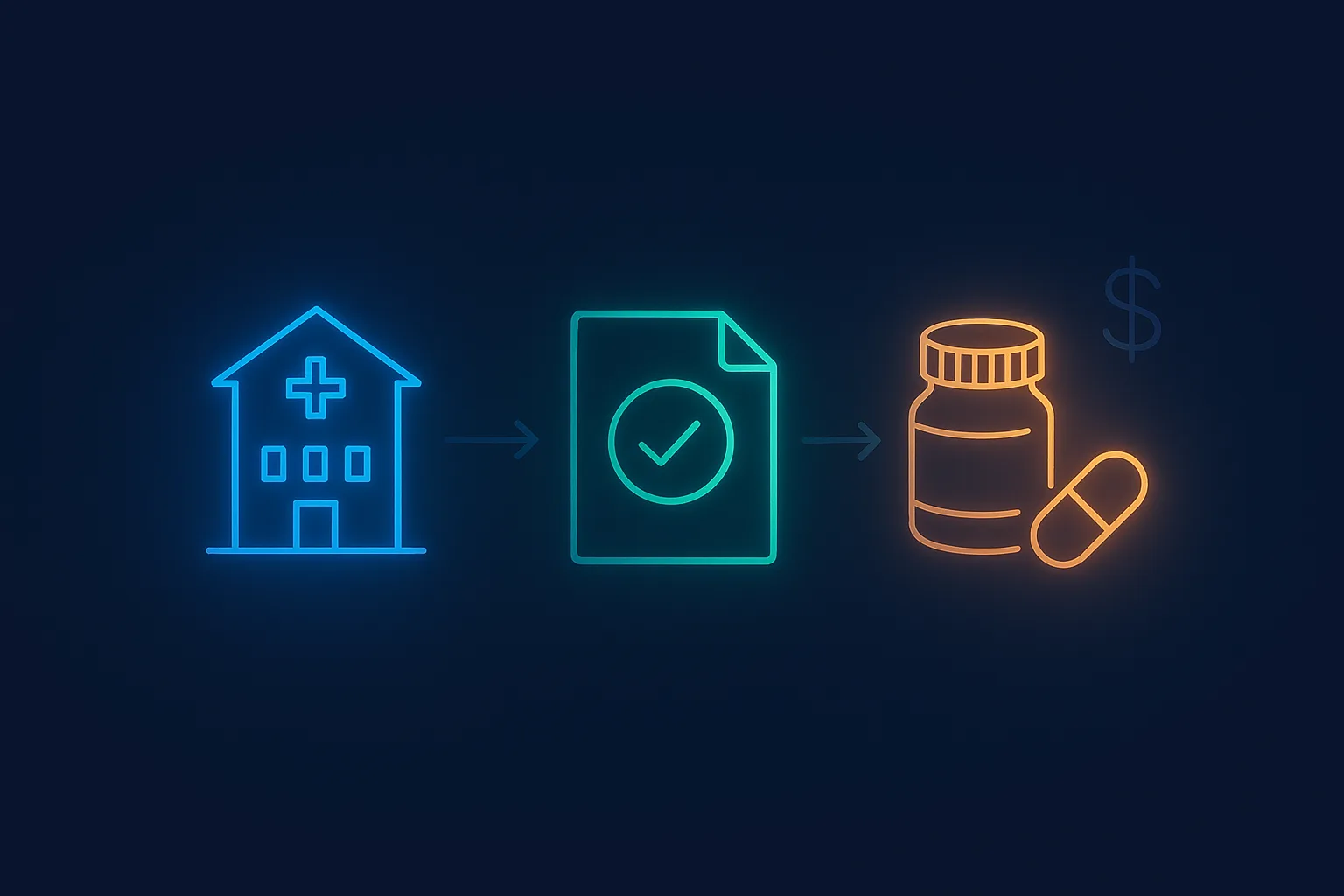
For women considering elinzanetant, the practical first step is a prescription from a menopause-trained clinician who will document the failed-trial or contraindication history that triggers prior authorization approval. Women's HRT telehealth clinics are often more practiced at this paperwork than general gynecology -- compare options at the best online HRT clinic for women review.
Who Should Consider Elinzanetant
The drug fits cleanly into specific clinical scenarios:
Strong Indications
- Breast cancer history or current adjuvant endocrine therapy. OASIS-4 makes elinzanetant the most evidence-backed nonhormonal option in this population. Coordinate with the treating oncologist.
- Recent VTE or stroke. Elinzanetant has no thrombotic mechanism and does not carry the VTE-related risk that even transdermal HRT carries (though transdermal estradiol VTE risk is low).
- High personal preference against hormones. Some women simply will not take estrogen, and elinzanetant now lets them get close to HRT-level relief.
- Failed fezolinetant. Either inadequate response or transaminase elevation that forced discontinuation. The dual NK1/NK3 mechanism may rescue patients who responded poorly to NK3 blockade alone.
- Sleep-fragmenting night sweats. The sleep benefit signal in OASIS is genuinely useful for women whose primary complaint is interrupted sleep.
Probably Not the Right Choice
- Asymptomatic or mild vasomotor symptoms. Reserve neurokinin antagonists for moderate-to-severe disease.
- Need for bone protection or genitourinary symptom management. Elinzanetant does not treat osteoporosis risk, vaginal dryness, urinary symptoms, or libido. HRT plus low-dose testosterone for women addresses those.
- Already well-controlled on HRT. Switching off effective HRT to a more expensive drug with narrower benefits rarely improves outcomes.
For a stepwise framework on choosing between hormonal and nonhormonal options, the HRT for hot flashes and night sweats breakdown walks through the decision tree.
What This Means for the HRT Conversation
For 20 years, women with vasomotor symptoms had a binary choice: take estrogen or accept underwhelming alternatives. The arrival of fezolinetant in 2023 narrowed that gap. Elinzanetant's approval and OASIS-4 data closes most of what remained.
The implication is not that HRT is obsolete -- it is not. Estrogen still does things no neurokinin antagonist can do: protect bone, treat genitourinary syndrome of menopause, support cardiovascular health when started within the timing-hypothesis window, and pair with low-dose testosterone for libido and mood symptoms.
What has changed is the cost of saying "no" to HRT. Until 2025, declining estrogen meant accepting roughly half the symptom relief. With elinzanetant, declining estrogen costs only a few percentage points of vasomotor efficacy. That re-balances the risk-benefit conversation, particularly for women with breast cancer history, intermediate genetic risk profiles, or strong personal preferences.
The corollary: women who tried HRT, hated the side effects, and gave up have a real second-line option now -- one with phase 3 data, FDA approval, and copay assistance pricing within reach.
How to Get Elinzanetant
The practical pathway:
- Confirm moderate-to-severe vasomotor symptoms -- typically defined as 7+ moderate-to-severe hot flashes per day or 50+ per week
- Document HRT contraindication, failure, or refusal -- this is what triggers prior authorization approval at most commercial insurers
- Get a prescription from a menopause-trained clinician -- general primary care providers may be unfamiliar with elinzanetant or default to fezolinetant out of habit
- Use the Bayer Lynkuet Access program if commercially insured -- the $25 copay card eliminates most out-of-pocket cost
- Reassess at 8-12 weeks -- if symptom frequency has not dropped at least 50%, the dose is likely correct but the underlying diagnosis or expectations may need re-examination
Women who want a streamlined process should compare vetted HRT clinics for women -- midlife-focused telehealth practices are typically more current on neurokinin antagonist prescribing than general OB-GYN.
The Bottom Line
Elinzanetant is the most important nonhormonal menopause therapy approved in two decades. By blocking both NK1 and NK3 receptors, it cuts moderate-to-severe hot flashes by roughly 72% -- close enough to HRT that the gap stops mattering for most women who cannot or will not take estrogen.
The OASIS-4 data finally gives breast cancer survivors a phase 3 option that matches what oncologists have wanted for years: meaningful vasomotor relief without estrogen exposure. The absence of routine liver monitoring makes it easier to prescribe than fezolinetant. The copay program makes it accessible to most commercially insured women.
For women who would benefit from HRT, HRT remains the right answer -- it does things elinzanetant cannot. For everyone else with moderate-to-severe vasomotor symptoms, elinzanetant has reset the standard of care.
References
- Pinkerton JV, Simon JA, Joffe H, et al. Elinzanetant for the Treatment of Vasomotor Symptoms Associated With Menopause: OASIS 1 and 2 Randomized Clinical Trials. JAMA. 2024;332(16):1343-1354. PMID: 39172446
- Simon JA, Pinkerton JV, Stute P, et al. Long-term efficacy and safety of elinzanetant for vasomotor symptoms associated with menopause: 52-week findings from the OASIS 3 phase 3 study. Climacteric. 2025. Bayer release
- Lederman S, Cardoso F, Loibl S, et al. Elinzanetant for vasomotor symptoms associated with adjuvant endocrine therapy for breast cancer: OASIS 4 randomized clinical trial. N Engl J Med. 2025. ASCO abstract 508
- Cardoso F, et al. Efficacy of elinzanetant on vasomotor symptoms across endocrine therapy subgroups in OASIS-4. Presented at the 15th European Breast Cancer Conference (EBCC15), March 2026.
- U.S. Food and Drug Administration. Lynkuet (elinzanetant) prescribing information. October 24, 2025.
- Bayer United States. Bayer's Lynkuet (elinzanetant), the First and Only Neurokinin 1 and Neurokinin 3 Receptor Antagonist, Receives FDA Approval. October 24, 2025.
- The 2023 nonhormone therapy position statement of The North American Menopause Society. Menopause. 2023;30(6):573-590. PMID: 37252752
Related Reading