Perimenopause and Oral Health: Gum Disease, Tooth Loss, and How HRT Helps
5/26/2026
5 min read
By The TRT Catalog
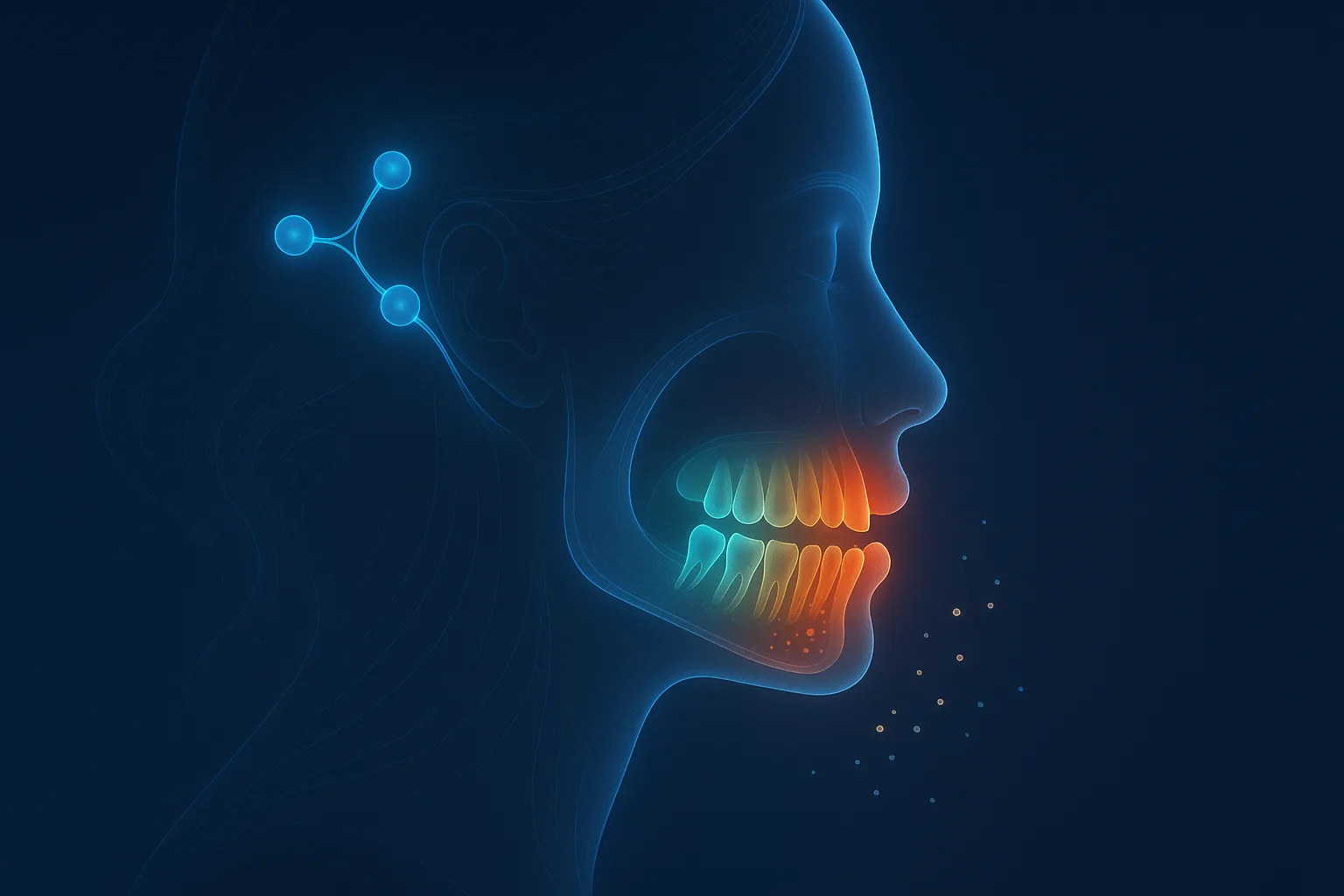
Estrogen receptors line your gums, jaw, and salivary glands. When levels drop in perimenopause, gum disease, dry mouth, and bone loss accelerate. Here is what to do.
Key Takeaways: Your gums, jawbone, tongue, cheek lining, and salivary glands all contain estrogen receptors. When estrogen declines during perimenopause, oral tissues thin, saliva production drops, inflammatory responses intensify, and alveolar bone resorption accelerates. The clinical result is increased gum disease, dry mouth, burning mouth syndrome, and accelerated tooth loss -- even in women with lifelong excellent dental hygiene. Research shows HRT reduces periodontal probing depth, clinical attachment loss, gum bleeding, and alveolar bone loss in postmenopausal women. Early recognition and a coordinated approach between your dentist and hormone provider produces the best outcomes.
The Dental Changes No One Connects to Hormones
The story is familiar. A woman in her early to mid 40s goes to her regular dental cleaning and hears something new. "Your gums are bleeding more than usual." Or, "We are seeing some recession that was not there last year." Or, "There is some bone loss on your X-rays that we want to watch."
She has not changed her brushing or flossing. She has not started eating differently. She may have noticed her mouth feels drier than it used to, or that her gums look redder, or that she is getting more sensitive to hot and cold. She asks the dentist why, and the answer is some version of "it happens with age" or "you need to floss more."
What almost never happens is someone connecting these changes to the hormonal transition happening at the same time.
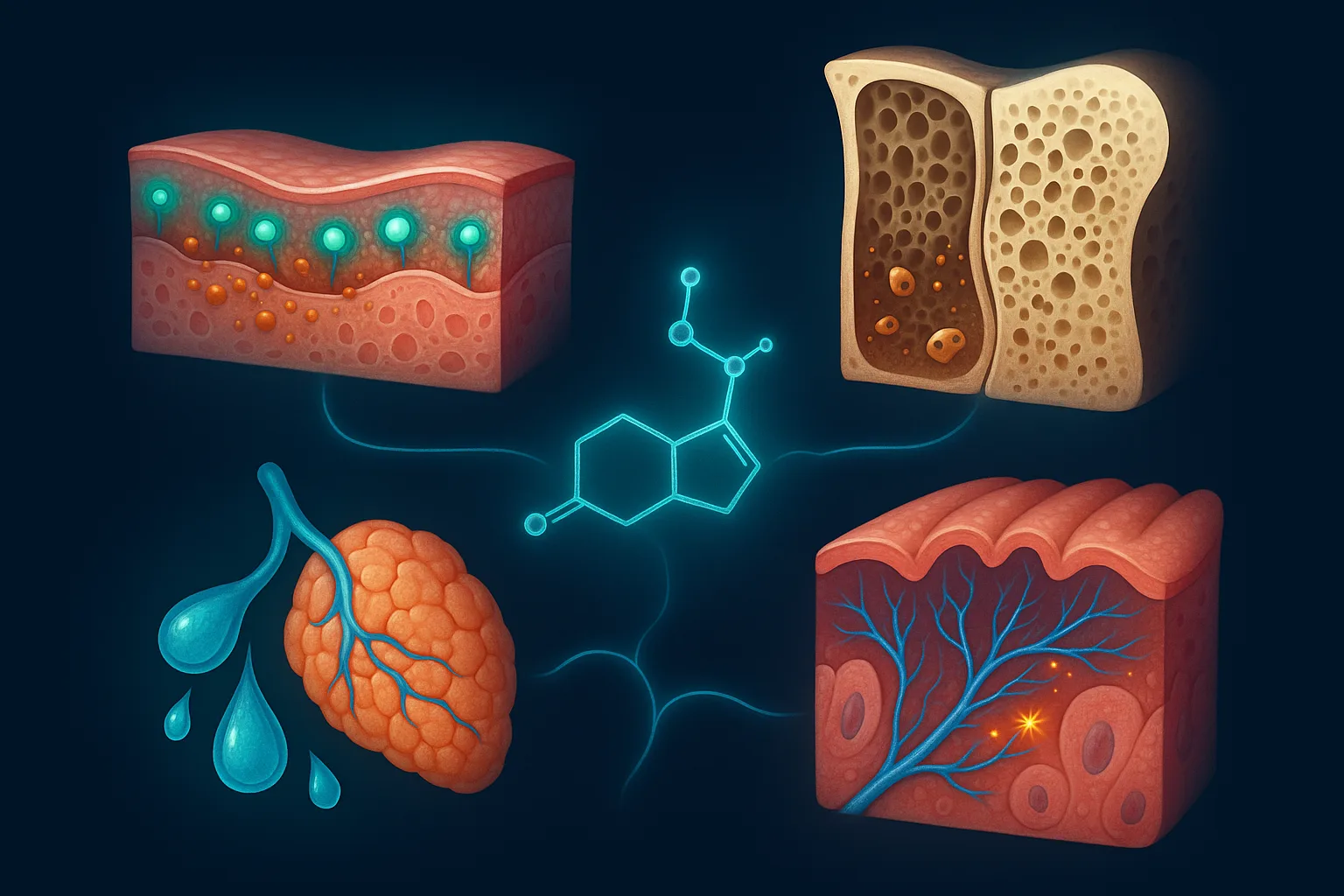
This disconnect matters because the mechanism is not mysterious. The oral cavity is rich in hormone receptors, and the tissues that maintain dental health -- gingiva, periodontal ligament, alveolar bone, salivary glands, oral mucosa -- all respond directly to estrogen and progesterone [1]. When those hormones fluctuate and decline, oral health deteriorates through specific, well-documented pathways that standard dental advice alone cannot fully address.
Why Your Mouth Is a Hormonal Organ
The connection between hormones and oral health has been documented in the medical literature for decades, but it remains poorly integrated into routine dental practice.
Estrogen Receptors in Oral Tissues
Both ER-alpha and ER-beta estrogen receptors are expressed in the gingiva (gums), periodontal ligament cells, oral mucosa (cheek and lip lining), tongue epithelium, salivary glands, and alveolar bone [1]. These are not incidental findings. Estrogen actively regulates tissue integrity, inflammatory response, wound healing, and bone turnover in every one of these structures.
A 2025 review published in Frontiers in Dental Medicine documented how estrogen maintains periodontal tissue integrity through multiple pathways: supporting collagen synthesis in the gingival connective tissue, modulating the inflammatory cascade in response to bacterial plaque, regulating osteoblast and osteoclast balance in alveolar bone, and maintaining blood flow to the periodontal ligament [1].
When estrogen levels drop, every one of these protective functions weakens simultaneously.
The Gingival Inflammation Cascade
Estrogen has direct anti-inflammatory effects in gum tissue. It modulates the production of pro-inflammatory cytokines (IL-1, IL-6, TNF-alpha) and influences how immune cells respond to the bacterial biofilm that constantly forms on teeth.
During perimenopause, fluctuating estrogen creates an exaggerated inflammatory response to the same bacterial load that the immune system previously managed without tissue damage. The gums become more permeable, allowing bacterial products to penetrate deeper into the connective tissue and trigger a more aggressive immune response [1].
This is why women notice bleeding gums during perimenopause even when their oral hygiene has not changed. The bacteria are the same. The immune response is different because the hormonal modulation is disrupted.
Alveolar Bone Loss
The most consequential oral effect of estrogen deficiency is accelerated loss of alveolar bone -- the specific bone that forms the sockets holding teeth in place. Estrogen deficiency shifts the balance between bone-building osteoblasts and bone-resorbing osteoclasts toward net resorption [2].
Research has established that estrogen enhances human periodontal ligament stem cells' osteogenic differentiation through stimulation of the Wnt/beta-catenin signaling pathway [2]. When estrogen declines, this regenerative capacity drops, and the jawbone thins progressively.
A University at Buffalo study examining postmenopausal women found that the rate of severe periodontitis was 44% lower in women receiving osteoporosis treatment (which addresses bone resorption) compared to untreated women [3]. The treated group had less periodontal probing depth, less clinical attachment loss, and less gum bleeding.
This is not subtle. A 44% reduction in severe gum disease from addressing the bone resorption pathway demonstrates that the hormonal mechanism is a primary driver, not a secondary factor.
Dry Mouth: The Silent Accelerator
Saliva is the mouth's first line of defense. It neutralizes acid, remineralizes enamel, flushes bacteria, delivers antimicrobial proteins, and maintains the mucosal barrier. When saliva production drops, every protective function weakens simultaneously.
How Estrogen Regulates Saliva
Salivary glands contain estrogen receptors, and estrogen directly influences both the volume and composition of saliva. Declining estrogen reduces salivary flow rate and alters the protein composition that gives saliva its protective properties [4].
Studies show that 1 in 3 menopausal women experience clinically significant dry mouth (xerostomia), compared to approximately 1 in 5 in the general population [4]. The difference is hormonal, not age-related -- premenopausal women of the same age bracket do not show the same prevalence.
The Cascade from Dry Mouth to Dental Damage
Reduced saliva creates a compounding problem:
Bacterial overgrowth -- less salivary flow means less mechanical flushing of bacteria, allowing biofilm to accumulate faster
Acid damage -- without salivary buffering, acids from food, drink, and bacterial metabolism attack enamel more aggressively
Demineralization -- saliva normally delivers calcium and phosphate ions that repair microscopic enamel damage; reduced flow slows this repair
Mucosal breakdown -- the oral mucosa depends on salivary lubrication; chronic dryness leads to fissuring, soreness, and increased infection risk
Women who never had cavities suddenly develop them in their 40s and 50s. The common explanation is "aging teeth," but the actual driver is often hormonal dry mouth reducing the protective environment that kept those teeth healthy for decades.
Management Strategies for Dry Mouth
Hydration and stimulation:
Sip water throughout the day, especially during meals
Sugar-free xylitol gum or lozenges stimulate residual salivary function and xylitol itself inhibits cavity-causing bacteria
Avoid alcohol-based mouthwashes that worsen dryness
Saliva substitutes:
Artificial saliva sprays or gels for symptom relief, particularly at night
Products containing carboxymethylcellulose or mucin-based formulas most closely mimic natural saliva
Fluoride protection:
Prescription-strength fluoride toothpaste (5000 ppm) for women with active dry mouth
Fluoride varnish applied at dental cleanings every 3-4 months rather than the standard 6
Hormonal approach:
A case-control study published in BMC Oral Health found that HRT improved symptoms of oral dryness in postmenopausal women, with measurable increases in salivary estradiol [5]. Results were individual -- not every woman responds equally -- but for women whose dry mouth correlates with other perimenopausal symptoms, addressing the hormonal driver alongside local management produces better outcomes.
Women's HRT — Menopause-First Telehealth
Bioidentical estradiol, progesterone, and low-dose testosterone — all 50 states, unlimited physician access.
Burning mouth syndrome (BMS) causes chronic burning, tingling, or scalding sensations in the mouth -- most commonly on the tongue, palate, and lips -- without any visible lesion or laboratory abnormality. It affects approximately 40% of perimenopausal and menopausal women [6].
The Hormonal Mechanism
The pathophysiology involves estrogen-dependent changes in taste bud nerve fibers. Researchers have identified that declining estrogen damages the small nerve fibers innervating taste buds, which in turn generates abnormal pain signals [6]. Additionally:
Estrogen regulates fluid balance and tissue hydration in the oral mucosa -- when levels drop, tissues become dry and fragile
Progesterone and testosterone both support nerve function in the oral mucosa -- the simultaneous decline of all three hormones during the menopause transition compounds the neuropathic effect
Estrogen receptors in the oral mucosa vary between individuals -- women with higher receptor density in oral tissues tend to experience more severe BMS when estrogen declines
Treatment
Women with BMS symptoms and demonstrated estrogen receptors in the oral mucosa respond to hormone replacement, while women without these receptors show less benefit [6]. This explains why BMS treatment results are mixed in studies that do not stratify by receptor status.
For women whose BMS appeared or worsened during perimenopause alongside other hormonal symptoms (hot flashes, sleep disruption, mood changes), a trial of HRT is physiologically rational. The burning often improves as estrogen levels stabilize -- not immediately, but typically within 4-8 weeks of reaching therapeutic hormone levels.
For women who cannot take systemic HRT, alpha-lipoic acid (600 mg daily), clonazepam oral rinse, and cognitive behavioral therapy have shown benefit in controlled trials, though none addresses the underlying hormonal driver.
What the Research Shows About HRT and Oral Health
The evidence for HRT's protective effect on oral health spans multiple study types and endpoints.
Tooth Retention
A study examining the association between HRT use and natural tooth count in postmenopausal women found that HRT users retained significantly more natural teeth than non-users [7]. The mechanism is straightforward: by reducing alveolar bone resorption, HRT preserves the structural foundation that holds teeth in place.
Periodontal Disease Prevention
A 2026 study published in the Journal of Clinical Periodontology compared the prevalence of periodontitis between three groups: premenopausal women, postmenopausal women on HRT, and postmenopausal women not on HRT [8]. The findings were clear:
No significant difference in periodontitis prevalence between premenopausal women and postmenopausal women using HRT
Significantly higher periodontitis prevalence in postmenopausal women not using HRT compared to both other groups
HRT essentially maintained periodontal health at premenopausal levels -- which is what you would expect if estrogen deficiency is a primary driver and estrogen replacement restores the protective effect.
Periodontal Treatment Response
Even after gum disease has developed, HRT improves treatment outcomes. Research examining periodontal treatment in postmenopausal women found that clinical attachment gain was significantly greater in the HRT group compared to controls [9]. This means that when women on HRT receive standard periodontal treatment (scaling and root planing), their gums heal better and reattach more effectively than in women without hormonal support.
Bone Loss Inhibition
A 2025 study published in Oral Diseases provided mechanistic evidence, demonstrating that HRT relieves periodontitis by specifically inhibiting alveolar bone loss and reducing inflammatory markers in periodontal tissues [10]. The dual action -- anti-inflammatory plus anti-resorptive -- explains why the clinical effect is robust.
The Practical Protocol for Oral Health in Perimenopause
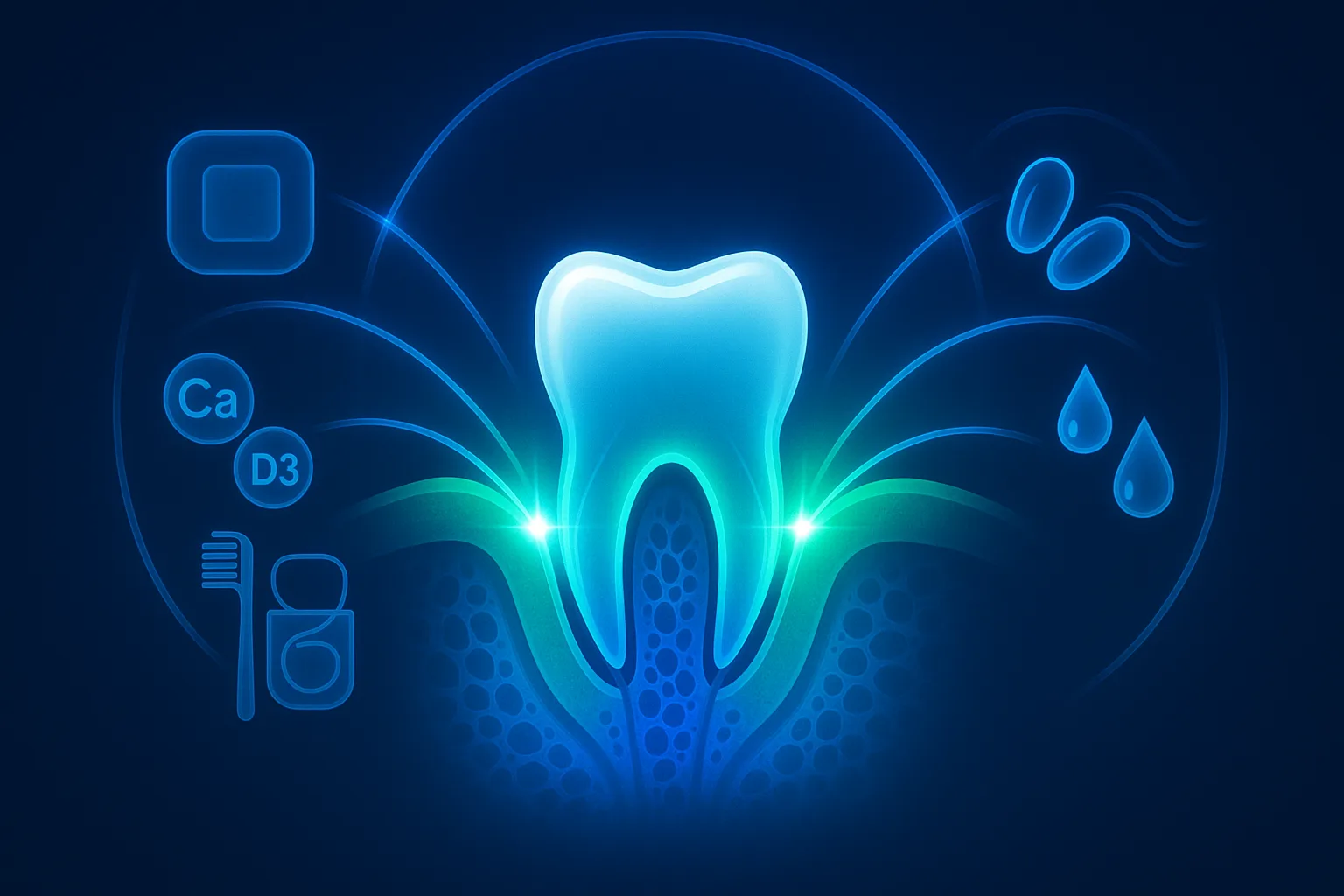
Protecting your oral health during the menopause transition requires a coordinated approach that addresses both the hormonal driver and the local dental environment.
Step 1: Connect Your Dental and Hormonal Care
Tell your dentist you are in perimenopause or menopause. This single piece of information changes how they should interpret bleeding, recession, and bone loss on X-rays. If your dentist dismisses the connection, consider finding one who understands hormonal influences on oral health.
Equally, tell your hormone provider about dental changes. New gum bleeding, dry mouth, burning mouth, or accelerated cavity formation are clinical signs of estrogen deficiency in tissues with estrogen receptors -- relevant diagnostic information for your hormonal evaluation.
Step 2: Adjust Your Dental Maintenance Schedule
Women in perimenopause with any signs of gum inflammation or dry mouth should consider:
Cleanings every 3-4 months rather than every 6 -- more frequent professional removal of bacterial biofilm reduces the burden on an immune system with less hormonal modulation
Annual bitewing X-rays rather than every 2 years -- to catch alveolar bone changes early
Periodontal probing at every visit -- tracking pocket depth over time reveals progression that visual inspection misses
Step 3: Optimize Your Home Care
Standard advice applies, but with perimenopause-specific additions:
Electric toothbrush with pressure sensor -- thinning gum tissue tears more easily under aggressive manual brushing
Soft-bristle brush heads -- replaced every 6-8 weeks rather than the standard 12
Interdental brushes or water flosser -- more effective than string floss for cleaning recession areas where root surfaces are exposed
Xylitol products -- gum or mints after meals; xylitol directly inhibits Streptococcus mutans (the primary cavity-causing bacterium) and stimulates salivary flow
Fluoride rinse at bedtime -- a 0.05% sodium fluoride rinse provides overnight mineral protection when salivary flow is lowest
If you are experiencing perimenopausal symptoms beyond oral changes, HRT addresses the root cause across all estrogen-dependent tissues simultaneously:
Transdermal estradiol (patch, gel, or spray) -- stabilizes estrogen levels, avoids first-pass liver effects, and restores estrogen signaling in gingival, bone, and salivary gland tissues
Micronized progesterone at bedtime if uterus is intact -- provides endometrial protection with the added benefit of improved sleep via GABA-A receptor modulation
Optional low-dose transdermal testosterone if fatigue, low libido, and muscle loss accompany the oral symptoms
A comprehensive hormone evaluation (FSH, estradiol, progesterone, free and total testosterone, SHBG) establishes where you are in the transition. See the best online HRT clinics for women for providers who evaluate the full hormonal picture.
Step 5: Nutritional Support
Specific nutrients support oral tissue health during the menopause transition:
Calcium (1000-1200 mg daily) and vitamin D3 (2000-4000 IU daily) -- essential for maintaining alveolar bone density; most perimenopausal women are insufficient in both
Vitamin C (500-1000 mg daily) -- required for collagen synthesis in gingival connective tissue; deficiency accelerates gum recession
Coenzyme Q10 (100-200 mg daily) -- specifically studied for gum health; supports mitochondrial function in gingival fibroblasts
Vitamin K2 (MK-7, 100-200 mcg daily) -- directs calcium into bone rather than soft tissue; works synergistically with vitamin D3 for jawbone maintenance
The TMJ Connection
Temporomandibular joint (TMJ) disorders increase significantly during perimenopause. The temporomandibular joint contains estrogen receptors, and estrogen deficiency predisposes the joint to degeneration [2].
Women in their 40s who develop new jaw clicking, pain with chewing, headaches originating from the jaw area, or difficulty opening their mouth fully should consider the hormonal connection. TMJ dysfunction during perimenopause is not just mechanical stress -- it is estrogen-dependent cartilage and ligament degradation in a joint that relies on hormonal support.
The same HRT that protects gums and jawbone also supports TMJ cartilage. Women who start estrogen therapy for vasomotor symptoms often report improvement in jaw symptoms as a secondary benefit.
When to Seek Specialized Help
Some oral changes during perimenopause warrant prompt evaluation beyond routine dental care:
Rapid progression of gum disease despite good hygiene -- may indicate aggressive periodontitis requiring specialist treatment plus hormonal evaluation
Persistent burning mouth lasting more than 3 months -- needs differential diagnosis (vitamin B12 deficiency, iron deficiency, thyroid dysfunction, Sjogren's syndrome all overlap)
Loose teeth or changes in bite -- indicates significant bone loss requiring periodontal specialist assessment and possible hormonal intervention
Severe dry mouth affecting eating or speaking -- may require salivary gland evaluation and comprehensive management beyond basic hydration strategies
Recurrent oral thrush -- persistent candida despite treatment suggests immune or hormonal factors that need broader investigation
What This Means for You
If your dental health changed during perimenopause, you are not imagining it and you are not failing at oral hygiene. Your mouth is responding to the same hormonal shift that produces hot flashes, sleep disruption, and mood changes. The gums, jawbone, salivary glands, and oral mucosa all depend on estrogen, and when supply becomes erratic and eventually declines, these tissues show it.
The practical path forward:
Connect the dots -- if dental problems appeared alongside other perimenopausal symptoms, they share a hormonal driver
Inform both providers -- your dentist needs to know your hormonal status, and your hormone provider needs to know about oral changes
Increase dental maintenance frequency -- every 3-4 months during the active transition
Consider HRT as a systemic intervention that protects oral tissues alongside every other estrogen-dependent system
Optimize nutrition -- calcium, vitamin D3, vitamin C, omega-3s, CoQ10, and vitamin K2 specifically support oral tissue maintenance
Manage dry mouth aggressively -- xylitol, fluoride, hydration, and potentially HRT to protect against the cascade of problems reduced saliva causes
For women navigating new dental problems in midlife, comprehensive women's hormone clinics evaluate the full hormonal, metabolic, and systemic picture together rather than treating each symptom in isolation. See the best online HRT clinics for women comparison for providers who take this integrated approach.
Pursitasari A, et al. The impact of estrogen on periodontal tissue integrity and inflammation -- a mini review. Front Dent Med. 2025;6:1455755. doi:10.3389/fdmed.2025.1455755
Li Q, et al. Estrogen signaling impacts temporomandibular joint and periodontal disease pathology. Cells. 2020;9(2):428. doi:10.3390/cells9020428
LaMonte MJ, et al. History of periodontitis diagnosis and edentulism as predictors of cardiovascular disease, stroke, and mortality in postmenopausal women. J Am Heart Assoc. 2017;6(4):e004518.
Agha-Hosseini F, Mirzaii-Dizgah I, Moosavi MS. Role of hormone replacement therapy in relieving oral dryness symptoms in postmenopausal women: a case control study. BMC Oral Health. 2021;21(1):631. doi:10.1186/s12903-021-01989-7
Rukmini JN, et al. Effect of menopause on saliva and dental health. J Int Soc Prev Community Dent. 2018;8(6):529-533.
Meurman JH, et al. Burning mouth syndrome and menopause. Int J Prev Med. 2012;3(Suppl 1):S1-S6.
Taguchi A, et al. Associations between the number of natural teeth in postmenopausal women and hormone replacement therapy. Maturitas. 2016;91:74-78.
Alhassani RM, et al. Effect of hormone replacement therapy on periodontal health in post-menopausal women. J Clin Periodontol. 2026;53(4):412-421.
Alencar CO, et al. Periodontal treatment outcomes in post menopausal women receiving hormone replacement therapy. J Periodontal Res. 2017;52(6):1065-1071.
Man G, et al. Hormone replacement therapy relieves periodontitis by inhibiting alveolar bone loss and inflammation. Oral Dis. 2025;31(3):1245-1256. doi:10.1111/odi.15192
Frequently Asked Questions
Why does perimenopause cause gum problems?
The gums, tongue, cheek lining, salivary glands, and jawbone all contain estrogen receptors. When estrogen levels fluctuate and decline during perimenopause, these tissues lose hormonal support. The gingival tissues become thinner and more prone to inflammation, salivary flow decreases (reducing the mouth's natural defense against bacteria), and the inflammatory response in periodontal tissues intensifies. The result is increased bleeding, recession, pocket formation, and accelerated attachment loss -- even in women who previously had excellent dental health.
Can menopause actually cause tooth loss?
Yes. Estrogen deficiency accelerates alveolar bone resorption -- the loss of the jawbone that holds teeth in place. A 2017 University at Buffalo study found that postmenopausal women not on osteoporosis treatment had 44% higher rates of severe periodontitis compared to treated women. Tooth mobility increases as the periodontal ligament weakens and supporting bone thins. This is not aging -- it is a specific hormonal effect that can be mitigated with treatment.
Does HRT help prevent gum disease and tooth loss?
Research supports a protective effect. Studies show that postmenopausal women using HRT have less periodontal probing depth, less clinical attachment loss, less gum bleeding, and retain more natural teeth than untreated women. A 2025 study published in Oral Diseases demonstrated that HRT relieves periodontitis by inhibiting alveolar bone loss and reducing inflammatory markers. The evidence is strongest for systemic estrogen therapy started within 10 years of menopause.
What is burning mouth syndrome and is it related to menopause?
Burning mouth syndrome (BMS) is a chronic oral pain condition causing burning, tingling, or scalding sensations on the tongue, palate, lips, or inner cheeks without visible lesions. It affects approximately 40% of perimenopausal and menopausal women. The mechanism involves estrogen-dependent damage to taste bud nerve fibers and reduced blood flow to oral mucosal tissues. Estrogen, progesterone, and testosterone all support nerve function in the oral mucosa, so declining levels can trigger or worsen BMS. HRT can improve symptoms in women whose oral tissues express estrogen receptors.
Why is my mouth so dry during perimenopause?
Salivary glands contain estrogen receptors, and declining estrogen reduces saliva production -- a condition called xerostomia. Studies show 1 in 3 menopausal women experience clinically significant dry mouth, compared to 1 in 5 in the general population. Saliva is the mouth's primary defense against bacteria, acid, and demineralization, so reduced flow increases the risk of cavities, gum disease, and oral infections. HRT can improve salivary flow in some women, and additional strategies include xylitol products, artificial saliva, and staying well hydrated.
Should I tell my dentist I am in perimenopause?
Absolutely. Your dentist needs this information to interpret what they see. Increased gum bleeding, recession, or bone loss on X-rays in a woman in her 40s with previously stable dental health should trigger a hormonal conversation, not just more aggressive scaling. A dentist who understands the hormonal connection can coordinate care with your hormone provider, adjust cleaning frequency, recommend appropriate fluoride protocols for dry mouth, and monitor jawbone density alongside your medical team.