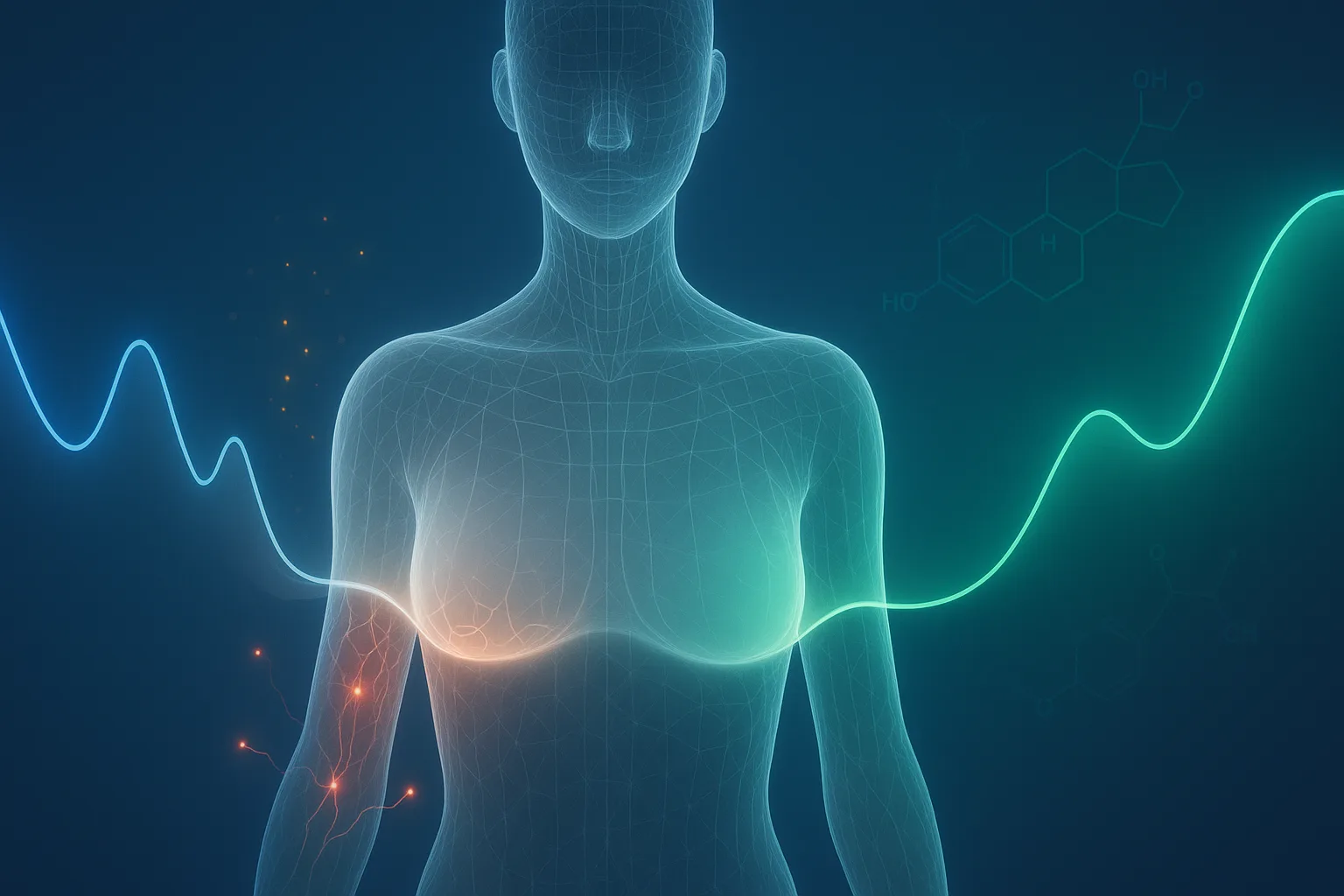
Menopause Itchy Skin: Why You Itch and How HRT Helps
6/7/2026
5 min read
By The TRT Catalog
Up to half of perimenopausal women develop itchy skin (pruritus) as estrogen falls. The estrogen-barrier-histamine mechanism, what it isn't, and how HRT helps.
Key Takeaways: Itchy skin is one of the most under-recognized symptoms of perimenopause and menopause -- surveys suggest up to roughly half of women experience it. The cause is estrogen: it drives the skin's production of ceramides, hyaluronic acid, sebum, and collagen, so when estradiol falls and fluctuates, the skin barrier thins, water escapes, the skin dries out, and nerve endings become easier to trigger. Falling estrogen also tips immune signaling toward more histamine, the classic itch mediator -- which is why menopause itch is often worse at night. It is distinct from formication (the phantom crawling sensation) and from simple skin aging. The fix is two-layered: restore the barrier (ceramide moisturizers, gentle cleansing, antihistamines for breakthrough itch) and, for many women, restore the estrogen that maintains the barrier in the first place. HRT has been shown to reduce water loss through skin, thicken it, and rehydrate it. The important caveat: generalized itch without a rash is occasionally a sign of something other than menopause, so it deserves a proper screen before it's chalked up to hormones.
The Symptom No One Warned You About
Hot flashes get the headlines. But a large share of women moving through perimenopause notice something quieter and more confusing: their skin starts to itch. It might be the shins, the back, the arms, the scalp -- sometimes everywhere at once. There is usually no rash to point at, which makes it easy to dismiss or misattribute to a new laundry detergent, dry weather, or stress.
It is none of those things, or rather it is those things plus a hormonal change that has made the skin far more vulnerable to all of them. Itchy skin -- clinically, pruritus -- is a genuine and common feature of the menopause transition, and like many midlife symptoms it is rarely raised in a 15-minute primary-care visit because neither the patient nor the doctor connects "itchy skin" to "hormones."
It connects. Here is the mechanism, why it tends to be worse at night, how to tell it apart from the crawling sensation of formication, and what actually settles it down.
Why Estrogen Loss Makes Skin Itch
Estrogen is, among many other things, a skin hormone. Skin is dense with estrogen receptors, and estradiol directly supports four things that keep skin comfortable and itch-resistant:
Ceramides -- the lipid "mortar" between skin cells that seals the barrier.
Hyaluronic acid -- the molecule that holds water in the skin like a sponge.
Sebum -- the natural oil that coats and protects the surface.
Collagen -- the structural protein that keeps skin thick and resilient.
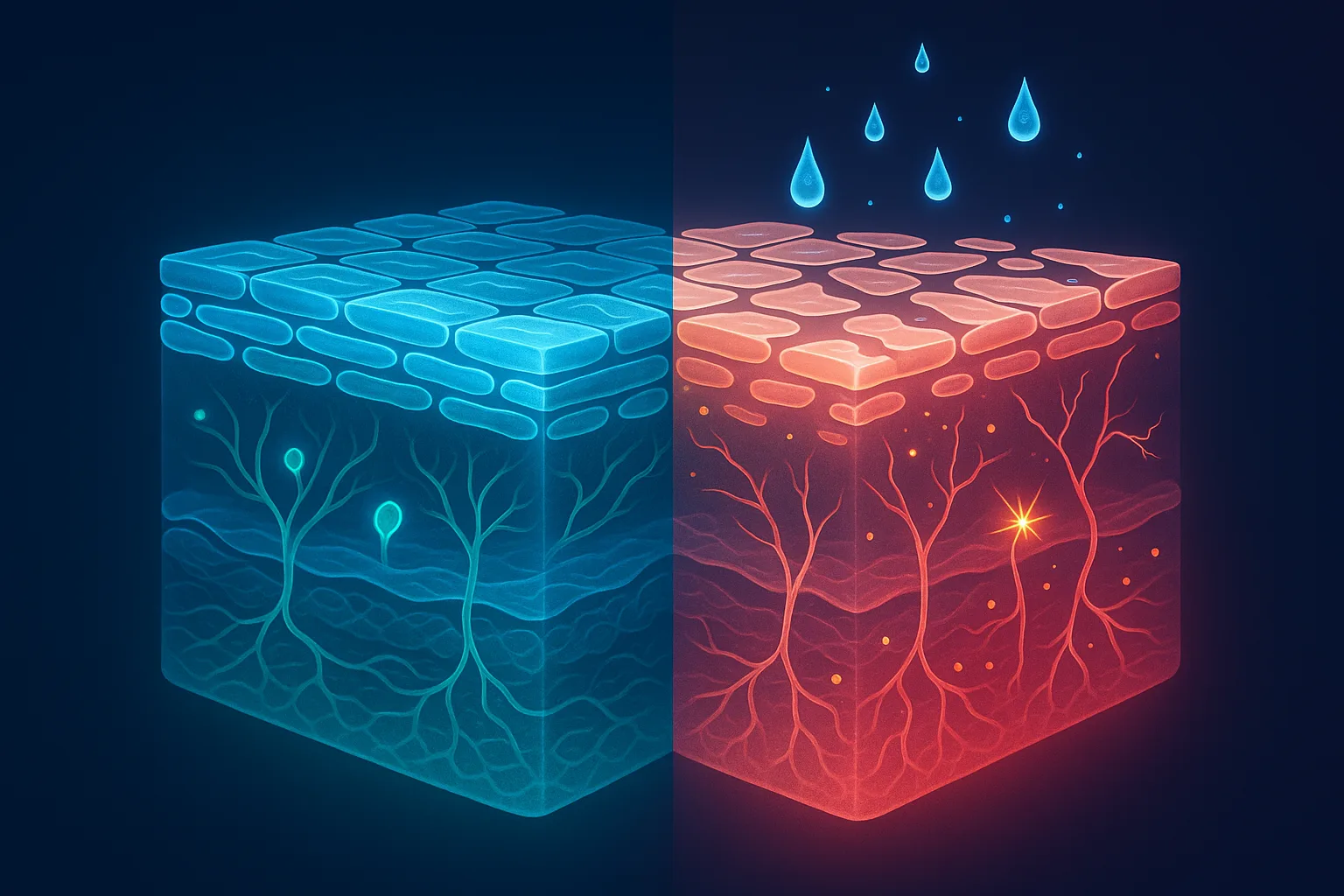
When estradiol falls and -- crucially in perimenopause -- swings unpredictably, all four decline. The barrier, normally a tight waterproof seal, becomes leaky. Dermatologists measure this as a rise in transepidermal water loss (TEWL): water that should stay in the skin evaporates out. The skin gets drier, thinner, and rougher, and a dry, compromised barrier is an itchy barrier.
Women's HRT — Menopause-First Telehealth
Bioidentical estradiol, progesterone, and low-dose testosterone — all 50 states, unlimited physician access.
There is a second mechanism layered on top of the dryness. Estrogen helps keep the immune system's histamine response in check. As estrogen falls, that brake loosens and histamine release rises. Histamine is the single most important itch signal in the body -- it is exactly what an antihistamine targets. So menopausal skin is itchy for two reinforcing reasons at once: the barrier is damaged (dryness, exposed nerve endings) and the itch-signaling chemistry is turned up (more histamine). That combination is why the itch can feel out of proportion to how the skin looks.
Why It's Worse at Night
A near-universal complaint: the itch is tolerable by day and maddening in bed. Several daily rhythms conspire:
Cortisol bottoms out overnight. Cortisol has a mild itch-suppressing, anti-inflammatory effect. At its 2-4 a.m. low, itch that the body was quietly damping all day breaks through.
Skin temperature rises in the evening as core temperature falls for sleep, and warmth amplifies itch perception.
Histamine tends to peak in the evening, which is the same reason allergies and eczema often feel worst at night.
Fewer distractions. With nothing else competing for attention, the sensation takes center stage.
For women who also get night sweats, the estrogen dip that drives the sweats hits the skin barrier in the same window that itch defenses are weakest -- a double hit. Practical countermeasures that target the nighttime pattern specifically: a cool bedroom, ceramide moisturizer applied right before bed to damp skin, breathable cotton bedding, and a sedating antihistamine at night if the itch is wrecking sleep.
Itchy Skin vs. Formication vs. Skin Aging
Three menopausal skin symptoms get tangled together. Separating them clarifies treatment:
Pruritus (this article) -- a true itch you want to scratch, tied to dryness and histamine. Responds well to barrier repair and antihistamines.
Formication -- the phantom sensation of insects crawling on or under the skin, often without dryness. This is a misfiring sensory-nerve phenomenon, not a true itch, and it leans more on restoring estrogen and calming nerve signaling.
Skin aging and collagen loss -- the structural thinning, wrinkling, and loss of firmness that accompanies the estrogen drop. Overlaps with the barrier dryness that drives itch but is a longer-arc cosmetic-and-structural issue.
Many women experience two or three of these at once because they share a root cause: less estrogen. But knowing which one is dominant tells you where to put the effort -- moisturizer and antihistamine for itch, estrogen and nerve-calming for crawling sensations, estrogen and collagen support for aging.
What Helps: Barrier First, Hormones for the Root Cause
Treatment works best in two layers -- repair the barrier locally, and address the hormonal driver underneath.
Barrier repair (do this regardless):
A fragrance-free moisturizer with ceramides, hyaluronic acid, or glycerin, applied to damp skin within minutes of showering, morning and night. This is the single highest-yield step.
Lukewarm, short showers with a gentle non-foaming cleanser. Hot water and foaming surfactants strip the very lipids that are already depleted.
A humidifier in dry seasons, and avoidance of known irritants (harsh detergents, wool next to skin, very hot water).
Antihistamines (for breakthrough itch):
A non-drowsy antihistamine by day and, if itch disrupts sleep, a sedating one at night. These target the histamine arm of the problem directly.
HRT (for the root cause):
Barrier creams treat the symptom; estrogen treats why the barrier failed. Estrogen therapy has been shown to reduce transepidermal water loss, increase skin thickness and hydration, and restore collagen and natural oils -- precisely the functions whose decline drives menopausal itch. The standard modern systemic regimen is transdermal estradiol (a patch, gel, or spray that bypasses the first-pass liver effect and carries a lower clot risk than oral estrogen) plus oral micronized progesterone for women who still have a uterus.
HRT is not a dedicated anti-itch drug, so it is paired with the barrier and antihistamine measures above rather than replacing them. But for many women the durable answer is restoring the hormone that kept the skin comfortable in the first place. Some women also benefit from low-dose testosterone as part of a complete regimen for energy, mood, and libido -- not for itch specifically, but because the same telehealth evaluation that addresses skin symptoms can assess the full hormonal picture. Our testosterone for menopause guide covers where it fits.
If the itch is localized to the vulva or vagina, low-dose vaginal estrogen treats it directly with minimal systemic absorption -- see our vaginal estrogen and GSM guide.
When Itch Is Not Menopause
This is the part a good clinician will not skip. Generalized itch without a rash is usually benign and barrier-related -- but it is occasionally the first sign of something systemic. Flag any of the following to a doctor rather than assuming hormones:
Itch with jaundice (yellowing of skin or eyes) -- can indicate liver or biliary problems.
Itch with unexplained weight loss, drenching night sweats unrelated to menopause, or swollen lymph nodes -- rarely, generalized itch precedes certain blood cancers.
Itch with a rash, blistering, or spreading lesions -- points to a primary skin condition (eczema, contact dermatitis) rather than dryness.
Localized, worsening vulvar itch -- can reflect lichen sclerosus or another treatable condition, not just menopausal dryness.
Itch can also be a marker of thyroid disease, iron deficiency, kidney problems, or poorly controlled diabetes -- all worth ruling out with simple labs, several of which overlap with a standard menopause workup. The point is not alarm; it is that "menopause itch" should be a diagnosis reached after a quick screen, not a label slapped on by default. Well-run women's telehealth intakes build this screening in, which is part of what separates a thorough platform from a prescription mill.
The Bottom Line
Itchy skin in perimenopause and menopause is real, common, and mechanistically clear: falling estrogen thins the skin barrier and turns up histamine, so the skin dries out and the itch signal amplifies -- worst at night, when cortisol is low and warmth and histamine are high. It is distinct from the crawling sensation of formication and from longer-arc skin aging, though they share the same hormonal root.
The fix is layered. Repair the barrier with ceramide moisturizers and gentle care, blunt the histamine with antihistamines when itch breaks through, and -- for the durable solution -- restore the estrogen that maintained the barrier to begin with. HRT measurably reduces water loss and rehydrates skin, and a proper evaluation also screens out the less-common, non-hormonal causes of itch before defaulting to a hormonal explanation.
If your skin started itching for no obvious reason in your 40s or 50s, you are not imagining it, and you are far from alone. Our best online HRT clinic for women comparison grades telehealth platforms on diagnostic rigor, protocol depth, and pricing transparency -- the variables that decide whether you get a real evaluation or a vending-machine prescription.
References
Wilkinson HN, Hardman MJ. The role of estrogen in cutaneous ageing and repair. Maturitas. 2017;103:60-64.
Hall G, Phillips TJ. Estrogen and skin: the effects of estrogen, menopause, and hormone replacement therapy on the skin. J Am Acad Dermatol. 2005;53(4):555-568.
Raghunath RS, Venables ZC, Millington GWM. The menopausal effects on the skin barrier. Clin Exp Dermatol. 2015;40(4):402-408.
The 2022 hormone therapy position statement of The North American Menopause Society. Menopause. 2022;29(7):767-794.
Stander S, Weisshaar E, Mettang T, et al. Clinical classification of itch: a position paper of the International Forum for the Study of Itch. Acta Derm Venereol. 2007;87(4):291-294.
Yes. Itchy skin (pruritus) is a recognized perimenopausal and menopausal symptom, and surveys suggest up to roughly half of women experience some skin itching during the transition. The mechanism is estrogen-driven: estrogen stimulates the skin's production of ceramides, hyaluronic acid, sebum, and collagen, all of which keep the skin barrier intact and the skin hydrated. As estradiol falls and fluctuates in perimenopause, the barrier thins, water escapes more easily (transepidermal water loss rises), the skin dries out, and exposed nerve endings become more easily triggered. Falling estrogen also shifts immune signaling toward more histamine release, and histamine is the classic itch mediator. The result is skin that is drier, more reactive, and itchier than it was a few years earlier, often with no visible rash.
Is menopause itchy skin the same as formication?
No, they are different and worth distinguishing because the treatment emphasis differs. Pruritus is genuine itch, usually tied to dry, thinned skin and histamine, and it makes you want to scratch. Formication is the phantom sensation of insects crawling on or under the skin -- a misfiring nerve sensation rather than a true itch, and it often occurs without any dryness. Many women in perimenopause get both, and both improve when estrogen is restored, but pruritus responds especially well to barrier repair (ceramide moisturizers) and antihistamines, while formication is more of a sensory-nerve phenomenon. We cover the crawling sensation separately in our [formication and skin-crawling guide](/learn/formication-skin-crawling-menopause-hrt).
Why is menopause itching worse at night?
Several rhythms stack at night. Core body temperature drops and skin temperature rises slightly in the evening, which can heighten itch perception. Cortisol -- which has a mild anti-inflammatory, itch-suppressing effect -- is at its daily low point overnight, so itch that was tolerable during the day breaks through. Histamine release tends to be higher in the evening. And there are simply fewer distractions, so the sensation dominates attention. For women whose estrogen also crashes at night (a pattern linked to night sweats), the skin barrier is under the most stress in exactly the window when itch defenses are weakest. Evening barrier repair, a cool bedroom, and a non-sedating or bedtime antihistamine often help.
Does HRT help itchy skin in menopause?
Often, yes, when the itch is genuinely driven by estrogen-related skin changes rather than an unrelated condition. Estrogen therapy has been shown to reduce transepidermal water loss, increase skin thickness and hydration, and restore collagen and natural oils -- the same barrier functions whose decline drives menopausal pruritus. Transdermal estradiol plus oral micronized progesterone (for women with a uterus) is the standard modern systemic regimen. HRT is not a dedicated itch drug, so most clinicians pair it with daily ceramide-based moisturizer and, when needed, an antihistamine for breakthrough itch. If the itch is localized to the vulva or vagina, low-dose vaginal estrogen treats it directly with minimal systemic exposure.
When should I see a doctor about menopause itching?
Itchy skin is usually benign and barrier-related, but some itch is not menopause. See a clinician promptly if the itch is severe, persistent, or accompanied by a rash, blistering, jaundice (yellowing skin or eyes), unexplained weight loss, night sweats unrelated to menopause, or swollen lymph nodes -- generalized itch without a rash can occasionally signal thyroid disease, iron deficiency, liver or kidney problems, diabetes, or, rarely, blood cancers. Also flag itch that is localized and worsening on the vulva, as it can reflect a treatable condition like lichen sclerosus rather than simple dryness. A good intake will screen for these before attributing the itch to hormones.
What helps menopause itchy skin besides HRT?
Barrier repair is the foundation: a fragrance-free moisturizer with ceramides, hyaluronic acid, or glycerin applied to damp skin twice daily, lukewarm (not hot) showers, a gentle non-foaming cleanser, and a humidifier in dry months. Oral antihistamines blunt histamine-driven itch -- a non-drowsy one by day, a sedating one at night if itch disrupts sleep. Hydration, omega-3 intake, and avoiding known irritants (harsh detergents, wool, very hot water) all reduce reactivity. These measures complement HRT rather than replace it; for many women the durable fix is restoring the estrogen that maintains the barrier in the first place, which is where a [women's HRT consult](/clinics/best-online-hrt-clinic-women?from=menopause-itchy-skin-pruritus-hrt) fits.