Menopause Dry Eyes & Vision Changes: How HRT Helps
5/28/2026
5 min read
By The TRT Catalog
Up to 61% of menopausal women develop dry eyes. Androgens and estrogen control your tear film. How HRT, omega-3s, and targeted treatments restore eye comfort.
Meibomian glands atrophy permanently if untreated — early intervention preserves gland function
Blurred vision from dry eyes is usually reversible with proper tear film management
Your prescription is fine. Your reading glasses are correct. But your eyes burn by 3 PM, your vision blurs at the computer, and no amount of blinking fixes the gritty, sandpaper feeling that showed up around the same time as the hot flashes.
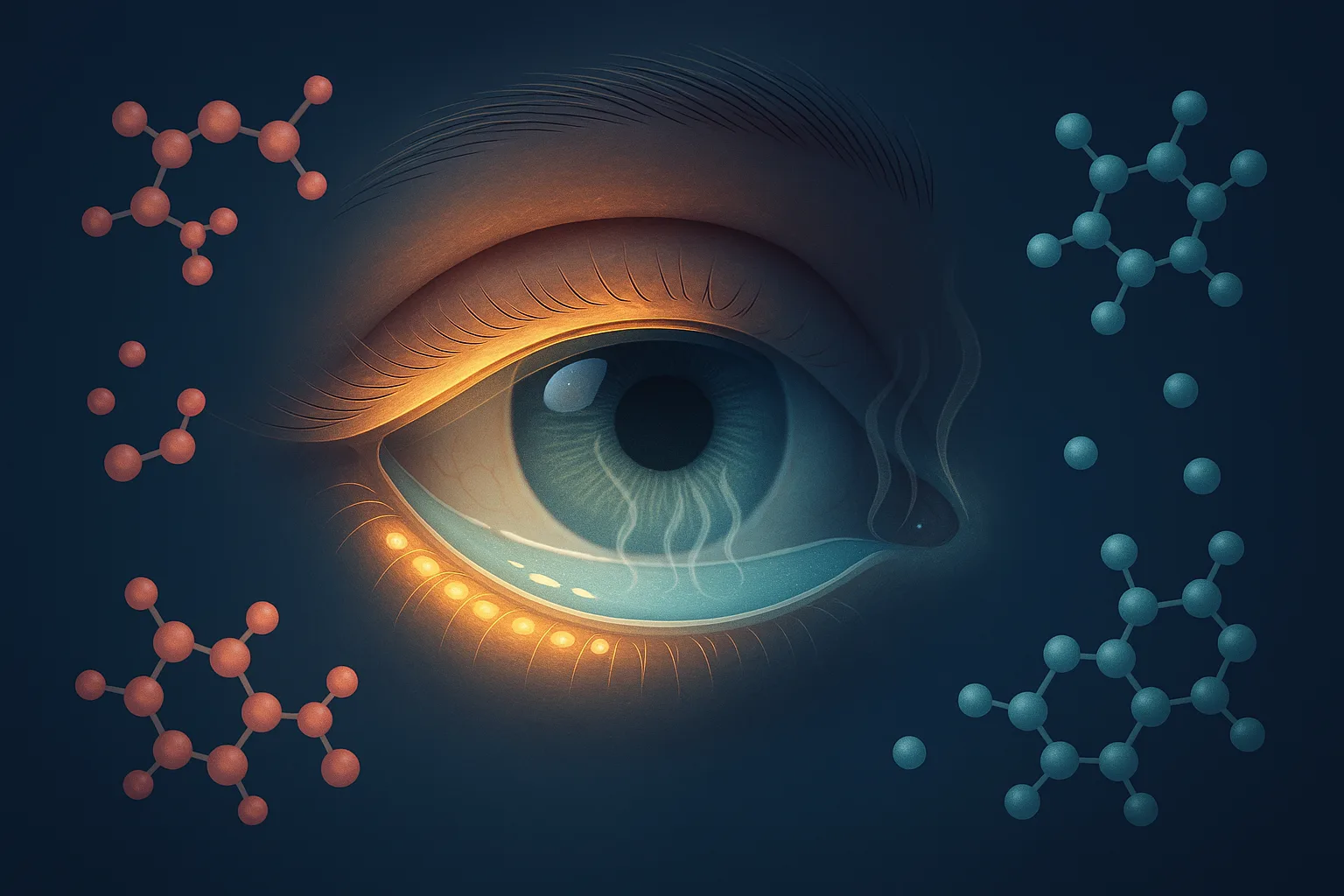
You are not imagining it. Up to 61% of women going through perimenopause and menopause develop dry eye syndrome — and most are never told it is hormone-related. The same estrogen and androgen decline that drives hot flashes, insomnia, and mood changes also dismantles your tear film from the inside out.
This is not a cosmetic nuisance. Untreated menopausal dry eye leads to chronic corneal irritation, meibomian gland atrophy that is irreversible, and progressive vision instability that makes driving, screen work, and reading increasingly uncomfortable. The good news: understanding the mechanism means you can treat it properly rather than cycling through eye drops that only address symptoms.
How Hormones Control Your Tear Film
Your tear film is not just water. It is a three-layer structure, and hormones influence every layer:
Tear Film Layer
Function
Hormone Dependency
Lipid (outer)
Prevents tear evaporation
Androgen-dependent (meibomian glands)
Aqueous (middle)
Provides moisture, nutrients, oxygen
Estrogen and androgen modulated (lacrimal glands)
Mucin (inner)
Anchors tear film to corneal surface
Less hormone-dependent (goblet cells)
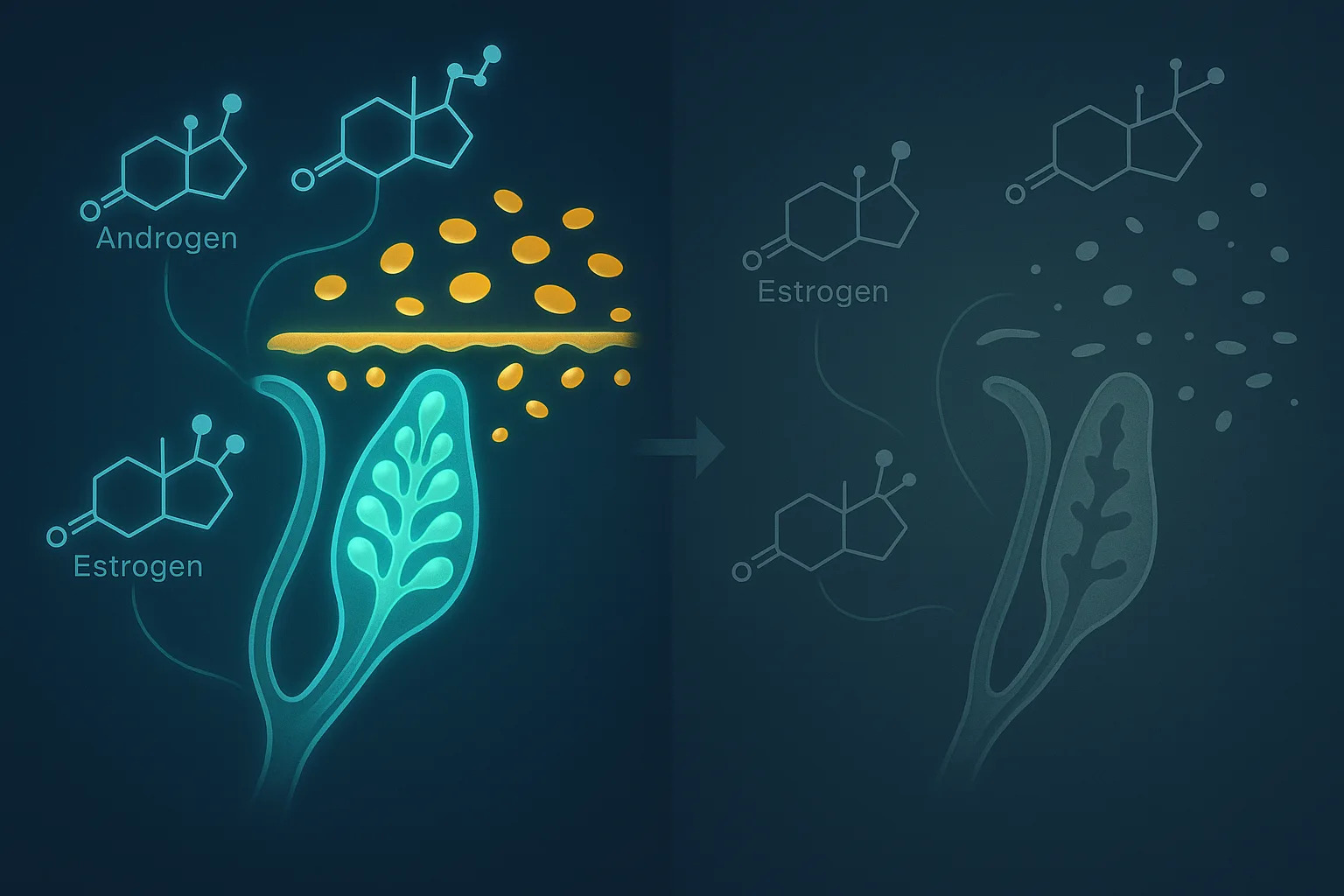
The lipid layer is where the damage starts. Your meibomian glands — roughly 30 in each upper lid and 20 in each lower lid — produce the oily outer layer of your tear film. These glands have androgen receptors. Testosterone and DHEA are the upstream signals that tell them to synthesize and secrete lipids.
When androgen levels decline in perimenopause, the meibomian glands start producing less meibum (the oily secretion). The lipid layer thins. Tears evaporate faster than your lacrimal glands can replace them. This is evaporative dry eye, and it accounts for the majority of menopausal dry eye cases.
Estrogen plays a more complicated role. Estrogen receptors are also present in meibomian gland tissue, but estrogen may actually suppress androgen-driven lipid production in these glands. This is one reason why estrogen-only HRT can paradoxically worsen dry eyes in some women — the added estrogen may further inhibit the already struggling androgen pathway in the meibomian glands.
The lacrimal glands (which produce the aqueous middle layer) are influenced by both estrogen and androgens. As both hormones decline, total tear volume drops. But the evaporative problem — thin lipid layer, rapid tear breakup — is usually the dominant mechanism.
The Symptoms You Should Recognize
Menopausal dry eye does not always present as "dry" eyes. The symptom pattern is often counterintuitive:
Classic dry eye symptoms:
Gritty, sandy sensation — worse in afternoon and evening
Burning or stinging, especially after screen time
Eyes that feel tired and heavy by midday
Sensitivity to wind, air conditioning, fans
Paradoxical watering:
Reflex tearing — your eyes water excessively because the cornea sends a distress signal when the tear film breaks down, triggering a flood of low-quality reflex tears that wash over the eyes but do not stick
Vision instability:
Blurred vision that clears momentarily with blinking
Fluctuating vision throughout the day (worse in dry environments)
Difficulty with nighttime driving — halos, starbursts around lights
Increased discomfort with contact lenses
Associated symptoms that point to hormonal cause:
Symptoms started or worsened in tandem with other perimenopause signs (hot flashes, insomnia, irregular cycles)
Morning eye dryness and crusting (meibomian gland secretions thicken overnight)
Eyelid margin redness and irritation (blepharitis — common when meibomian glands dysfunction)
If your dry eye symptoms started between ages 40 and 55 and coincide with other perimenopause symptoms, the hormonal connection is likely. This does not rule out other causes — medications, screen time, autoimmune conditions — but it establishes the primary driver.
How Bad It Gets: The Prevalence Data
The numbers on menopausal dry eye are striking:
61% of perimenopausal and menopausal women report dry eye symptoms in clinical surveys
70% of dry eye patients overall are women
Dry eye prevalence increases sharply after age 50, tracking the menopausal hormone transition
Women with surgical menopause (oophorectomy) have higher dry eye rates than women with natural menopause, supporting the hormonal mechanism
The Beaver Dam Eye Study found that every 1 ng/dL decrease in bioavailable estradiol was associated with a measurable increase in dry eye symptom severity
These are not comfort complaints. Severe dry eye significantly impairs quality of life — studies using validated questionnaires rank its impact on daily function comparable to moderate angina.
Women's HRT — Menopause-First Telehealth
Bioidentical estradiol, progesterone, and low-dose testosterone — all 50 states, unlimited physician access.
Here is where the data gets complicated. If dry eyes are driven by hormone decline, HRT should help. The reality is more nuanced.
Estrogen-Only HRT: Potentially Harmful for Eyes
The Women's Health Study — a large prospective cohort of nearly 40,000 women — found that estrogen-only HRT was associated with a 69% increased risk of developing dry eye syndrome. Women on combined estrogen-plus-progesterone therapy had a 29% increased risk, though this was less consistent across studies.
The proposed mechanism: oral estrogen increases sex hormone-binding globulin (SHBG), which binds free testosterone and further reduces the already low androgen availability at the meibomian glands. Estrogen may also directly compete with androgens at the gland receptor level.
Transdermal vs. Oral: Route Matters
Transdermal estradiol (patches, gels) does not raise SHBG as aggressively as oral estrogen because it bypasses first-pass liver metabolism. This means transdermal HRT may be less harmful to meibomian gland function than oral estrogen. No large randomized trial has compared transdermal vs. oral HRT specifically for dry eye outcomes, but the SHBG mechanism is well-established and the clinical logic follows.
If you are on HRT and experiencing worsening dry eyes, discussing a switch from oral to transdermal estradiol with your provider is a reasonable step. The estradiol patch dosing guide covers the transition.
Where Testosterone Fits
Testosterone is the hormone most directly linked to meibomian gland function. Women on physiological testosterone replacement — typically for low libido, fatigue, or mood — may see a secondary benefit in tear film quality because their meibomian glands regain androgen stimulation.
This is not a primary indication for testosterone prescribing. No guideline recommends testosterone for dry eyes. But if you are already a candidate for testosterone based on other symptoms, the meibomian gland support is a meaningful added benefit.
Micronized progesterone (the standard for women with an intact uterus on HRT) does not appear to directly worsen or improve dry eye. Its role is endometrial protection, not ocular. Combined estrogen-plus-progesterone HRT shows a weaker dry eye association than estrogen-only, which may reflect progesterone partially buffering estrogen's anti-androgen effects at the meibomian glands.
First-Line Treatments: What Actually Works
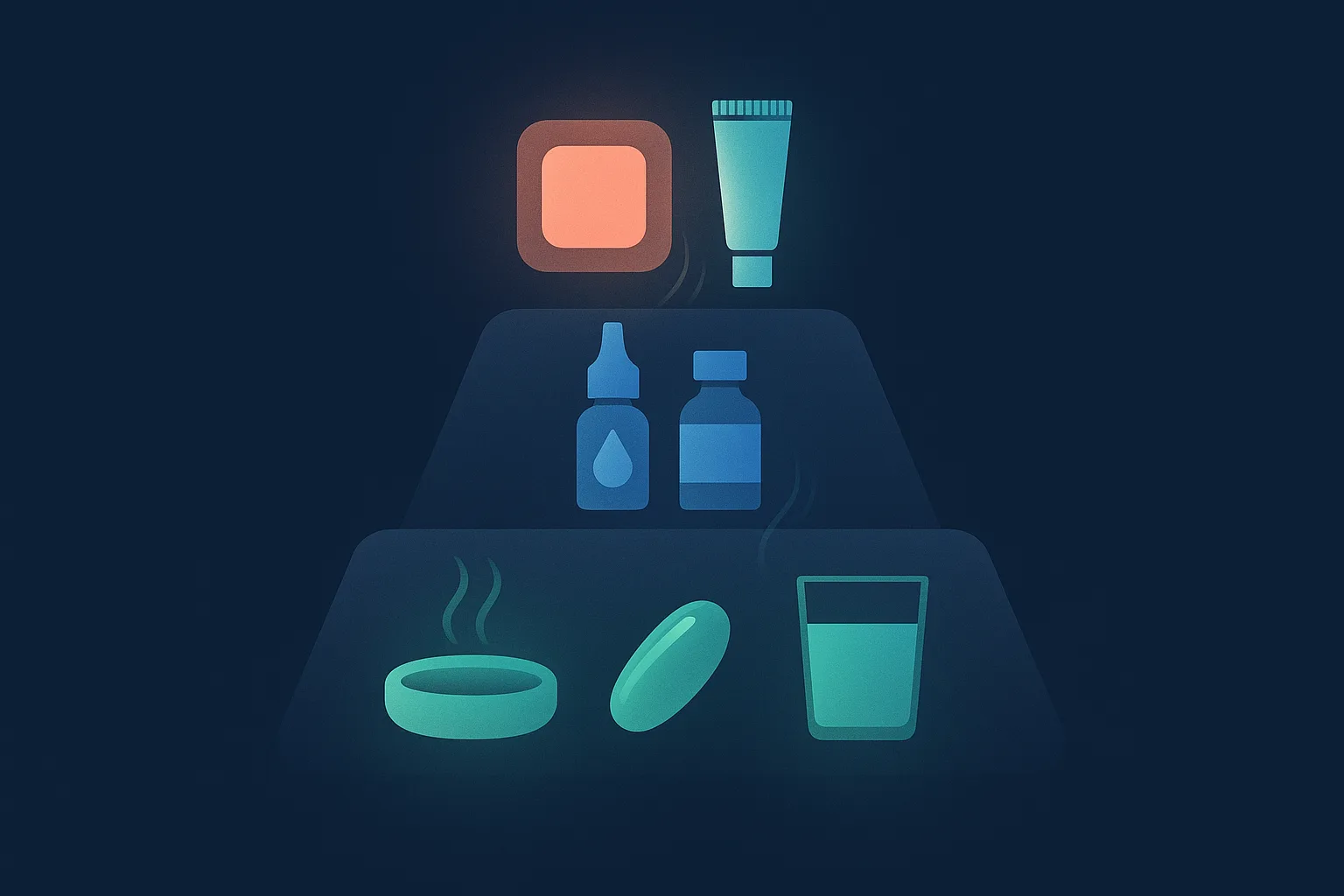
Regardless of your HRT status, dry eye management in menopause follows a layered approach. Start at the foundation and add treatments as needed.
1. Warm Compresses and Lid Hygiene (Foundation)
Your meibomian glands are still there — they just need help expressing their secretions. A daily warm compress routine is the single most underutilized dry eye treatment:
Heated eye mask or warm washcloth: 10 minutes daily, ideally before bed
Temperature: 40-45 degrees Celsius — warm enough to melt thickened meibum, not hot enough to burn
Lid massage: after the compress, gently press along the upper and lower lid margins from inner to outer corner to express the glands
Lid wash: use a dedicated eyelid cleanser or diluted baby shampoo to clean the lid margins
Consistency matters more than intensity. Daily warm compresses for 8 weeks outperform sporadic use of expensive prescription drops.
2. Preservative-Free Artificial Tears
Not all eye drops are equal for menopausal dry eye:
Use preservative-free formulations — preserved drops (with benzalkonium chloride) irritate already inflamed eyes and worsen meibomian gland dysfunction with chronic use
Lipid-based tears (emulsion drops) are preferred because they supplement the deficient oil layer, not just the aqueous layer
Frequency: 3-4 times daily as maintenance; more during screen time or in dry environments
Avoid "redness-relief" drops — vasoconstrictors like naphazoline or tetrahydrozoline reduce redness cosmetically but do not treat dry eye and can cause rebound redness
3. Omega-3 Fatty Acids
Omega-3 supplementation (EPA and DHA from fish oil) has moderate evidence for improving tear film quality in dry eye:
Dose: 2-3 grams total EPA + DHA daily (typically 2-4 fish oil capsules depending on concentration)
Mechanism: omega-3 replaces pro-inflammatory omega-6 in meibomian gland lipid composition, improving meibum quality and reducing lid margin inflammation
Timeline: 6-12 weeks for noticeable improvement
Supporting evidence: a 2018 meta-analysis in Cornea found omega-3 supplementation improved both tear breakup time and dry eye symptom scores
Omega-3 supplements also support cardiovascular health during the menopausal transition — a dual benefit. Women considering the broader perimenopause cardiovascular picture should note this overlap.
4. Environmental Modifications
Small changes that reduce tear evaporation:
Humidifier in bedroom and office (target 40-50% humidity)
Position screens below eye level — looking up widens the palpebral fissure and increases evaporation surface
20-20-20 rule: every 20 minutes, look at something 20 feet away for 20 seconds (blink rate drops 60% during screen use)
Wrap-around glasses or moisture chamber inserts for windy or dry environments
Avoid direct airflow from fans, car vents, or HVAC outlets aimed at your face
5. Prescription Options (When First-Line Is Not Enough)
If warm compresses, artificial tears, and omega-3s are insufficient after 8-12 weeks, prescription treatments include:
Cyclosporine ophthalmic (0.05%): reduces ocular surface inflammation and increases tear production. Takes 3-6 months for full effect
Lifitegrast (5%): blocks the inflammatory pathway (LFA-1/ICAM-1) driving dry eye. Faster onset than cyclosporine (2-6 weeks)
Short-course topical corticosteroids: for acute flares only — effective but not for long-term use due to cataract and glaucoma risk
Punctal plugs: tiny silicone plugs inserted in tear drainage ducts to conserve existing tears. Particularly effective for aqueous-deficient dry eye
Intense pulsed light (IPL) therapy: treats meibomian gland dysfunction by reducing lid margin inflammation and improving meibum flow. Emerging evidence supports 3-4 sessions
When to Rule Out Other Causes
Not all midlife dry eye is hormonal. Conditions that can mimic or coexist with menopausal dry eye:
Sjogren syndrome: An autoimmune condition that attacks moisture-producing glands (lacrimal and salivary). Affects roughly 0.5-1% of the population but is nine times more common in women, with average onset in the 40s-50s. If you have severe dry eyes plus dry mouth, joint pain, or fatigue that seems disproportionate to menopause, ask for SSA/SSB antibody testing and a Schirmer test.
Medication-induced dry eye: Antihistamines, antidepressants (SSRIs, SNRIs), beta-blockers, diuretics, and isotretinoin all reduce tear production. If your dry eyes started or worsened after starting one of these medications, that may be the primary driver. Women started on SSRIs for perimenopausal mood symptoms — before anyone evaluates whether HRT vs. antidepressants is the right approach — may develop dry eye as a medication side effect layered on top of hormonal changes.
Thyroid disease: Both hypothyroidism and Graves disease affect the eyes. Thyroid disorders are more common in perimenopausal women. The HRT and thyroid interaction article covers this overlap.
Contact lens overwear: Extended contact lens use, combined with menopausal tear film instability, accelerates surface drying. Many women in their late 40s find contacts that worked for decades suddenly become intolerable — the contact lens is not the root cause, but it is an aggravating factor.
The Meibomian Gland Atrophy Problem
This is the part that creates urgency. Meibomian glands do not regenerate.
When these glands are chronically understimulated (by declining androgens) and chronically inflamed (from poor-quality meibum and bacterial colonization), they undergo structural atrophy. The glandular tissue is replaced by scar tissue. This process is called meibomian gland dropout, and it is visible on meibography imaging — a painless infrared scan your eye doctor can perform.
Once a gland drops out, it is gone. No treatment brings it back.
This is why early intervention matters. Women who start warm compresses, omega-3 supplementation, and regular lid hygiene in perimenopause — when glands are dysfunctional but still intact — preserve significantly more gland function than women who wait until symptoms are severe.
Think of meibomian gland preservation the same way you think about bone density in menopause: the goal is to intervene early and maintain what you have, because the biological clock runs one direction.
Building Your Eye Comfort Protocol
Here is a practical framework, organized by effort and cost:
Start immediately (cost: minimal):
Daily warm compress + lid massage (10 minutes, before bed)
Add at 8-12 weeks if still symptomatic (cost: higher, requires provider):
Eye exam with meibography to assess gland health
Prescription cyclosporine or lifitegrast drops
Consider punctal plugs for aqueous-deficient component
Discuss HRT route (transdermal vs. oral) with your hormone provider
Discuss with your HRT provider at next visit:
If on oral estrogen, ask about switching to transdermal (patch or gel)
If already a candidate for testosterone, discuss meibomian gland benefit
Review all medications for dry-eye side effects
Women managing dry eyes alongside other perimenopause symptoms may benefit from an integrated approach through online HRT clinics that evaluate the full hormonal picture rather than treating each symptom in isolation. The best online HRT clinics for women comparison can help narrow the options.
References
Schaumberg DA, Buring JE, Sullivan DA, Dana MR. Hormone replacement therapy and dry eye syndrome. JAMA. 2001;286(17):2114-2119. doi:10.1001/jama.286.17.2114
Sullivan DA, Rocha EM, Aragona P, et al. TFOS DEWS II sex, gender, and hormones report. The Ocular Surface. 2017;15(3):284-333. doi:10.1016/j.jtos.2017.04.001
Gagliano C, Caruso S, Napolitano G, et al. Low levels of 17-beta-oestradiol, oestrone and testosterone correlate with severe evaporative dry eye syndrome in postmenopausal women. Gynecological Endocrinology. 2014;30(12):871-874. doi:10.3109/09513590.2014.943719
Versura P, Giannaccare G, Campos EC. Sex-steroid imbalance in females and dry eye. Current Eye Research. 2015;40(2):162-175. doi:10.3109/02713683.2014.966847
Liu R, Rong B, Tu P, et al. Analysis of cytokine levels in tears and clinical correlations after intense pulsed light treating meibomian gland dysfunction. American Journal of Ophthalmology. 2017;183:81-90. doi:10.1016/j.ajo.2017.08.021
Epitropoulos AT, Donnenfeld ED, Shah ZA, et al. Effect of oral re-esterified omega-3 nutritional supplementation on dry eyes. Cornea. 2016;35(9):1185-1191. doi:10.1097/ICO.0000000000000940
Arita R, Itoh K, Inoue K, Amano S. Noncontact infrared meibography to document age-related changes of the meibomian glands in a normal population. Ophthalmology. 2008;115(5):911-915. doi:10.1016/j.ophtha.2007.06.031
Why do my eyes feel so dry since perimenopause started?
Your meibomian glands — the tiny oil-producing glands along your eyelid margins — are androgen-dependent. As testosterone and DHEA decline during perimenopause, these glands produce less lipid. The lipid layer is what prevents your tears from evaporating. When it thins, tears evaporate faster than your eyes can replace them, producing the gritty, burning, watery-then-dry cycle that up to 61% of perimenopausal and menopausal women experience. Estrogen decline contributes too, but androgen loss is the primary driver of meibomian gland dysfunction in midlife women.
Does HRT help or hurt dry eyes?
It depends on the type of HRT. Estrogen-only therapy (oral estrogen without progesterone) has been associated with a higher risk of dry eye symptoms in some large studies, including the Women's Health Study, which found a 69% increased risk. Combined estrogen-plus-progesterone therapy shows a smaller and inconsistent association. The mechanism may be that oral estrogen suppresses androgen activity in the meibomian glands. Transdermal estradiol appears less problematic than oral estrogen for dry eye. The bottom line: HRT prescribed for menopausal symptoms may not fix dry eyes on its own, and in some cases may contribute to them — but that does not mean avoiding HRT. It means managing dry eyes as a specific symptom alongside your broader hormone plan.
Can testosterone help with menopausal dry eyes?
The mechanism is strong. Meibomian glands have androgen receptors, and testosterone directly stimulates lipid production in these glands. Low androgen levels are a recognized driver of evaporative dry eye. However, systemic testosterone replacement in women at physiological doses has not been tested in large randomized trials specifically for dry eye outcomes. Topical androgen (testosterone-based) eye preparations have been explored in early research but are not commercially available. The practical takeaway: if you are already on testosterone for other menopausal symptoms (libido, energy, mood), your meibomian glands may benefit as a secondary effect. But testosterone is not prescribed for dry eyes alone.
What is the best over-the-counter treatment for menopause dry eyes?
Start with preservative-free artificial tears used 3-4 times daily. Look for lipid-based formulations (they supplement the oil layer your meibomian glands are underproducing). Add a daily warm compress routine: 10 minutes with a heated eye mask, followed by gentle lid massage to express residual meibomian gland secretions. Omega-3 supplementation (EPA/DHA from fish oil, 2-3 grams daily) has moderate evidence for improving tear film quality by replacing inflammatory omega-6 in your glands with anti-inflammatory omega-3. Avoid antihistamines and decongestants when possible — they dry mucous membranes systemically, including your eyes.
Should I see an eye doctor or my HRT provider about dry eyes?
Both, ideally. An ophthalmologist or optometrist can grade your dry eye severity, check for meibomian gland dropout (using meibography imaging), rule out other causes like Sjogren syndrome, and prescribe targeted treatments like cyclosporine or lifitegrast drops. Your HRT provider should know about your dry eye symptoms because the type and route of hormone therapy can influence eye comfort — switching from oral to transdermal estrogen, or adding low-dose testosterone, may help. Neither provider alone has the full picture.
Is menopause blurred vision permanent?
Usually not. Most menopause-related blurred vision is caused by tear film instability, not structural changes to the eye. The hallmark sign: your vision blurs, you blink a few times, and it clears temporarily. That pattern means your cornea is drying between blinks, distorting light refraction. Treating the underlying dry eye — with artificial tears, warm compresses, omega-3s, and appropriate hormone management — typically restores stable vision. However, menopause also coincides with age-related changes like presbyopia (difficulty focusing up close) that are structural and progressive. If blurred vision does not improve with dry eye treatment, a comprehensive eye exam is warranted.
Do menopause dry eyes ever go away on their own?
Rarely. Dry eye syndrome in menopause is driven by permanent hormonal changes — your androgen and estrogen levels are not going to spontaneously recover. Without treatment, meibomian gland dysfunction tends to progress: the glands atrophy over time, and once they drop out, they do not regenerate. Early intervention matters. Women who start warm compresses, omega-3s, and appropriate artificial tears in perimenopause tend to preserve more gland function than those who wait until symptoms are severe. Think of it like bone density — you manage it, you do not wait for it to fix itself.