A combination of an over-the-counter allergy pill and an acid reducer is going viral on TikTok and Instagram as a "menopause hack." The pitch: take fexofenadine (the active ingredient in Allegra) with famotidine (Pepcid) and watch your hot flashes, brain fog, joint pain, and sleep disruption ease without ever touching hormones.
In May 2026 the trend hit national news. CNN, ABC News, Good Morning America, Fox, and Yahoo Health all ran explainers within 48 hours of each other. The core message from every doctor interviewed was the same: the science is thin, the relief reported by women is real but symptomatic, and the trade-offs are not zero.
Key Takeaways
- The viral protocol pairs an H1 antihistamine (fexofenadine) with an H2 blocker (famotidine) for menopausal symptoms
- There are no randomized trials of this combo in menopausal women
- The biological rationale -- estrogen-histamine cross-talk -- is real for a subset of women, especially those with mast cell activation features
- Reported relief is symptomatic, not corrective; it does not address the hormonal driver
- Side effects, drug interactions, and missed-diagnosis risks are non-trivial
- For most candidates, transdermal estradiol plus progesterone outperforms the OTC stack on every endpoint that matters
What Women Are Actually Doing
The most-shared version of the protocol is straightforward. Fexofenadine 180 mg in the morning. Famotidine 20-40 mg once or twice a day. Some posts add quercetin, a low-histamine diet, vitamin C, or a magnesium supplement. The claim is that hot flashes, flushing, itching, palpitations, brain fog, and sleep problems improve within days to a couple of weeks.
The trend originated in histamine intolerance and mast cell activation communities -- where H1 + H2 stacking has been used informally for years -- and crossed into the menopause space because the symptom lists overlap. A woman with perimenopausal flushing, sleep disruption, and "histamine-y" food sensitivities is genuinely in the Venn diagram where both frames could apply.
That overlap is what makes the trend stickier than a fad. Some women report meaningful relief. Their experience is not fabricated. The question is what that relief means and what it costs.
The Mechanism Story (And Where It Breaks Down)
Estrogen and histamine interact in two directions:
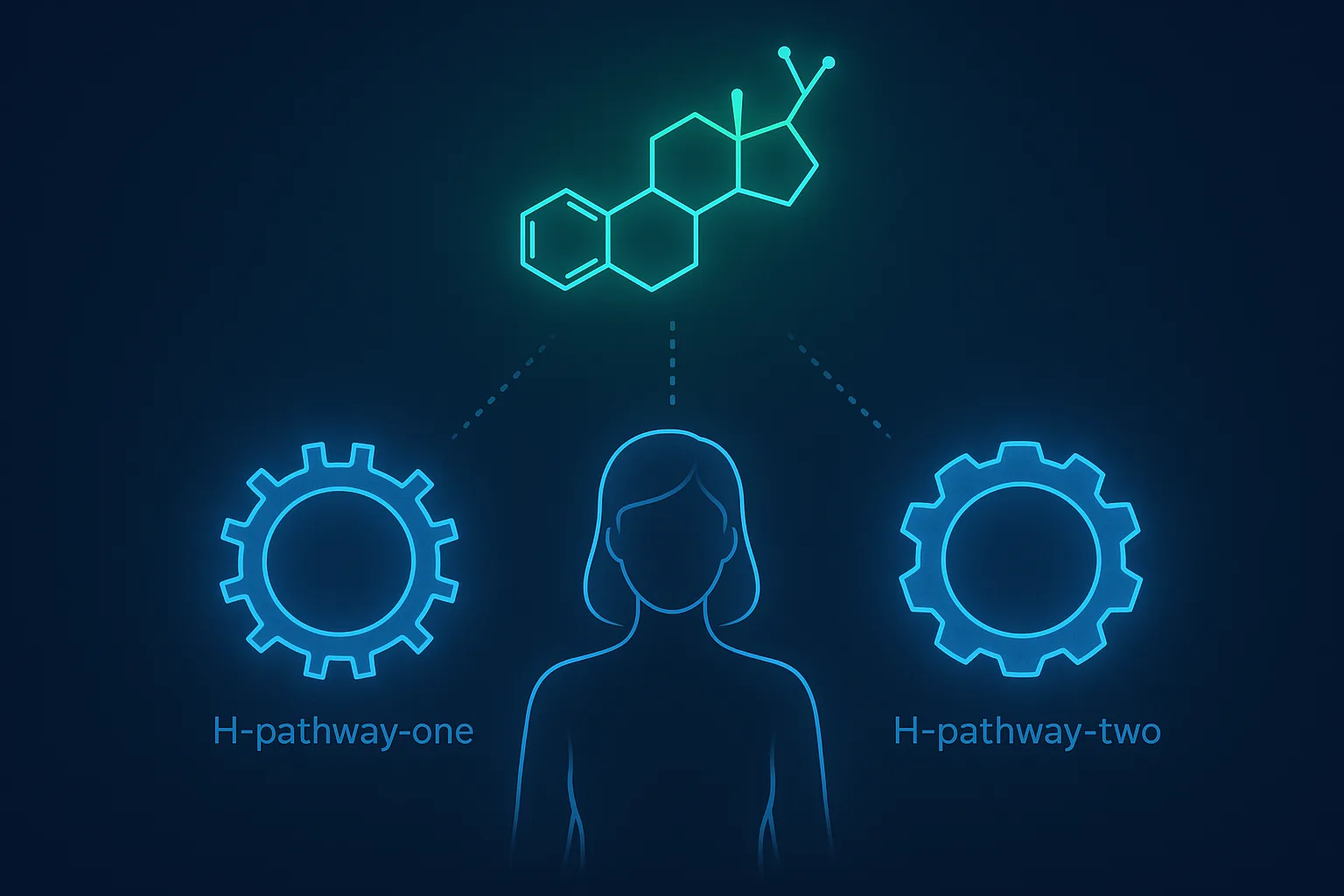
- Estrogen increases histamine release. Estradiol acts on mast cells, the immune cells that store and release histamine. When estradiol rises -- premenstrually, in early perimenopause, or pharmacologically -- mast cells become more reactive.
- Histamine increases ovarian estrogen production. Histamine signaling on ovarian theca cells upregulates aromatase activity, raising local estradiol synthesis.
This bidirectional loop matters most when estradiol is volatile, which is exactly what perimenopause is. Falling and fluctuating estradiol can destabilize mast cell behavior, producing flushing, itching, palpitations, and sleep disruption that look indistinguishable from classic vasomotor and autonomic menopausal symptoms.
In a woman with underlying mast cell activation features -- chronic urticaria, food and fragrance sensitivities, dermatographia, exercise-induced hives, postural symptoms -- the histamine arm of menopause can be a real driver. Blocking H1 and H2 receptors in that subgroup quiets a real signal.
In a woman with classic vasomotor symptoms driven by KNDy neuron hyperactivity in the hypothalamus -- the underlying mechanism for most hot flashes -- the antihistamine stack is at best a partial mask. KNDy neurons do not run on histamine. They run on neurokinin B and the loss of estradiol's calming feedback. Fezolinetant and elinzanetant, the FDA-approved non-hormonal hot flash drugs, target this pathway directly. Antihistamines do not.
The mechanism story explains why some women feel real relief on the OTC stack and others feel almost nothing. The trend is being applied universally to a heterogeneous problem.
What the Evidence Actually Shows
Search PubMed for randomized trials of fexofenadine plus famotidine in menopausal women and you will find none. Search for any antihistamine in vasomotor symptoms and the literature is essentially silent at the trial level.
What does exist:
- Mechanistic and observational reports linking estrogen withdrawal to mast cell instability and histamine intolerance
- Case series and surveys from histamine intolerance and MCAS communities reporting symptom improvement on H1 + H2 stacking, including for symptoms women describe as menopausal
- Pharmacology data showing both drugs are well absorbed, well tolerated short-term, and OTC for a reason
What does not exist:
- A single randomized, placebo-controlled trial of H1 + H2 blockade for menopausal vasomotor symptoms
- Comparison data against any of the FDA-approved options (HRT, fezolinetant, paroxetine 7.5 mg, elinzanetant)
- Long-term safety data in older women using the combo continuously for years
For comparison, transdermal estradiol has dozens of randomized trials demonstrating ~75% reduction in hot flash frequency, with mortality and fracture benefits when started within 10 years of menopause. Fezolinetant has phase 3 SKYLIGHT trial data. Paroxetine 7.5 mg has a 1,184-woman pivotal trial. The OTC antihistamine stack has anecdotes.
The Side Effect and Interaction Story
Both drugs are generally safe at OTC doses for short courses. The viral trend is not always at OTC doses, and not always short courses.
Fexofenadine: drowsiness (less than first-generation antihistamines but still possible), headache, nausea, fatigue, dry mouth. Reduced absorption with fruit juices and antacids. Caution with QT-prolonging drugs.
Famotidine: headache, dizziness, constipation or diarrhea, fatigue. Long-term use (months to years) is associated with reduced absorption of vitamin B12, magnesium, calcium, and iron. Can interact with drugs whose absorption depends on stomach acid (some antifungals, certain HIV medications, some thyroid replacement protocols).
Combined: stacking sedating side effects, additive QT effects with other QT-prolonging medications, potential interactions with antidepressants, anticoagulants, antiarrhythmics, and certain chemotherapies.
Missed diagnosis risk: flushing can mask carcinoid syndrome, pheochromocytoma, and mastocytosis. Palpitations can mask arrhythmia, hyperthyroidism, and anemia. Brain fog can mask hypothyroidism, sleep apnea, depression, and B12 deficiency. The OTC stack covers symptoms that warrant workup.
None of these are reasons not to use these drugs when indicated. They are reasons not to use them as a substitute for evaluation.
Where This Fits Against Real Treatment Options
For a 52-year-old woman with hot flashes, sleep disruption, joint pain, and brain fog, the actual menu of evidence-based options looks like this:
| Treatment |
Hot Flash Reduction |
What Else It Treats |
Evidence Level |
| Transdermal estradiol + progesterone |
70-90% |
Sleep, GSM, bone density, joint pain, mood, cognition |
Multiple RCTs, FDA-approved |
| Estradiol + progesterone + low-dose testosterone |
Same as above |
Adds libido, energy, training response |
RCTs for each component |
| Fezolinetant 45 mg |
60-65% |
VMS-specific, no hormone effects |
Phase 3 SKYLIGHT trials, FDA-approved |
| Elinzanetant |
60-70% |
VMS-specific, no hormone effects |
Phase 3 OASIS trials, FDA-approved |
| Paroxetine 7.5 mg |
35-45% |
Mood, anxiety overlap |
RCTs, FDA-approved for VMS |
| Venlafaxine 75 mg |
45-50% |
Mood, anxiety; safe with tamoxifen |
Multiple RCTs, off-label |
| Fexofenadine + famotidine |
Unknown -- no RCTs |
Histamine-driven symptoms in subgroup |
Anecdotal only |
The OTC stack is not in the same evidence tier as the other options. That is not a moral judgment -- it is a description of what trials have and have not been run.
The argument for the antihistamine combo is that it is cheap, OTC, and avoids hormones. The argument against using it as a first line is that for the average woman, it underperforms every option above on the primary endpoint and adds its own risks.
When the Antihistamine Stack Genuinely Makes Sense
There is a defensible use case. A woman who:
- Has an established mast cell activation diagnosis or strong MCAS phenotype
- Has flushing, itching, urticaria, food sensitivities, palpitations, and dermatographia alongside menopausal symptoms
- Has tried or cannot take HRT
- Has been evaluated for the above missed-diagnosis possibilities
In that woman, fexofenadine and famotidine are reasonable adjuncts and have been used in MCAS protocols for years. The viral version of the trend takes that targeted use and broadcasts it to all menopausal women, which is where the evidence runs out.
What a Reasonable Workup Looks Like
If your hot flashes, flushing, sleep, and energy are off and you are wondering whether the OTC hack is for you, the better order of operations:
- Lab and clinical workup first. TSH, free T4, CBC, ferritin, B12, fasting glucose and HbA1c, lipid panel, estradiol, FSH, total and free testosterone, SHBG, DHEA-S. Plus blood pressure, sleep history, and a careful symptom inventory.
- Trial of guideline-supported therapy. For most women within 10 years of menopause, that is transdermal estradiol with cyclic or continuous progesterone if a uterus is present. For breast cancer survivors or women who decline HRT, fezolinetant or paroxetine 7.5 mg.
- Reassess at 8-12 weeks. Hot flashes should be down 60-90%. Sleep should be improving. If symptoms persist with adequate dosing, consider mast cell features specifically -- and only then add a structured H1 + H2 trial under clinical supervision.
This is not the order most women find on TikTok. It is the order that matches the evidence.
What This Trend Tells Us About the System
The trend is not just about Allegra and Pepcid. It is about how many women are reaching for OTC remedies because they cannot get a competent menopause workup quickly through their primary care doctor.
Surveys consistently find that fewer than 1 in 5 OB-GYNs feel confident managing menopausal hormone therapy. Wait times to see a menopause-certified provider stretch into months. Women with real, treatable symptoms are told they are too young, too old, or that "this is just part of life." When the system fails them, they go to TikTok.
The FDA's removal of HRT black-box warnings in November 2025 was supposed to make this conversation easier. It did, modestly. But practice patterns lag policy by years, and the gap between updated guidelines and what most patients are actually offered is still wide. Online HRT clinics have grown specifically to fill that gap.
If you want a real evaluation -- not a 6-minute primary care visit and a brochure -- a dedicated menopause or HRT telehealth practice is now the fastest path. See our best online HRT clinic for women review for vetted options that take an integrated approach, including testosterone alongside estrogen and progesterone where indicated.
Compare full options on the main clinic comparison page before settling on one. Pricing, lab inclusion, and willingness to prescribe testosterone for women vary significantly between clinics.
What to Do If You Are Already on the Stack
If you are taking fexofenadine and famotidine and feeling better, that is information, not a verdict. The reasonable next steps:
- Document what improved. Specifically: hot flash frequency, sleep, mood, joint pain, flushing, itching, palpitations.
- Get the full hormonal workup anyway. Knowing your estradiol, FSH, testosterone, SHBG, and thyroid status changes the differential.
- Discuss the mast cell question explicitly with a clinician. If you have features beyond menopause -- food sensitivities, urticaria, dermatographia, atypical flushing -- a structured workup is worth doing.
- Compare directly. Many women who feel better on the OTC stack feel substantially better on transdermal estradiol with or without low-dose testosterone, plus a targeted antihistamine if mast cell features remain.
- Watch for long-term H2 blocker exposure. B12, magnesium, and bone density monitoring become relevant past 6-12 months of daily use.
The Bottom Line
The viral Allegra and Pepcid menopause hack is a real signal of a real problem, treated with a real-but-narrow tool. For a defined subgroup with mast cell features, H1 + H2 blockade can quiet histamine-driven symptoms that overlap with menopause. For most women with vasomotor symptoms, it underperforms every FDA-approved alternative on the primary endpoint and adds side-effect, interaction, and missed-diagnosis risk.
If you would benefit from HRT, the OTC stack is not a substitute. If you would benefit from non-hormonal pharmacotherapy, fezolinetant, elinzanetant, paroxetine, and venlafaxine are sitting right there with phase 3 data behind them. If you have mast cell features, that is its own diagnosis and deserves its own protocol.
A trend on social media is not a treatment plan. The fastest path to one is a competent provider, the right labs, and an evidence-based first line -- not a self-built protocol from a video.
Related Reading
References:
-
Wen L. What to know about a viral menopause trend, according to a doctor. CNN Health. May 5, 2026. https://edition.cnn.com/2026/05/05/health/menopause-hormones-antacids-antihistamines-wellness
-
Narula T. Viral menopause treatment trend: what to know. ABC News / Good Morning America. May 5, 2026. https://www.goodmorningamerica.com/wellness/story/viral-menopause-treatment-trend-doctor-132446921
-
The 2023 nonhormone therapy position statement of The North American Menopause Society. Menopause. 2023;30(6):573-590. PMID: 37252752
-
Lederman S, Ottery FD, Cano A, et al. Fezolinetant for treatment of moderate-to-severe vasomotor symptoms associated with menopause (SKYLIGHT 1): a phase 3 randomised controlled study. Lancet. 2023;401(10382):1091-1102. PMID: 36924778
-
Maintz L, Novak N. Histamine and histamine intolerance. Am J Clin Nutr. 2007;85(5):1185-1196. PMID: 17490952
-
Zierau O, Zenclussen AC, Jensen F. Role of female sex hormones, estradiol and progesterone, in mast cell behavior. Front Immunol. 2012;3:169. PMID: 22737152
-
FDA. HHS Advances Women's Health, Removes Misleading FDA Warnings on Hormone Replacement Therapy. November 2025. https://www.fda.gov/news-events/press-announcements/hhs-advances-womens-health-removes-misleading-fda-warnings-hormone-replacement-therapy