
Key Takeaways: Testosterone pellets provide 3-4 months of steady testosterone delivery from a single office procedure. Standard female dosing is 50-100 mg per insertion. The main advantage is convenience and consistent levels. The main drawback is that you cannot easily reduce the dose once pellets are placed.
What Are Testosterone Pellets
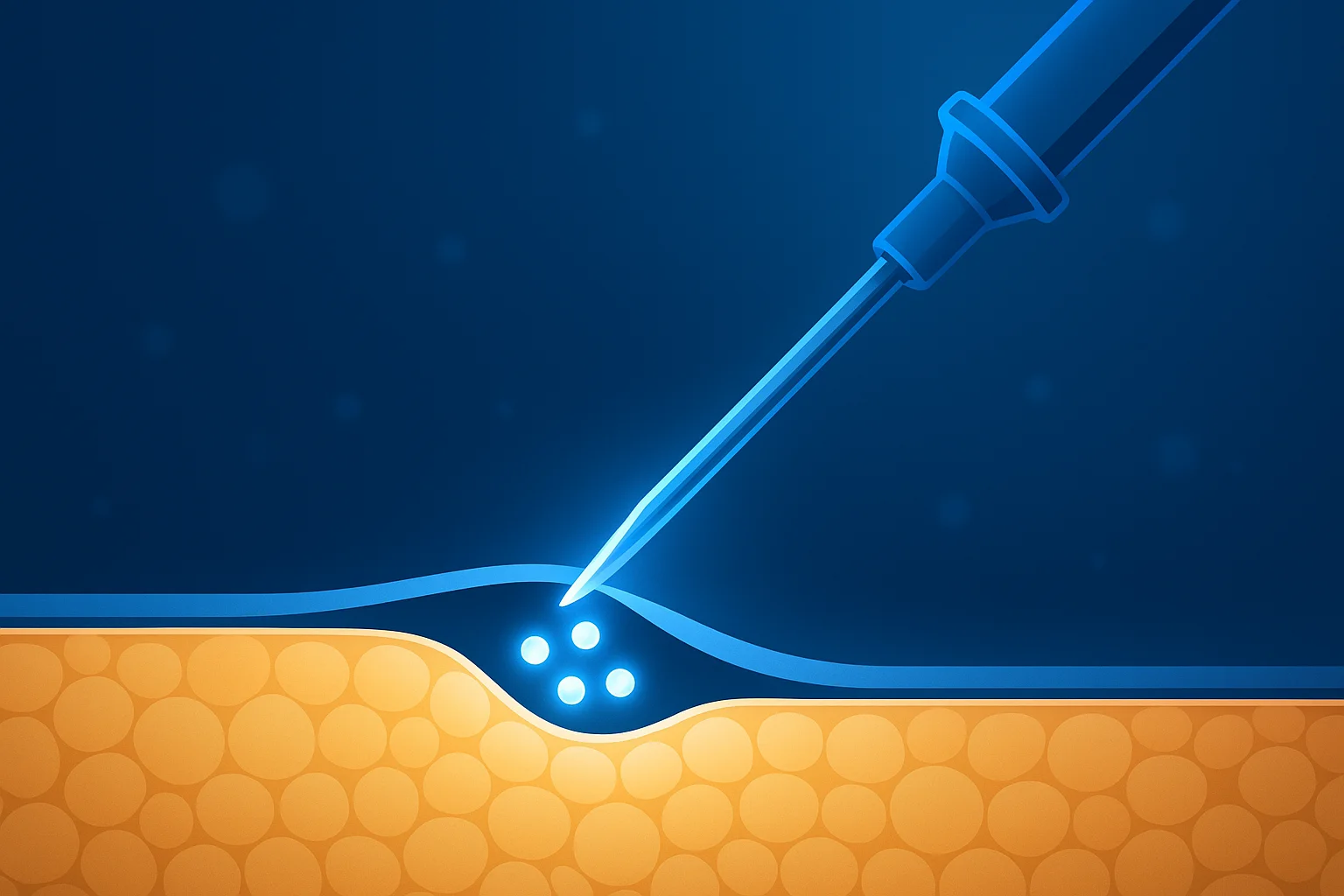
Testosterone pellets are small crystalline cylinders (roughly the size of a grain of rice) made of compressed, pharmaceutical-grade testosterone. They are inserted subcutaneously in a quick office procedure and dissolve slowly over 3-4 months, delivering a steady stream of testosterone into the bloodstream.
Pellet therapy has been around since the 1930s. It is one of the oldest forms of hormone delivery and remains popular because of its convenience and consistent blood levels.
The Insertion Procedure
Before the Procedure
- Blood work should confirm low testosterone levels
- Discuss target dosing with your provider
- Avoid blood thinners (aspirin, ibuprofen, fish oil) for 5-7 days before if possible
- Wear loose, comfortable clothing
During the Procedure (10-15 Minutes)
- Site preparation -- the upper buttock/hip area is cleaned with antiseptic
- Local anesthesia -- lidocaine is injected to numb the insertion site
- Small incision -- a 3-5 mm incision is made (no stitches needed for most procedures)
- Trocar insertion -- a specialized instrument creates a small pocket in the subcutaneous fat
- Pellet placement -- 1-3 pellets are deposited into the pocket
- Closure -- the incision is closed with a sterile strip or small adhesive bandage
Most women describe the experience as painless due to the local anesthetic. You may feel pressure but should not feel sharp pain.
Recovery
- Day 1-3: Mild bruising and tenderness at the insertion site
- Day 3-7: Bruising fades, minimal discomfort
- Week 1: Most women return to full activity
- Activity restrictions: No strenuous lower body exercise, swimming, hot tubs, or baths for 5-7 days
- Walking and upper body exercise: Fine immediately
Complications are rare but include:
- Pellet extrusion (2-5%) -- the pellet works its way out through the incision, usually from too much activity too soon
- Infection (less than 1%) -- signs include increasing redness, warmth, swelling, or discharge
- Prolonged bruising -- more common in women on blood thinners
Dosing
Female pellet dosing is substantially lower than male dosing. Men typically receive 600-1200 mg per insertion; women receive 50-100 mg.
Standard Dosing Protocol
| Patient profile |
Starting dose |
Maintenance dose |
| First-time pellet patient |
50 mg |
50-75 mg |
| Converting from cream/gel |
62.5-75 mg |
75-100 mg |
| Post-oophorectomy |
75 mg |
75-100 mg |
| Previous pellets, good response |
Maintain prior dose |
Adjust as needed |
Factors Affecting Dose
- Body weight -- heavier women may metabolize pellets faster
- Activity level -- highly active women may need higher doses due to faster metabolism
- SHBG levels -- high SHBG (common with oral estrogen use) binds more testosterone, potentially requiring higher pellet doses
- Individual metabolism -- some women are "fast metabolizers" who burn through pellets in 10-12 weeks
Monitoring
Check blood work 4-6 weeks after insertion to verify levels are in the target range (total testosterone 50-70 ng/dL). If levels are too high, the only option is to wait for the pellets to dissolve. This is the primary limitation of pellet therapy -- you cannot titrate down once they are in.
For detailed dosing across all methods, see our Women's Testosterone Dosage Guide.
Duration and Reinsertion
Most women need reinsertion every 3-4 months. The timeline varies:
- Weeks 1-2: Testosterone levels rise as pellets begin dissolving
- Weeks 3-8: Peak levels, maximum symptom benefit
- Weeks 8-12: Levels begin declining as pellets dissolve
- Weeks 12-16: Symptoms may return, signaling time for reinsertion
Some providers schedule reinsertion based on a fixed calendar (every 12-14 weeks). Others wait until symptoms return or blood work shows declining levels. The symptom-based approach tends to work better because individual metabolism varies significantly.
Pellets vs Cream: A Direct Comparison
| Factor |
Pellets |
Cream |
| Convenience |
Insert every 3-4 months |
Apply daily |
| Dose adjustability |
Cannot adjust once placed |
Easy to titrate up or down |
| Blood level consistency |
Very steady |
Mild daily fluctuations |
| Transfer risk |
None |
Risk of transfer to others |
| Cost per year |
$900-2,000 |
$360-1,080 |
| Onset of effects |
2-3 weeks |
2-4 weeks |
| Reversibility |
Must wait for dissolution |
Stop application immediately |
| Insurance coverage |
Rarely covered |
Rarely covered |
| Office visits |
Every 3-4 months for insertion |
Only for monitoring |
When Pellets Are the Better Choice
- Women who forget daily applications
- Women concerned about transfer risk (partners, children)
- Women who travel frequently
- Women who have achieved stable dosing on cream and want convenience
- Women who prefer fewer office visits
When Cream Is the Better Choice
- Women starting testosterone therapy for the first time (easier to adjust)
- Women sensitive to hormonal changes who need precise titration
- Women on a tight budget
- Women who want the ability to stop immediately if side effects occur
Read our Testosterone Cream for Women guide for the full breakdown of topical testosterone.
Pros and Cons
Advantages
- Convenience -- no daily application to remember
- Consistent levels -- steady release means no daily peaks and troughs
- No transfer risk -- safe around partners and children
- High patient satisfaction -- studies show pellet patients report high satisfaction rates
- Compliance -- impossible to miss a dose
Disadvantages
- Not easily adjustable -- if the dose is too high, you wait it out
- Procedure required -- minor but still involves an incision
- Cost -- higher upfront cost than creams
- Extrusion risk -- small chance the pellet comes out
- Provider dependent -- need a trained provider for insertion
- Variable duration -- some women metabolize faster than expected

Finding a Pellet Provider
Not all providers are trained in pellet insertion. Look for:
- Training certification -- programs like BioTE, SottoPelle, or EvexiPEL train providers specifically in pellet therapy
- Experience volume -- providers who insert regularly have lower complication rates
- Comprehensive approach -- the provider should check full blood work, not just insert pellets
- Follow-up protocol -- post-insertion labs and monitoring should be standard
Avoid providers who:
- Push pellets as the only option without discussing alternatives
- Do not check blood work before insertion
- Use a one-size-fits-all dosing approach
- Cannot explain their dosing rationale
Our independently scored clinic reviews evaluate providers on exactly these criteria.
Insurance and Payment
Most insurance plans do not cover testosterone pellet therapy for women. Expect to pay out of pocket:
- Insertion fee: $150-300 per visit
- Pellet cost: $150-250 per session
- Lab work: $50-200 (may be partially covered by insurance)
- Annual total: $900-2,000
Some clinics offer pellet packages or membership pricing that reduces the per-visit cost. HSA and FSA funds can typically be used for pellet therapy. Compare clinic pricing and services to find the best value for pellet therapy.
Related Reading
This content is for informational purposes only and is not medical advice. Consult a qualified healthcare provider before starting any treatment.