This article reports what published clinical literature and TRT prescribing experience describe about low estradiol in men. It is not medical advice. Estradiol management, aromatase inhibitor use, and dose changes require a licensed prescriber and lab monitoring.
There is a counterintuitive failure mode on testosterone replacement therapy: the man whose testosterone labs look textbook-perfect but who feels worse than he did before he started. Achy joints, a libido that has gone quiet, low mood, weak erections. The instinct is to assume the dose is too low, or that estrogen is too high and needs more control. Often the truth is the opposite — estradiol has been pushed too low, usually by an aromatase inhibitor that was never needed in the first place.
Estradiol is not a male hormone problem to be eliminated. In men, it is the form of estrogen that does the heavy lifting for bone, joints, libido, and mood. This article covers what low estradiol feels like on TRT, why "lower is better" is one of the most persistent myths in the space, where the optimal range actually sits, and how the estradiol you manage on TRT is supposed to behave.
Why Men Need Estradiol at All
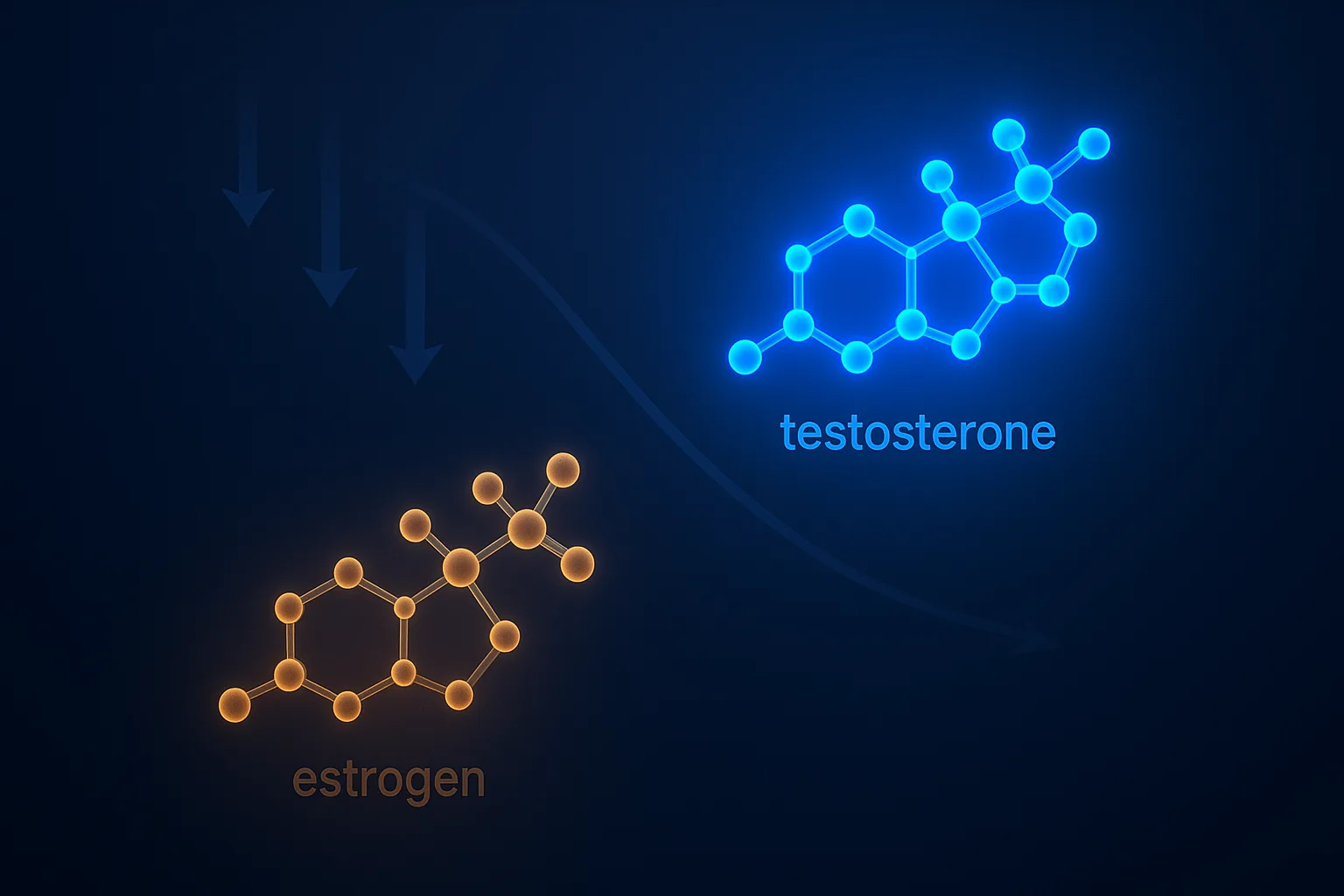
Testosterone aromatizes — converts — into estradiol via the aromatase enzyme, which is concentrated in fat tissue. This is normal and necessary. Estradiol in men is responsible for:
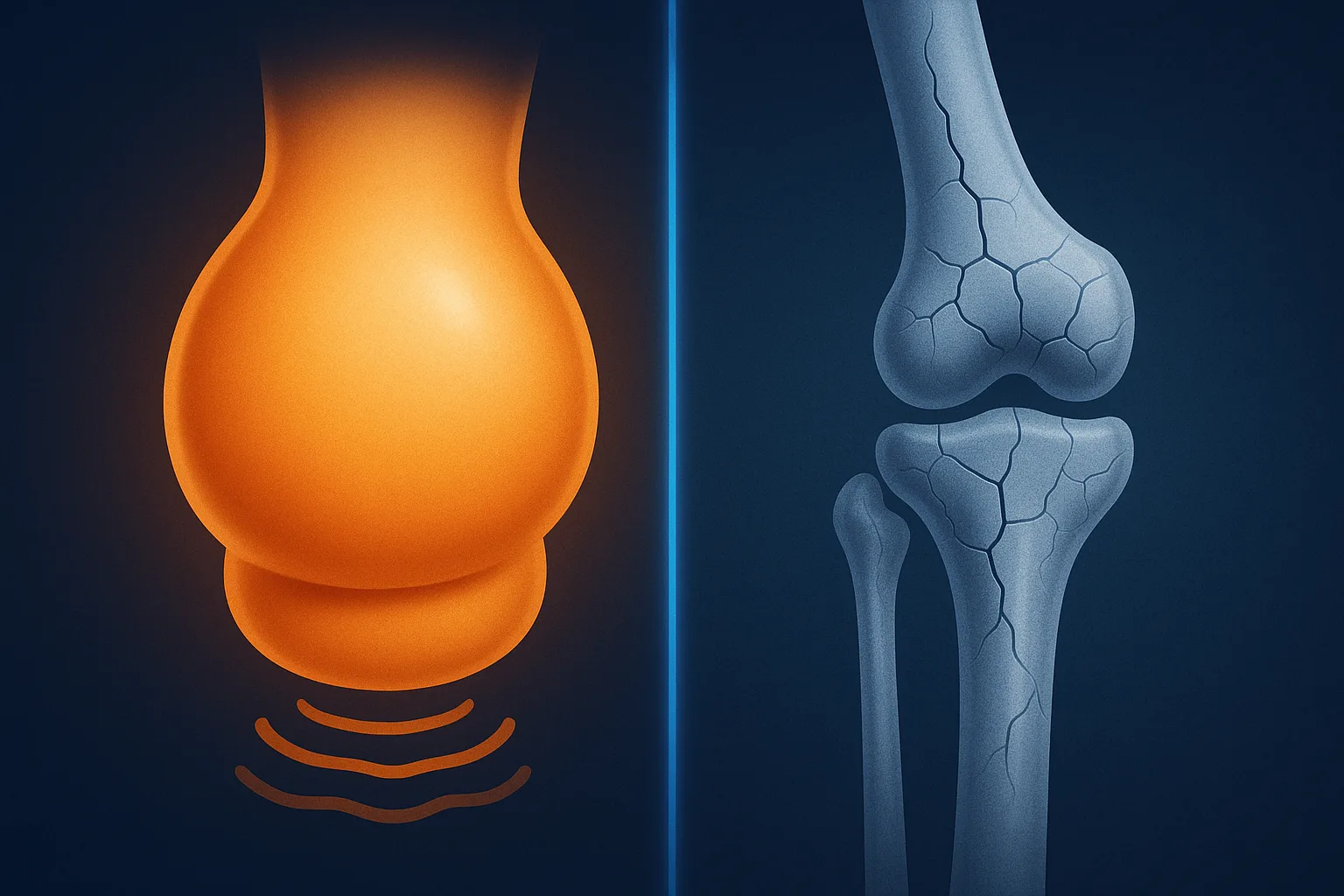
Bone density. Estradiol, not testosterone directly, is the dominant driver of male bone mineral density. Men with severely low estradiol lose bone even with high testosterone.
Joint and tendon health. Estradiol helps maintain cartilage hydration, the synovial environment, and tendon resilience. It suppresses the enzymes that break down cartilage and dampens inflammatory signaling.
Libido and erectile function. Sex drive in men depends on both testosterone and estradiol. Estradiol acts in the brain on the same circuits that govern desire.
Mood and cognition. Estradiol has direct effects on serotonin and dopamine signaling. Crashed estradiol commonly produces low mood, anxiety, and a flat affect.
Skin, eyes, and lipids. Estradiol supports skin hydration, tear film, and a favorable lipid profile.
When estradiol is driven below the range the male body expects, every one of these systems suffers. The number on the testosterone report being high does not protect against any of it.
The Symptoms of Low Estradiol
The low-estradiol cluster is distinctive enough that experienced clinicians can often recognize it from the symptom pattern alone. The hallmark is a man who started TRT, started feeling good, then started an aromatase inhibitor and felt the floor drop out.
Joint pain that feels dry and sudden
Low-estradiol joint pain has a recognizable signature: sharp, sudden "zaps" or twinges that appear without warning, soreness concentrated in the hinge joints — elbows, wrists, fingers, knees, hips — and a sensation that the joints feel dry, creaky, or stiff with reduced range of motion. This is different from the gradual ache of overuse. It often comes on within a week or two of starting or increasing an aromatase inhibitor.
Libido that disappears despite great testosterone numbers
This is the most confusing symptom because it contradicts the entire premise of TRT. A man can have total testosterone of 900 ng/dL and a libido that has gone completely flat — no spontaneous desire, no morning erections, poor response to stimulation. When estradiol is the missing variable, no amount of additional testosterone fixes it. Restoring estradiol into range frequently brings libido back with no change to the testosterone dose.
Flat mood, anxiety, and brain fog
Crashed estradiol commonly produces a low, flat, irritable, or anxious mood, sometimes with the same brain fog men start TRT to escape. Men describe feeling emotionally numb or unusually fragile. This often gets misattributed to the testosterone "not working," when the real culprit is the estrogen being suppressed beneath it.
The rest of the cluster
Dry skin, dry eyes, and increased thirst
Poor or absent morning erections and weaker erections generally
Fatigue that does not match the testosterone level
Trouble falling or staying asleep
In severe, prolonged cases, accelerated bone loss
The tell is the timeline. High-estradiol symptoms (water retention, nipple sensitivity, emotional volatility, puffiness) tend to track with dose increases. Low-estradiol symptoms tend to appear after an aromatase inhibitor is started or its dose is raised. If you felt better on TRT before you added anastrozole, the medication — not your hormones — is the most likely problem.
The idea that men should drive estradiol as low as possible is one of the most damaging pieces of folklore in the TRT world. It comes from conflating two different things: the genuine discomfort of high estradiol (which some men do experience) and the false assumption that the opposite extreme must therefore be ideal.
The evidence does not support it. Estradiol below the normal range impairs bone density, joint health, libido, and mood — the precise outcomes men pursue TRT to improve. Major medical guidelines do not recommend routine aromatase inhibitor use for all men on testosterone therapy; the inhibitor is reserved for specific, symptom-confirmed cases. A clinic that reflexively prescribes anastrozole alongside every testosterone prescription is exhibiting a recognized clinic red flag, not best practice.
The deeper problem is that aromatase inhibitors are blunt instruments. Anastrozole does not gently nudge estradiol down; in many men a standard dose flattens it well below the floor, and because the drug has a relatively long half-life, the effect lingers. The result is an estradiol crash that can take days to weeks to recover from once the drug is stopped.
The Optimal Estradiol Range for Men on TRT
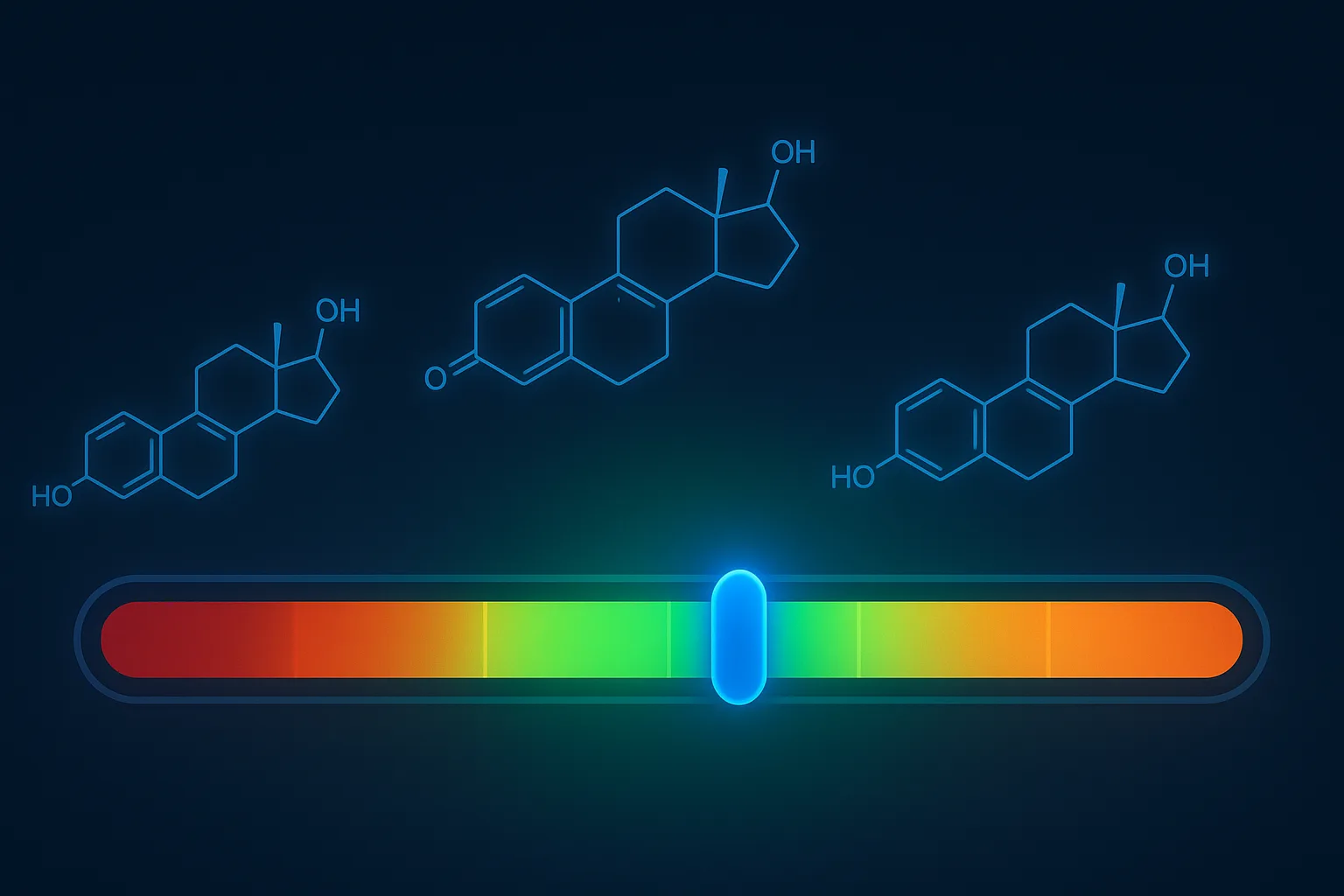
There is no single universally agreed number, but the working consensus among TRT-experienced clinicians clusters tightly:
Sensitive Estradiol (LC-MS/MS)
Interpretation for Men on TRT
Below 20 pg/mL
Associated with joint pain, low libido, and bone loss; commonly symptomatic
20-30 pg/mL
Zone where many men report feeling best
20-40 pg/mL
Broadly considered the target range
40-60 pg/mL
Acceptable for some men, especially with higher doses; watch for high-E2 symptoms
Above 60 pg/mL
More likely to produce high-estradiol symptoms in sensitive men
Two essential caveats:
Use the sensitive assay. Estradiol should be measured with the sensitive (LC-MS/MS) method, not the standard immunoassay, which is calibrated for women and unreliable at male concentrations. Ordering the wrong test produces meaningless numbers — a point covered in how to read your TRT labs.
Treat the man, not the number. Estradiol must be interpreted alongside symptoms. Some men feel great at 45 pg/mL; some feel flat at 25 pg/mL. The "ideal" estradiol is the one at which you feel well, not a fixed target chased in isolation. Symptoms plus labs, never labs alone.
How Estradiol Gets Crushed in the First Place
Three patterns account for most estradiol crashes:
1. An aromatase inhibitor prescribed by default
The most common cause. A clinic hands every patient anastrozole alongside testosterone, with no estradiol symptoms to justify it and no sensitive estradiol test to track it. The man takes it as directed and crashes. The fix is usually to stop the inhibitor entirely and let estradiol recover.
2. Chasing a high-E2 number with an inhibitor
A man sees an estradiol reading that looks high — often because it was measured on the wrong (immunoassay) test, which over-reads — and takes an aromatase inhibitor to "correct" it. The number drops, the symptoms of low estradiol arrive, and he now feels worse than before. This is why the assay matters so much.
3. Over-aggressive inhibitor dosing
Even when an aromatase inhibitor is genuinely indicated, the doses commonly used are easy to overshoot. Anastrozole is potent; a full tablet several times a week can flatten estradiol in many men. Micro-dosing, longer intervals, or stopping entirely are the usual corrections.
The root cause behind most of these is that the testosterone dose or injection pattern was driving more aromatization than necessary. For many men, the cleaner solution than an inhibitor is to address the estradiol management strategy on TRT at the source.
The Fix: Recovering From an Estradiol Crash
The general approach, always coordinated with a prescriber:
Stop or sharply reduce the aromatase inhibitor. This is the single highest-yield move. Estradiol will recover on its own, typically over several days to a couple of weeks given anastrozole's half-life.
Address the root cause with dose strategy. Splitting the weekly testosterone dose into smaller, more frequent injections — twice weekly or every other day — produces steadier peaks and less aromatization than one large injection. For many men this controls estradiol with no inhibitor at all. The injection frequency question is central here.
Lower the testosterone dose if needed. If estradiol runs genuinely high at the current dose, a modest dose reduction lowers both testosterone and the estradiol that tracks with it — often resolving symptoms without crushing estrogen.
Retest with the sensitive assay at 6-12 weeks. Any change needs confirmation. Symptoms can lag labs in both directions, so give the new equilibrium time before judging it.
What you should not do is stack a second drug on top of the first to chase a number. The goal is the lowest-intervention protocol that keeps you symptom-free, not the most aggressive one.
How This Connects to Choosing a Clinic
The estradiol crash is, more than almost any other TRT problem, a clinic-quality issue. A good prescriber:
Orders the sensitive (LC-MS/MS) estradiol test, not the immunoassay
Does not prescribe an aromatase inhibitor by default
Tries dose splitting before reaching for a drug
Interprets estradiol alongside symptoms, not as a number to minimize
Rechecks labs after any change
A clinic that ships anastrozole with every starter kit, uses the wrong estradiol assay, or tells you lower estrogen is always better is one to avoid. The clinic comparison hub ranks clinics by exactly this kind of monitoring and protocol discipline, and the questions to ask a TRT clinic include how they handle estradiol before you sign up.
Bottom Line
Estradiol is not the enemy of a man on TRT — it is part of what makes TRT work. Crushed below roughly 20 pg/mL, it produces dry, achy joints, a flat libido that no testosterone number can rescue, low mood, weak erections, and over time, bone loss. The "lower is better" belief is a myth, and the aromatase inhibitor most often responsible was usually never needed. If you feel worse on TRT after adding anastrozole, the most likely fix is to remove it, split your dose, and let estradiol return to the 20-40 pg/mL zone where men feel their best. Do it with a prescriber, confirm it with the right test, and treat the symptoms rather than the number.
Finkelstein JS, Lee H, Burnett-Bowie SM, et al. Gonadal Steroids and Body Composition, Strength, and Sexual Function in Men. N Engl J Med. 2013;369(11):1011-1022. PMID: 24024838
Bhasin S, Brito JP, Cunningham GR, et al. Testosterone Therapy in Men With Hypogonadism: An Endocrine Society Clinical Practice Guideline. J Clin Endocrinol Metab. 2018;103(5):1715-1744. PMID: 29562364
Mulhall JP, Trost LW, Brannigan RE, et al. Evaluation and Management of Testosterone Deficiency: AUA Guideline. J Urol. 2018;200(2):423-432. PMID: 29601923
Vandenput L, Ohlsson C. Estrogens as regulators of bone health in men. Nat Rev Endocrinol. 2009;5(8):437-443. PMID: 19528961
Russell N, Grossmann M. Estradiol as a male hormone. Eur J Endocrinol. 2019;181(1):R23-R43. PMID: 31096185
This content is for informational purposes only and is not medical advice. Consult a qualified healthcare provider before starting any treatment.
Frequently Asked Questions
What are the symptoms of low estradiol in men on TRT?
The classic low-estradiol cluster is achy, dry, or 'creaky' joints (often elbows, wrists, fingers, hips), a flat or absent libido despite good testosterone numbers, low mood or anxiety, poor erections, dry skin and eyes, and trouble sleeping. Many men describe feeling worse on TRT after starting an aromatase inhibitor than they did before treatment, which is the signature of an over-corrected estradiol.
What is the optimal estradiol range for men on TRT?
Most TRT-experienced clinicians target a sensitive (LC-MS/MS) estradiol roughly in the 20-40 pg/mL range, with many men feeling best in the 20-30 pg/mL zone. Estradiol below about 20 pg/mL is associated with joint pain and accelerated bone loss in men, and the level should always be interpreted alongside symptoms rather than chased to a fixed number.
Is lower estradiol better for men on TRT?
No. The belief that lower estrogen is better is not supported by evidence. In men, estradiol maintains bone density, cartilage and tendon health, libido, and erectile function. Suppressing it below the normal range with an aromatase inhibitor impairs the exact outcomes TRT is supposed to improve, even when total testosterone looks perfect on paper.
How do I recover from an estradiol crash?
An estradiol crash from an aromatase inhibitor usually resolves by stopping or sharply reducing the inhibitor and allowing estradiol to recover, which can take days to a couple of weeks since anastrozole has a relatively long half-life. Lowering or splitting the testosterone dose addresses the root cause for many men. Any change should be made with a prescriber and confirmed with repeat labs at 6-12 weeks.
Do most men on TRT even need an aromatase inhibitor?
Most do not. Major guidelines reserve aromatase inhibitors for specific symptomatic cases, not routine use. Splitting the dose into smaller, more frequent injections often keeps estradiol in range without any inhibitor. Reflexively prescribing anastrozole to every TRT patient is a recognized red flag for low-quality prescribing.
Can high testosterone with low estradiol still cause low libido?
Yes. Libido in men depends on both testosterone and estradiol. A man can have total testosterone of 900 ng/dL and still have a dead libido if his estradiol has been crushed below roughly 15-20 pg/mL. Restoring estradiol into range frequently brings libido back even with no change to the testosterone dose.