Key Takeaways: A University of Cambridge analysis of nearly 125,000 women in the UK Biobank, published in Psychological Medicine in early 2026, found that post-menopausal women had significantly less grey matter in the hippocampus, entorhinal cortex, and anterior cingulate cortex -- regions central to memory and among the earliest hit in Alzheimer's disease. Hormone therapy (HRT) did not reverse those volume reductions in this snapshot, and HRT users showed higher anxiety and depression than never-users. The catch: this is cross-sectional data, and the authors found the mental-health differences predated HRT use (women with worse symptoms were more likely to start it), so the study shows associations, not cause. The most actionable detail is that about one in four women on the maximum HRT dose still had suboptimal estrogen levels -- widespread under-dosing that could blunt any real benefit. The honest read: HRT remains strong symptom therapy, dementia prevention is not an established reason to take it, and lifestyle plus proper dose monitoring matter more than headlines suggest.
What the Study Found
University of Cambridge researchers Christelle Langley and Barbara Sahakian analyzed data from nearly 125,000 women in the UK Biobank, splitting them into three groups: pre-menopausal, post-menopausal not using hormone therapy, and post-menopausal using HRT. They combined brain MRI (grey matter volume), cognitive testing (memory, attention, psychomotor speed), and mental health measures (anxiety, depression, antidepressant use, sleep). The work was published in Psychological Medicine in early 2026.
Three findings drove the headlines:
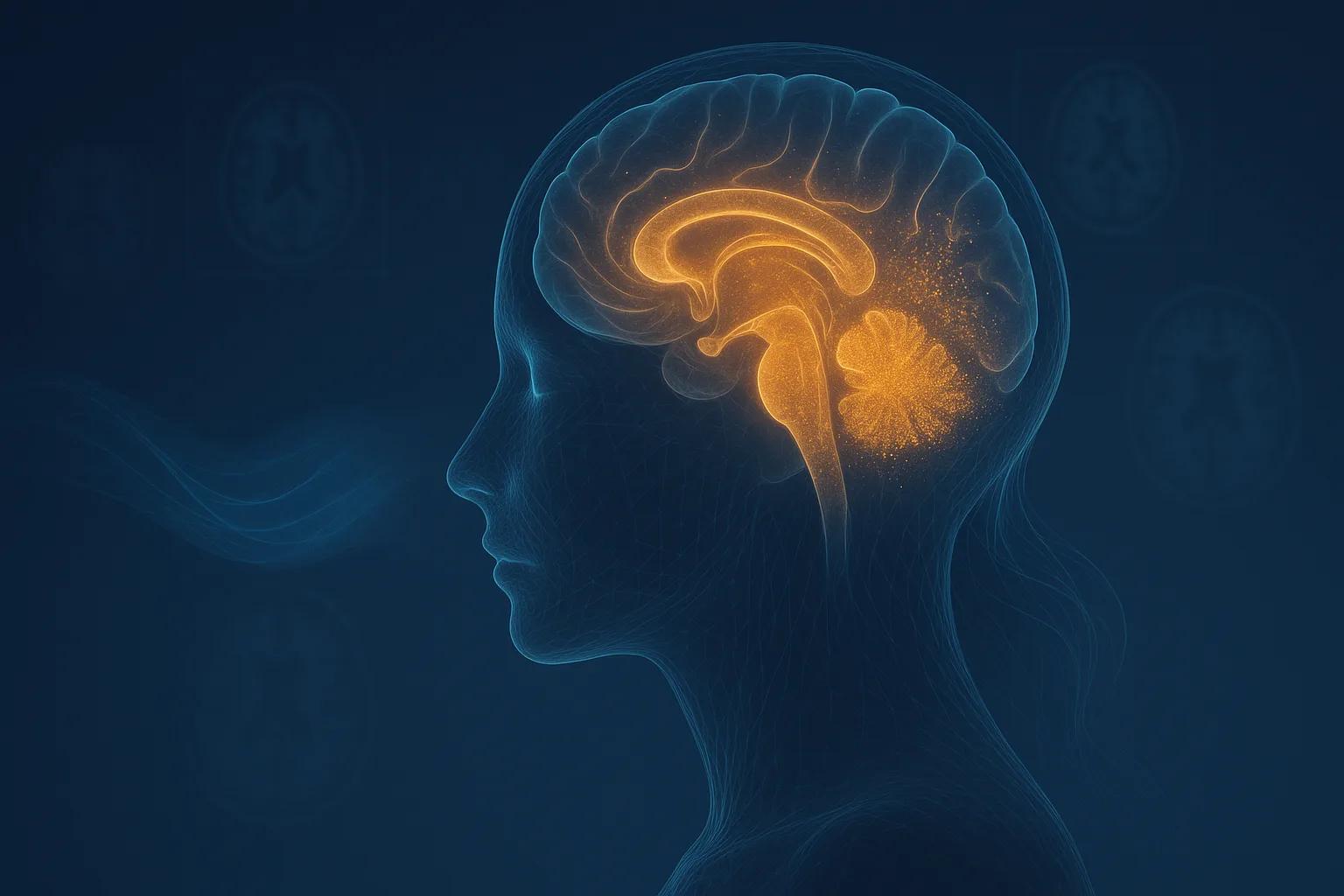
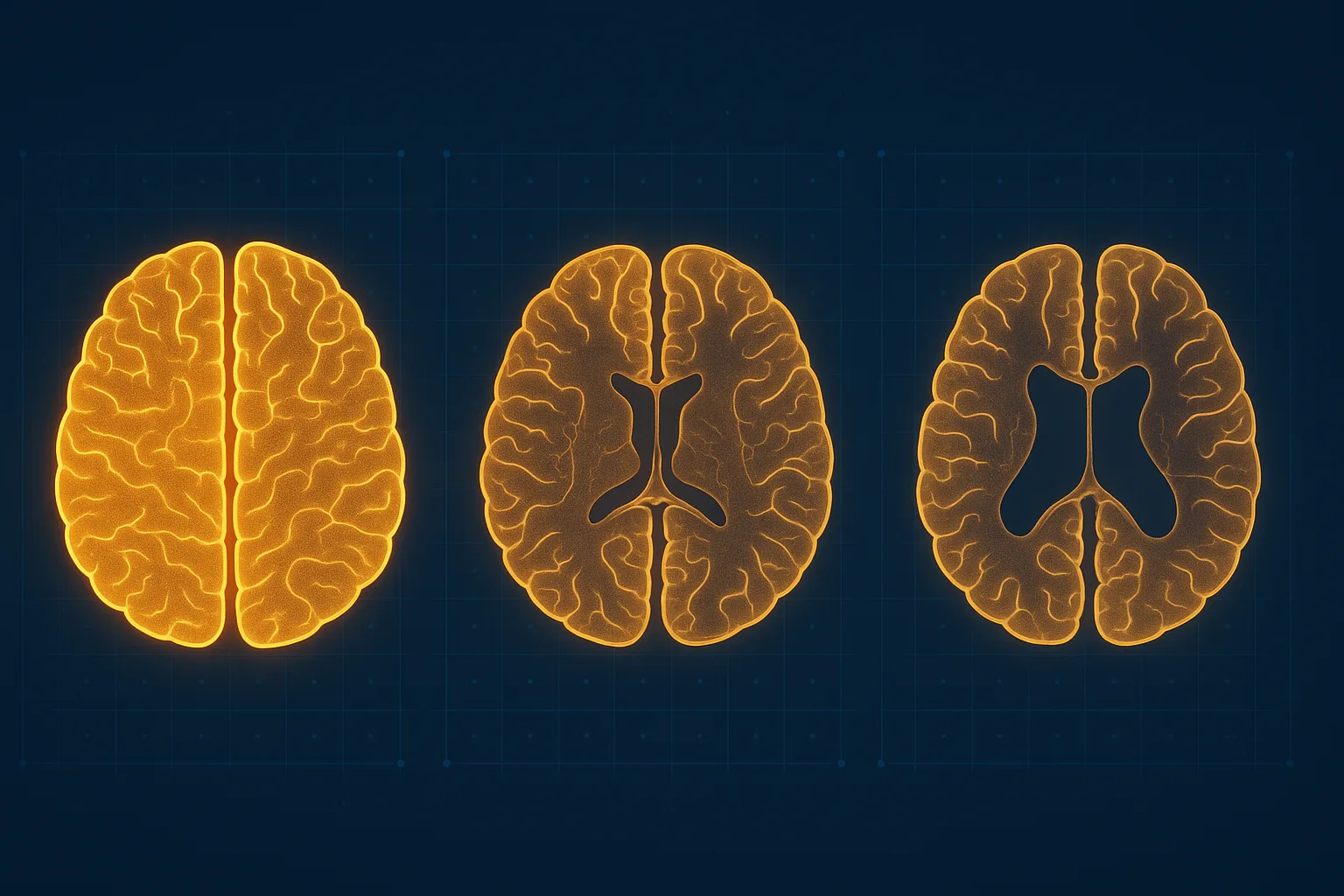
1. Menopause was associated with grey matter loss in memory regions. Post-menopausal women had significantly reduced grey matter volume in the hippocampus (forms and stores memories), the entorhinal cortex (the gateway routing information into and out of the hippocampus), and the anterior cingulate cortex (emotion regulation, decision-making, attention). The authors specifically note these regions "are among the earliest affected in Alzheimer's disease" -- a possible thread in why women carry a higher lifetime dementia burden than men.
2. HRT did not reverse the reductions. In this snapshot, women using HRT did not show preserved grey matter in those regions compared to post-menopausal non-users. In the hippocampus and anterior cingulate, the HRT group's volumes were if anything lower.
3. HRT users reported worse mood -- but it came first. Women on HRT had higher levels of anxiety and depression than post-menopausal women who never used it. This is the finding most likely to be misread, and the authors addressed it head-on: the mental-health differences appeared to predate HRT use. Women with pre-existing anxiety and depression were more likely to start hormone therapy in the first place.
There was also a benefit worth naming: HRT was associated with better psychomotor speed -- the brain's processing and reaction speed -- suggesting it slowed at least one component of age-related cognitive decline.
Why You Should Not Panic About This
The framing matters enormously here, because "menopause shrinks your brain and HRT doesn't fix it" is the kind of headline that sends women into either despair or a panic to start or stop treatment. The study's own authors are careful, and you should be too.
It is a snapshot, not a movie. This is cross-sectional data -- a single point-in-time comparison between groups of women, not a before-and-after tracking of the same women through menopause and onto HRT. Cross-sectional designs can reveal associations but cannot establish that menopause caused the grey matter difference, or that HRT failed to protect it. You are comparing different people, not the same person over time.
Confounding by indication is everywhere in this data. The authors demonstrated this directly with the mood finding: HRT users looked worse on anxiety and depression, but those problems existed before they started. Women who feel worse seek treatment. The exact same logic almost certainly applies to the brain-volume comparison -- the women who chose HRT may differ from those who did not in ways the study cannot fully account for (symptom severity, health-seeking behavior, surgical menopause, age at menopause). This is a classic "sicker patients get the treatment, so the treatment looks bad" trap.
The brain regions are correlated with menopause status, but causation runs in many directions. Aging itself shrinks grey matter. Poor sleep -- which the study also linked to menopause -- damages the hippocampus. Depression is associated with hippocampal volume loss. Disentangling menopause from age, sleep, and mood in a snapshot is genuinely hard, and the authors say so.
The honest interpretation is not "HRT doesn't work for the brain." It is "this snapshot cannot tell us whether HRT protects the brain, and the simple story that it should has not held up cleanly in observational data." That uncertainty is the actual finding.
The Detail Everyone Missed: Widespread Under-Dosing
The single most clinically useful sentence in the coverage is easy to skip past: roughly one in four women on the maximum HRT dose still had suboptimal estrogen levels.
Think about what that does to a study like this. If a meaningful fraction of the "HRT users" group is not actually reaching the estrogen concentrations needed for a biological brain effect, then the HRT group is partly a group of under-treated women. Diluting a treatment group with people who are effectively under-dosed will blunt or erase any real benefit the treatment might have. You would not test whether a blood pressure drug works by including people whose pressure never came down on it.
This matters far beyond the study, because under-dosing is one of the most common real-world failures in menopause care. A fixed-dose patch handed out with no follow-up labs is not the same as titrated therapy aimed at a target level. Absorption varies widely between women -- skin, body composition, and metabolism all change how much of a transdermal dose actually reaches the bloodstream. Two women on the "same" patch can land at very different blood levels.
This is why monitoring is not bureaucratic box-checking. If you take HRT and want it to do anything measurable, the dose has to actually get you into range, and the only way to know is to test. A program that prescribes a starter patch and never checks a level cannot tell you whether you are optimized or under-treated -- and based on this data, a quarter of women maxed out on dose still are not where they need to be.
Put the new study next to everything else known about hormones and the brain, and a coherent position emerges.
HRT is well-established for symptoms, not for dementia prevention. Hot flashes, night sweats, sleep disruption, genitourinary symptoms, bone loss -- these are the indications with strong evidence. Many women also report that their subjective brain fog, word-finding, and mental clarity improve on HRT, and that quality-of-life benefit is real even if MRI volumes do not move. What this study reinforces is that you should not start HRT primarily to prevent Alzheimer's or rebuild grey matter, because the evidence for that does not exist.
Timing still looks like the dominant variable. The broader literature -- including the critical window hypothesis discussed in our HRT brain fog guide and the timing hypothesis for when to start HRT -- consistently finds that starting hormone therapy within roughly 10 years of menopause or before age 60 is neutral-to-protective for cognition, while starting after 65 may add risk. The UK Biobank snapshot does not overturn this; it adds a note of caution that even well-timed HRT may not visibly rebuild structure.
The dose has to be right to expect anything. Given the under-dosing finding, "I'm on HRT" tells you very little. "I'm on HRT, my estradiol is in target range, and I'm monitored" tells you a great deal more.
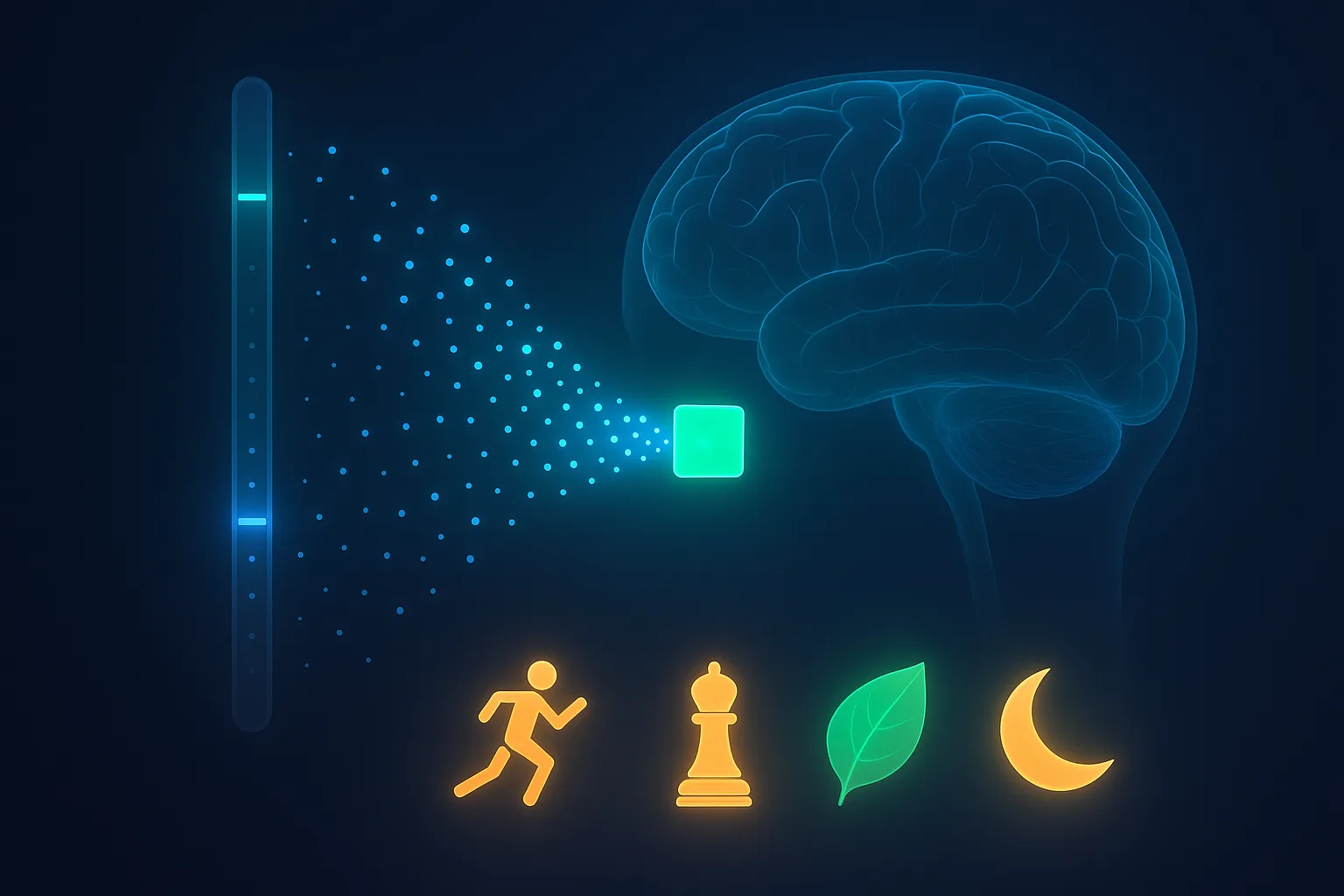
Lifestyle is not a consolation prize. The authors explicitly recommend exercise (which can increase hippocampal volume), cognitively demanding activity, a nutritious diet, quality sleep, and social connection. These are not what you do instead of HRT -- they are the foundation, with HRT layered on for symptom control. For midlife brain health, the exercise-and-sleep evidence is arguably stronger than the hormone evidence.
Where Testosterone Fits
This study was about menopause status and estrogen-based HRT. It did not examine testosterone, and the women's testosterone story is genuinely different.
Unlike estrogen, testosterone in women does not drop at menopause -- a large 2025 Australian study found it declines gradually with age, with no menopause cliff. The established evidence-based indication for testosterone in women is hypoactive sexual desire disorder, not cognition. Some small trials hint that transdermal testosterone may modestly help verbal memory, but it is not a proven treatment for brain fog or dementia. If a clinic is positioning testosterone as a brain or memory therapy for women, that is running ahead of the evidence -- the same caution that applies to estrogen here applies doubly to testosterone for cognitive claims.
How to Use This When Choosing Care
The practical lesson of this study is less about whether to take HRT and more about how it is delivered. Three signals separate optimized care from prescription-mill care:
Does the clinic check levels? Given that a quarter of women on maximum dose are still under-treated, baseline and follow-up estradiol testing is the difference between guessing and knowing. A program that never draws a level cannot tell you whether you are in range.
Does it titrate, or just hand you a starter dose? Absorption varies. A clinic that adjusts your dose based on symptoms and labs is doing the work this study shows actually matters. A fixed patch with no follow-up is the under-dosing failure mode in action.
Is it honest about what HRT can and cannot do? A trustworthy prescriber will offer HRT for symptoms and quality of life, and will be straight that dementia prevention is not an established indication. A clinic selling HRT as brain-saving or anti-aging is overselling what the data supports.
The Bottom Line
The UK Biobank study is a real, large, and useful data point -- and it is also exactly the kind of cross-sectional finding that gets oversold in headlines. Menopause is associated with grey matter loss in memory regions, HRT did not visibly reverse it in this snapshot, and HRT users had worse mood that predated their treatment. None of that proves HRT harms the brain, and the buried under-dosing detail suggests a chunk of the "HRT group" was never properly treated to begin with.
For a woman deciding about hormone therapy, the takeaway is steady: use HRT for the symptoms it clearly treats, get the dose monitored and right if you take it, do not bank on it to prevent dementia, and treat exercise, sleep, and cognitive engagement as the real foundation of brain health through midlife.
Compare HRT and TRT Clinics
If you are considering hormone therapy, the standard a clinic holds itself to -- baseline labs, target-level monitoring, dose titration, honest framing of benefits -- matters more than the marketing. See independent reviews of leading clinics, scored on diagnostic rigor, physician oversight, lab monitoring, pricing transparency, and guideline-aligned care.
Langley C, Sahakian BJ, et al. "Emotional and cognitive effects of menopause and hormone replacement therapy." Psychological Medicine (Cambridge University Press), 2026. Analysis of ~125,000 UK Biobank participants.
University of Cambridge. "Menopause linked to loss of grey matter in the brain, poorer mental health and sleep disturbance." Research news, 2026.
Langley C, Sahakian BJ. "Menopause: our study revealed how it affects the brain, cognition and mental health." The Conversation, 2026.
Davis SR, Wang Y, et al. "Testosterone and pre-androgens by age and menopausal stage at midlife: findings from a cross-sectional study." eBioMedicine (The Lancet), 2025. Australian Women's Midlife Years Study.
Frequently Asked Questions
What did the UK Biobank menopause brain study actually find?
University of Cambridge researchers analyzed brain imaging, cognitive tests, and mental health data from nearly 125,000 women in the UK Biobank, published in Psychological Medicine in early 2026. Post-menopausal women showed significant reductions in grey matter volume in the hippocampus, entorhinal cortex, and anterior cingulate cortex -- three regions central to memory, learning, and emotional regulation, and among the earliest affected in Alzheimer's disease. The same regions were also smaller in women using hormone therapy (HRT) than in post-menopausal women who never used it, meaning HRT did not reverse the volume reductions in this analysis. HRT did show one benefit: it was associated with better psychomotor (processing) speed, slowing one aspect of age-related cognitive decline.
Does this mean HRT is bad for the brain?
No -- and the study authors are explicit about this. The study is cross-sectional, meaning it is a single snapshot rather than a before-and-after comparison, so it cannot prove that menopause or HRT caused the brain changes. Critically, the authors found that the higher anxiety and depression seen in HRT users existed before they started HRT -- women with worse mental health were more likely to start it (confounding by indication). The same logic likely applies to brain volume: women who chose HRT may differ systematically from those who did not. The study shows an association in a snapshot, not that HRT shrinks the brain. It is a reason to be realistic about HRT's brain benefits, not a reason to stop or avoid it.
Should I take HRT to prevent dementia or brain fog?
Based on current evidence, dementia prevention is not an established reason to start HRT, and this study reinforces that. HRT is well-supported for menopausal symptoms -- hot flashes, night sweats, genitourinary symptoms, bone protection -- and many women report that their subjective brain fog and clarity improve on it. But the randomized evidence that HRT prevents dementia or reverses structural brain changes is not there. The strongest cognitive signal across studies remains timing: starting HRT within about 10 years of menopause (or before age 60) appears neutral-to-protective, while starting after 65 may carry cognitive risk. Treat HRT as symptom and quality-of-life therapy, with brain effects as an open question.
Why did HRT not help if estrogen protects the brain?
One likely explanation buried in the data is under-dosing. The Cambridge authors noted that roughly one in four women on the maximum HRT dose still had suboptimal estrogen levels -- meaning a large share of HRT users may not be reaching the blood concentrations needed for a biological brain effect. If many 'HRT users' in the dataset were effectively under-treated, that alone could blunt any measurable benefit. This is why blood-level monitoring and dose titration matter, and why a fixed starter patch with no follow-up labs is not the same as optimized therapy. It is also why where and how you get HRT affects what you actually get out of it.
What does the study say women should actually do for brain health?
The authors point to lifestyle as the most accessible, evidence-backed strategy: regular exercise (which can actually increase hippocampal size), cognitively challenging activity like learning a language or playing chess, a balanced nutritious diet, good-quality sleep, and strong social connections. None of this competes with HRT -- it complements it. The practical takeaway is to use HRT for the symptoms it clearly treats, optimize the dose with proper monitoring if you take it, and treat exercise, sleep, and cognitive engagement as the foundation of brain health through midlife rather than expecting a hormone patch to do that work alone.
Does testosterone play a role in this brain picture for women?
The UK Biobank study focused on menopause status and estrogen-based HRT, not testosterone. Separately, a large 2025 Australian study found that testosterone in women does not drop at menopause the way estrogen does -- it declines gradually with age. The current evidence-based indication for testosterone in women is hypoactive sexual desire disorder, not cognition. Some small trials suggest transdermal testosterone may modestly help verbal memory, but it is not an established treatment for brain fog or dementia prevention. If you are considering testosterone for cognitive symptoms, treat it as exploratory and insist on labs, monitoring, and physiologic dosing.