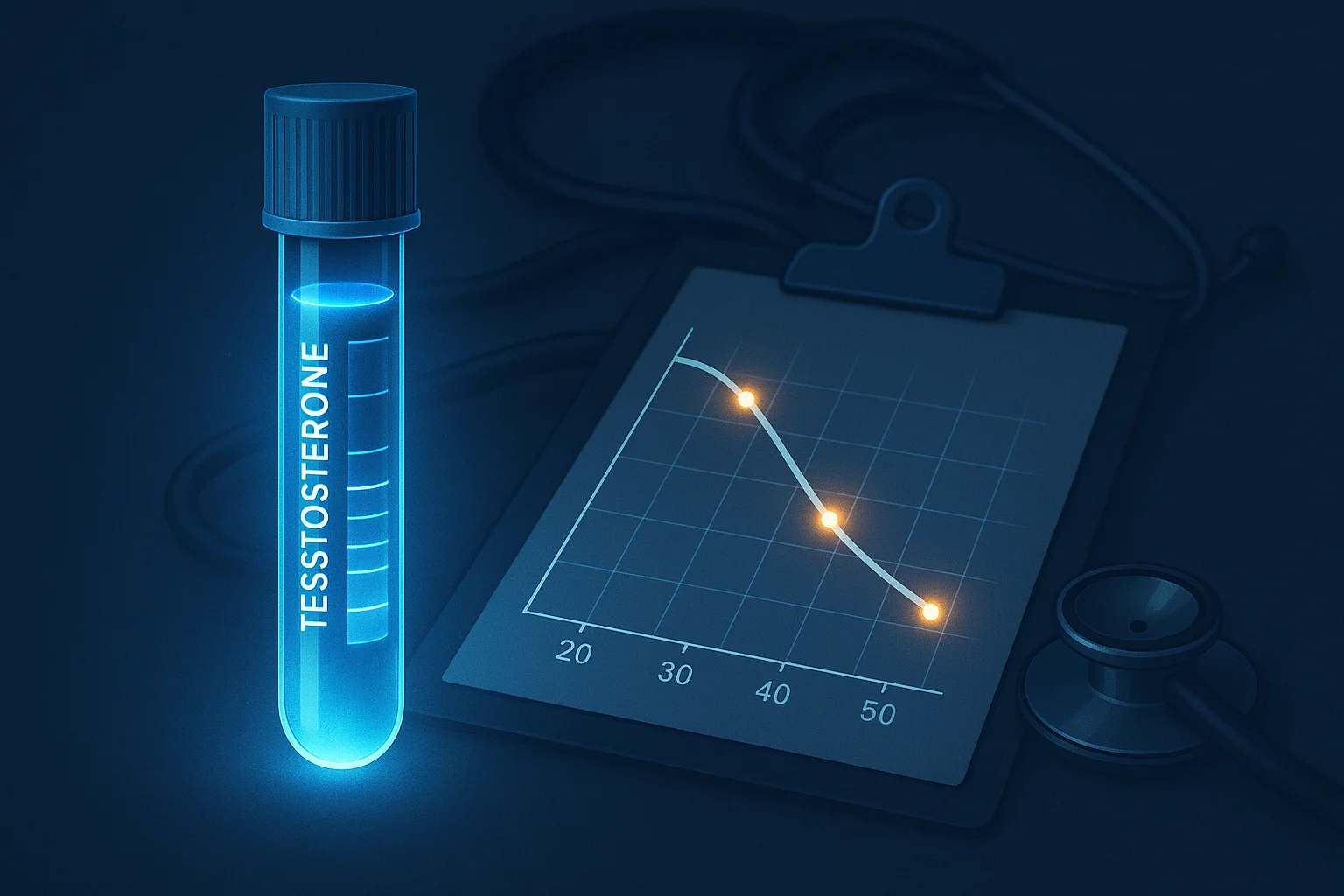
Key Takeaways: Low testosterone in women causes a recognizable pattern of symptoms including decreased libido, fatigue, brain fog, muscle loss, and mood changes. These symptoms are frequently misdiagnosed as depression, thyroid problems, or normal aging. Testosterone levels decline roughly 50% between ages 20 and 40, with further drops at menopause.
The Problem with Diagnosis
Low testosterone in women is one of the most under-recognized hormone deficiencies in medicine. The symptoms overlap heavily with depression, hypothyroidism, iron deficiency, and perimenopause. Many women spend years cycling through antidepressants, sleep aids, and lifestyle changes without anyone checking their testosterone levels.
Part of the problem is systemic. There is no universally agreed-upon diagnostic threshold for female testosterone deficiency. Unlike men, where hypogonadism has clear lab cutoffs, women's ranges are poorly standardized across labs. Reference ranges vary wildly, and many labs do not even offer sensitive enough assays for the low levels found in women.
Despite these challenges, the symptom pattern is consistent and recognizable. If you have three or more of the following symptoms, testosterone deficiency belongs on the differential.
1. Decreased Libido
This is the most studied and validated symptom of low testosterone in women. The 2019 Global Consensus Position Statement specifically identified hypoactive sexual desire disorder (HSDD) as the primary indication for testosterone therapy in postmenopausal women.
Low T-related libido decline is different from stress-related or relationship-related decreases. It presents as a fundamental absence of sexual interest -- not just being too tired, but genuinely not thinking about or wanting sex. Women often describe it as their "pilot light going out."
The clinical trials are clear. The Davis et al. 2019 meta-analysis in the Lancet showed testosterone therapy significantly improved sexual desire, arousal, orgasm, and satisfaction in postmenopausal women.
Not the tiredness that comes from poor sleep or a demanding schedule. This is a bone-deep fatigue that persists regardless of rest. Women with low testosterone describe feeling like they are operating at 60% capacity all the time.
Testosterone influences mitochondrial function and red blood cell production. When levels drop, cellular energy production becomes less efficient. The fatigue often worsens in the afternoon and is particularly noticeable during exercise, where recovery times lengthen considerably.
3. Loss of Muscle Mass
Testosterone is anabolic. It drives protein synthesis and muscle maintenance. When testosterone drops, women lose muscle mass even if their exercise routine has not changed. This creates a frustrating cycle: less muscle means lower metabolism, which means easier weight gain, which makes exercise harder.
The loss is often subtle. Clothes fit differently. Weights that were manageable become harder. Muscle definition disappears. Many women attribute this to aging without considering the hormonal component.
4. Unexplained Weight Gain
Closely linked to muscle loss, testosterone deficiency shifts body composition toward higher fat and lower lean mass. The weight tends to accumulate around the midsection, which is metabolically the most dangerous fat distribution pattern.
This is not about willpower or diet failure. The hormonal environment has changed. Without adequate testosterone, the body preferentially stores fat and breaks down muscle. Women often report that diet and exercise strategies that worked in their 20s and 30s simply stop working.
Testosterone acts on androgen receptors throughout the brain, including areas responsible for memory, focus, and executive function. Low levels impair these cognitive processes.
Women describe this as an inability to think clearly, word-finding difficulty, losing track of conversations, or struggling with tasks that were previously easy. It is one of the most distressing symptoms because it affects professional performance and daily functioning.
This symptom is frequently misattributed to perimenopause (which may be partially correct, as falling estrogen contributes too), stress, or early cognitive decline.
Women's HRT — Menopause-First Telehealth
Bioidentical estradiol, progesterone, and low-dose testosterone — all 50 states, unlimited physician access.
Low testosterone is associated with depressed mood, irritability, and anxiety in women. While the relationship is complex (testosterone interacts with serotonin, dopamine, and GABA systems), many women report significant mood improvement when testosterone levels are optimized.
The critical distinction: if antidepressants help somewhat but do not fully resolve symptoms, or if depression appears alongside other items on this list, low testosterone should be investigated. Pure serotonin deficiency and testosterone deficiency look different clinically but often get treated identically.
7. Decreased Bone Density
Testosterone works alongside estrogen to maintain bone mineral density. While estrogen gets most of the attention for osteoporosis prevention, testosterone plays an independent role. Women with low testosterone are at increased risk for osteopenia and osteoporosis, even when estrogen levels are adequate.
This symptom is rarely caught early because bone density testing is not routinely performed until age 65 (or earlier with risk factors). By the time osteoporosis is diagnosed, years of bone loss may have occurred.
8. Hair Thinning
Paradoxically, while excess testosterone can cause male-pattern hair growth (hirsutism), low testosterone contributes to overall hair thinning. The hair becomes finer, grows more slowly, and loses volume. This is different from the pattern hair loss seen with excess androgens, which affects specific scalp areas.
Testosterone supports hair follicle health and the growth cycle. When levels are low, hair can shift into the resting (telogen) phase more quickly, leading to diffuse thinning.
9. Dry Skin and Decreased Collagen
Testosterone stimulates sebaceous gland activity and collagen production. Low levels result in drier skin, thinner skin, and accelerated wrinkling. Women often notice their skin becomes more fragile and heals more slowly from minor cuts and abrasions.
This symptom is usually attributed to aging or environmental factors, but the hormonal component is significant. Women who start testosterone therapy frequently report improved skin quality within 2-3 months.
10. Sleep Disruption
Testosterone influences sleep architecture. Low levels are associated with difficulty falling asleep, frequent waking, and non-restorative sleep. This creates a vicious cycle because poor sleep further suppresses testosterone production.
Sleep disruption from low testosterone differs from menopausal night sweats (though both can coexist). It presents more as difficulty achieving deep sleep and waking feeling unrefreshed, even after adequate hours in bed.
11. Loss of Motivation and Drive
Testosterone modulates dopamine signaling in the brain's reward pathways. Low testosterone can dampen motivation, ambition, and the sense of drive that propels people through challenging tasks.
Women describe this as losing their "spark" or "edge." Goals that once excited them feel irrelevant. Work becomes something to endure rather than engage with. This symptom overlaps with depression but has a distinct quality -- it is more about absence of drive than presence of sadness.
12. Joint Pain and Stiffness
Testosterone has anti-inflammatory properties and supports connective tissue health. Low levels can manifest as joint pain, stiffness, and muscle aches that do not correspond to any rheumatological condition.
The pain tends to be diffuse rather than localized to specific joints. It often worsens with inactivity and improves somewhat with movement. Many women are evaluated for fibromyalgia or early arthritis when low testosterone is the underlying issue.
Why These Symptoms Get Misdiagnosed
The overlap between low testosterone symptoms and other common conditions is substantial:
Symptom
Also seen in
Fatigue
Hypothyroidism, iron deficiency, depression, sleep apnea
Low libido
Depression, relationship issues, medication side effects
Weight gain
Hypothyroidism, insulin resistance, menopause
Brain fog
Perimenopause, B12 deficiency, sleep disorders
Mood changes
Depression, anxiety, perimenopause
Joint pain
Fibromyalgia, autoimmune conditions, vitamin D deficiency
The pattern matters more than any single symptom. A woman presenting with low libido, fatigue, brain fog, and unexplained weight gain has a constellation that should prompt testosterone testing, not just a prescription for an SSRI.
When to Get Tested
Consider testosterone testing if:
You have three or more symptoms from this list
Symptoms appeared or worsened around perimenopause (ages 40-50)
You have had an oophorectomy (surgical removal of ovaries)
You are on oral estrogen therapy (which raises SHBG and lowers free testosterone)
Standard treatments for depression or fatigue have not fully resolved symptoms
Request: total testosterone, free testosterone (by equilibrium dialysis, not analog assay), and SHBG. Testing should be done in the morning for the most accurate results. Many online TRT clinics now offer women's hormone panels and can order the sensitive assays your local lab may not stock.
What Comes Next
If testing confirms low testosterone, treatment options include topical creams, gels, and pellets. Read our Testosterone for Women: Complete Guide for a full overview of treatment approaches and the evidence supporting them. Finding a provider who understands female hormone optimization is critical -- compare clinics here to find one that offers women's TRT protocols.
This content is for informational purposes only and is not medical advice. Consult a qualified healthcare provider before starting any treatment.
Frequently Asked Questions
What is the most common symptom of low testosterone in women?
Decreased libido is the most well-documented symptom, but fatigue and low energy are often the first complaints women bring to their doctor.
Can low testosterone cause weight gain in women?
Yes. Low testosterone reduces muscle mass, which lowers metabolic rate and promotes fat accumulation, particularly around the abdomen.
At what age do women start losing testosterone?
Testosterone levels begin declining in the mid-20s. By age 40, most women have roughly half the testosterone they had at 20. Menopause accelerates the decline further.
How is low testosterone diagnosed in women?
Diagnosis requires both symptoms and blood work showing low total and/or free testosterone. Testing should be done in the morning when levels peak.