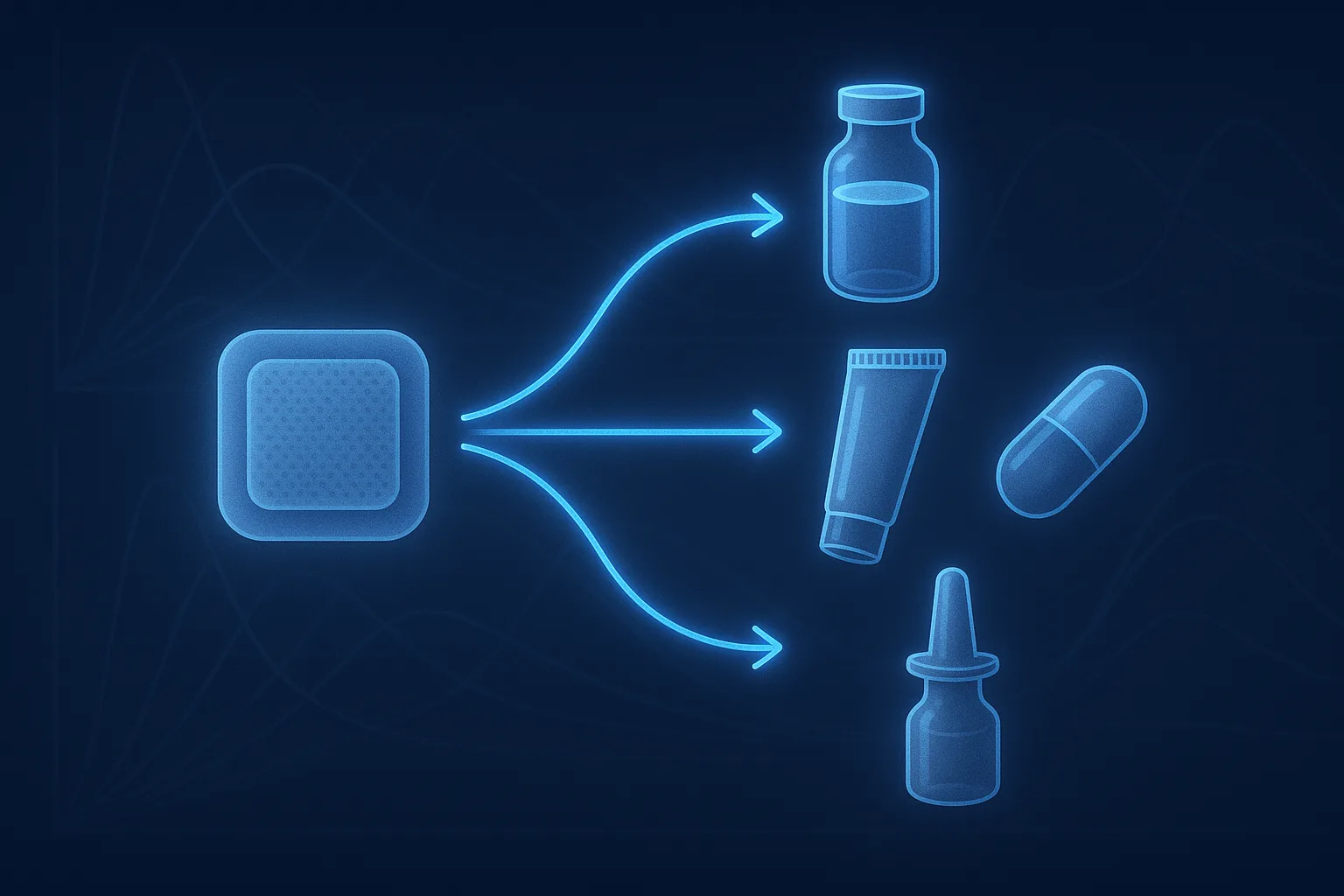
Androderm, the only testosterone patch in the US, is permanently discontinued with no generic coming. Here's what patch users should switch to and how.
If your pharmacy keeps telling you the testosterone patch is "out of stock" and never seems to come back, here's the part nobody is saying clearly: it's not coming back. Androderm, the only transdermal testosterone patch ever sold in the United States, has been permanently discontinued. There is no generic. No other company makes one. And as of June 2026, nobody has announced plans to.
This is not a back order you can wait out. It's the end of an entire delivery method. If you've been on the patch, you need a different plan, and the good news is that the alternatives are well established and most patch users transition without losing the symptom control they had.
Key Takeaways
Androderm (the only US testosterone patch) was discontinued starting in early 2023; no generic exists and none is coming -- this is permanent, not a temporary shortage
Topical testosterone gel is the closest like-for-like swap (daily transdermal delivery) but carries a skin-transfer risk to others that patches did not
Weekly testosterone cypionate or enanthate injections are the cheapest and most reliably stocked option, often $15-40/month
Non-injection options remain: gel, oral capsules, and nasal gel -- each with cost and dosing trade-offs
Don't stop therapy abruptly; line up the replacement before your last patch box runs out, and get labs 2-4 weeks after switching
What Actually Happened to the Patch
The discontinuation timeline is straightforward once you know it:
Date
Event
Early 2023
Allergan/AbbVie announces it is discontinuing Androderm
March 2023
American Society of Health-System Pharmacists (ASHP) lists Androderm as a shortage
2024-2025
Remaining inventory dries up; no generic enters the market
June 2026
Still no US testosterone patch from any manufacturer; no replacement announced
Reporting attributes the decision to quality concerns in the patch's manufacturing process. The manufacturer chose to exit rather than invest in fixing them. The reason this turned into a dead end rather than a temporary gap is structural: no generic version of Androderm was ever approved. When the only brand left the market, there was no second supplier waiting to pick up the slack, the way there usually is when a common drug goes short.
That's why this feels different from the testosterone cypionate shortage, which is an intermittent supply problem with multiple manufacturers still in the game. The patch isn't short. It's discontinued. If you search "why is Androderm so hard to find," that's the answer: it isn't hard to find, it's gone.
The patch delivered a steady dose through the skin, once daily, with no needles and no transfer risk to other people. No single alternative checks all those boxes, so the right choice depends on which feature mattered most to you.
1. Testosterone Gel (Closest to the Patch Experience)
Why it fits: Like the patch, gel is a daily transdermal application that delivers relatively steady serum levels without the peak-and-trough swing of injections. If your reason for choosing the patch was "topical, daily, no needles," gel is the natural successor.
The catch the patch didn't have: Skin-to-skin transfer. Testosterone gel can rub off onto partners, children, and pets through contact before it dries and absorbs. You'll need to apply it to covered areas, wash your hands, and let it dry fully. Patches sealed the dose under an adhesive; gel does not.
Dosing: Not a 1:1 conversion from the patch. Typical starting doses for generic 1.62% gel are about 20.25-40.5 mg/day (1-2 pumps), then titrated on 2-4 week labs.
Cost: Generic 1.62% gel is usually tier 2 -- roughly $40-80/month with insurance, more cash. Brand gels run higher.
Availability: Widely stocked nationwide. Generic gel held up even through the injectable shortage.
2. Testosterone Injections (Cheapest and Most Reliable)
Why it fits: Weekly or twice-weekly testosterone cypionate or enanthate is the workhorse of TRT for a reason -- it's the most affordable formulation, the best covered by insurance, and effective for nearly everyone. If cost or reliable supply is your priority, this is the move.
The catch: Needles. But the gap between "patch" and "injection" is smaller than it sounds. Many patients switch to subcutaneous injection with a short, fine insulin-style needle, which is far less intimidating than the deep intramuscular shots people picture. See our subcutaneous vs. intramuscular comparison for the practical difference.
Dosing: Your prescriber sets a weekly milligram dose (commonly 100-160 mg/week) and you can split it into smaller, more frequent shots to keep levels steady -- closer to the flat curve you had on the patch. See injection frequency: weekly vs. every-other-day.
Cost: Generic cypionate or enanthate with a discount coupon is often $15-40/month. Cheapest option by a wide margin.
Availability: Cypionate has had its own intermittent shortages; enanthate is pharmacokinetically identical and a clean 1:1 swap if cypionate isn't in stock. Compounded testosterone is also widely available through online clinics.
Why it fits: Twice-daily testosterone undecanoate capsules taken with food, absorbed through the lymphatic system to bypass first-pass liver metabolism. Completely needle-free and no skin-transfer risk.
The catch: Cost and monitoring. Brand-only with no generic, frequently $500-900/month, and rarely well covered by insurance. Some carry a boxed warning for blood pressure increases and require monitoring. Full breakdown in our oral testosterone guide.
Cost: $500-900/month, often non-formulary.
4. Nasal Testosterone Gel (Needle-Free, Frequent Dosing)
Why it fits: A gel applied inside the nostrils, dosed three times daily. Needle-free and minimal transfer risk to other people because it's absorbed nasally.
The catch: Three-times-a-day dosing is a bigger lifestyle change than a once-daily patch, and some users get nasal irritation or congestion.
Cost: Often tier 3 or non-formulary; varies widely by plan.
How to Make the Switch Without a Gap
The real risk isn't the patch being gone -- it's letting your supply run out before the replacement is in hand. A short gap in therapy causes symptom rebound (fatigue, low mood, low libido) while your prescriber catches up.
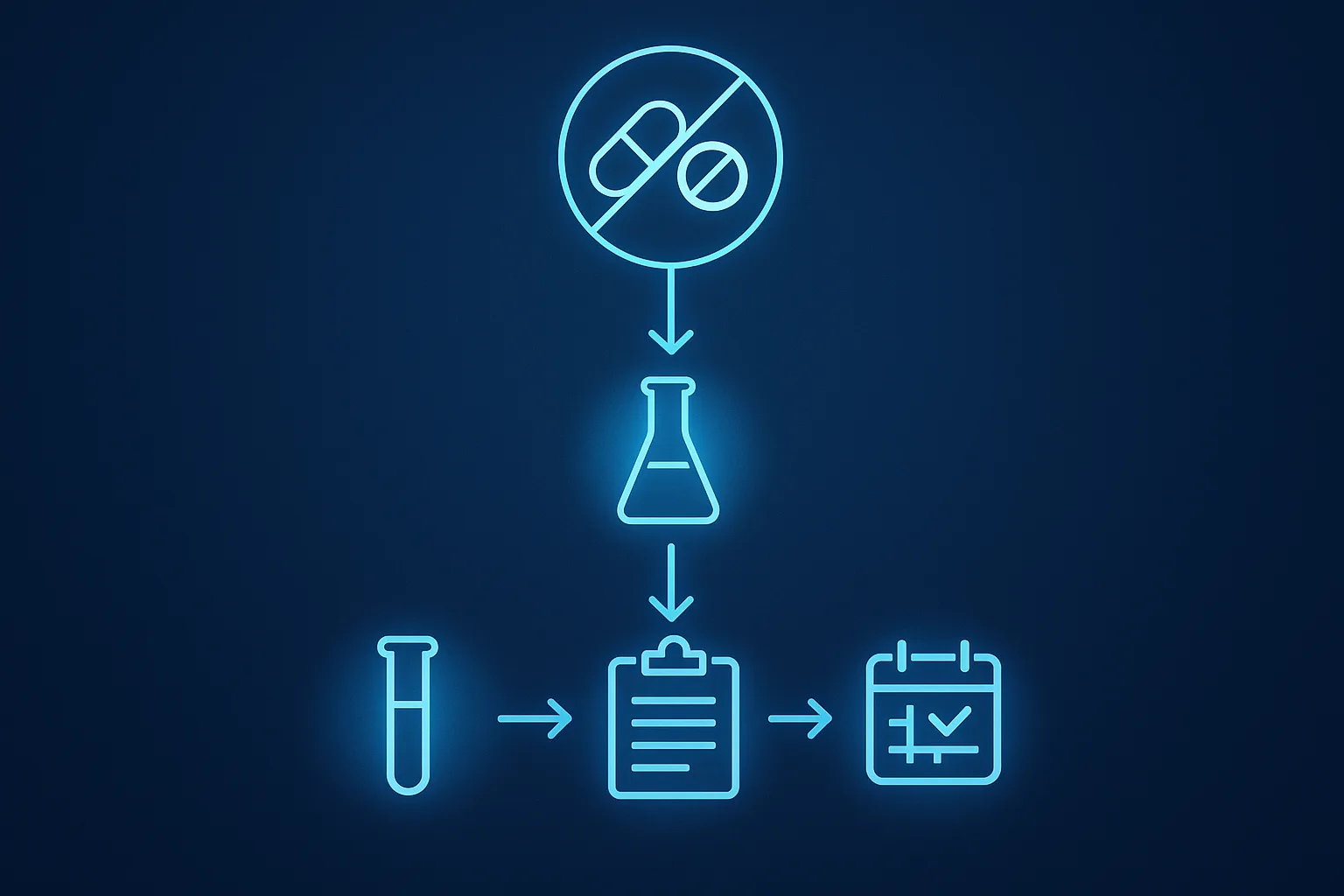
The Transition Checklist
Don't wait until your last box. As soon as you confirm the patch is unavailable, book a prescriber visit. You want overlap, not a gap.
Get baseline labs if it's been a while. Total and free testosterone, plus hematocrit and PSA where appropriate, give your prescriber a starting point for dosing the new formulation.
Pick the formulation by your top priority. Closest to the patch feel? Gel. Cheapest and most reliable? Injections. Absolutely no needles and budget isn't the issue? Oral or nasal.
Confirm coverage before you commit. Have the pharmacy or your prescriber check your formulary so you're not surprised by a $600 cash price at pickup.
Recheck labs at 2-4 weeks. Different formulations produce different level curves. A follow-up test confirms you're dosed correctly, especially when moving from a steady patch to an injection's peak-and-trough pattern.
Do Not Do This
Don't stop therapy cold turkey while you sort out a replacement. If a brief gap is unavoidable, ask your prescriber about a short gel bridge. For what stopping actually feels like, see our guide to coming off TRT.
Don't hunt for leftover Androderm online. Gray-market and "research chemical" sellers are unregulated, frequently mislabeled, and risky given testosterone's Schedule III status. There is no legitimate new patch supply.
Don't assume the patch will quietly return. It won't. Build your protocol around a formulation that's actually manufactured.
If Your Pharmacy Keeps Failing You
A recurring pattern with TRT supply problems: patients using retail pharmacies hit walls, while patients using online TRT clinics mostly don't. The reason is sourcing -- most online clinics work with 503A compounding pharmacies and can put you straight onto injections or compounded testosterone, with labs and titration handled in the same visit.
If the patch disappearing has left you scrambling, a cash-pay online clinic is often $75-150/month all-in (medication, visit, and renewal labs), which can be close to a copay plus the gas money you've spent driving between pharmacies. We work through the trade-offs in TRT with insurance vs. without and what you should actually pay for TRT. To compare your options head to head, start with our 2026 clinic rankings.
Bottom Line
The testosterone patch is not on back order -- it's discontinued, permanently, with no generic and no replacement on the horizon. That's frustrating if it was working for you, but the transition is well-trodden. Gel keeps the daily-topical feel. Injections are the cheapest, most reliable path. Oral and nasal options exist if needles are a hard no.
The only mistake that actually hurts is letting your last box run out before the next prescription is ready. Line up the switch now, get labs after a few weeks, and you'll keep the levels you had.
References
American Society of Health-System Pharmacists. Drug Shortage Detail: Testosterone Transdermal System (Androderm). ASHP Drug Shortages Database, listed March 2023; accessed June 2026.
FDA. Drug Shortages and Discontinuations: Testosterone Transdermal System. FDA CDER, accessed June 2026.
Bhasin S, et al. Testosterone Therapy in Men With Hypogonadism: An Endocrine Society Clinical Practice Guideline. J Clin Endocrinol Metab. 2018;103(5):1715-1744.
MedlinePlus. Testosterone Transdermal Patch. US National Library of Medicine, accessed June 2026.
Lincoff AM, et al. Cardiovascular Safety of Testosterone-Replacement Therapy (TRAVERSE). N Engl J Med. 2023;389(2):107-117.
Yes. Androderm, the only transdermal testosterone patch sold in the US, was discontinued by its manufacturer (Allergan/AbbVie) starting in early 2023, and the American Society of Health-System Pharmacists listed it as a shortage in March 2023. As of June 2026, no generic was ever approved, no other company makes a testosterone patch, and no manufacturer has announced plans to. This is a permanent discontinuation, not a temporary back order.
Why was the testosterone patch discontinued?
Reporting attributes the discontinuation to quality concerns in the patch manufacturing process. Rather than invest in fixing them, the manufacturer chose to stop production. Because no generic version of the patch was ever approved, there was no backup supplier to fill the gap when the brand left the market.
What is the closest alternative to a testosterone patch?
Topical testosterone gel is the closest match in spirit -- it's a daily transdermal application that delivers steady levels, just as a rub-on instead of an adhesive. The trade-off is a skin-transfer risk to partners and children that patches did not have. Many former patch users instead move to weekly testosterone cypionate or enanthate injections, which are the cheapest and most reliably stocked option.
I hate needles. What are my non-injection options now?
Testosterone gel (daily topical), oral testosterone undecanoate capsules taken twice daily with food, and nasal testosterone gel dosed three times daily are all needle-free. Gel is the most affordable of the three; oral capsules are effective but often $500-900/month and rarely well covered by insurance. Some patients also tolerate subcutaneous injection with a tiny insulin-style needle far better than they expect.
Will insurance cover the alternatives?
Generic testosterone cypionate and enanthate injections are the best-covered and cheapest options, often $15-40/month. Generic gel is usually tier 2. Oral capsules and nasal gel are frequently tier 3 or non-formulary and can be expensive cash. Check your plan's formulary before you commit to a switch, and ask your prescriber to suggest the covered option that fits your needle preference.
Should I just use an online TRT clinic to handle the switch?
It's a reasonable option, especially if your retail pharmacy keeps coming up empty. Most online TRT clinics source through compounding pharmacies and weren't disrupted by the patch leaving the market. They can move you straight onto injections or compounded testosterone with labs and dose titration built in. See our guide to [choosing a TRT clinic](/clinics/how-to-choose-trt-clinic?from=testosterone-patch-discontinued-alternatives) and our [top picks for 2026](/clinics/best-online-trt-clinic-2026?from=testosterone-patch-discontinued-alternatives).