Self-injecting testosterone is a skill that takes about three sessions to become comfortable with. The first time feels daunting. By the fourth or fifth injection, it's routine. This guide covers everything you need to know to inject safely and confidently. For the typical week-by-week starting protocol that pairs with these techniques, see the TRT first cycle dosing schedule.
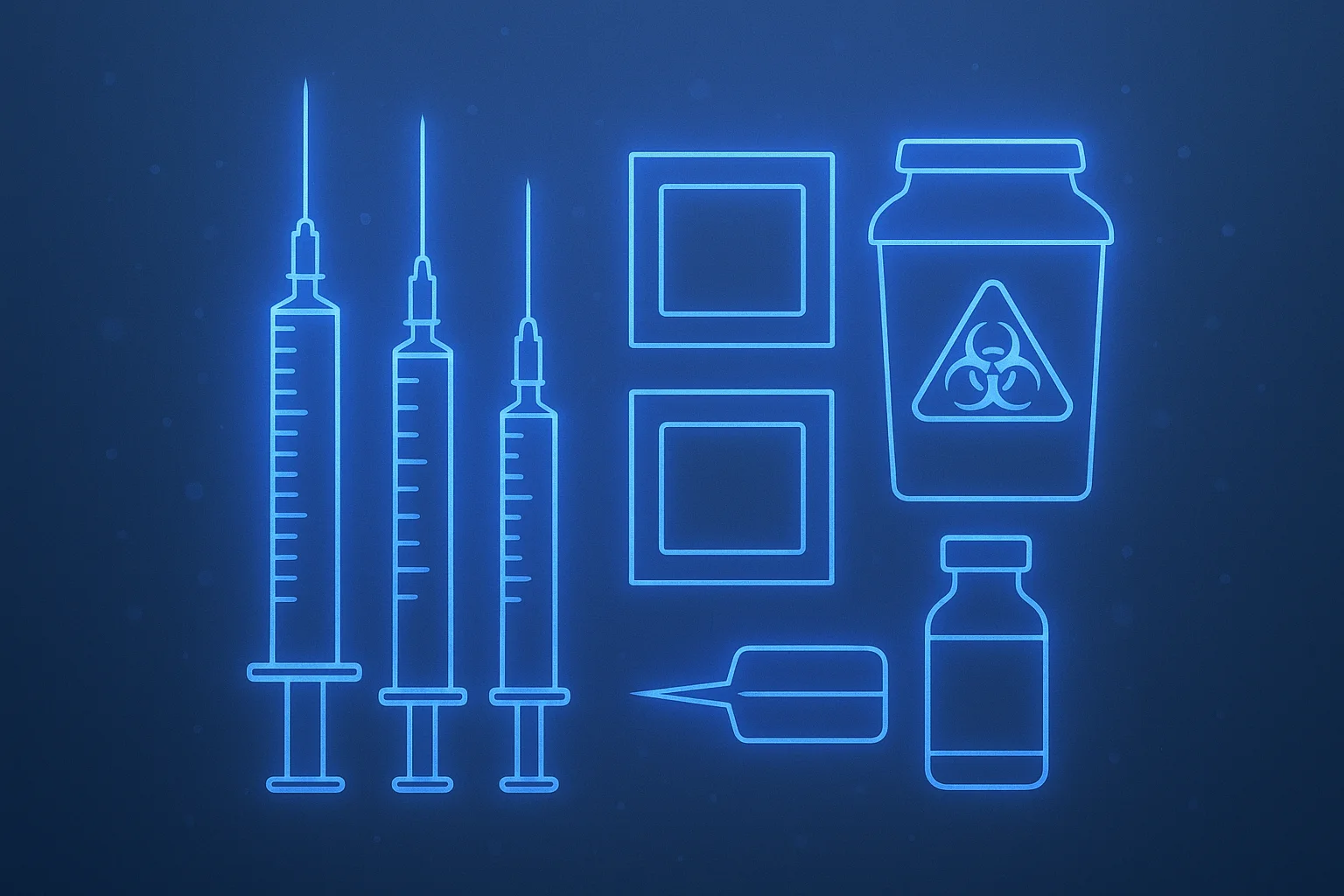
Equipment You'll Need
Syringes
Luer-lock syringes (1mL or 3mL) are the standard for TRT. The luer-lock mechanism screws the needle onto the syringe, preventing accidental disconnection. For most TRT doses, a 1mL syringe provides the best accuracy for measuring smaller volumes.
Insulin syringes (0.5mL or 1mL, 27-31 gauge) are increasingly popular for subcutaneous and shallow IM injections. The needle is permanently attached, which eliminates dead space (the testosterone that gets trapped in the hub of a detachable needle). This saves roughly 0.05-0.1mL per injection -- meaningful when you're injecting small volumes.
Needles: Drawing vs Injecting
Use two separate needles: one to draw testosterone from the vial and one to inject. Drawing through a rubber stopper dulls the needle tip, making injection more painful.
Drawing needle: 18-21 gauge, 1-1.5 inch. The larger bore draws viscous oil-based testosterone quickly.
Injection needles by method:
Method
Gauge
Length
Best For
IM -- Glute
23-25 gauge
1-1.5 inch
Standard IM injection
IM -- Deltoid
25 gauge
1 inch
Leaner individuals
IM -- Quad
25 gauge
1 inch
Moderate body fat
IM -- Ventrogluteal
23-25 gauge
1-1.5 inch
Preferred IM site
SubQ -- Abdomen
27-30 gauge
0.5 inch
SubQ protocol
SubQ -- Thigh
27-30 gauge
0.5 inch
SubQ protocol
General rule: Higher gauge numbers mean thinner needles. A 27-gauge needle is much thinner than a 21-gauge. Thinner needles hurt less but take longer to push oil-based testosterone through.
Other Supplies
Alcohol swabs (for cleaning the vial stopper and injection site)
Sharps container (never throw needles in regular trash)
Band-aids (optional, for any minor bleeding)
Intramuscular (IM) Injection Sites
Ventrogluteal (Recommended Primary Site)
The ventrogluteal muscle is considered the safest and most reliable IM injection site by nursing guidelines. It has the thickest muscle mass with the fewest major blood vessels and nerves.
How to locate it:
Place the palm of your opposite hand on the greater trochanter (the bony prominence at the top of your outer hip)
Point your index finger toward the anterior superior iliac spine (the bony point at the front of your hip)
Spread your middle finger toward the iliac crest (the top of your hip bone)
The injection site is in the V formed between your two fingers
Technique: Insert the needle at a 90-degree angle to the skin. Aspirate briefly (pull back on the plunger for 5 seconds) -- if you see blood, withdraw and try a new site. If no blood, inject slowly and steadily.
Vastus Lateralis (Outer Quad)
The outer quadricep is one of the easiest sites for self-injection because you can see and access it without twisting.
How to locate it:
Sit on the edge of a chair or bed with your leg relaxed
Divide your outer thigh into thirds from knee to hip
The injection site is in the middle third, on the outer aspect of the thigh
Technique: Insert at 90 degrees. This site works well but carries a slightly higher risk of hitting a nerve, which causes a sharp, electric sensation. If that happens, pull the needle out and try slightly to the left or right.
Note on quad injections: Some men experience more post-injection pain (PIP) in the quads than other sites. This is individual -- try it and see how your body responds.
Deltoid
The deltoid muscle in the upper arm accommodates smaller volume injections (up to about 1mL).
How to locate it:
Feel the bony point at the top of your shoulder (the acromion process)
The injection site is about 2-3 finger widths below this point, in the thickest part of the deltoid muscle
Technique: Insert at 90 degrees with a 1-inch, 25-gauge needle. Keep the volume under 1mL. This site is convenient but limited in capacity.
Glute (Dorsogluteal)
The traditional "glute injection" targets the upper outer quadrant of the buttock. While still widely used, it's fallen out of favor in clinical settings because of proximity to the sciatic nerve and superior gluteal artery.
If you use this site, always aim for the upper outer quadrant. Injecting too low or too medially risks nerve damage.
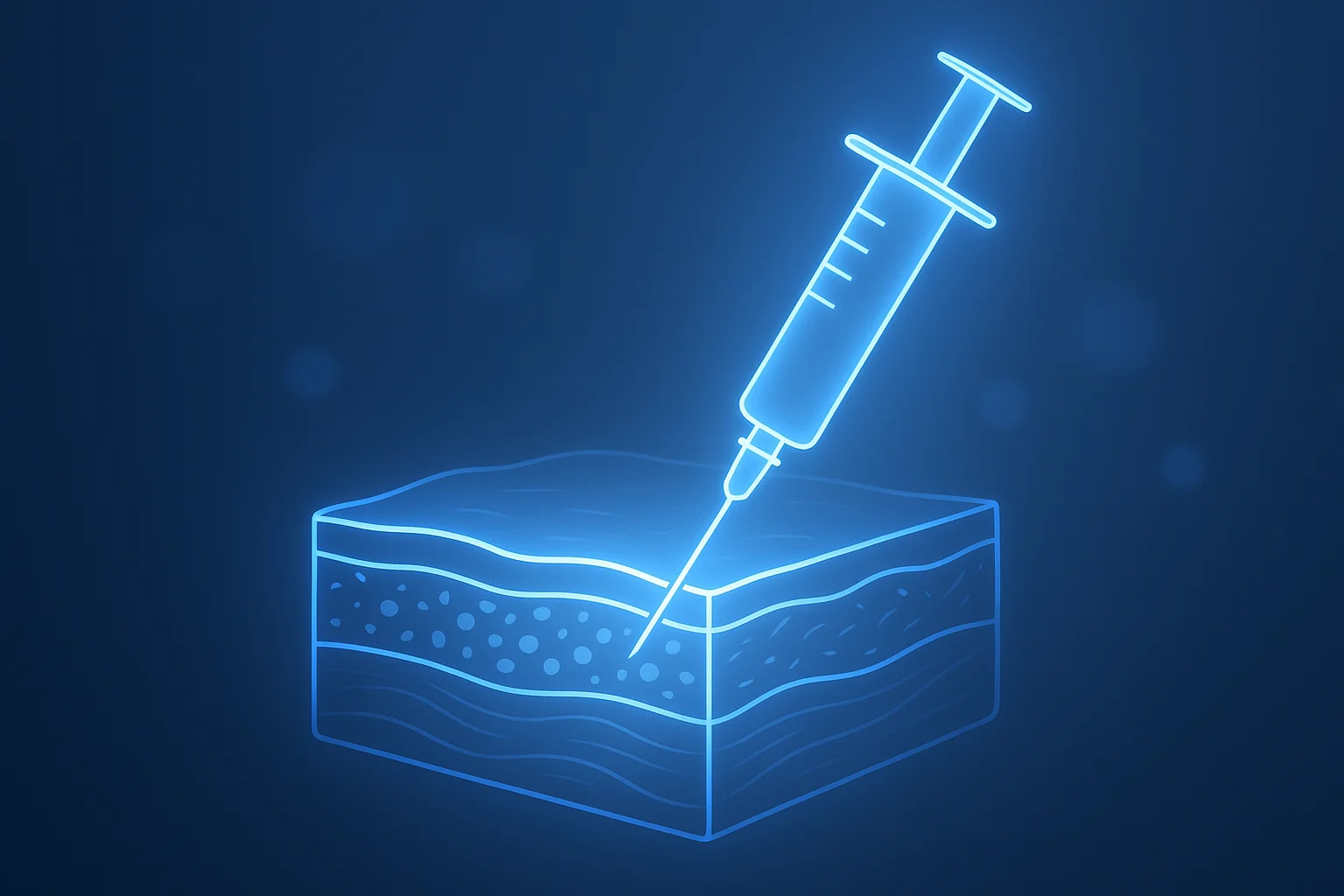
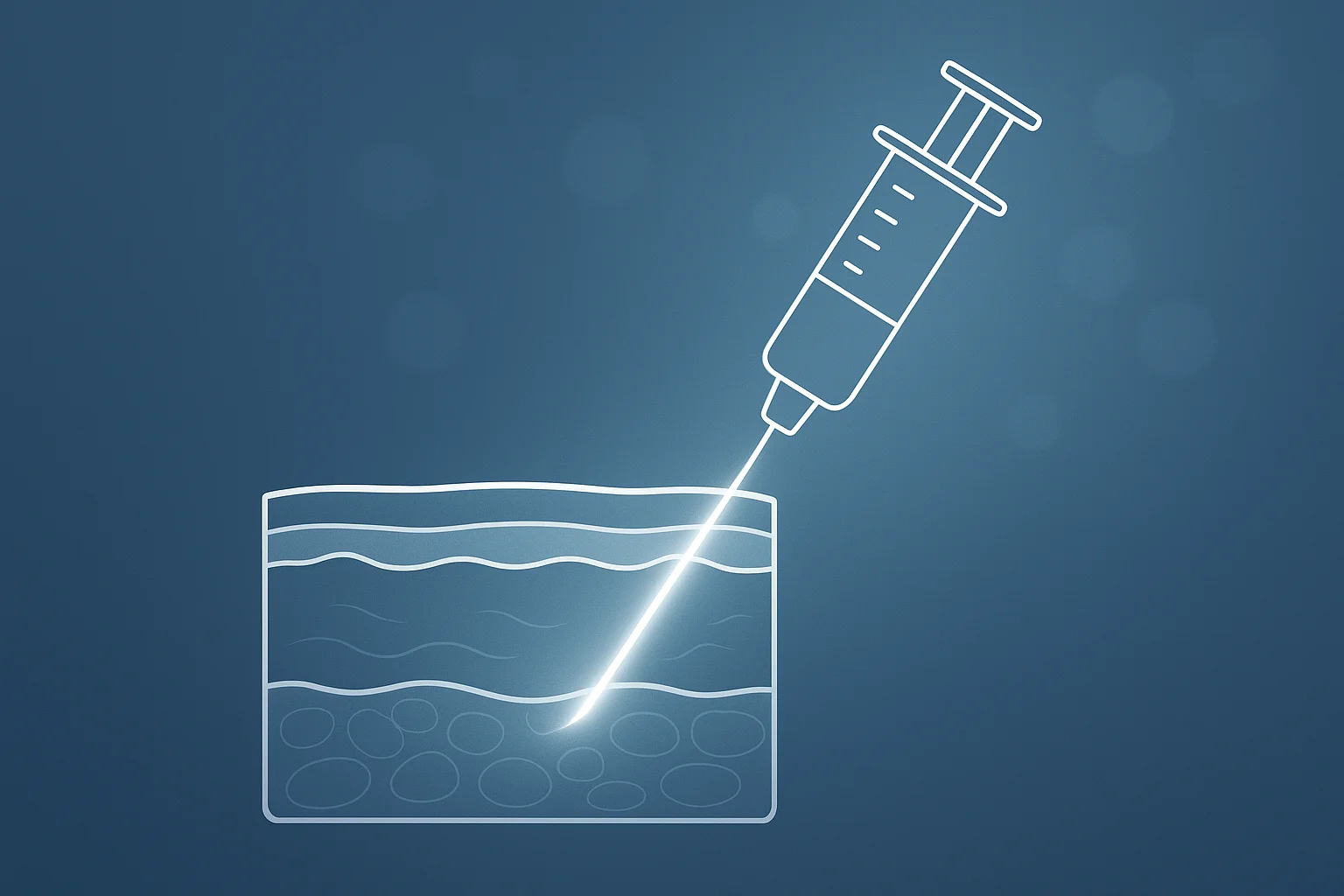
SubQ injections go into the fat layer just beneath the skin. Research supports equivalent testosterone absorption compared to IM injections.
Best SubQ Sites
Abdomen: 2 inches from the navel, alternating sides. Pinch a fold of skin and fat.
Outer thigh: Upper outer thigh area, similar location to IM but with a shorter needle angled into the fat layer.
Love handles: The lateral fat pad above the hip.
SubQ Technique
Clean the site with an alcohol swab
Pinch a fold of skin and fat between your thumb and index finger
Insert a 27-30 gauge, 0.5-inch needle at a 45-90 degree angle (45 degrees for very lean individuals, 90 degrees if you have more subcutaneous fat)
Release the skin pinch
Inject slowly -- take 10-15 seconds per 0.1mL
Withdraw the needle and apply light pressure with a cotton ball
SubQ Volume Limits
Keep SubQ injection volumes under 0.3-0.5mL per site. Larger volumes can pool in the subcutaneous tissue and create lumps that take days to absorb. If your weekly dose requires more than 0.5mL, split it across multiple days or use an IM site.
Check the testosterone vial for particles or discoloration (should be clear to pale yellow)
Check the expiration date
Drawing the Testosterone
Wipe the vial's rubber stopper with an alcohol swab. Let it dry for 10 seconds.
Attach the drawing needle (18-21 gauge) to the syringe
Pull back the plunger to draw air equal to your dose volume
Insert the needle through the rubber stopper and inject the air into the vial (this prevents a vacuum)
Invert the vial so the needle tip is submerged in the testosterone
Pull back the plunger slowly to your desired dose
Tap the syringe to move air bubbles to the top, then push the plunger slightly to expel them
Remove the needle from the vial
Switching Needles
Carefully remove the drawing needle and dispose in your sharps container
Attach your injection needle (keep the cap on until ready)
With the needle pointing up, push the plunger gently until a tiny drop appears at the needle tip (this confirms no air remains)
Performing the Injection
Clean the injection site with an alcohol swab using a circular motion. Let it dry completely -- injecting through wet alcohol stings.
Remove the needle cap
Hold the syringe like a dart (between thumb and first two fingers)
For IM: stretch the skin taut with your non-dominant hand. Insert the needle swiftly and smoothly at 90 degrees in one motion. Hesitating halfway through is more painful than a quick, decisive insertion.
Aspirate: pull back on the plunger for 5 seconds. If blood appears, withdraw and try a new site. (Note: aspiration is debated in current nursing literature, but it takes 5 seconds and adds safety.)
Inject slowly. Take 15-30 seconds to push the full volume. Slow injection reduces post-injection pain.
Wait 10 seconds after completing the injection before withdrawing the needle. This allows the oil to begin dispersing and reduces leakage.
Withdraw the needle smoothly at the same angle you inserted it
Apply gentle pressure with a cotton ball or alcohol swab for 10-15 seconds. Do not rub -- this can push testosterone into subcutaneous tissue and increase bruising.
Common Mistakes
Injecting Too Fast
Pushing the plunger quickly forces oil into the muscle faster than it can accommodate, causing immediate pain and more post-injection soreness. Take your time.
Not Rotating Sites
Using the same site repeatedly leads to scar tissue buildup, which makes future injections more painful and reduces absorption. Maintain a rotation of at least 4-6 sites.
Hitting a Nerve
If you feel a sharp, shooting, or electric pain during needle insertion, stop. You've likely contacted a nerve. Pull the needle out and move to a different spot (even a centimeter away can make the difference). This is more common in the quad than other sites.
Injecting Into a Blood Vessel
Visible blood filling the syringe during aspiration means you're in a vessel. Remove the needle, apply pressure, and try a new site. A small amount of blood when you withdraw the needle is normal and not a concern.
Using a Dull Needle
If you use the same needle to draw and inject, the tip is dulled from puncturing the rubber stopper. This makes the skin puncture more painful and can cause more tissue trauma. Always use a fresh needle for injection.
Post-Injection Care
Apply a bandage if there's any bleeding
Gently massage the area for 30 seconds to help distribute the oil (for IM injections)
Light movement or walking helps with absorption and reduces soreness
Mild soreness at the injection site for 24-48 hours is normal, especially with new sites
Do not apply heat immediately after injection -- it can increase inflammation
When to Seek Medical Attention
Redness, warmth, and swelling that worsen after 48 hours (possible infection)
Fever following an injection
A hard, painful lump that doesn't resolve within a week
Signs of an allergic reaction (rash, difficulty breathing, swelling away from the injection site)
Infections from self-injection are rare with proper sterile technique but not impossible. If you suspect infection, see a provider promptly. The best TRT clinics walk you through injection technique during onboarding -- see which clinics offer hands-on guidance.
Managing Needle Anxiety
Needle anxiety is extremely common and nothing to be embarrassed about. Strategies that help:
Ice the area. Apply an ice cube for 30-60 seconds before injecting. The cold numbs the skin and reduces pain sensation.
Don't look. Many people do better when they don't watch the needle enter the skin. Prep the site, look away, and insert.
Breathe. Take a slow, deep breath in. Insert the needle as you exhale. Exhaling relaxes your muscles, making the insertion easier and less painful.
Use thin needles. A 27-gauge needle is barely perceptible in most injection sites. SubQ with insulin syringes is the least intimidating injection method.
Start with SubQ. If the thought of a 1-inch needle going into muscle paralyzes you, start with subcutaneous injections using a half-inch insulin syringe. You can always transition to IM later.
It gets easier. This is the most important thing to know. The first 2-3 injections are the hardest. By injection 10, most men describe the process as completely routine.