Low Ferritin on TRT: The Iron Drain Behind Fatigue
6/4/2026
5 min read
By The TRT Catalog
TRT suppresses hepcidin and drains iron stores. Why ferritin crashes on testosterone, the fatigue-hair-loss link, and when to test and supplement iron.
Key Takeaways: Testosterone suppresses hepcidin and pulls iron out of storage to fuel red blood cell production. Ferritin commonly falls 30-60% in the first year of TRT, and some men land in functional iron deficiency — fatigue, brain fog, hair shedding, restless legs — while their testosterone labs look perfect. The trap is high hematocrit masking an empty iron tank. Test ferritin, serum iron, and transferrin saturation alongside your hormone panel, target ferritin around 75-150 ng/mL, and only supplement iron if the numbers confirm true deficiency.
The Symptom Nobody Connects to Iron
You started TRT to fix fatigue. Three months in, your trough total testosterone is 850 ng/dL, free T sits comfortably mid-range, estradiol is managed — and you are still dragging. Workouts feel harder than they should. Your hair is shedding in the shower. Your legs get twitchy at night. The instinct is to assume the dose is too low and ask for more testosterone.
In a meaningful slice of men, the real problem is not testosterone at all. It is iron. Specifically, it is ferritin — the protein that stores iron — quietly draining away because testosterone itself is pulling iron out of your tank to build red blood cells. Your hormone panel looks textbook. Your iron tank is running on fumes. And the two sets of symptoms are nearly identical, which is exactly why this gets missed.
This is one of the most under-tested interactions in TRT. Most clinics check a CBC for hematocrit and polycythemia but never order ferritin. So the high side of iron metabolism gets watched closely while the low side — the side that actually drives the fatigue people complain about — flies under the radar.
Why Testosterone Drains Your Iron Stores
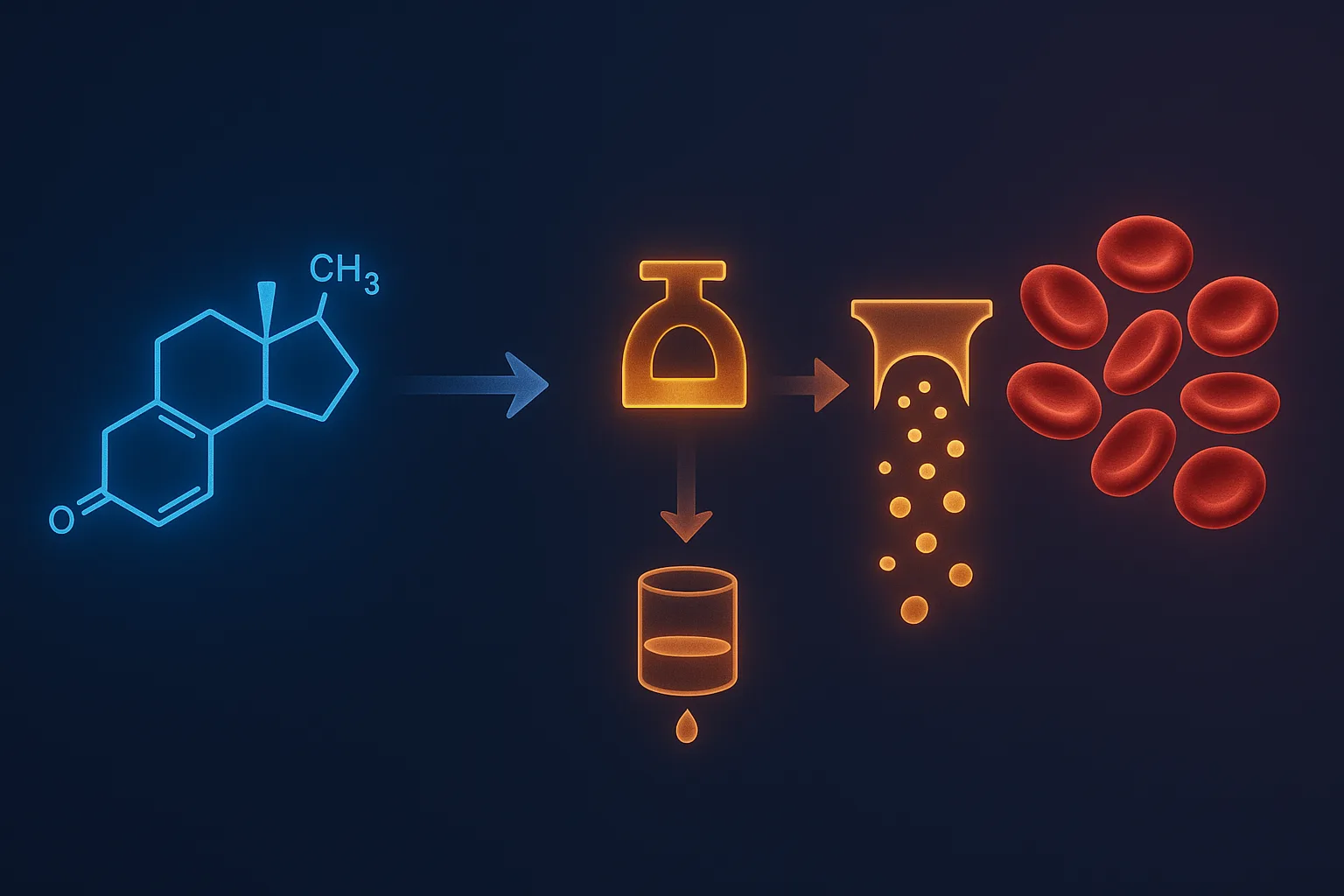
The mechanism is well established. Testosterone is a potent stimulator of erythropoiesis — red blood cell production. It does this partly through erythropoietin, but a large share of the effect runs through a hormone called hepcidin.
Hepcidin is the master regulator of iron in the body. When hepcidin is high, iron stays locked in storage and dietary iron absorption drops. When hepcidin is low, the gates open: iron pours out of storage and absorption ramps up. Testosterone strongly suppresses hepcidin. In one randomized study of men with type 2 diabetes, testosterone therapy reduced serum hepcidin by more than half. Over a year, testosterone has been shown to raise red cell count roughly 9%, hematocrit about 4%, and hemoglobin around 8% — while cutting hepcidin by more than 50%.
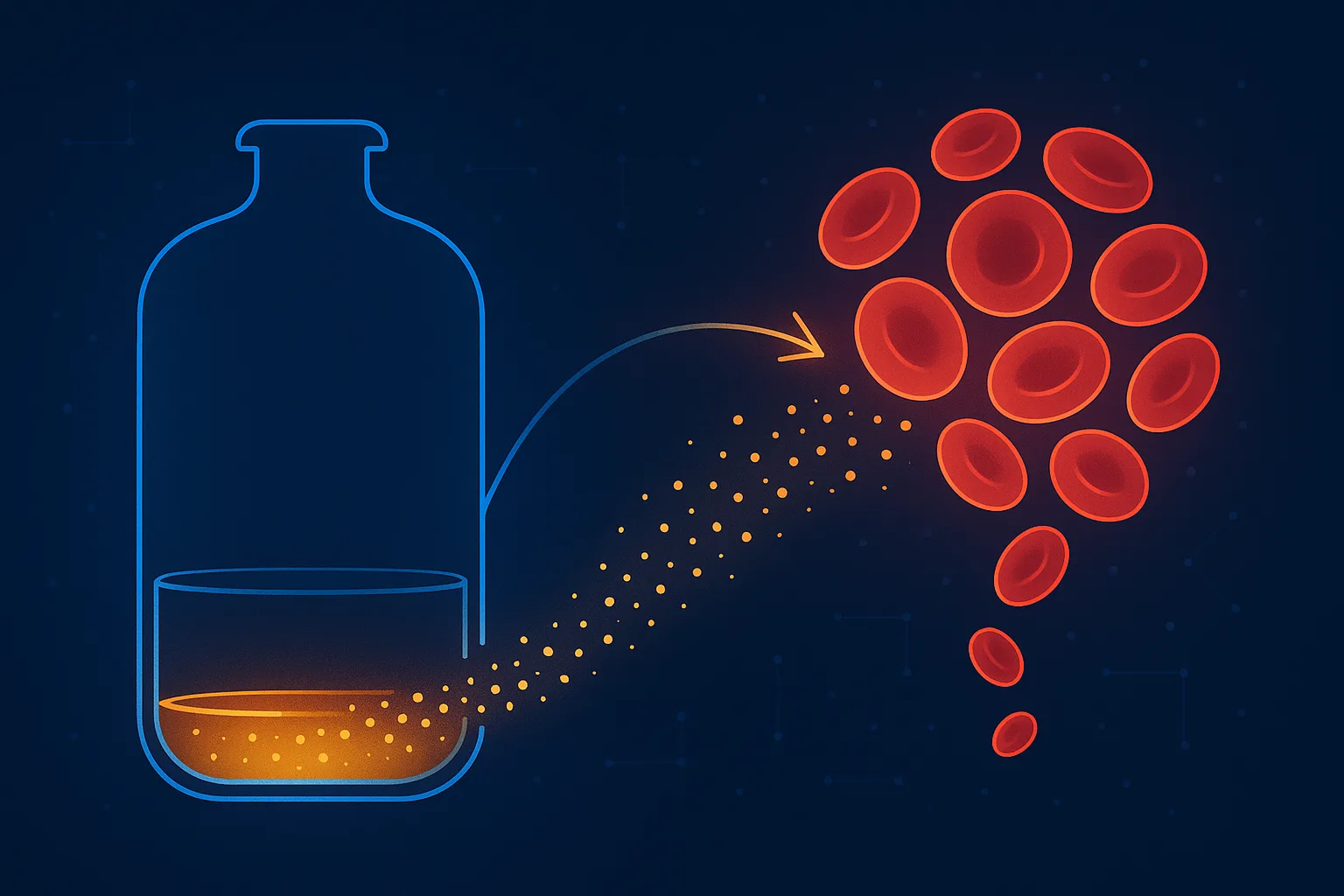
Here is the consequence. With hepcidin suppressed, your body floods iron out of storage to feed the new red blood cell production testosterone is demanding. Hemoglobin and hematocrit climb. But that iron has to come from somewhere, and it comes from your ferritin stores. Ferritin commonly falls 30-60% over the first year on TRT. Some men have enough headroom to absorb the hit. Men who started with mediocre iron stores — or who lose iron through other routes, or eat little heme iron — slide into outright functional iron deficiency.
Important nuance: this is not the same as classic anemia. Your red cell line stays full or even overfull. The deficiency is in the storage tank, not the bloodstream — at least at first. Which is why it hides.
This is the part that confuses both patients and undertrained prescribers.
On TRT you can simultaneously have:
High hematocrit (52%+) — the red cell line is overproducing, the classic flag for therapeutic phlebotomy
Low ferritin (under 30-50 ng/mL) — the iron warehouse is empty because all that overproduction consumed the stores
It looks contradictory. It is not. Testosterone is pushing the red cell factory at full speed and burning through raw material (iron) faster than you resupply it. Picture a factory running three shifts while the warehouse shelves go bare. Output stays high; inventory hits zero.
This paradox has a practical sting. If your prescriber sees a high hematocrit and orders therapeutic phlebotomy — a reasonable move for managing polycythemia — each blood draw removes more iron. Phlebotomy on top of already-low ferritin can tank your iron stores further and intensify the fatigue, hair loss, and restless legs. Done without checking ferritin first, the treatment for one problem can deepen another. The fix is not to skip phlebotomy when it is genuinely indicated — it is to check ferritin alongside hematocrit so the whole iron picture is visible before you start removing blood.
Symptoms of Low Ferritin That Mimic Low Testosterone
The reason this hides so well is that iron deficiency and low testosterone share a symptom list. Iron is required for oxygen transport, mitochondrial ATP production, and — critically — dopamine synthesis, where iron acts as a cofactor. Run it low and you get:
Fatigue out of proportion to sleep — the most common complaint, and the one men blame on T dose
Exercise intolerance and breathlessness on exertion — your muscles cannot get the oxygen they need
Hair shedding (telogen effluvium) — hair follicles are metabolically greedy and among the first tissues sacrificed when iron runs marginal
Restless legs syndrome — driven by low central-nervous-system iron impairing dopamine signaling; ferritin under 50-75 is a known trigger
Brain fog and poor concentration — also dopamine- and oxygen-dependent
Cold hands and feet, brittle nails, and pallor
Notice how much of that overlaps with still feeling tired on TRT and even with TRT-related hair loss. Men spend months adjusting dose and managing estradiol when the missing variable was never on the panel.
The Tests to Order — and the Targets That Matter
A CBC alone will not catch this. You need the iron panel. Ask for:
Test
What it tells you
TRT target range
Ferritin
Iron storage (the key marker)
75-150 ng/mL
Serum iron
Circulating iron right now
Mid reference range
TIBC / transferrin
Iron-carrying capacity
High TIBC suggests deficiency
Transferrin saturation (TSAT)
% of capacity filled
25-45%
CBC (Hgb, Hct, RBC)
Anemia and polycythemia
Hct under 52%
Two interpretation rules matter most:
The lab "normal" flag is misleading. Most labs flag ferritin as normal above 20-30 ng/mL. That floor reflects the level needed to avoid frank anemia, not the level needed to feel good. Symptom thresholds are much higher. For fatigue, most clinicians who track this want ferritin above 50. For hair and restless legs, above 70-80. A ferritin of 35 ng/mL will show no asterisk on your report and still leave you symptomatic.
Ferritin is also an inflammation marker. Ferritin rises with inflammation and infection, so a value that looks reassuring can be falsely elevated. If ferritin is borderline but TSAT is low, trust the low TSAT — that combination still points to functional deficiency.
Slot these onto your existing TRT bloodwork schedule so iron gets tracked at the same cadence as hematocrit, not as an afterthought.
When and How to Replace Iron
The rule is simple: only supplement if the labs confirm true deficiency. Iron when ferritin is already normal or high is useless and risky — and pushing iron alongside an already-elevated hematocrit can compound problems. Confirm low ferritin plus low TSAT first.
When deficiency is real, the practical approach most clinicians use:
Oral iron, taken correctly. Ferrous bisglycinate or ferrous sulfate, ideally every other day rather than daily — alternate-day dosing actually improves total absorption because it avoids the hepcidin spike each dose triggers. Take it with vitamin C and away from coffee, tea, calcium, and antacids.
Recheck at 8-12 weeks. Ferritin moves slowly. Do not chase it weekly.
Address the input side too. Heme iron from red meat absorbs far better than plant or supplemental iron. If your diet is low in it, that is part of the fix.
IV iron for severe or stubborn cases. When oral iron fails or deficiency is severe, IV repletion under medical supervision restores stores fast. This is a clinic conversation, not a self-managed one.
One caution: do not over-correct. Driving ferritin above 300 ng/mL is its own problem, and on TRT — where your body is already primed for robust red cell production — you want to refill the tank, not flood it.
What This Means for Choosing a Clinic
This whole problem is a monitoring problem. The clinics that catch it are the ones that order a full iron panel, not just a CBC, and that interpret ferritin against symptom thresholds instead of the lab's permissive normal flag. The clinics that miss it hand you a higher testosterone dose for fatigue that more testosterone will never fix — and may worsen, by driving even more red cell production and iron consumption.
When you evaluate a provider, monitoring depth is exactly the dimension that separates a real protocol from a refill mill:
TRT clinic red flags — including clinics that only check testosterone and hematocrit
If your current clinic has never mentioned ferritin, that is a signal worth weighing when you compare your options.
Bottom Line
Testosterone suppresses hepcidin and pulls iron out of storage to build red blood cells. Ferritin falls — sometimes dramatically — and a real subset of men land in functional iron deficiency that produces the exact fatigue, brain fog, hair loss, and restless legs they started TRT to escape. The high-hematocrit, low-ferritin paradox makes it easy to miss, especially if no one checks ferritin in the first place. Add an iron panel to your standard labs, target ferritin around 75-150 ng/mL, and replace iron only when the numbers confirm deficiency. Often the missing piece in "still tired on TRT" was never the testosterone dose — it was the empty iron tank underneath it.
This content is for informational purposes only and is not medical advice. Consult a qualified healthcare provider before starting any treatment.
Frequently Asked Questions
Does TRT lower ferritin?
Yes. Testosterone suppresses hepcidin, the hormone that controls iron release and absorption. With hepcidin down, iron floods out of storage into new red blood cell production. Ferritin (your iron storage marker) commonly drops 30-60% in the first year of TRT, and a meaningful minority of men slide into functional iron deficiency even though their hemoglobin and hematocrit look fine or even high.
Can low ferritin cause fatigue even if my testosterone is optimal?
Absolutely. Iron is required for oxygen transport, mitochondrial energy production, and dopamine synthesis. Ferritin below about 50 ng/mL frequently produces fatigue, brain fog, exercise intolerance, restless legs, and hair shedding — symptoms that overlap almost perfectly with low testosterone. Men chase a higher T dose when the real problem is an empty iron tank.
What ferritin level should men on TRT aim for?
Lab reference ranges call anything above 20-30 ng/mL normal, but symptom thresholds are higher. Most clinicians who track this target ferritin of 75-150 ng/mL for men on TRT — high enough to fuel erythropoiesis without symptoms, below the 300+ range where iron overload becomes a concern. Hair and restless-legs symptoms often need ferritin above 70-80.
Should I take iron supplements on TRT?
Only if your ferritin and transferrin saturation are genuinely low. Supplementing iron when ferritin is already normal or high is useless and potentially harmful, especially alongside the elevated hematocrit TRT can cause. Test ferritin, serum iron, TSAT, and a CBC first, then supplement under guidance if the numbers confirm deficiency.
Why do I have high hematocrit AND low ferritin on TRT?
This is the classic TRT iron paradox. Testosterone drives red blood cell production hard, which consumes stored iron faster than you replace it. The red cell line stays full (high hematocrit) while the iron warehouse empties (low ferritin). It is functional iron deficiency hiding behind a high-normal or elevated hematocrit — easy to miss if no one checks ferritin.