You optimized your testosterone. Your trough number looks great. Your estradiol is in range. And yet your libido is flat, your erections are softer than they should be, and your motivation has quietly evaporated. Before you blame the testosterone dose, look at a hormone most men on TRT never test: prolactin.
Prolactin is the pituitary hormone best known for milk production, but in men it is a powerful, underappreciated regulator of sex drive, erectile function, mood, and the entire testosterone-producing axis. When it climbs too high, it can cancel out the benefits of a perfectly dialed-in TRT protocol — and most general practitioners never check it.
This guide covers what prolactin does in men, why it sometimes rises on TRT, exactly when and how to test it, and the step-by-step approach to bringing it back down.
Key Takeaways
Prolactin suppresses dopamine and the GnRH-LH axis, so high levels can flatten libido and erections even when testosterone is optimal
On TRT, elevated prolactin is usually downstream of high estradiol — not testosterone itself
The male reference range tops out around 15-20 ng/mL; mild elevations are common and often a testing artifact
Prolactin must be drawn fasting, mid-morning, rested, and away from orgasm or exercise — and a single high value should always be repeated
First-line treatment is fixing estradiol and lifestyle drivers; persistent elevation may warrant a dopamine agonist like cabergoline under clinician supervision
Levels above 100 ng/mL suggest a pituitary adenoma and require endocrinology referral and imaging
Prolactin is secreted by lactotroph cells in the anterior pituitary. Its release is held in check by dopamine — the more dopamine signaling, the less prolactin. This single relationship explains most of what goes wrong when prolactin rises.
In men, prolactin has three jobs that matter for anyone on TRT:
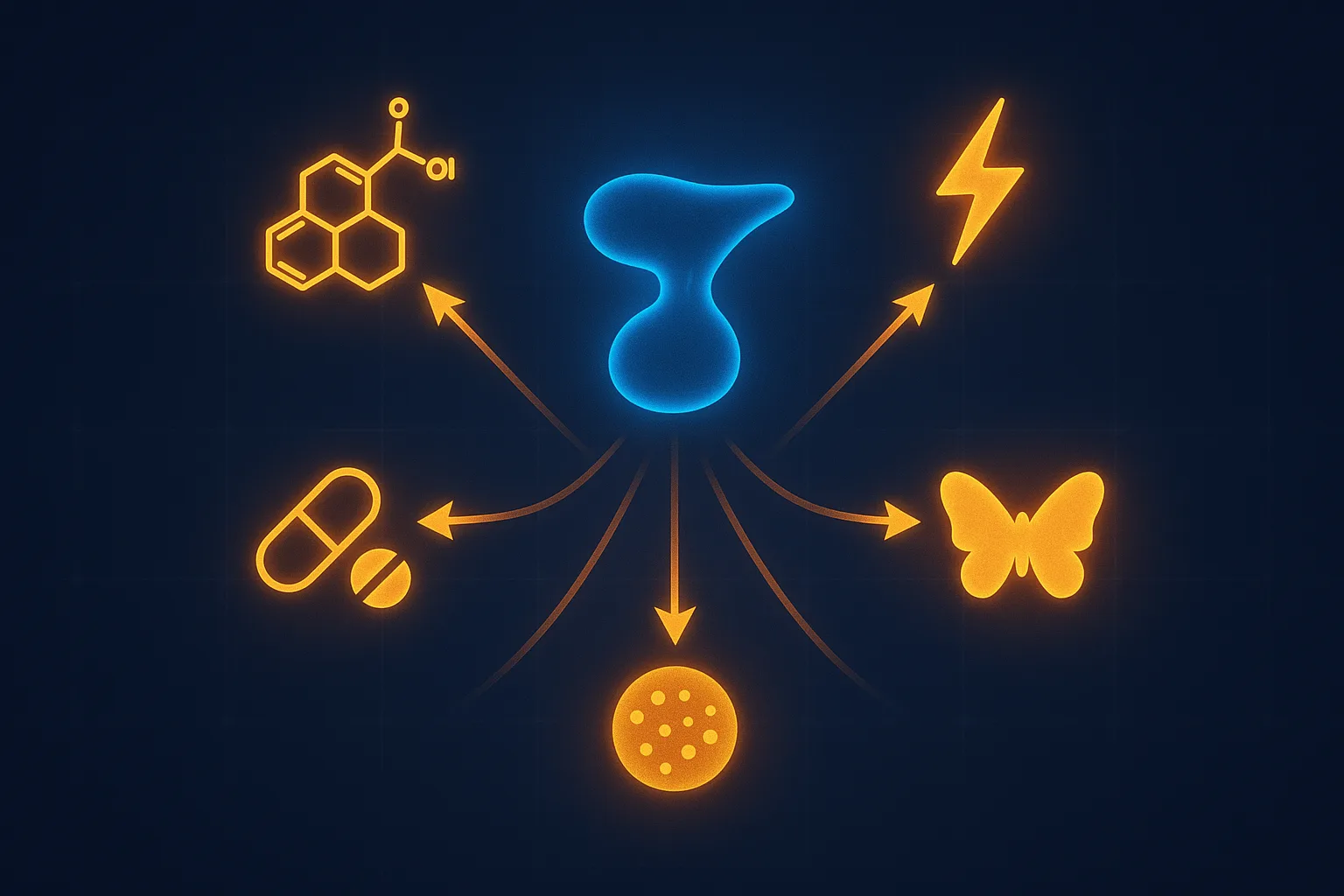
Sexual function. A normal, low prolactin level supports libido and the refractory recovery after orgasm. Chronically high prolactin does the opposite: it suppresses sexual desire and contributes to erectile dysfunction.
The HPG axis. Elevated prolactin inhibits gonadotropin-releasing hormone (GnRH) from the hypothalamus, which lowers luteinizing hormone (LH) and ultimately suppresses the testes' own testosterone and sperm production. For men on TRT this matters less for serum testosterone (you are replacing it exogenously) but it does affect testicular function and fertility.
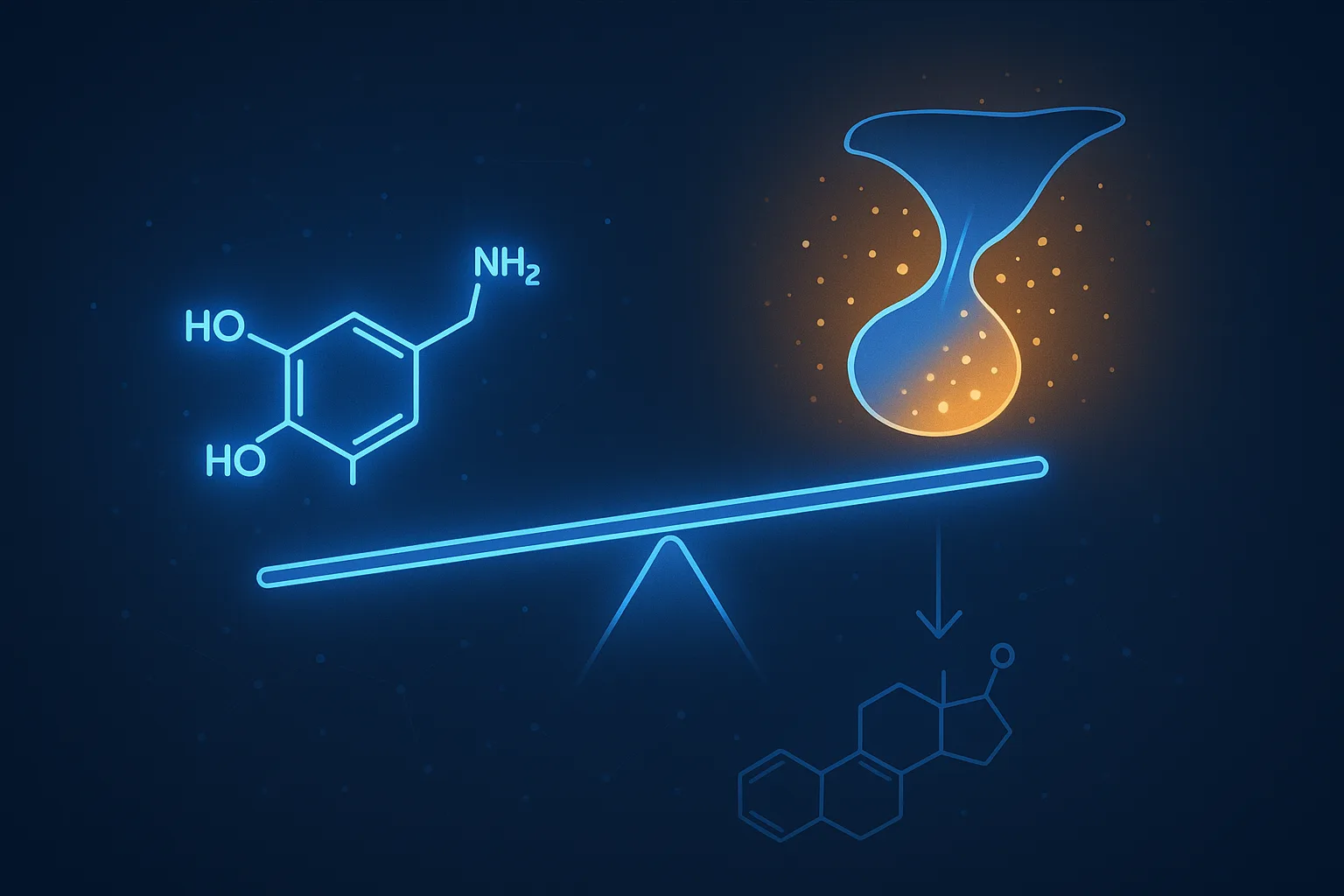
Dopamine and motivation. Because prolactin and dopamine sit on opposite ends of the same see-saw, high prolactin is associated with low motivation, low drive, and a blunted reward response — symptoms men frequently mistake for "the TRT not working."
The post-orgasm crash in desire that every man experiences is mediated in part by a transient prolactin spike. When prolactin is chronically elevated, it is as if that refractory state never fully lifts.
Why Prolactin Rises on TRT
Here is the part most men get wrong: testosterone is not a strong direct stimulator of prolactin. The real driver on TRT is almost always estradiol.
When you inject testosterone, a portion aromatizes into estradiol. Estradiol is a potent stimulator of pituitary lactotrophs — so men running high estradiol tend to drift toward higher prolactin. This is why prolactin problems cluster in the same men who have estradiol problems:
Infrequent injections that create high peaks and more aromatization
Higher weekly doses that push more substrate toward estradiol
Higher body fat, since adipose tissue is where aromatase concentrates
hCG use, which raises both testosterone and estradiol within the testes and can nudge prolactin up in some men
There are also causes that have nothing to do with TRT and must be ruled out before assuming the protocol is at fault:
Cause
Mechanism
Medications
Antipsychotics, some antidepressants (SSRIs), metoclopramide, certain blood pressure drugs raise prolactin
Hypothyroidism
Low thyroid raises TRH, which stimulates prolactin release
Stress / poor sleep
Acute and chronic stress elevate prolactin
Recent orgasm, exercise, or a meal
Cause transient spikes that contaminate a poorly timed lab draw
Pituitary adenoma (prolactinoma)
A benign pituitary tumor — the most important pathological cause to exclude
The clinical point: a high prolactin on TRT is a symptom, not a diagnosis. Your job is to find the upstream driver.
When to Test Prolactin — and How to Do It Right
Prolactin is one of the most easily mismeasured hormones in the panel. It follows a strong circadian rhythm (highest during sleep and early morning), spikes with orgasm, exercise, stress, nipple stimulation, and even the act of having blood drawn. A huge fraction of "high prolactin" results are false alarms caused by bad timing.
Test prolactin if you have any of the following on TRT:
Low libido despite optimal trough testosterone
Erectile dysfunction not explained by vascular or psychological causes
Unexplained low mood, low motivation, or anhedonia
Gynecomastia or nipple tenderness or discharge
Headaches or visual field changes (red flag for a pituitary mass)
How to draw it correctly:
Fasting, mid-morning. Avoid the immediate post-waking surge; aim for a few hours after rising rather than right out of bed.
Rested. Sit quietly for 15-20 minutes before the draw. Stress and the needle itself can spike prolactin.
No orgasm for 24 hours and no hard exercise the morning of the test.
Repeat any high value. A single elevated prolactin should never trigger treatment. Confirm with a second fasting, rested draw — ideally a "pooled" sample if your lab offers it.
If you test prolactin, test estradiol on the same draw. Without the estradiol context, an elevated prolactin on TRT is uninterpretable. See our estradiol management on TRT guide for how to interpret and act on E2.
How to Read Your Result
Prolactin (ng/mL)
Interpretation
Action
< 15-20
Normal male range
No action; reassess if symptoms persist
20-35
Mild elevation
Repeat the test correctly; check estradiol, thyroid, medications
Reference ranges vary slightly by lab and assay, so always interpret against your own lab's stated range. A value that is "high" on one assay may be normal on another. The trend across repeated, well-timed draws matters more than any single number.
One important caveat: in cases of very high prolactin, some labs underreport the true value due to a technical artifact called the "hook effect." If symptoms strongly suggest a prolactinoma but the number looks only modestly high, the lab can rerun the sample diluted to unmask the real level.
How to Lower Prolactin on TRT
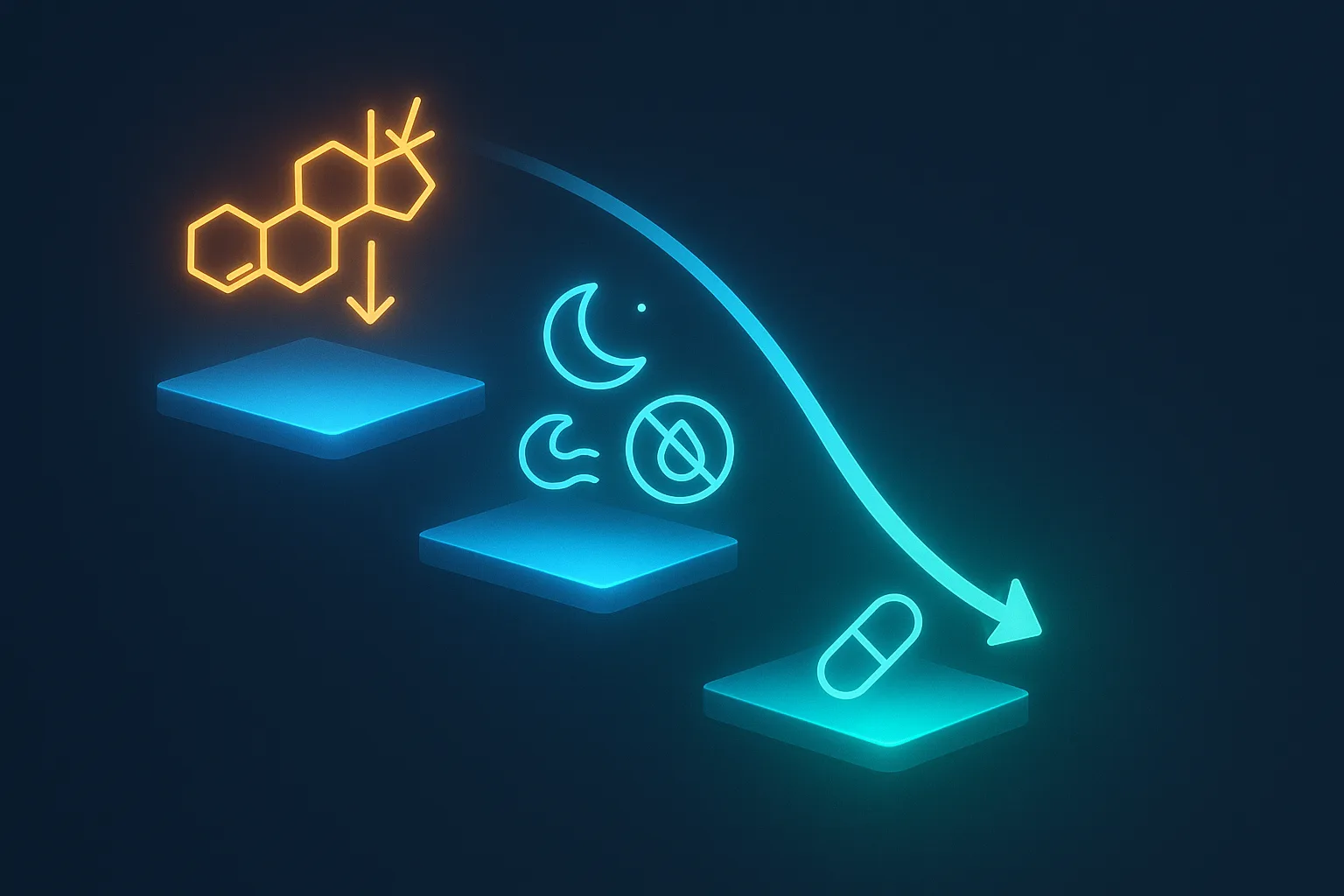
The order of operations matters. Fix the cheap, reversible drivers before reaching for medication.
Step 1: Control Estradiol
Because estradiol is the dominant driver on TRT, lowering it usually pulls prolactin down with it. The cleanest way to lower estradiol is rarely an aromatase inhibitor — it is splitting your dose into smaller, more frequent injections to flatten the peaks that drive aromatization. Twice- or three-times-weekly subcutaneous dosing lowers peak estradiol without crashing it. For the full approach, read our guide on injection frequency: weekly vs every other day.
If estradiol is genuinely high with symptoms and frequency adjustment is not enough, a low, carefully titrated dose of an aromatase inhibitor may be appropriate — but crashed estradiol creates its own libido and mood disaster, so this is symptom-and-lab guided, never aggressive. See aromatase inhibitors on TRT.
Stress. Sustained stress raises prolactin; the same stress also raises cortisol, which independently undermines TRT results. See TRT and cortisol management.
Alcohol. Heavy use disrupts the pituitary and worsens estradiol. See TRT and alcohol.
Medication audit. Review your full medication list with your provider. Antipsychotics and some antidepressants are common culprits.
Treat hypothyroidism. Low thyroid raises prolactin through TRH. A full thyroid panel is part of any prolactin workup.
Step 3: Consider a Dopamine Agonist
If prolactin remains elevated after estradiol and lifestyle drivers are addressed — or if it is high enough to suggest a prolactinoma — a clinician may prescribe a dopamine agonist, most commonly cabergoline. Dopamine agonists restore dopamine's braking effect on the pituitary, lowering prolactin and often shrinking prolactin-secreting adenomas.
Cabergoline is effective and well tolerated at the low doses used for hyperprolactinemia. Some men on TRT use very low "as-needed" doses around the time of intimacy, but this is off-label, must be clinician-directed, and carries real cautions: nausea, low blood pressure, and — at much higher cumulative doses than used here — concerns about heart valve changes. This is not a supplement to self-experiment with based on one lab value.
The Prolactin Decision Tree
Follow this sequence rather than jumping straight to medication.
Do you have symptoms? Low libido, ED, low mood, or gynecomastia despite good testosterone. If no symptoms and prolactin is only mildly high, monitor rather than treat.
Was the test done correctly? Fasting, mid-morning, rested, no recent orgasm or exercise. If not, repeat it before doing anything.
Is estradiol high? If yes, fix estradiol first — usually by splitting injections. Recheck prolactin in 6-8 weeks.
Any medication or thyroid cause? Audit medications and run a full thyroid panel.
Still elevated after estradiol and lifestyle are addressed? Discuss a dopamine agonist with your clinician.
Above 100 ng/mL or rising with headaches or vision changes? Endocrinology referral and pituitary MRI without delay.
Why This Belongs in Your Monitoring Panel
The reason men suffer with high prolactin for months is simple: most clinics never test it. A bare-bones TRT protocol that checks only total testosterone — and maybe a CBC — will miss prolactin entirely, leaving a man with optimal numbers and absent libido convinced his dose is wrong.
A good monitoring panel for any man on TRT includes total and free testosterone, sensitive estradiol, prolactin, a CBC, a metabolic panel, and a thyroid panel at least annually. If your provider has never checked your prolactin and you have libido or erection complaints, that is a gap in your care. For how to interpret the full picture, see our guide to reading testosterone labs.
If your current provider only checks total testosterone and dismisses symptoms when the number looks fine, it may be time to switch to a clinic that runs comprehensive panels and adjusts protocols based on the whole hormonal picture. See our independent TRT clinic comparison for providers that include estradiol and prolactin in their standard monitoring.
References
Bhasin S, et al. Testosterone Therapy in Men With Hypogonadism: An Endocrine Society Clinical Practice Guideline. J Clin Endocrinol Metab. 2018;103(5):1715-1744.
Melmed S, et al. Diagnosis and Treatment of Hyperprolactinemia: An Endocrine Society Clinical Practice Guideline. J Clin Endocrinol Metab. 2011;96(2):273-288.
Buvat J. Hyperprolactinemia and sexual function in men: a short review. Int J Impot Res. 2003;15(5):373-377.
Corona G, et al. The role of prolactin in male sexual function. J Sex Med. 2014;11(5):1124-1135.
Krysiak R, et al. The impact of testosterone and estradiol on prolactin secretion. Endokrynol Pol. 2017.
Maggi M, et al. Hormonal causes of male sexual dysfunction. Nat Rev Urol. 2013;10(12):673-685.
Testosterone itself is not a strong direct driver of prolactin, but TRT can raise it indirectly. When testosterone aromatizes into estradiol, elevated estradiol stimulates the pituitary lactotroph cells to secrete more prolactin. So the men who see prolactin creep up on TRT are usually the same men running high estradiol — often from infrequent injections, higher doses, or higher body fat. Adding hCG can also nudge prolactin upward in some men.
What prolactin level is too high for a man on TRT?
Most labs use an upper reference limit around 15-20 ng/mL for men. Mild elevations between 20 and 35 ng/mL are common and often driven by estradiol, stress, recent orgasm, or a poorly timed draw. Levels above 35-50 ng/mL warrant a repeat fasting morning test and a look for medication or pituitary causes. Levels above 100 ng/mL strongly suggest a prolactin-secreting pituitary adenoma and need endocrinology referral and imaging.
Can high prolactin cause low libido even if my testosterone is optimal?
Yes. This is the classic trap. Prolactin suppresses dopamine signaling and the GnRH-LH axis, so a man can have a textbook trough testosterone of 700-900 ng/dL and still have flat libido, weak erections, and low motivation because prolactin is sitting at 30-40 ng/mL. If your testosterone numbers look great but your sex drive is gone, prolactin is one of the first things to check.
How do you lower prolactin on TRT without medication?
First fix the upstream driver. If estradiol is high, lowering it by splitting injections into smaller, more frequent doses usually pulls prolactin back down. Reduce alcohol, improve sleep, manage stress, and avoid drawing labs right after orgasm or a hard workout. Vitamin B6 and adequate vitamin D may help modestly. If prolactin stays elevated after estradiol is controlled, a dopamine agonist like cabergoline is the medical option a clinician may prescribe.
Should I draw my prolactin test at trough like testosterone?
Prolactin timing matters more than most men realize. It is highest during sleep and in the early morning, spikes after orgasm, exercise, stress, and meals, and is best drawn fasting, mid-morning, after sitting quietly for 15-20 minutes, and at least a few hours after waking. A single high value should always be repeated before acting on it because false elevations are extremely common.
Is cabergoline safe to take long-term for high prolactin?
Cabergoline is effective and generally well tolerated at the low doses used for hyperprolactinemia, but it is a prescription medication that requires monitoring. High cumulative doses used in Parkinson disease have been linked to heart valve changes, though the much lower doses used for prolactin control carry far less risk. It should only be used under a clinician's supervision with periodic prolactin rechecks, never self-dosed based on a single lab value.